Artwork
Chinese Sages
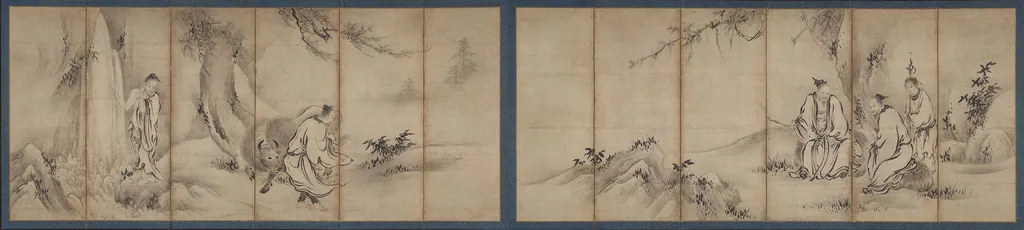
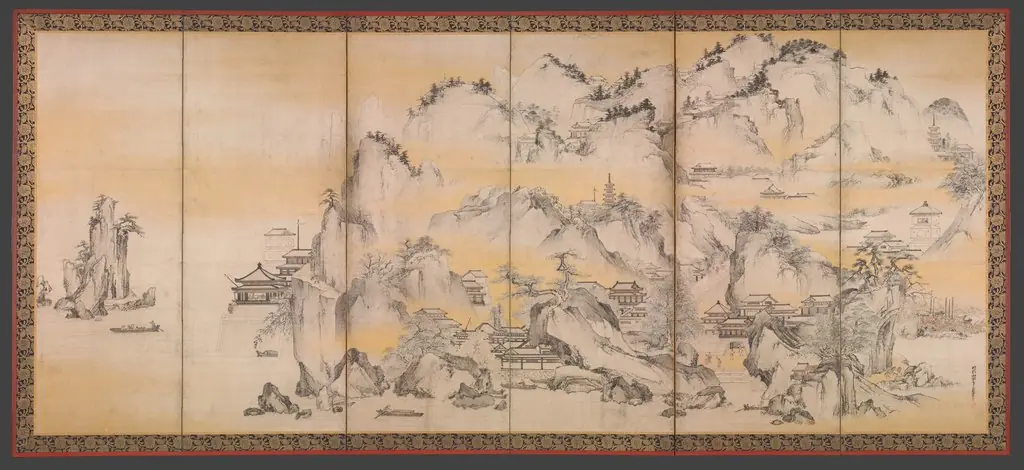
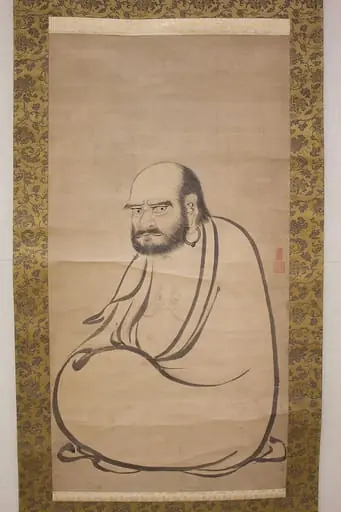
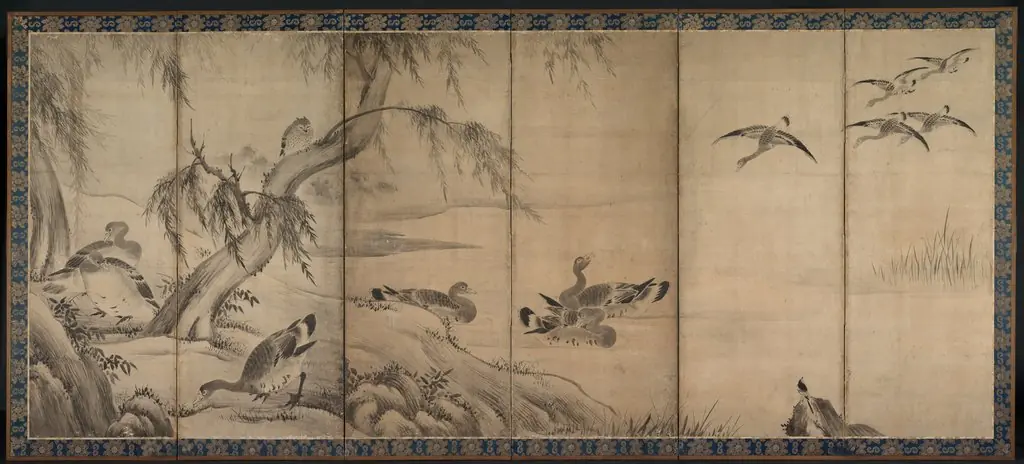
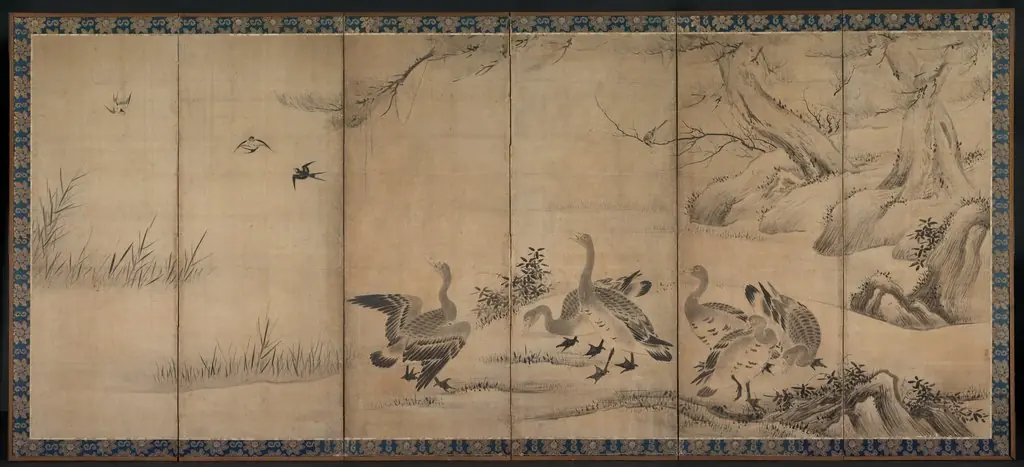
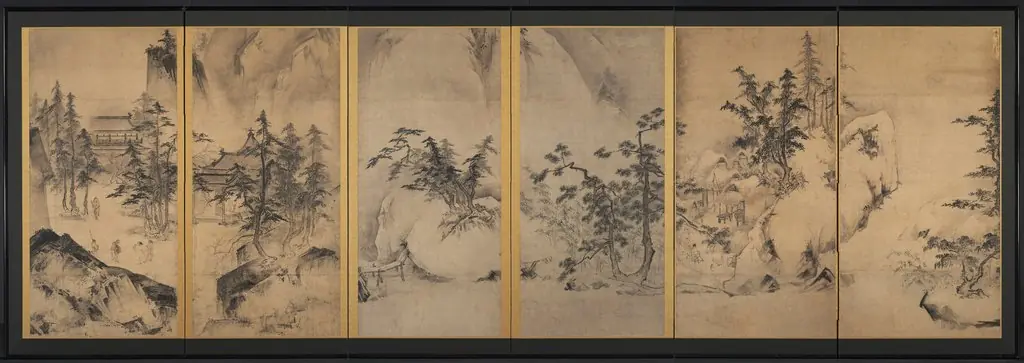
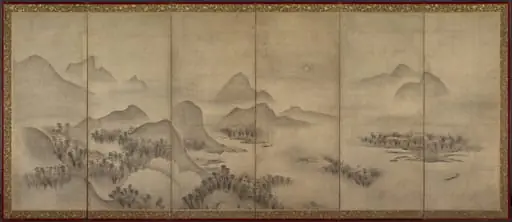
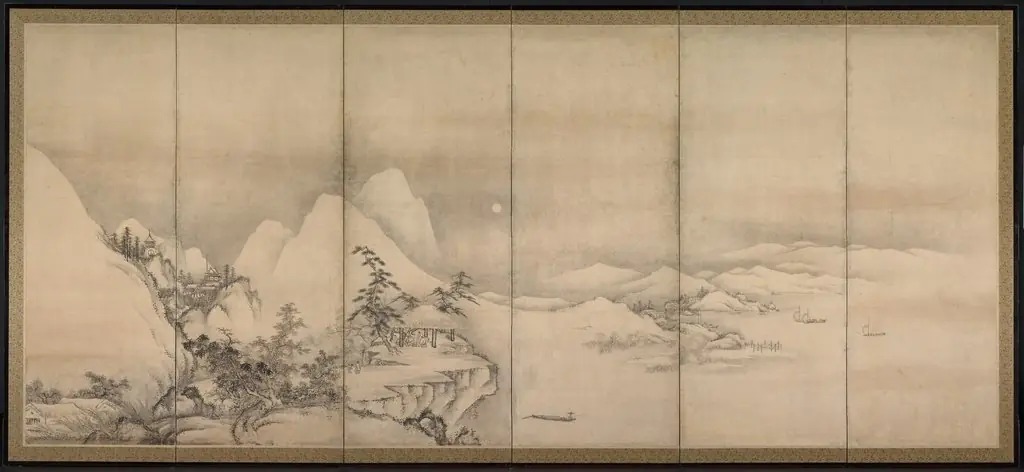
Chinese Sages is an unspecified painting by the Kanō school artist Kanō Sanraku. It dates from 1600 and is held in the collection of the Metropolitan Museum of Art.
About this work
Overview
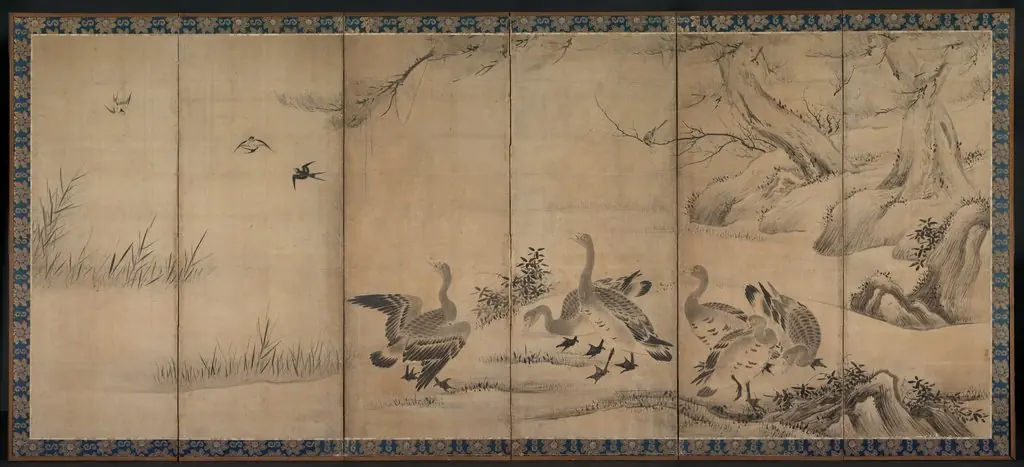
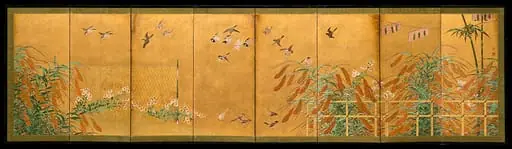
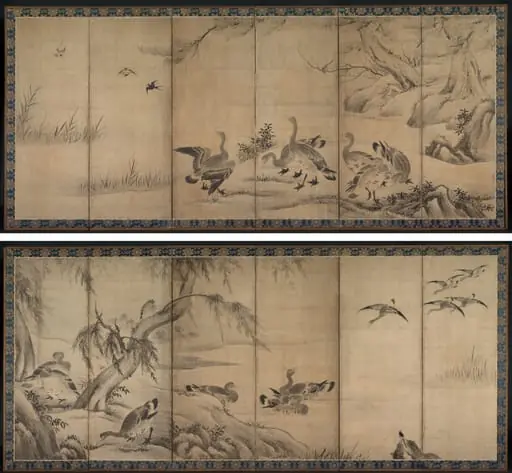
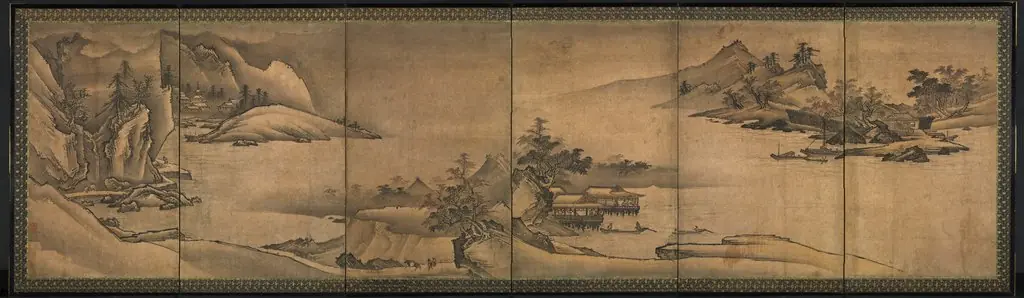
Created in 1600 by Kanō Sanraku, a sixth‑generation artist of the Kanō lineage, Chinese Sages is a three‑panel painting now in the Metropolitan Museum of Art. The work exemplifies the Kanō school’s large‑scale, decorative approach, merging the energetic vigor of the Momoyama era with the calmer tonalities that began to dominate early Edo visual culture.
Subject & Meaning
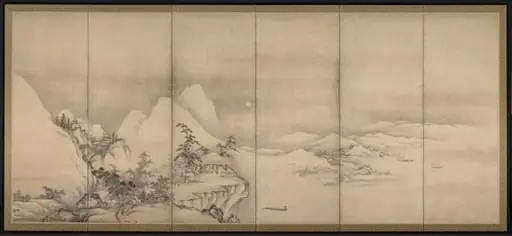
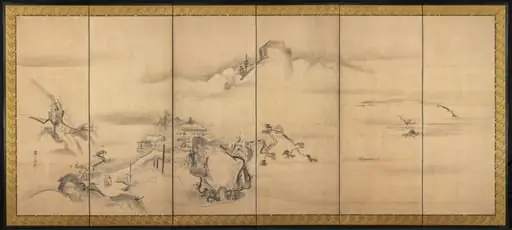
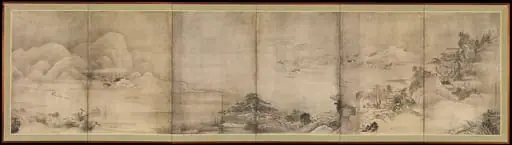
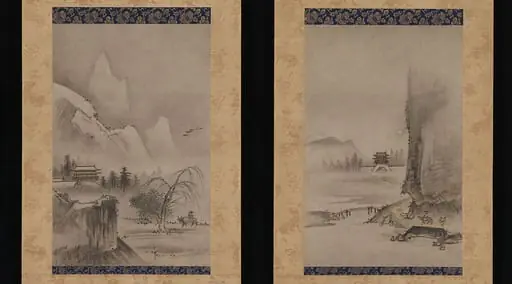
Each of the three panels presents a solitary figure engaged with a natural element: a robed man stands before a towering tree, a kneeling figure tends a bull beneath a hanging branch, and a seated individual looks downward. The composition suggests contemplation and moral instruction, echoing traditional Chinese sage iconography that emphasizes humility, stewardship, and introspection.
Technique & Style
The painting employs a restrained monochrome palette, relying on bold, sweeping brushwork to delineate forms and convey atmosphere. Minimal use of color heightens the sense of stillness, while the strong strokes create a rhythmic visual flow across the triptych, reflecting the Kanō school’s synthesis of decorative grandeur and understated elegance.
History & Provenance
Kanō Sanraku, who served successive Japanese shoguns, produced the piece during a transitional period between the Momoyama and early Edo dynasties. Chinese Sages entered the collection of the Metropolitan Museum of Art, where it remains accessible for study, illustrating the continuity of the Kanō workshop’s influence across centuries of Japanese painting.
Artist & collection
Artist
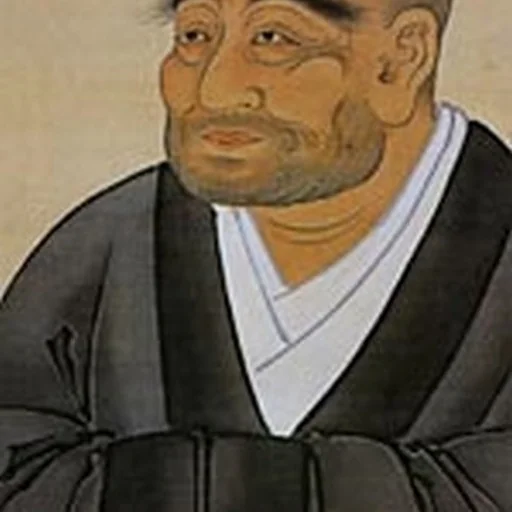
Kanō Sanraku (狩野 山楽; 1559 – September 30, 1635) was a Japanese painter also known as Kimura Heizō (his birth name), Shūri, Mitsuyori, and Sanraku.