Artwork
Untitled
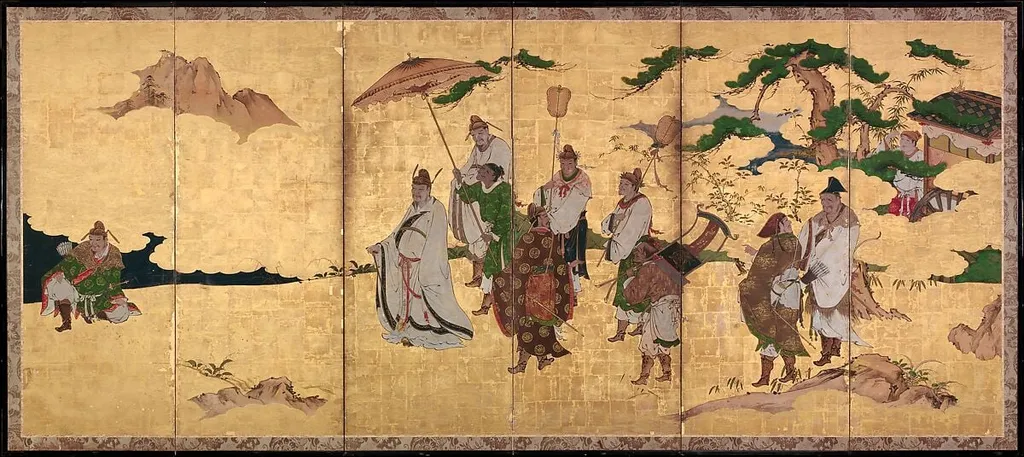
Untitled is an ink painting by the Kanō school artist Kano Takanobu. It dates from 1600 and is held in the collection of the Metropolitan Museum of Art.
About this work
Subject & Meaning
The imagery centers on the depicted figures as historical likenesses rather than illustrating a narrative scene or allegory.
Created around 1600 by Kanō Takanobu, this pair of six-panel folding screens functions as formal portraiture. Executed in ink, color, and gold leaf on paper, the screens depict an emperor and a male figure, using the visual language of Japanese portraiture to convey imperial dignity and status. The imagery centers on the depicted figures as historical likenesses rather than illustrating a narrative scene or allegory.
Technique & Style
Kanō Takanobu's Untitled (1600) consists of a pair of six-panel folding screens executed in ink, mineral pigments, and gold leaf on gilded paper. The support, multiple joined sheets of paper laminated to a wooden lattice, enables the screens' expansive format (168.8 cm high by 379.7 cm wide each) while maintaining structural flexibility.
The technique combines precise ink-line drawing with layered mineral colors and extensive gold leaf application, characteristic of the Kanō school's Momoyama-period decorative idiom. Brushwork ranges from fine, calligraphic contours for facial features to broad, gestural sweeps in textile patterns and landscape elements. Gold leaf both unifies the composition and heightens luminosity, reflecting the screens' intended use in palatial interiors.
History & Provenance
The pair of six-panel folding screens is dated to around 1600, in the late Azuchi–Momoyama period, when large-scale screen commissions flourished among the warrior elite and imperial court in Kyoto. Attributed to Kanō Takanobu, the work entered the Metropolitan Museum of Art in 2006 as accession numbers 2006.42.1 and 2006.42.2, where it is catalogued as folding screens depicting an emperor and a man, each measuring 168.8 cm in height by 379.7 cm in width. No specific exhibition history is provided in the available sources.
Overview
This untitled work by Kano Takanobu, created around 1600, comprises a pair of six-panel folding screens. Executed in ink, color, and gold on gilded paper, the paintings present a formal portrait. The subject is identified as Emperor Go-Yōzei, depicted during the period of his reign. This monumental format and rich materials underscore the significance of the imperial subject.
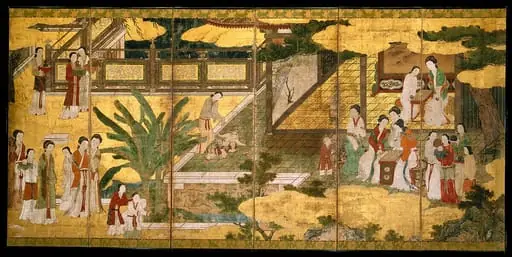
Artist & collection
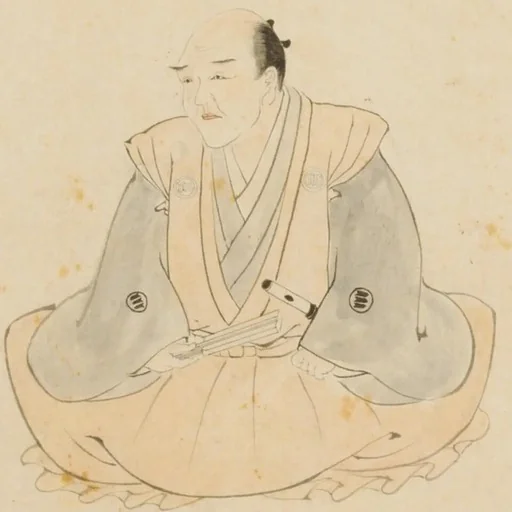

- 伝狩野永徳筆 唐美人唐子図屏風|Chinese Women and Children in a Palace Garden
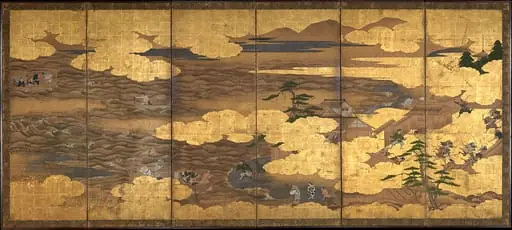 新曲図屏風|“Takebun,” from the Musical Drama “The New Piece” (“Shinkyoku”)
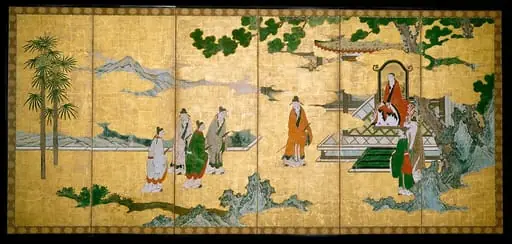 商山四皓・蘇東坡風水洞|The Return to Court of the Four Graybeards of Mount Shang (left); Su Shi’s Visit to the Wind and Water Cave (right
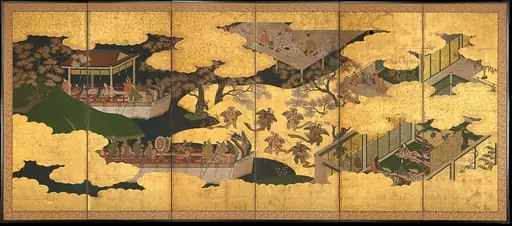 源氏物語図屏風 (胡蝶)|“Butterflies”
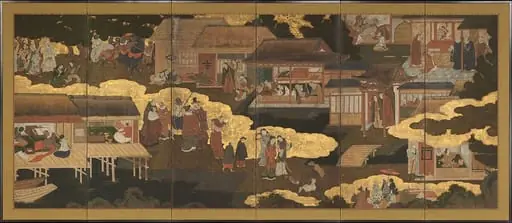 南蛮屏風|Arrival of the Europeans
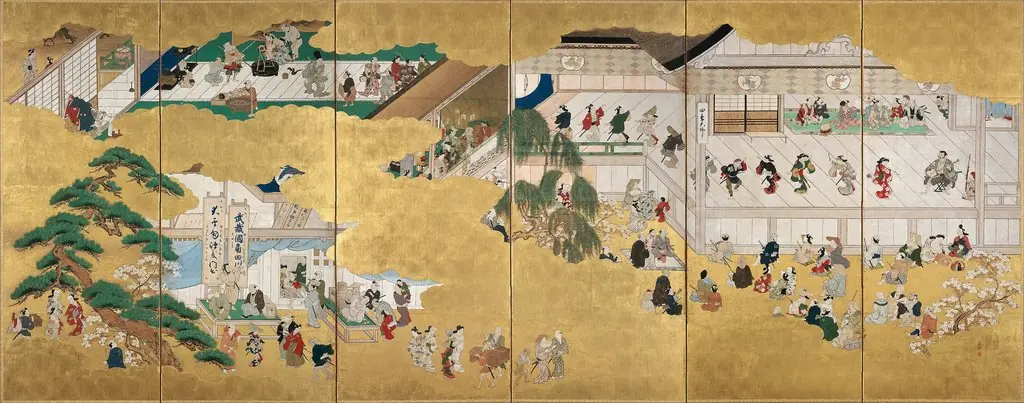 Scenes from the Nakamura Kabuki Theater
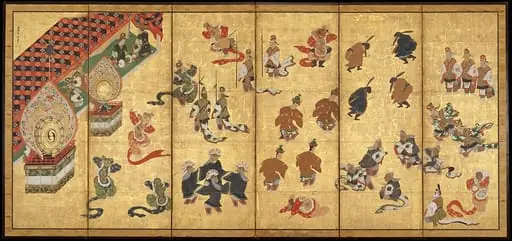 Untitled
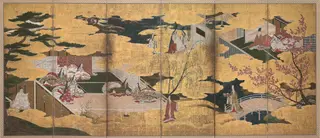 The Tale of Genji
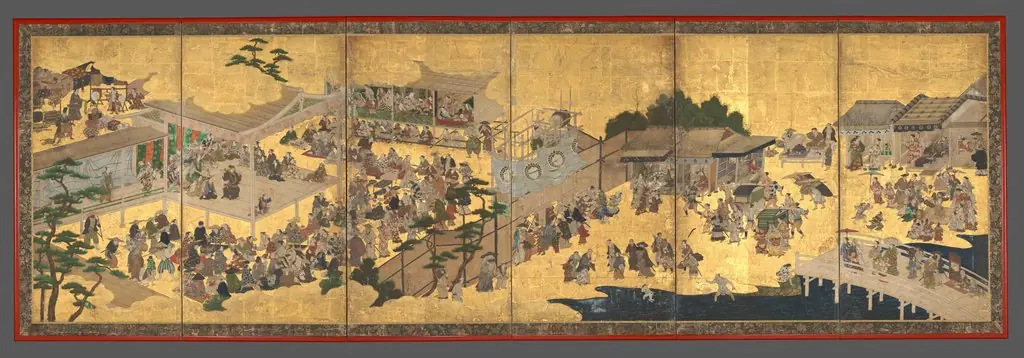 Women’s Kabuki
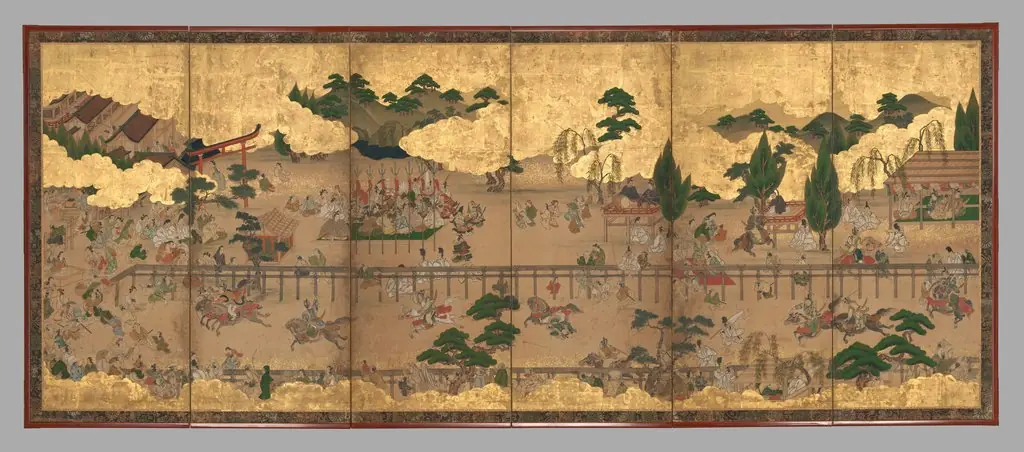 Horse Racing at Kamo Shrine
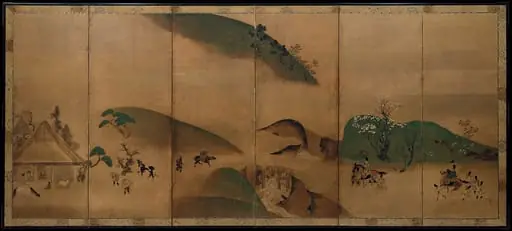 俵屋宗達工房 大原御幸図屏風|Royal Visit to Ōhara, from The Tale of the Heike
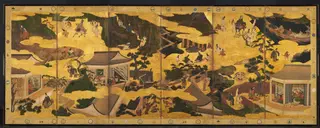 Scenes from the Tales of Ise