Artwork
俵屋宗達工房 大原御幸図屏風|Royal Visit to Ōhara, from The Tale of the Heike
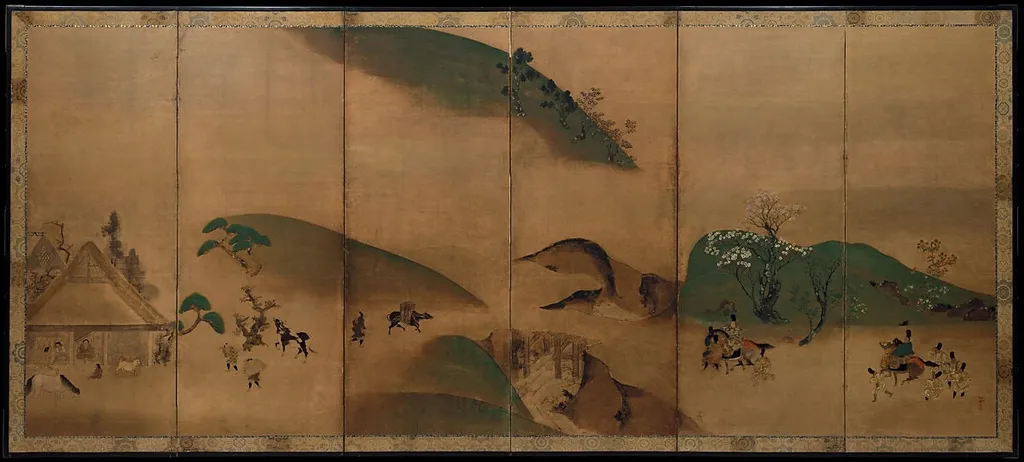
俵屋宗達工房 大原御幸図屏風|Royal Visit to Ōhara, from The Tale of the Heike is an ink painting by the Baroque artist Tawaraya Sōtatsu. It dates from 1625 and is held in the collection of the Metropolitan Museum of Art. This pair of six-panel folding screens, created around 1625, depicts a scene from The Tale of the Heike.
About this work
The painting's composition is notable for its use of negative space, with large areas of empty paper creating a sense of depth and atmosphere.
This painting depicts a serene landscape with rolling hills and trees, set against a muted color palette. In the foreground, a group of people are shown, some on horseback, while others are walking or standing. The scene is peaceful, with no signs of conflict or tension.
The painting's composition is notable for its use of negative space, with large areas of empty paper creating a sense of depth and atmosphere. The artist's use of ink and color is subtle, with delicate brushstrokes and soft colors that evoke a sense of calm.
The painting is a beautiful example of Japanese art from the early 17th century. To learn more about the artist's style and technique, look up Tawaraya Sōtatsu.
Overview
This pair of six-panel folding screens, created around 1625, depicts a scene from The Tale of the Heike. Executed in ink and color on paper, the work is attributed to the Rinpa school, led by Tawaraya Sōtatsu.
Subject & Meaning
The screens illustrate the 'Royal Visit to Ōhara', a narrative from the historical epic The Tale of the Heike. The serene landscape and figures on horseback or on foot convey a sense of tranquility, characteristic of the depicted scene.
Technique & Style
The composition is marked by the use of negative space, with large areas of empty paper creating depth. Sōtatsu's style combines bold arrangements with refined decorative elements, and techniques like tarashikomi, where wet paint is layered, achieve subtle visual effects.
History & Provenance
The screens are now part of The Metropolitan Museum of Art's collection. Created in the early 17th century, they exemplify the Rinpa movement's focus on elegance and narrative through visual means.
Artist & collection

Artist
Tawaraya Sōtatsu (俵屋 宗達; c. 1570 – c. 1640) was a Japanese furniture designer and painter of the Rinpa school. Sōtatsu is best known for his decorations of calligraphic works by his partner Hon'ami Kōetsu (1558–1637),…

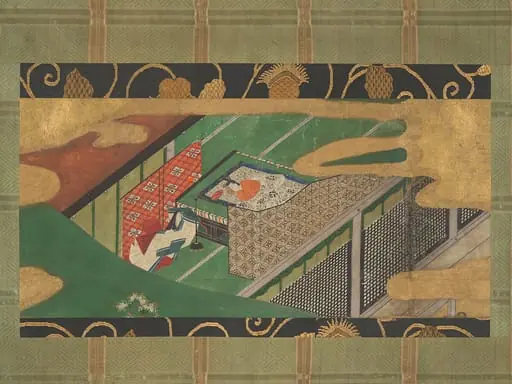 伝俵屋宗達筆 源氏物語図「宿木」 |“Trees Encoiled in Vines of Ivy” (Yadorigi)
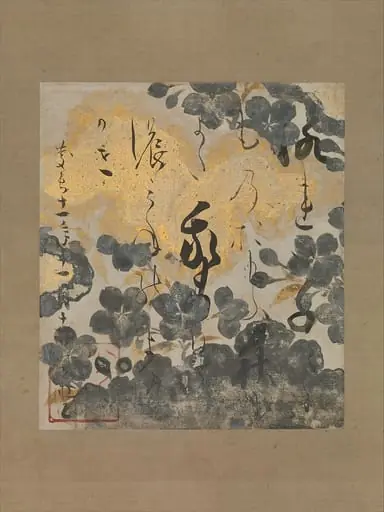 本阿見光悦書・俵屋宗達下絵 桜下絵和歌色紙 鴨長明|Poem by Kamo no Chōmei with Underpainting of Cherry Blossoms
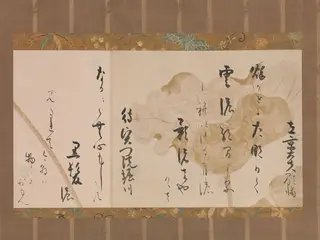 本阿弥光悦書・俵屋宗達下絵 小倉百人一首和歌巻断簡|Two Poems from One Hundred Poems by One Hundred Poets
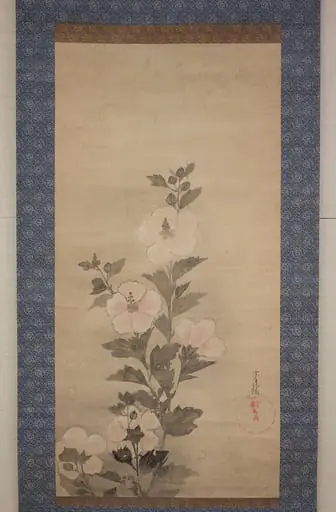 Untitled
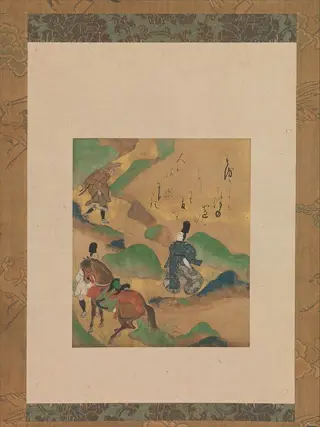 Untitled
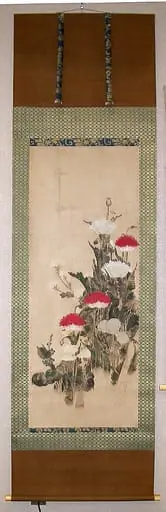 Untitled
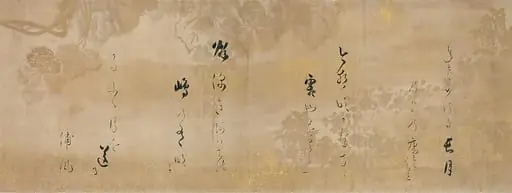 本阿弥光悦書 木版下絵和歌巻断簡|Twelve Poems from the New Collection of Poems Ancient and Modern
 Selections from the New Collection of Japanese Poems from Ancient and Modern Times (Shinkokin wakashū) with Printed Designs of Chinese Lions and Crab Finger Grass
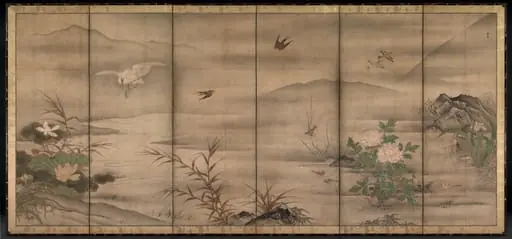 Birds and Flowers in a Landscape of the Four Seasons
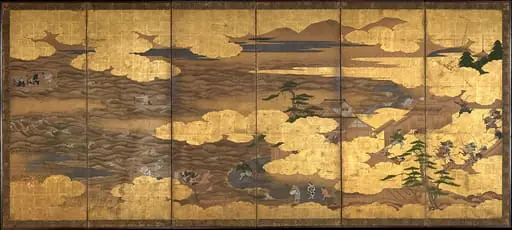 新曲図屏風|“Takebun,” from the Musical Drama “The New Piece” (“Shinkyoku”)
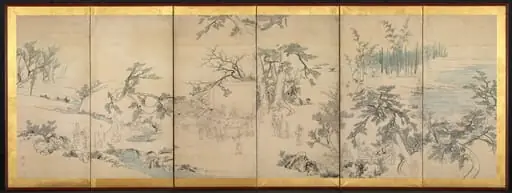 Literary Gathering in the Orchid Pavilion
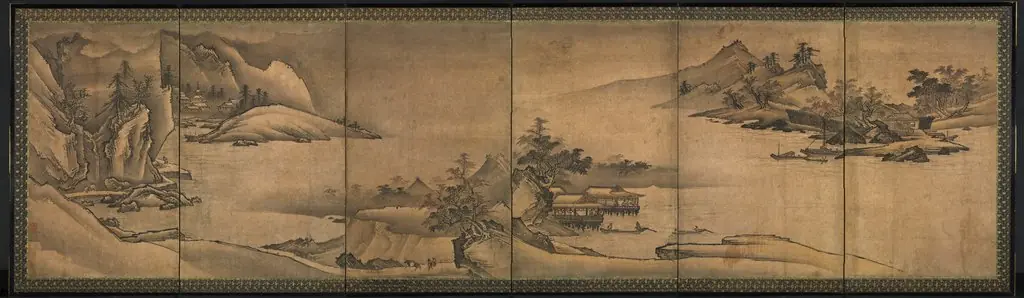 Landscape of the Four Seasons
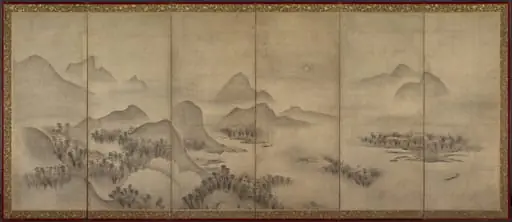 Moonlit Landscape (one of a pair)
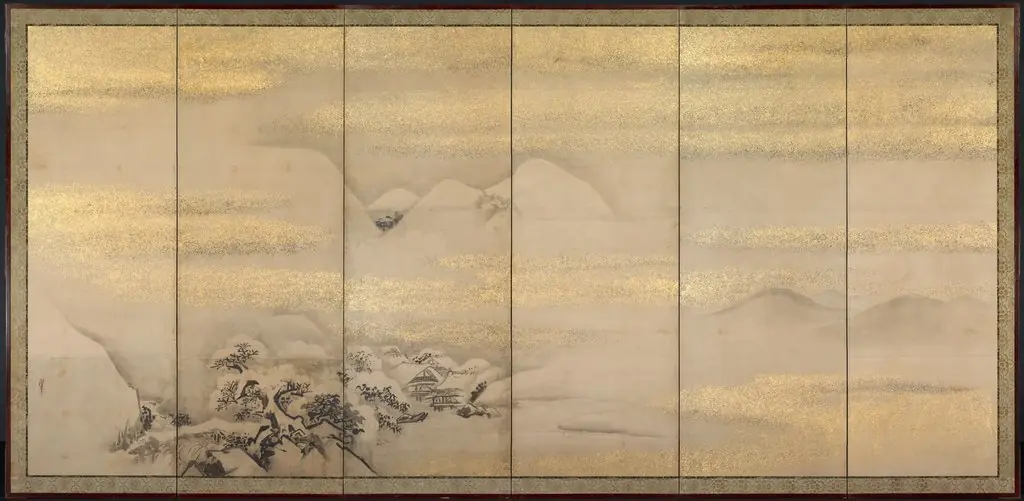 Summer and Winter Landscapes (one of a pair)
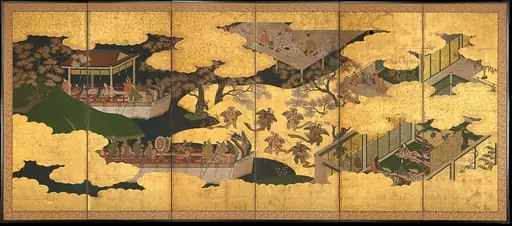 源氏物語図屏風 (胡蝶)|“Butterflies”
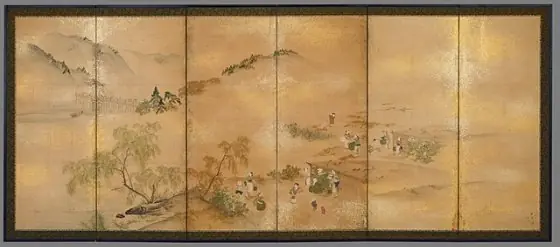 Tea Picking at Uji; Tea Party at Yoshida
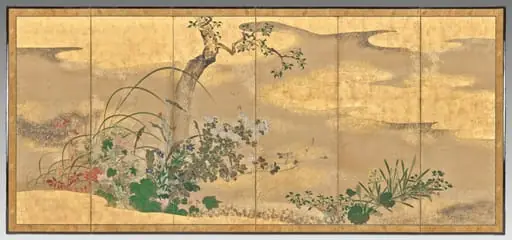 Flowers and Trees of the Four Seasons (left screen)
- 平家物語図屏風 「小督」 「大原御幸」|"Kogō" and "The Imperial Procession to Ōhara", from The Tale of the Heike (Heike monogatari)