Artwork
狩野常信筆 燕子花に鴛鴦図|Mandarin Ducks and Iris
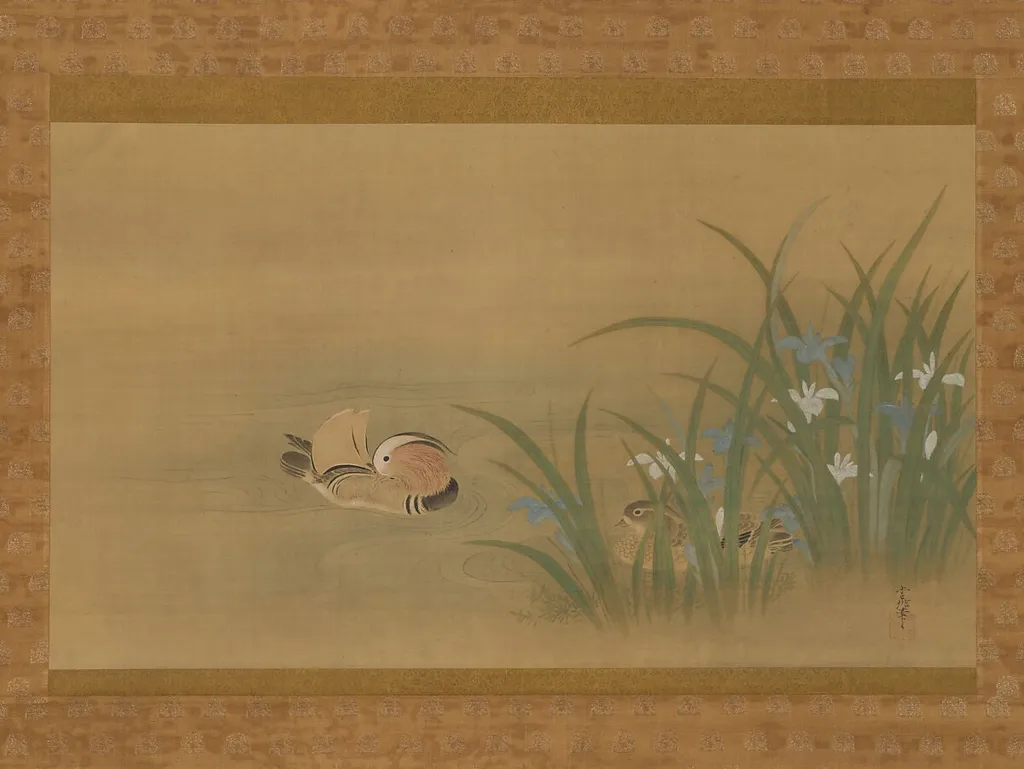
狩野常信筆 燕子花に鴛鴦図|Mandarin Ducks and Iris is an ink painting by the Baroque artist Kano Tsunenobu. It dates from 1674 and is held in the collection of the Metropolitan Museum of Art.
About this work
Technique & Style
4 centimeters, the composition integrates landscape elements with a focused depiction of its natural subjects, mandarin ducks, iris flowers, and foliage.
Kanō Tsunenobu executed Mandarin Ducks and Iris in 1674 as a hanging scroll, applying ink and color onto a silk support. Measuring approximately 42.5 by 72.4 centimeters, the composition integrates landscape elements with a focused depiction of its natural subjects, mandarin ducks, iris flowers, and foliage. The work reflects the Kanō school's approach to nature painting, utilizing the fluid handling of ink combined with applied color to render the forms of the ducks and iris against the silk ground.
History & Provenance
Created in 1674 by the Japanese artist Kanō Tsunenobu, this hanging scroll depicts mandarin ducks amidst irises, executed in ink and color on silk. The painting is currently held in the collection of the Metropolitan Museum of Art, New York, where it measures approximately 42.5 cm in height and 72.4 cm in width. Specific details regarding its original commission or early ownership history are not documented in the available records.
Overview
Kano Tsunenobu's painting, Mandarin Ducks and Iris, created in 1674, is rendered with ink and color on silk as a hanging scroll. This work presents a tranquil natural scene, featuring a pair of mandarin ducks gracefully floating on water, surrounded by vibrant purple iris blossoms and their accompanying green foliage. The composition evokes a sense of stillness and quiet observation.
Subject & Meaning
The central motif of this painting features a pair of mandarin ducks, which hold significant cultural meaning in Japan. These birds traditionally symbolize enduring love and marital fidelity, frequently appearing together in art to convey these sentiments. Their presence alongside the elegant purple iris flowers and lush green leaves creates a harmonious natural tableau, emphasizing themes of companionship and beauty within the natural world.
Artist & collection