Artwork
Queen Zenobia Found on the Banks of the Arax
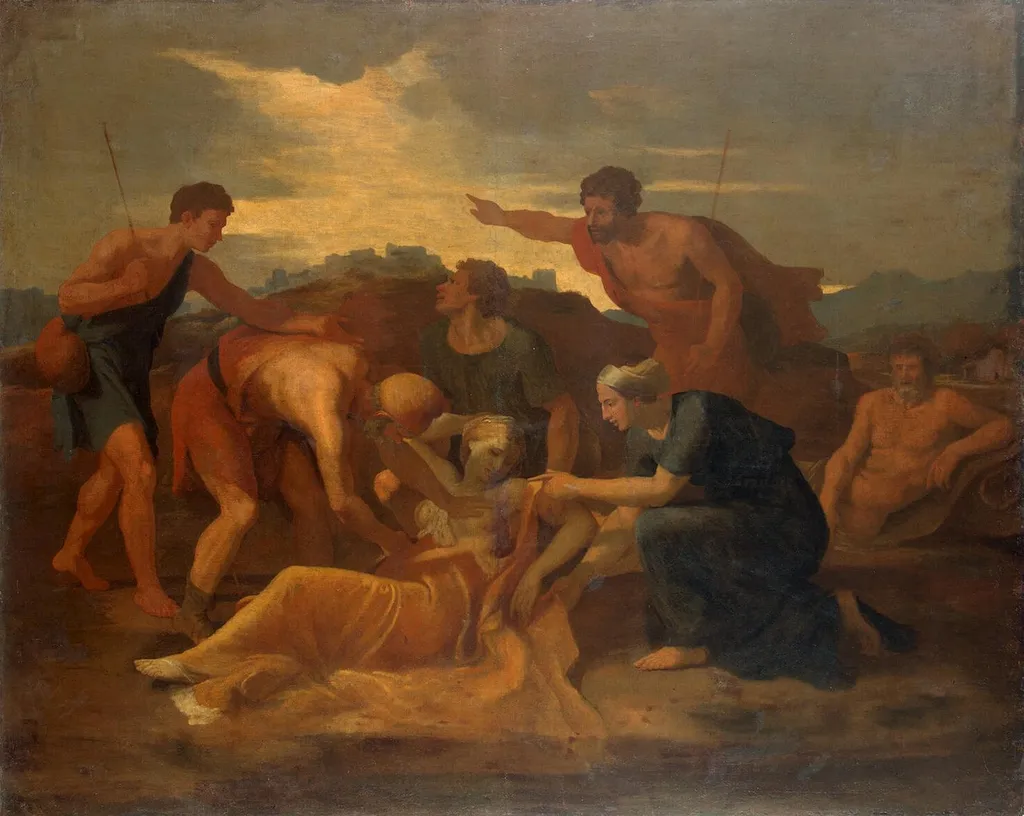
Queen Zenobia Found on the Banks of the Arax is an oil painting. It dates from 1640 and is held in the collection of the Hermitage Museum.
About this work
Subject & Meaning
The iconography focuses on the moment of rescue, showing the unconscious queen being attended to by herders rather than the preceding violence.
The painting depicts Queen Zenobia of Armenia being discovered by shepherds on the banks of the Aras River. The scene illustrates a specific historical episode recounted by the Roman historian Tacitus in his Annals, wherein Zenobia's husband, King Rhadamiste, stabbed her at her own request and cast her into the river to prevent her capture by advancing enemies before fleeing himself.
The iconography focuses on the moment of rescue, showing the unconscious queen being attended to by herders rather than the preceding violence. This narrative choice emphasizes themes of survival and humanitarian aid amidst political turmoil. The work serves as a visual interpretation of classical history, translating Tacitus's textual account of royal tragedy and refugee status into a composed historical tableau.
Technique & Style
The painting is executed in oil on canvas, a medium typical of 17th-century history painting. It measures 194.5 cm in width and 156.0 cm in height, reflecting the large scale often employed for narrative works intended for imperial collections. The composition depicts Queen Zenobia discovered on the banks of the Aras River, rendered with the precise linear drawing and restrained coloration characteristic of Poussin’s classicising style.
The handling of figures and landscape demonstrates a deliberate synthesis of antique subject matter with a controlled, almost architectural arrangement of space, underscoring the formal elegance of the work.
History & Provenance
The painting Queen Zenobia Found on the Banks of the Arax was created by Nicolas Poussin in 1640 while he was in Paris, though he left it unfinished when he returned to Rome. It remained in the collection of the abbé Quesnel, was identified through inventory records published by the vicomte de Grouchy in 1892 and later by Émile Magne in 1914, and was eventually acquired by the Hermitage Museum in 1931 after previously being part of the Saint-Petersburg Academy of Arts collection. The work’s provenance is documented through a series of drawings by Poussin, including studies in the collections of the Musée Condé, Windsor Castle, the Musée Pouchkine, and the Nationalmuseum in Stockholm, which trace the development of the composition toward the final Hermitage version.
Nicolas Poussin's Queen Zenobia Found on the Banks of the Arax is held by the Hermitage Museum in Saint Petersburg. The work entered the museum's collection in 1931, having previously belonged to the collection of the Academy of Fine Arts in Saint Petersburg (then Leningrad). Prior to its acquisition by the Academy, the painting was identified with a work listed in the inventory of the Abbé Quesnel collection, first published by the Vicomte de Grouchy in 1892.
The painting was long classified as a 17th-century French school piece before being attributed to Poussin by art historian V. Miller in 1934, a conclusion later confirmed by Walter Friedländer in 1949. The provided sources do not record a specific inventory or accession number for the work, nor do they document any specific exhibition history.
Context
The painting Queen Zenobia Found on the Banks of the Arax, a history painting in oil on canvas created in 1640, was produced during Nicolas Poussin's Paris period before his permanent move to Rome, where he left the work unfinished. Its subject draws on Tacitus' Annals, depicting the Armenian queen Zenobia rescued by shepherds after her husband Radamisto kills her and casts her into the Aras River. Early scholarly attributions began with V. Miller in 1934, who linked the Hermitage work to a drawing in the Pushkin Museum, a connection later confirmed by Walter Friedländer in 1949 through comparative analysis of multiple preparatory sketches, including those in Chantilly, Windsor, and Stockholm.
The Hermitage acquired the piece in 1931 from the Academy of Fine Arts in Saint Petersburg, then known as Leningrad, with prior provenance documented in the 1892 inventory of the Abbé Quesnel collection and 1914 references by Émile Magne. Comparative study of drawings held by the Nationalmuseum in Stockholm further establishes the compositional development of Poussin's concept for the painting.
Legacy
The painting Queen Zenobia Found on the Banks of the Arax became a reference point for later interpretations of the Zenobia legend in art history. Its depiction of the queen’s rescue by shepherds influenced subsequent portrayals of the subject, particularly in 19th‑century French and Italian art literature that cited the work as a model for compositions of the ‘Zenobia saved by the shepherds’ theme. The attribution process, beginning with V. Miller’s 1934 study of related drawings and solidified by Walter Friedländer’s 1949 analysis, established a scholarly lineage that traced the composition through multiple preparatory sketches in collections such as the Musée Condé, Windsor Castle, the Musée Pouchkine, and the Nationalmuseum in Stockholm.
This lineage contributed to the painting’s recognition as a distinct Poussin work, leading to its acquisition by the Hermitage Museum in 1931 after its appearance in the inventory of the Abbé Quesnel collection. Contemporary references, including entries in French and Italian Wikipedia articles, continue to cite the Hermitage’s version as the principal exemplar of the subject.
Overview
The canvas portrays a reclining female figure, identified as Queen Zenobia, positioned on the banks of a river that may correspond to the Arax. She is attended by several figures in modest attire, while a cloudy sky forms the distant backdrop, lending the scene a tranquil atmosphere.
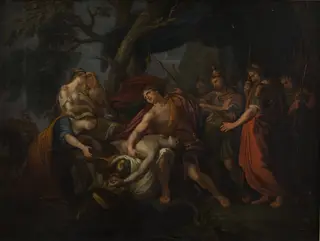
Artist & collection

- Achilles Lamenting the Death of Patroclus
 The Good Samaritan
 Combate de centauros y lapitas. (Tit. Ant.: Centauros e ilotas)
 Hecabe mit den Leichnamen ihrer Kinder Polyxena und Polydoros am Grab des Achill
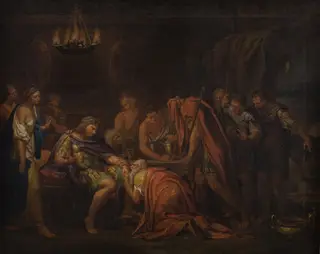 Priam Pleading with Achilles for the Body of Hector
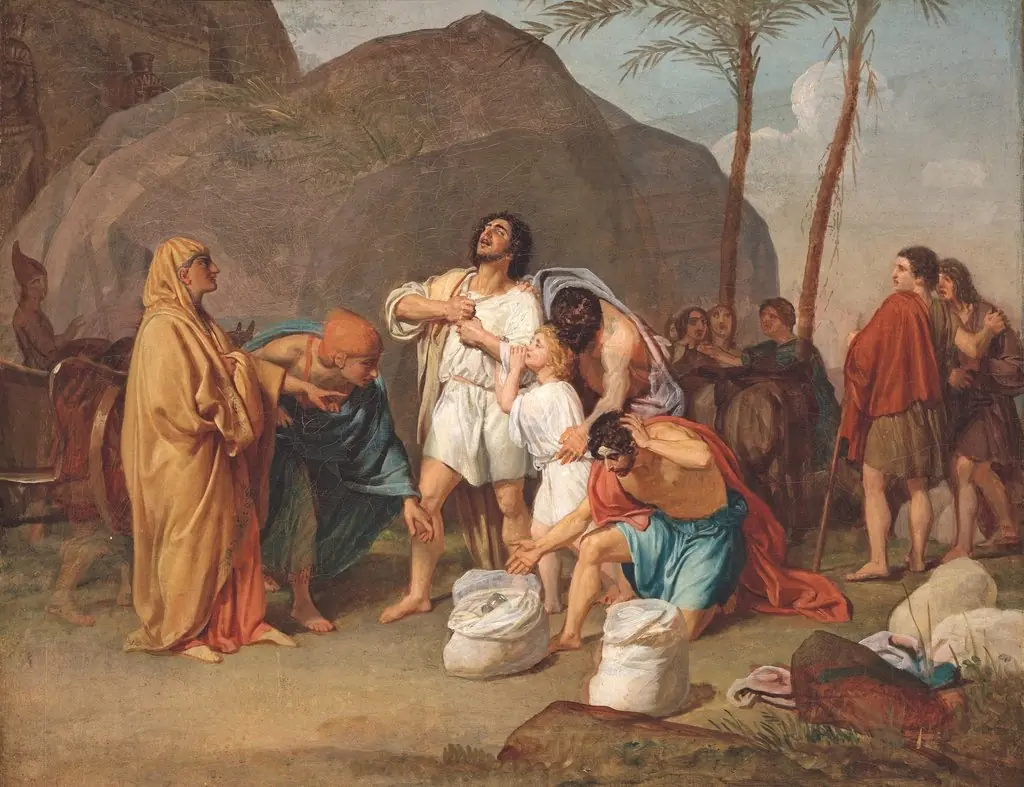 Joseph's Brothers Find the Silver Goblet in Benjamin's Pack.
 Killer of Darius before Alexander (King Porus and Alexander the Great)
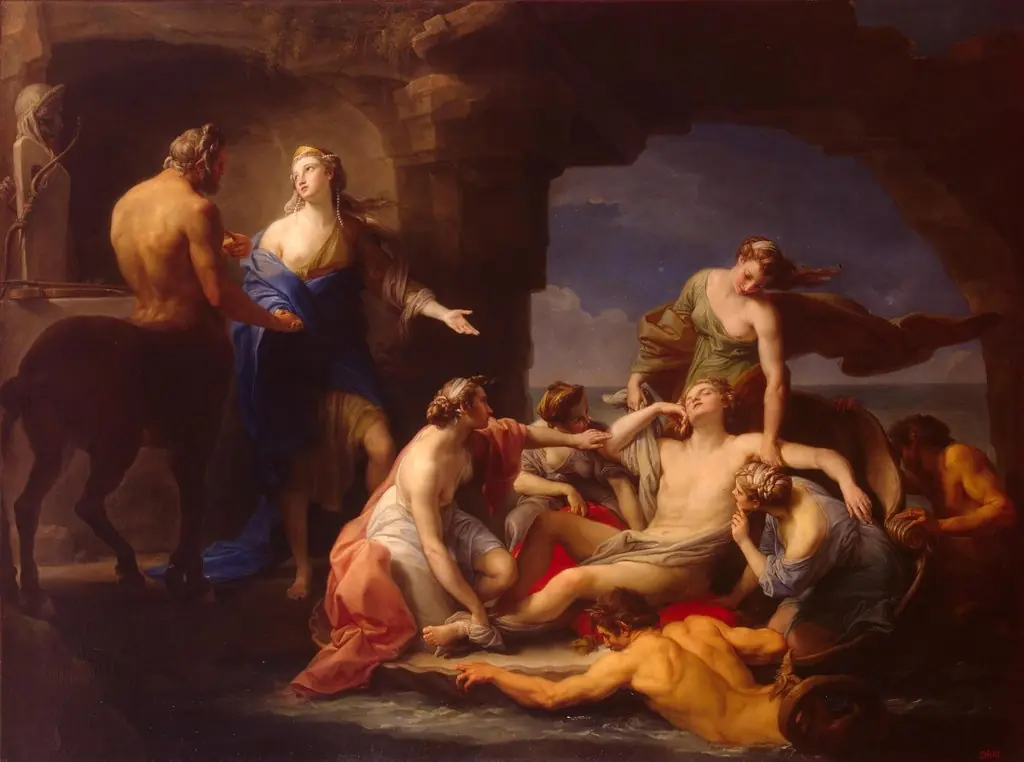 Thetis takes Achilles from the Centaur Chiron
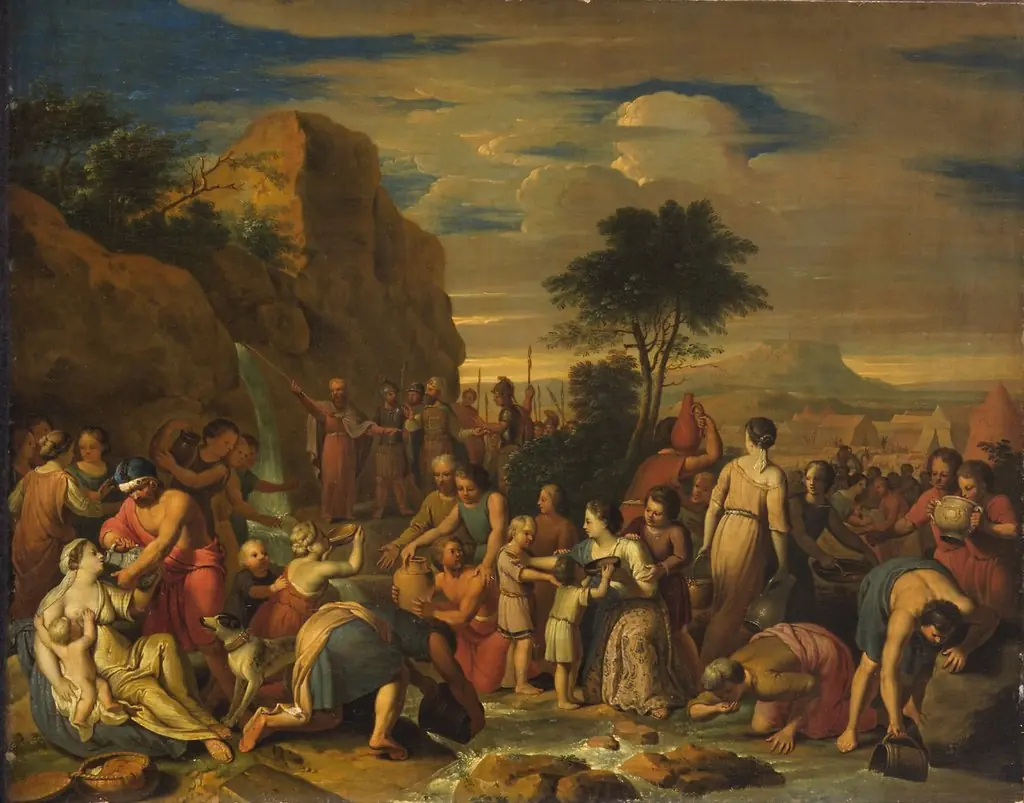 Moses schlägt Wasser aus dem Felsen
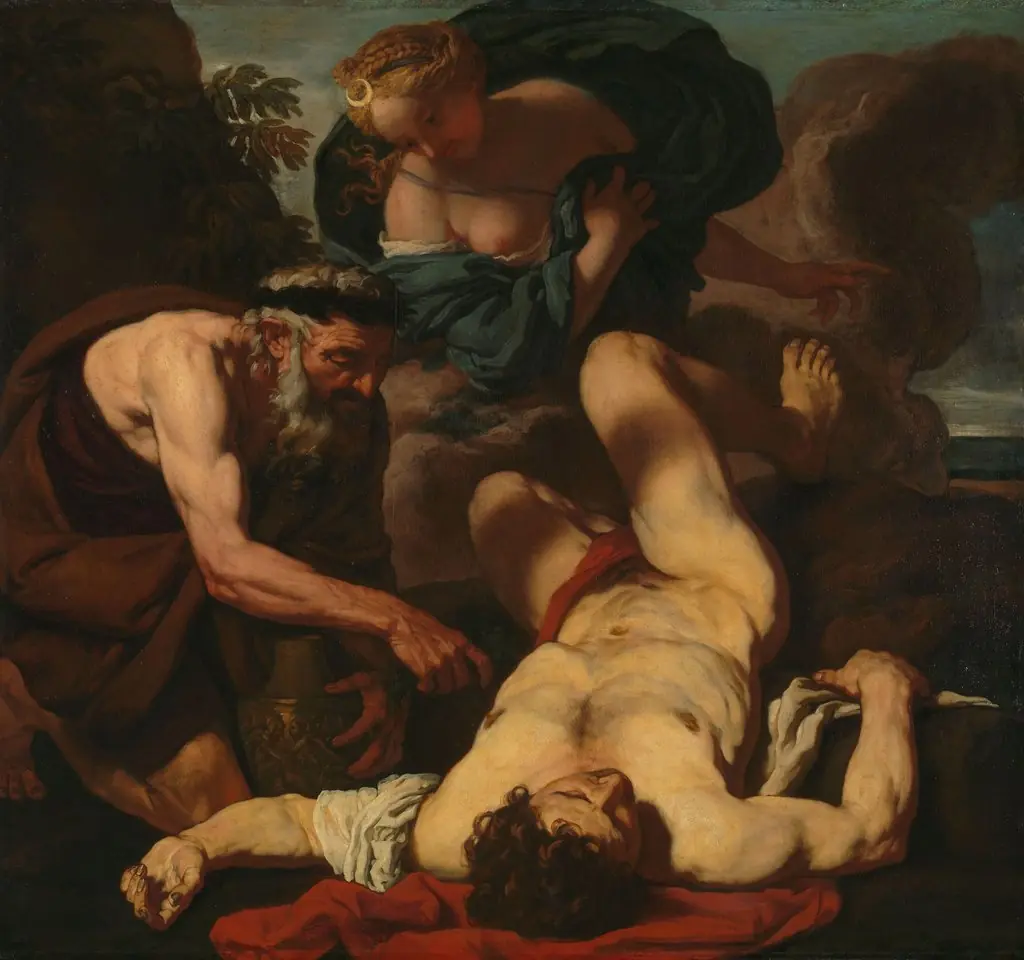 Selene and Endymion
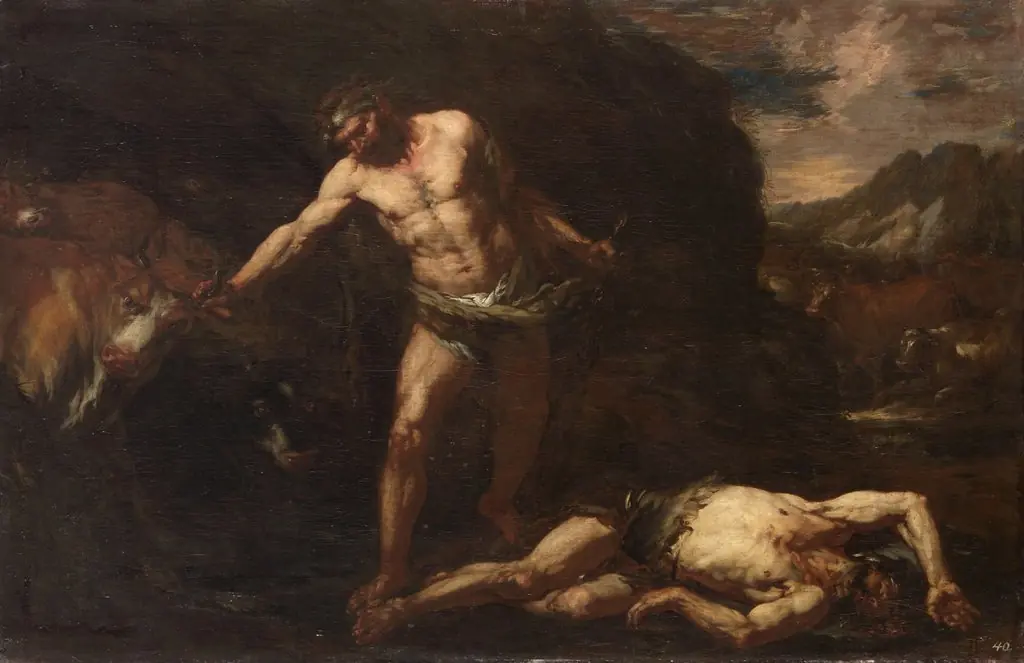 Hercules tötet den Riesen Cacus und raubt die Rinder des Geryoneus
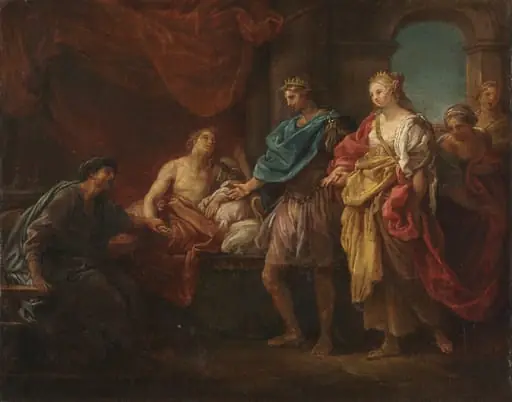 Study for "Antiochus and Stratonice"