Artwork
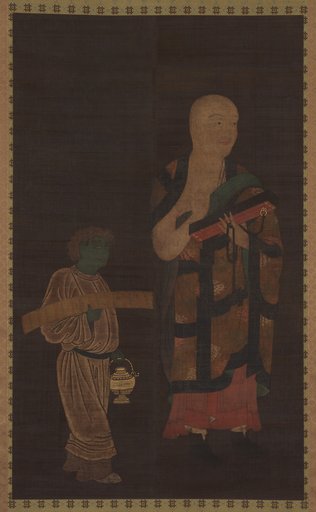
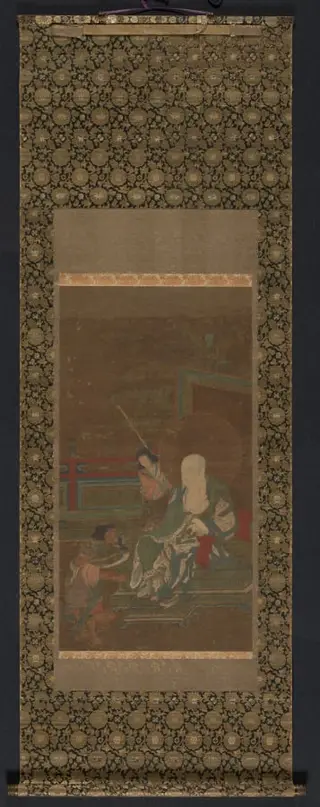
伝春日基光筆 玄奘三蔵像|Portrait of Xuanzang (Genjō) with Attendant
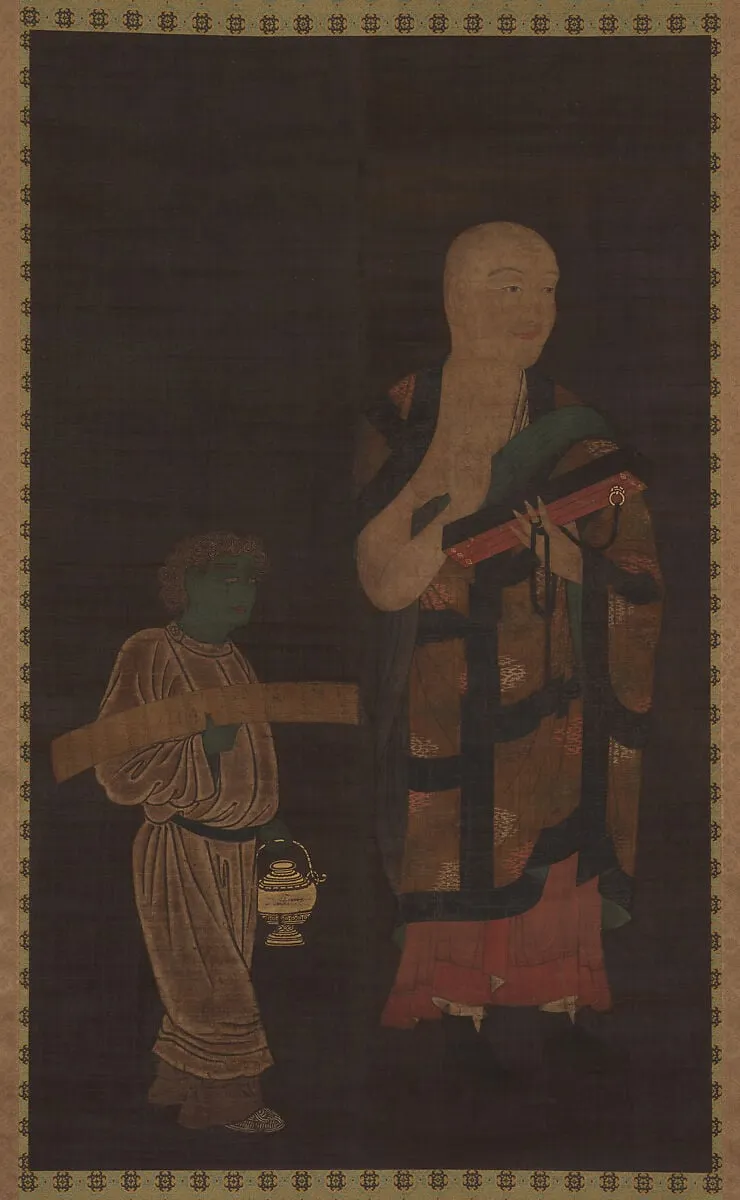
伝春日基光筆 玄奘三蔵像|Portrait of Xuanzang (Genjō) with Attendant is an ink painting by the Joseon dynasty painting artist Kasuga Motomitsu. It dates from 1316 and is held in the collection of the Metropolitan Museum of Art.
About this work
Subject & Meaning
The artwork depicts the Buddhist monk Xuanzang (Genjō), identified as a man and religious figure, accompanied by an attendant.
The artwork depicts the Buddhist monk Xuanzang (Genjō), identified as a man and religious figure, accompanied by an attendant. Created in 1316 by Kasuga Motomitsu, the hanging scroll functions as a formal portrait of this historical traveler. While the specific iconographic details of the attendant or symbolic attributes are not elaborated in the available records, the work's classification as a portrait emphasizes the representation of Xuanzang's identity and status.
The piece serves to memorialize the monk, presenting him in a dignified manner consistent with Japanese religious portraiture traditions of the early fourteenth century.
History & Provenance
The hanging scroll Portrait of Xuanzang (Genjō) with Attendant, attributed to Kasuga Motomitsu and dated to 1316, is held in the collection of the Metropolitan Museum of Art in New York. While the work was created in Japan, its current location is confirmed within the museum's holdings. The provided sources do not specify a unique inventory or accession number for this piece, nor do they record any details regarding its exhibition history or past loans.
Consequently, the available documentation confirms only the institution holding the artwork and its general classification as a portrait painting from the early fourteenth century.
Overview
This hanging scroll, attributed to Kasuga Motomitsu and created in 1316, presents a depiction of the revered Chinese monk Xuanzang (Genjō) accompanied by an attendant. Executed with ink and color on silk, the painting serves as a visual record of a significant historical and religious figure. Its composition and delicate artistry reflect the aesthetic sensibilities prevalent in Japanese devotional art of the early 14th century.
Technique & Style
Rendered in ink and color on silk, the artwork employs fine brushstrokes and a palette of soft hues to create a serene image. The primary monk is depicted as tall and slender, clad in dark robes, with a composed expression and hands concealed within his sleeves. This understated approach, utilizing delicate lines and minimal detail, conveys a sense of quiet dignity and profound wisdom, contributing to the painting's overall tranquil atmosphere.
Artist & collection

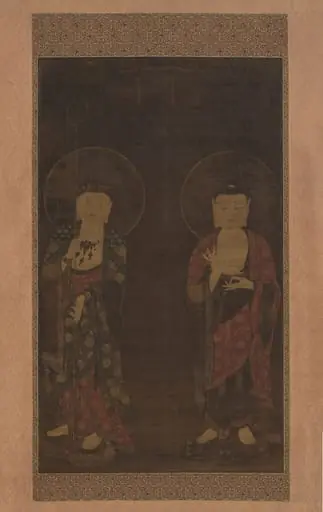 아미타불과 지장보살도 고려|阿彌陀佛・地藏菩薩圖 高麗|Amitabha and Kshitigarba
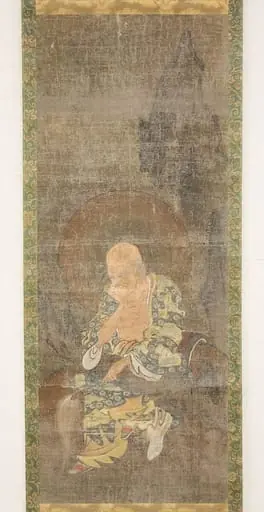
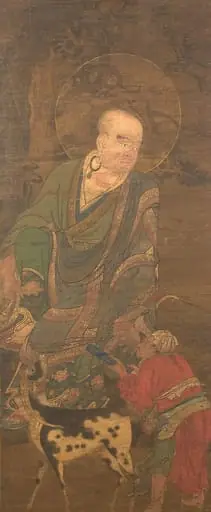 羅漢図|Rakan
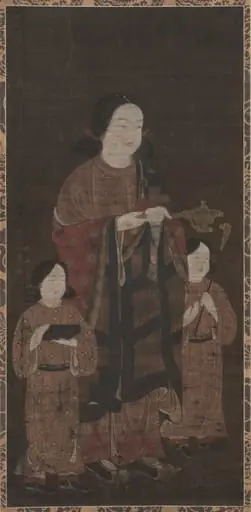 Shōtoku Taishi at Sixteen
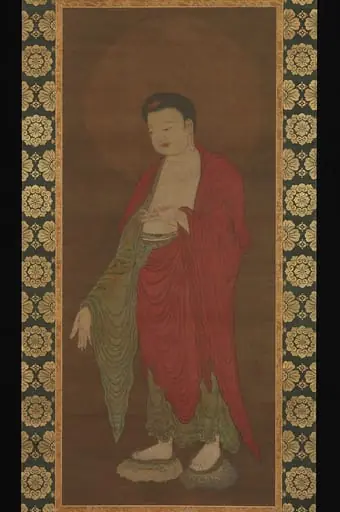 南宋 佚名 阿彌陀佛圖 軸|Buddha Amitabha Descending from his Pure Land
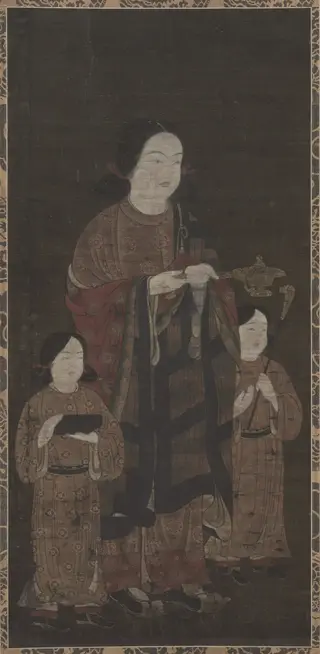 Shōtoku Taishi at Sixteen
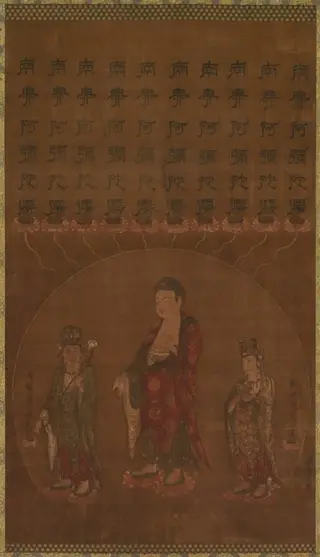 Buddha Amitābha with Two Attending Bodhisattvas
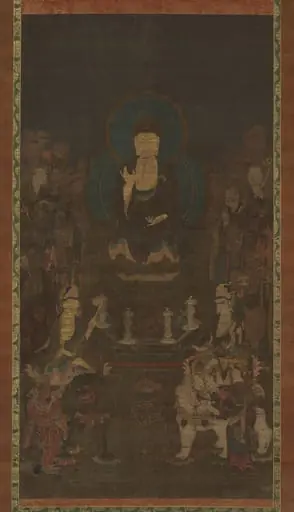 釈迦三尊十大弟子像|Shaka (Shakyamuni), the Historical Buddha, with Two Attendant Bodhisattvas and the Ten Great Disciples
 Seated Arhat with Two Attendants
 羅漢図|Rakan