Artwork
Shōtoku Taishi at Sixteen
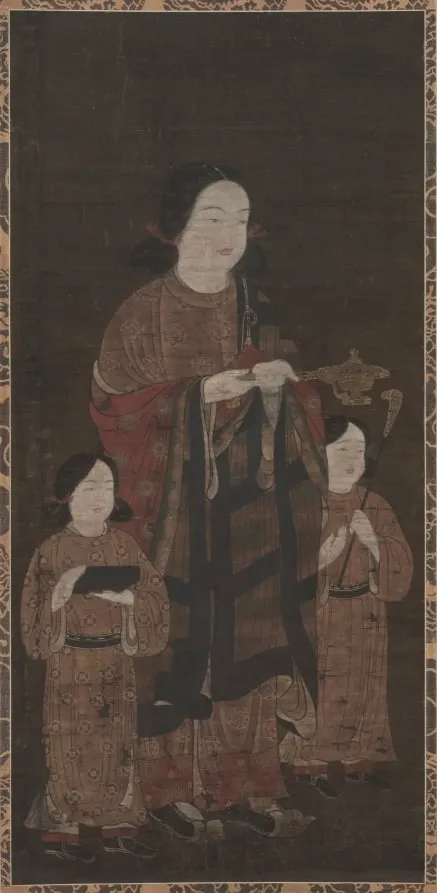
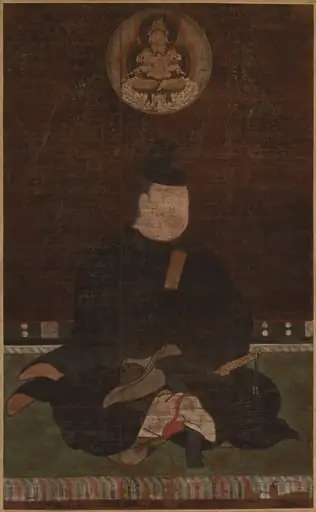
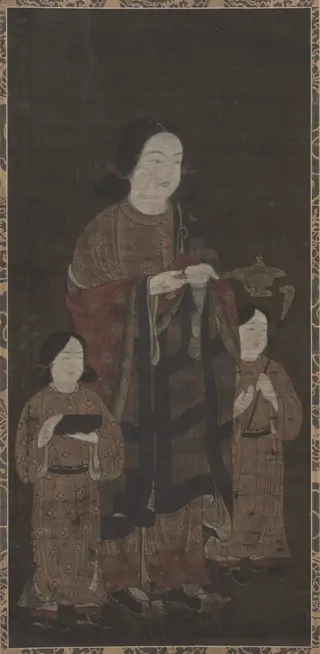
Shōtoku Taishi at Sixteen is an unspecified painting by the Joseon dynasty painting artist Unknown. It dates from 1500 and is held in the collection of the Cleveland Museum of Art. The work portrays a sixteen‑year‑old Prince Shōtoku in Buddhist attire, holding a lit incense burner while two attendants stand beside him.
- Accession no.
- 1964.278
- Credit line
- Severance and Greta Millikin Collection
About this work
This painting shows Shōtoku Taishi, a real prince from the 500s, but it was made nearly 1,000 years later.
A young prince in gold robes holds a smoking incense burner. Two boys stand beside him, one carries a book box, the other a curved staff. The prince is praying for his sick father, the emperor.
This painting shows Shōtoku Taishi, a real prince from the 500s, but it was made nearly 1,000 years later. The artist copied an older style to honor him. The gold leaf and careful lines make it feel like a sacred object, not just a picture.
To see more art like this, look up Japan, Muromachi period (1392–1573).
Overview
The work portrays a sixteen‑year‑old Prince Shōtoku in Buddhist attire, holding a lit incense burner while two attendants stand beside him. One attendant carries a box of scriptures, the other a curved nyoi scepter. The scene depicts the young regent praying for his ailing father, Emperor Yōmei, whose subsequent recovery is linked to the acceptance of Buddhism.
Subject & Meaning
Shōtoku is shown as a devout intermediary, invoking Buddhist aid for his father’s illness. The presence of the scripture box and ceremonial staff underscores the ritual context, while the incense burner symbolizes purification. The composition conveys the narrative that the emperor’s recovery, attributed to Shōtoku’s prayers, led to the imperial endorsement of Buddhism in Japan.
Technique & Style
Executed in the refined brushwork of the late medieval period, the painting employs gold leaf backgrounds and precise line work that lend it a devotional aura. The figures are rendered with delicate contours and a restrained palette, echoing earlier courtly styles while reflecting the artist’s intent to honor the historic prince through a reverent visual language.
History & Provenance
Although it depicts a historical figure from the sixth century, the painting was created roughly a millennium later, during the Muromachi era. The artist deliberately adopted an older aesthetic to evoke the antiquity of Shōtoku’s legacy, and the work has been preserved as a ceremonial object rather than a purely decorative piece.
Context
The image belongs to the broader corpus of Japanese court paintings that celebrate the introduction of Buddhism under imperial patronage. Produced in the 14th–16th centuries, it aligns with a period of renewed interest in early Japanese history and the legitimization of Buddhist practice through royal narratives.
Artist & collection