Artwork
Seated Arhat with Two Attendants
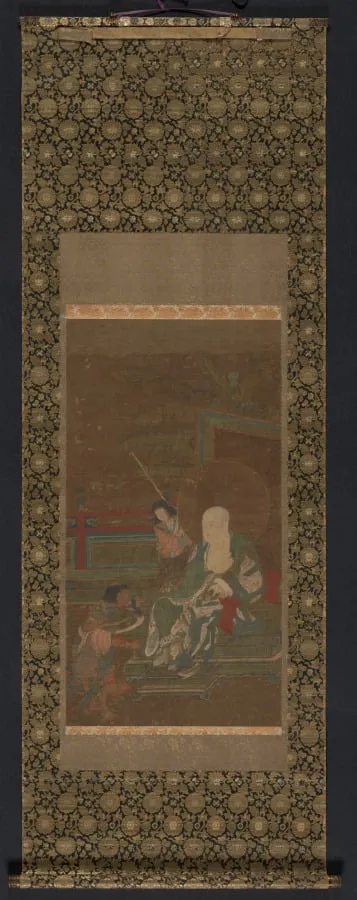
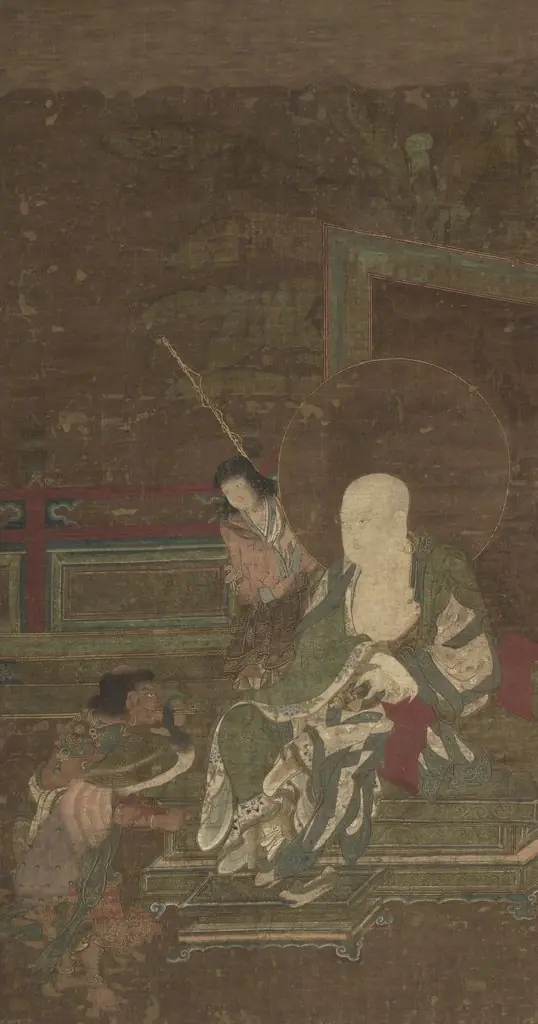
Seated Arhat with Two Attendants is an unspecified painting by Unknown. It dates from 1204 and is held in the collection of the Cleveland Museum of Art. The work is a Chinese hand‑scroll painting depicting a seated arhat, a revered disciple of the historical Buddha.
- Accession no.
- 1976.91
- Credit line
- John L. Severance Fund
About this work
The artist made the main figure much bigger than the others, so your eye goes straight to him.
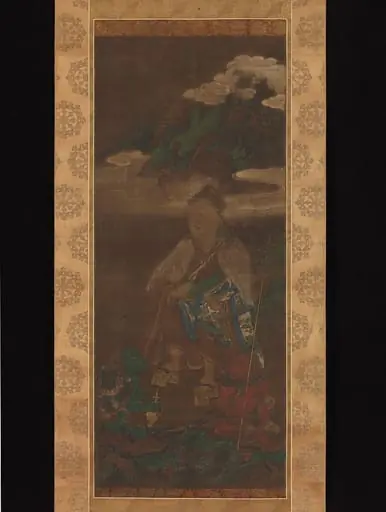
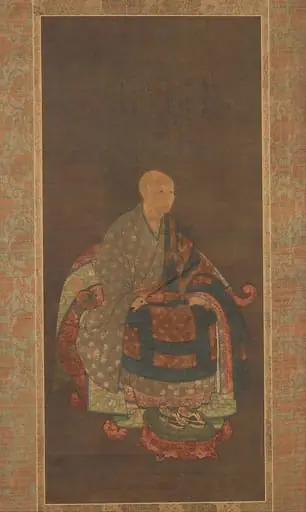
A robed man sits on a rock under a gnarled tree, one hand raised. Two smaller figures stand beside him, one holds a scroll, the other carries a wild goose. The man’s face is calm, almost hidden under heavy brows.
This painting comes from a set of scrolls showing Buddhist disciples called arhats. The artist made the main figure much bigger than the others, so your eye goes straight to him. The wild goose wasn’t just a gift, it was a symbol of freedom in Chinese art.
To see more like this, look up china, southern song dynasty (1127-1279).
Overview
The work is a Chinese hand‑scroll painting depicting a seated arhat, a revered disciple of the historical Buddha. Executed on paper, the composition presents the monk on a rocky ledge beneath a twisted tree, flanked by two diminutive figures, one bearing a scroll, the other presenting a wild goose. The arhat’s serene expression and raised hand dominate the visual field, drawing immediate attention.
Subject & Meaning
Arhats, known in Chinese as luóhàn, are traditionally shown in groups ranging from sixteen to five hundred. In this piece the central figure is rendered on a grand scale, emphasizing his spiritual authority. The attendant with the scroll suggests scriptural learning, while the offering of a wild goose alludes to the bird’s symbolic association with freedom and transcendence in Chinese Buddhist iconography.
Technique & Style
The artist employs delicate brushwork to delineate the rugged rock and gnarled tree, contrasting with the smoother rendering of the monk’s robes. Subtle ink washes create atmospheric depth, while the figures’ proportions are deliberately exaggerated to foreground the arhat. The composition balances linear outlines with tonal shading, characteristic of Southern Song court painting.
History & Provenance
The scroll belongs to a larger series illustrating Buddhist disciples, likely produced during the Southern Song dynasty (1127‑1279). Such series were often commissioned for monastic or elite private collections, serving both devotional and decorative purposes. The surviving piece reflects the period’s interest in individualized portraiture of holy figures.
Context
During the Southern Song era, Buddhist art increasingly focused on the personal qualities of enlightened beings rather than narrative scenes. This shift is evident in the painting’s emphasis on the arhat’s contemplative pose and the symbolic gifts presented by his attendants, aligning with contemporary meditative practices.
Legacy
The work exemplifies the Southern Song’s refined aesthetic and its integration of symbolic motifs, influencing later Chinese Buddhist visual culture. Its treatment of scale and iconography informs scholarly understanding of how arhat iconography evolved from collective representations to individualized, devotional images.
Artist & collection