Artwork
釈迦三尊十大弟子像|Shaka (Shakyamuni), the Historical Buddha, with Two Attendant Bodhisattvas and the Ten Great Disciples
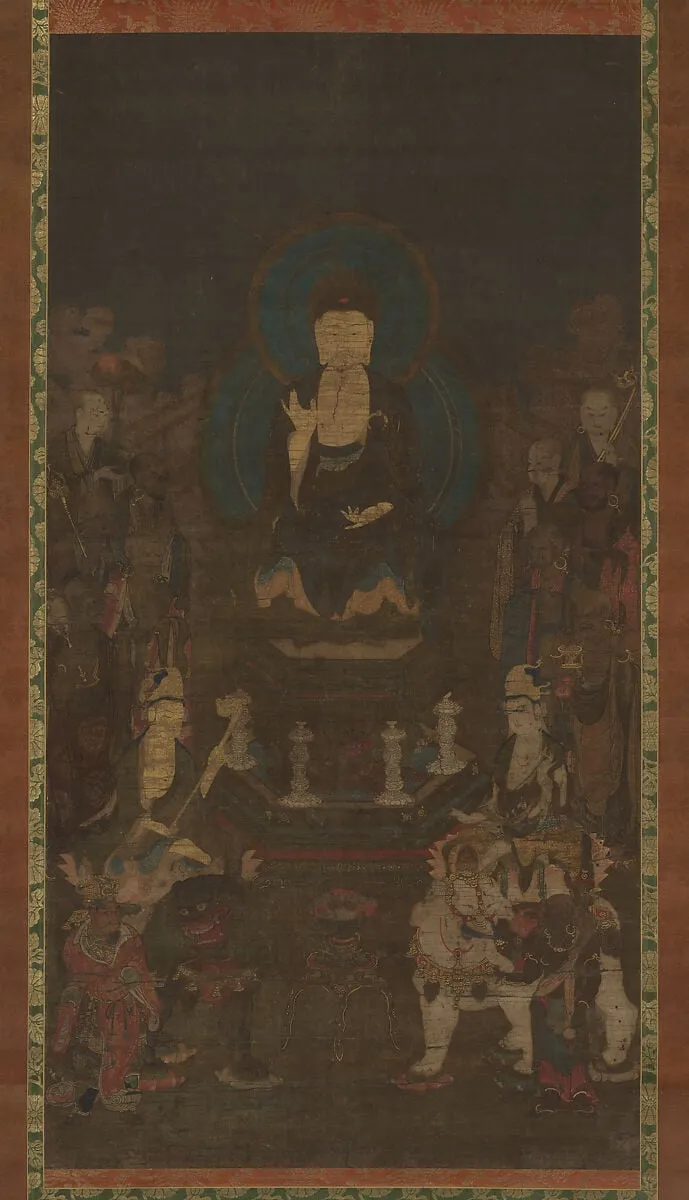
釈迦三尊十大弟子像|Shaka (Shakyamuni), the Historical Buddha, with Two Attendant Bodhisattvas and the Ten Great Disciples is an ink painting. It dates from 1316 and is held in the collection of the Metropolitan Museum of Art.
About this work
A tall silk scroll: a golden Buddha on a lotus, flanked by two bodhisattvas, with ten disciples ranged in rows below and tiny elephants bearing offerings along the border. Made for a Japanese temple around 1300, it survives in near-perfect shape, the silk kept rolled away for centuries.
Subject & Meaning
The presence of an elephant in the composition alludes to the Buddha’s birth, as he is traditionally associated with the white elephant of Queen Maya’s dream.
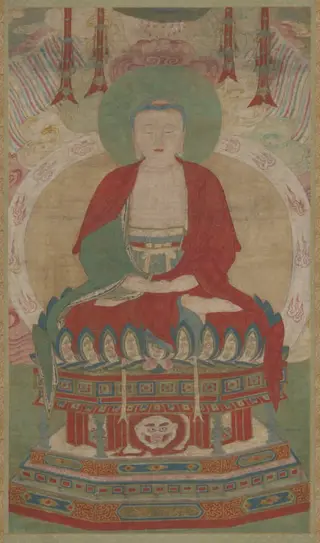
The hanging scroll depicts Shakyamuni, the Historical Buddha, flanked by two attendant bodhisattvas and accompanied by the Ten Great Disciples. Iconographically, the central figure of Shakyamuni is shown in a meditative posture, symbolizing enlightenment and the teaching of the Dharma. The attendant bodhisattvas represent compassion and wisdom, while the Ten Great Disciples embody the historical followers of the Buddha, illustrating the transmission of Buddhist teachings.
The presence of an elephant in the composition alludes to the Buddha’s birth, as he is traditionally associated with the white elephant of Queen Maya’s dream. Together, these elements convey the core Buddhist narrative of enlightenment, spiritual guidance, and the continuity of the faith through discipleship.
Technique & Style
The painting is executed on silk using ink, color, and gold, arranged as a hanging scroll. The figures are rendered with fine mineral pigments and delicate ink washes, while gold is applied selectively for halos and decorative accents. Stylistic features include attenuated forms, serene facial types, and softly modulated drapery folds, consistent with Kamakura-period Buddhist iconography.
The handling emphasizes linear grace and subtle shading rather than volumetric modeling, and the composition balances symmetrical arrangement with individualized postures among the twelve figures.
History & Provenance
The hanging scroll titled 釈迦三尊十大弟子像|Shaka (Shakyamuni), the Historical Buddha, with Two Attendant Bodhisattvas and the Ten Great Disciples was created in Japan in 1316 by an anonymous painter. Executed in ink, color, and gold on silk, the work depicts the Buddha Shakyamuni together with two attendant bodhisattvas and the ten great disciples, including imagery of a Buddha, bodhisattvas, and an elephant. Its inception is recorded as 1316, placing its production in the early 14th century.
The painting entered the collection of the Metropolitan Museum of Art, where it remains owned by the museum. Provenance details indicate creation in Japan followed by acquisition by the museum, though specific commissioning information is not recorded.
Context
The work is an anonymous Japanese hanging scroll dated 1316, executed in ink, color, and gold on silk, and housed in the Metropolitan Museum of Art. Its religious genre and iconography, depicting Shakyamuni Buddha, two attendant bodhisattvas, and the ten great disciples, reflect the devotional emphasis of late Kamakura‑period Buddhist art. The painting’s attribution to an unnamed master and its inclusion in the museum’s collection have made it a reference point for scholars studying the stylistic development of Buddhist narrative painting in Japan.
Overview
This hanging scroll, executed in ink, color, and gold on silk, depicts Shaka (Shakyamuni), the historical Buddha, accompanied by two attendant bodhisattvas and his ten principal disciples. Created around 1300 for a Japanese temple, the central golden Buddha is seated on a lotus, flanked by two smaller sacred figures, with the disciples arranged in rows beneath them. The lower border features tiny elephants bearing offerings, completing the devotional scene.
Artist & collection

- Shakyamuni with the Sixteen Benevolent Deities
 釈迦三尊十六善神像|Shaka (Shakyamuni), the Historical Buddha, with Two Attendant Bodhisattvas and Sixteen Benevolent Deities
 Shakyamuni Triad: Buddha Attended by Manjushri and Samantabhadra
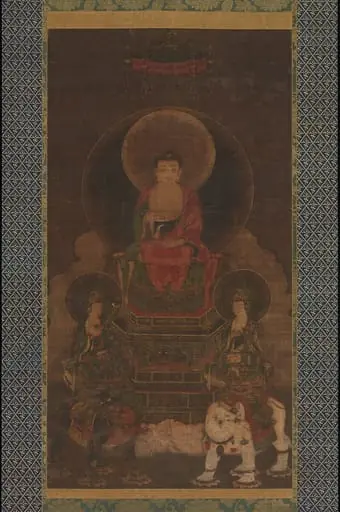 釈迦三尊像|Shaka (Shakyamuni) Triad
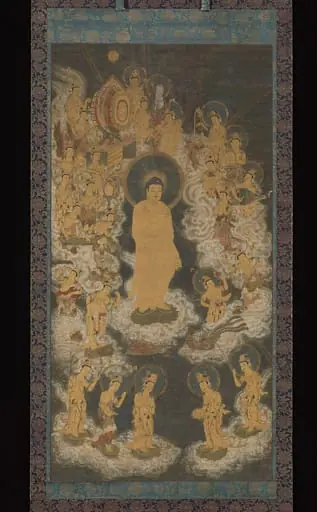 阿弥陀聖衆来迎図 |Welcoming Descent of Amida and Bodhisattvas
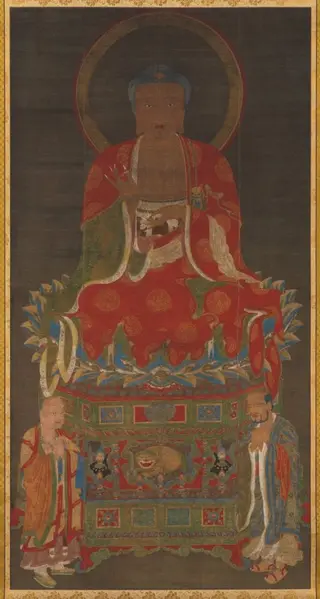 Shakyamuni with two attendants
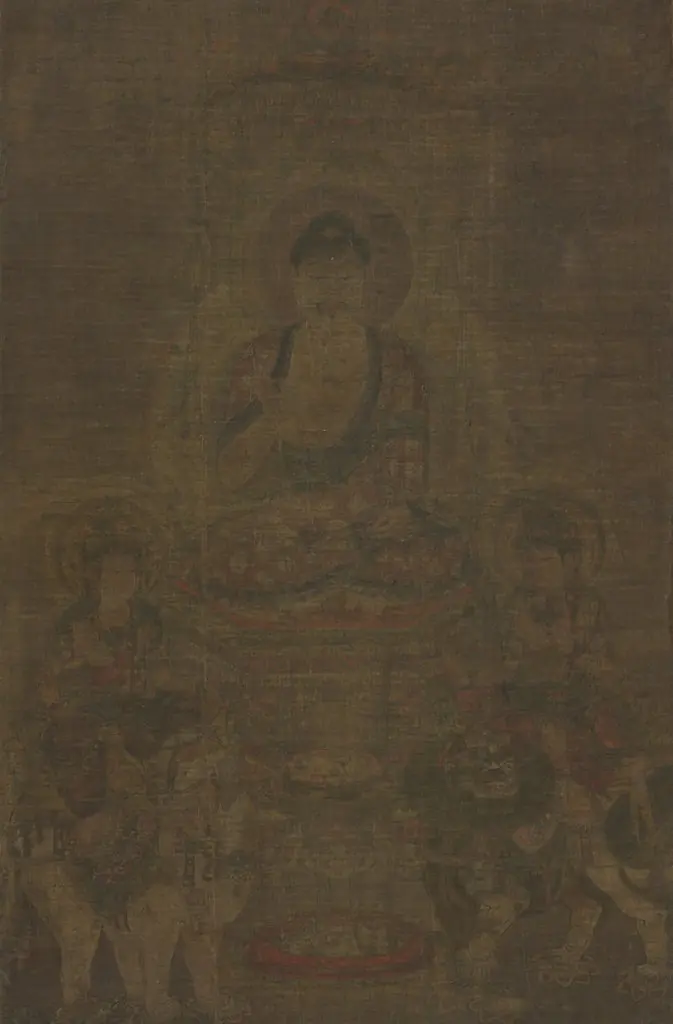 Shakyamuni Triad: Buddha Attended by Manjushri and Samantabhadra
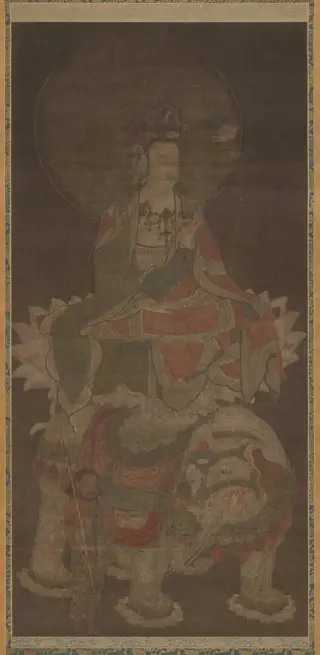 Samantabhadra
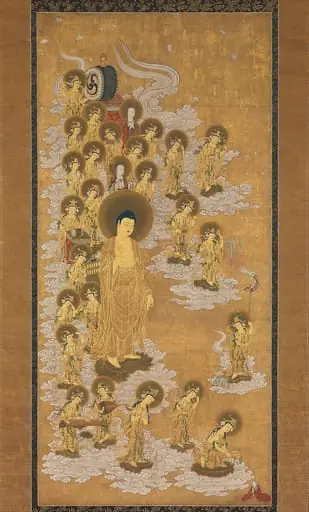 阿弥陀二十五菩薩来迎図|Welcoming Descent of Amida Buddha and Twenty-five Bodhisattvas
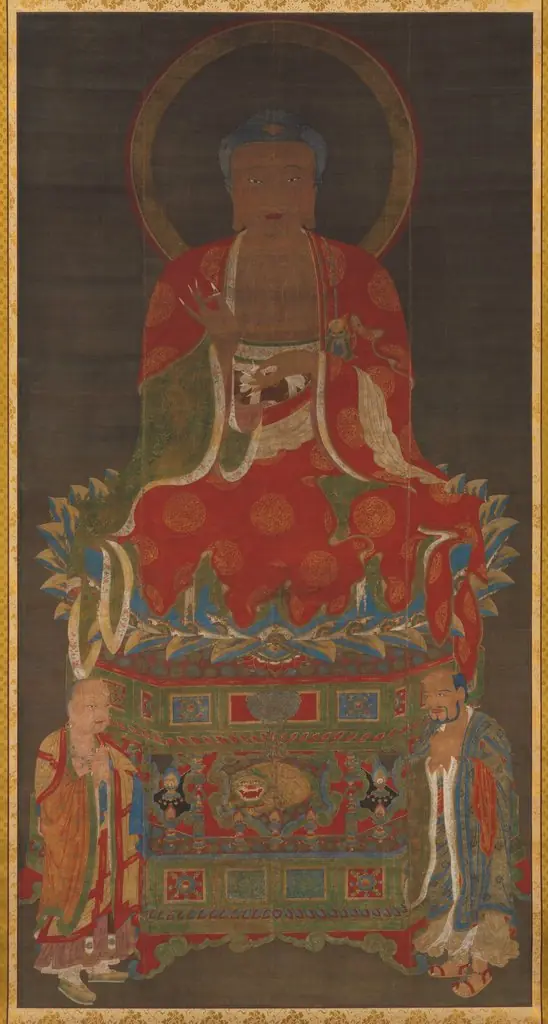 Shakyamuni with two attendants
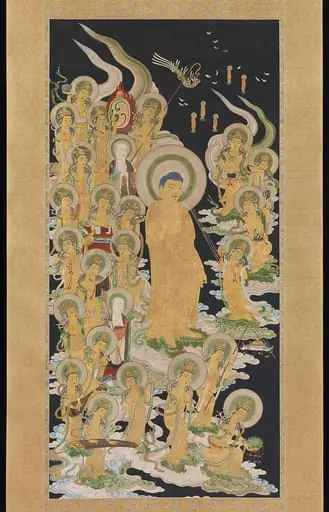 阿弥陀二十五菩薩来迎図|Buddha and Attendants
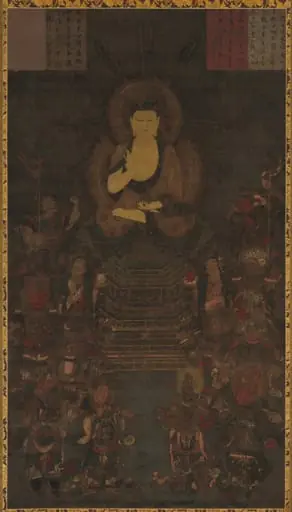 Medicine Master Buddha and the Twelve Divine Generals
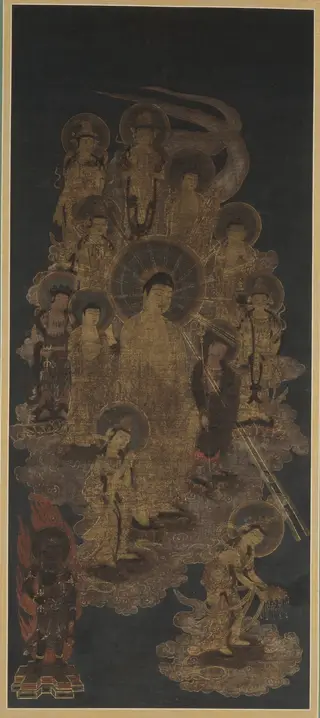 Thirteen Buddhas Welcoming the Dying Believer to the Western Pure Land
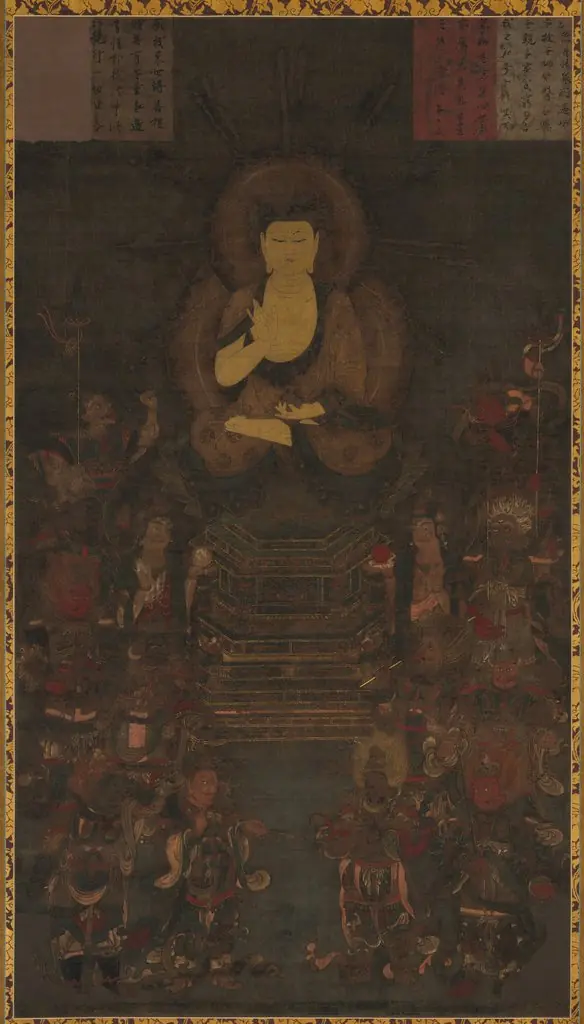 Medicine Master Buddha and the Twelve Divine Generals
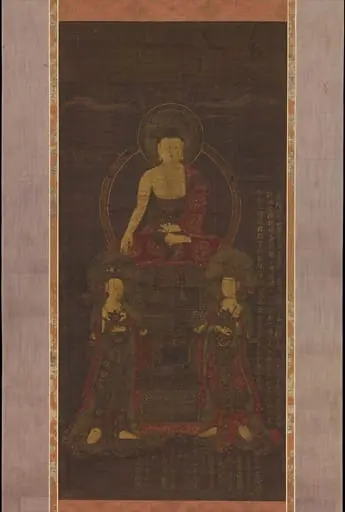 석가삼존도 조선|釋迦三尊圖 朝鮮|Shakyamuni triad
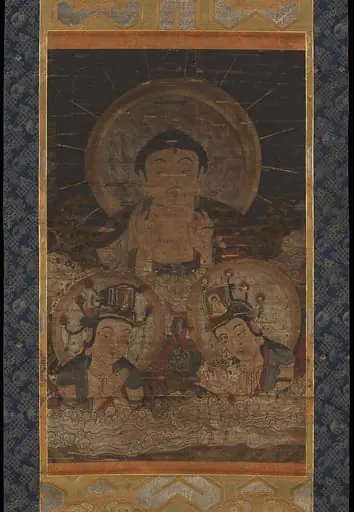 Untitled
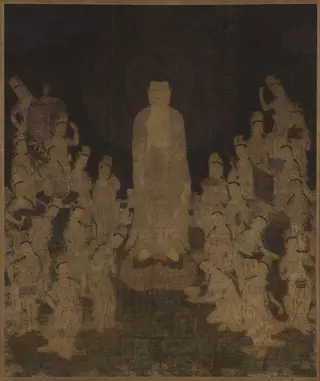 Welcoming Descent of Amida with Twenty-Five Bodhisattvas
 Lohans
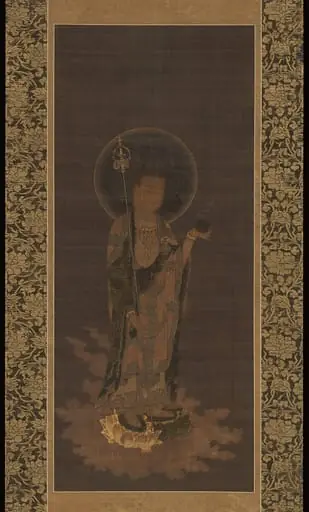 地蔵菩薩来迎図|Welcoming Descent of the Bodhisattva Jizō
 Seated Amitābha