Artwork
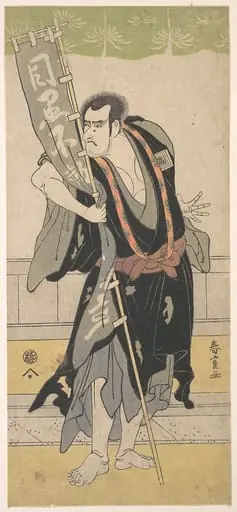
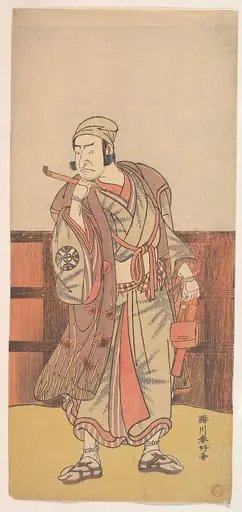
Nakamura Nakazo I as a Townsman Holding an Anchor
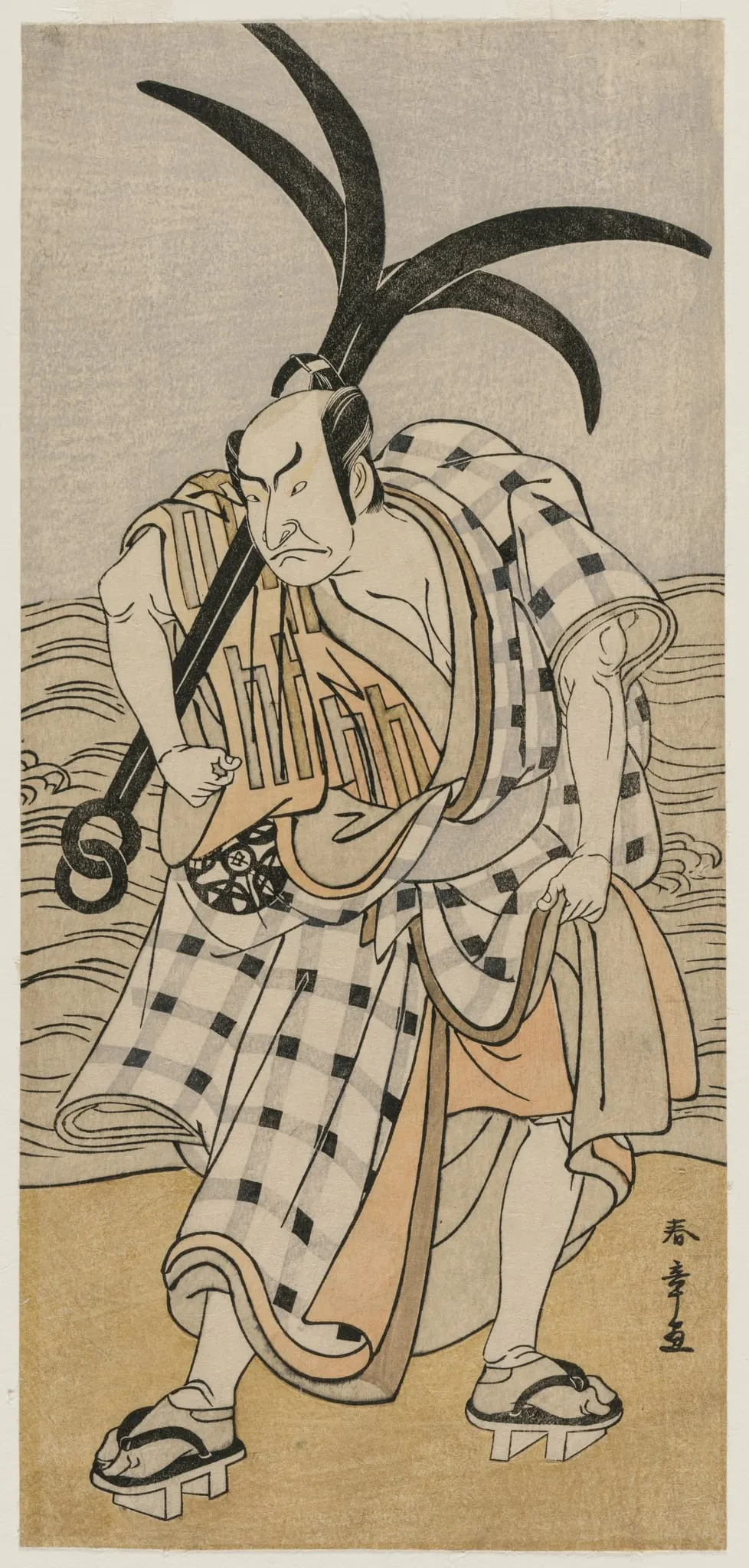
Nakamura Nakazo I as a Townsman Holding an Anchor is a print by the Romanticist artist Katsukawa Shunshō. It dates from 1780 and is held in the collection of the Cleveland Museum of Art.
- Accession no.
- 1921.1264
- Credit line
- Gift from J. H. Wade
About this work
Overview
Katsukawa Shunshō's print Nakamura Nakazo I as a Townsman Holding an Anchor, circa 1780, depicts the actor in a non-traditional role. Held at The Cleveland Museum of Art, the work showcases the artist's interpretation of a renowned figure in an unusual context.
Subject & Meaning
The subject, Nakamura Nakazo I, is portrayed not in his theatrical persona but as a townsman, emphasizing the blurring of stage and everyday life. The anchor he holds may symbolize stability or a connection to the sea, contrasting with his urban attire.
Technique & Style
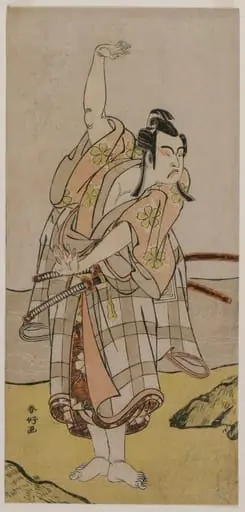
Executed in a simple yet effective style, the print features a muted gray background with subtle wavy lines suggesting a coastal setting. The figure's detailing, from the checkered robe to the curved feathers on his hat, highlights Shunshō's attention to texture and layering.
History & Provenance
Created around 1780, the print is a product of the Edo period. Its provenance leads to The Cleveland Museum of Art, though specific acquisition details are not provided here.
Context
While labeled under Romanticism in the visual note, this classification might be contextual or thematic rather than stylistically accurate for a Japanese ukiyo-e print of this period. The work more accurately reflects the nuances of Japanese Edo-period art, exploring the intersection of theatrical and civilian life.
Legacy
As part of Shunshō's oeuvre, the print contributes to the broader legacy of ukiyo-e in capturing the cultural and theatrical sensibilities of 18th-century Japan, though its individual impact or influence on subsequent art movements is not distinctly outlined in available information.
Artist & collection

Artist
Katsukawa Shunshō spent his life in Edo (now Tokyo), where the city’s teahouses and theaters buzzed with energy.