Artwork
Untitled
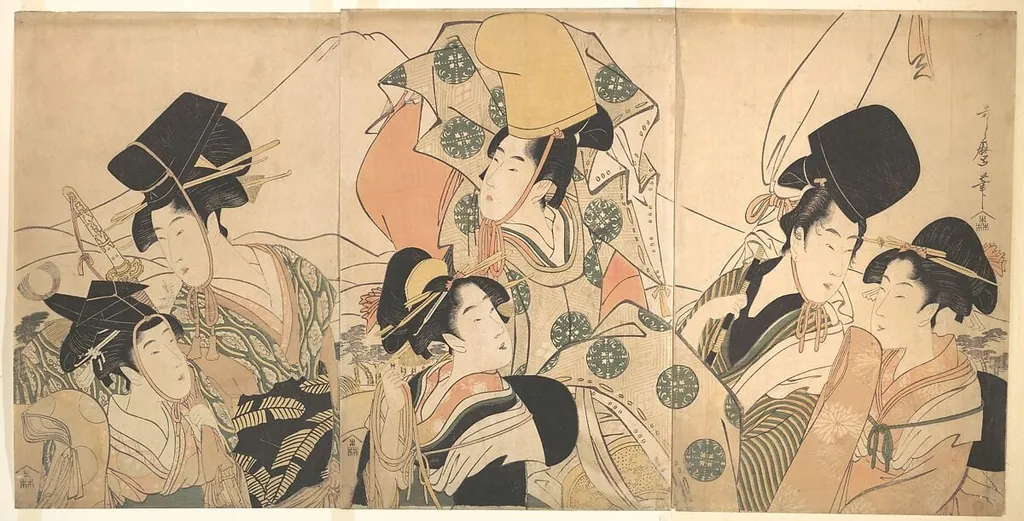
Untitled is an ink print by the Romanticist artist Kitagawa Utamaro. It dates from 1797 and is held in the collection of the Metropolitan Museum of Art.
About this work
Overview
Two of the women wear tall black hats, while the third sports a round, decorated headpiece, highlighting the variety of costume details rendered with precision.
Created in 1797, this triptych of woodblock prints by Kitagawa Utamaro depicts three women in elaborate, historical attire, a subject reflecting the artist's fascination with the past and the fashion of earlier eras. The composition arranges the figures closely together, emphasizing their expressive faces characterized by Utamaro's signature soft modeling, large eyes, and delicate features. Two of the women wear tall black hats, while the third sports a round, decorated headpiece, highlighting the variety of costume details rendered with precision.
The background is filled with swirling lines and patterns in muted tones of pink and green, creating a dynamic yet harmonious setting that contrasts with the stillness of the figures. This work exemplifies Utamaro's mastery of the bijin-ga (pictures of beautiful women) genre during his peak period, showcasing his ability to capture both the physical beauty and the psychological presence of his subjects. As a triptych, it demonstrates the artist's skill in composing across multiple sheets, a format often used for larger, more ambitious prints.
The piece remains a significant example of ukiyo-e portraiture, illustrating the cultural interest in historical fashion and the enduring appeal of Utamaro's idealized depictions of women in late 18th-century Japan.
Subject & Meaning
The three figures are portrayed in fashionable garments, two topped with tall black hats and the third with a rounded, ornamented headpiece. Their expressions are soft, with enlarged eyes and refined features that convey a sense of poised elegance. While no explicit narrative is supplied, the composition invites contemplation of contemporary ideals of beauty and femininity.
Technique & Style
Utamaro employs crisp outlines and simplified geometric forms to define the figures, while the hands and sleeves are rendered with fine, crisscrossed lines that create texture without heavy shading. The background is filled with swirling motifs in muted pink, green, and brown tones, providing a decorative contrast to the central subjects. The cross‑hatching technique underscores the artist’s mastery of line work in woodblock printing.
History & Provenance
The prints were produced in the late eighteenth century during the height of ukiyo‑e portraiture. After changing hands through private collections, the triptych entered the Metropolitan Museum of Art, where it remains on view as an example of Kitagawa Utamaro’s contribution to the genre of bijin-ga, or images of beautiful women.
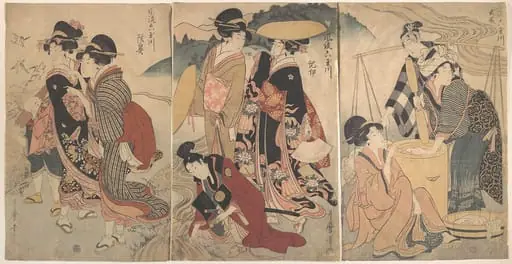
Artist & collection


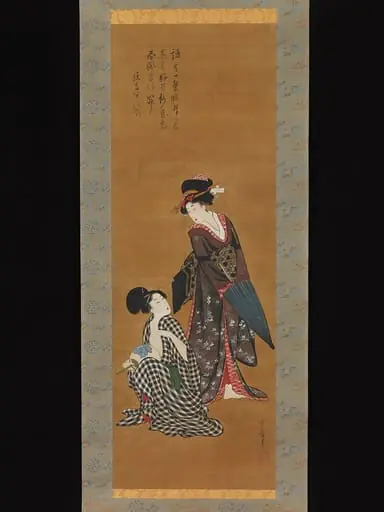 Untitled
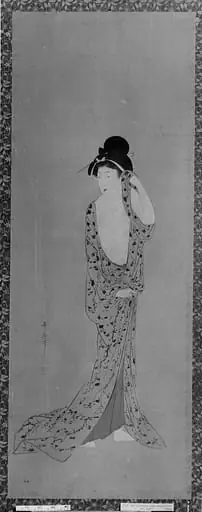 Untitled
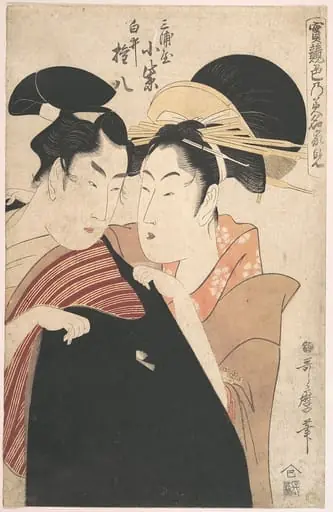 実競色乃美名家見 三浦屋小紫 白井権八|The Lovers Miura-ya Komurasaki and Shirai Gonpachi.
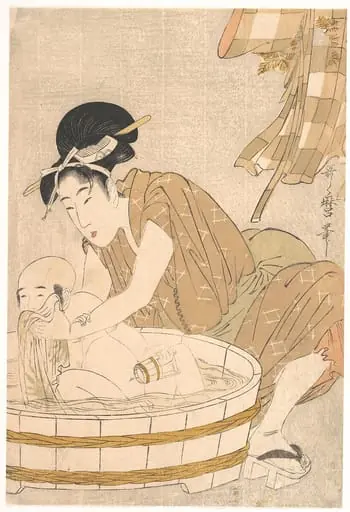 行水|Bathtime (Gyōzui)
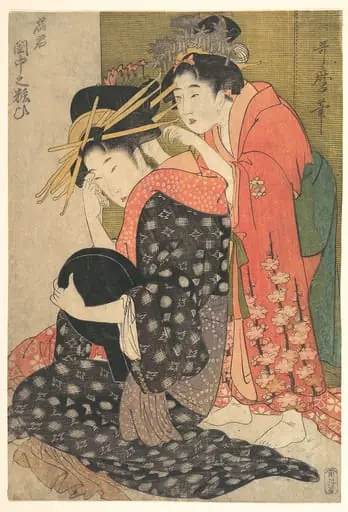 名君 閨中の粧ひ|The Oiran Yoso-oi Seated at Her Toilet
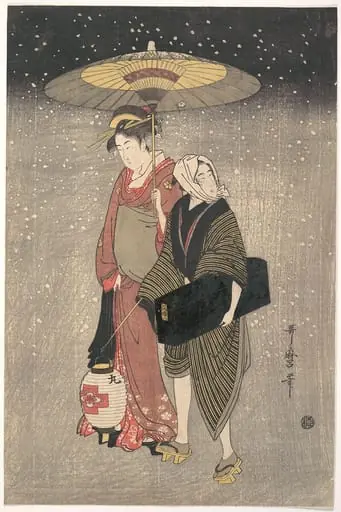 Untitled
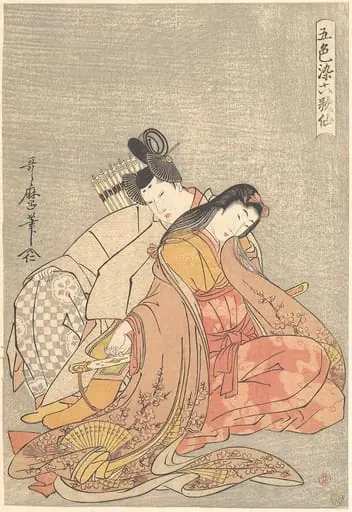 『五色染六歌仙』 在原業平と小野小町|“The Poet Ariwara no Narihira (825–880) and Ono no Komachi,” from the series Five Colors of Love for the Six Poetic Immortals (Goshiki-zome rokkasen)
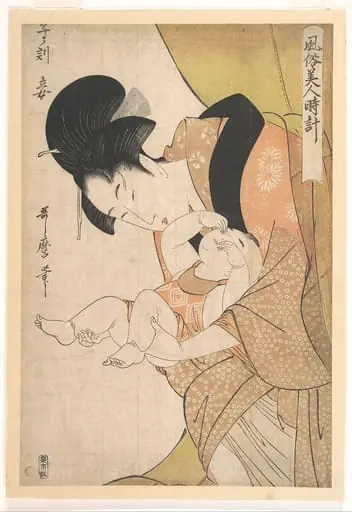 風俗美人時計 子ノ刻 妾|Midnight: Mother and Sleepy Child
- 風流六玉川 武蔵 紀伊 陸奥|Women and a Man in the Country; Some pageant(?)
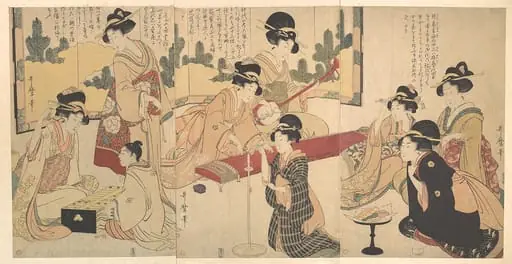 Untitled
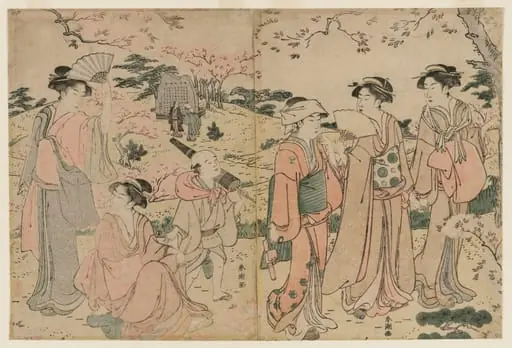 Women Viewing Cherry Blossoms at Asukayama
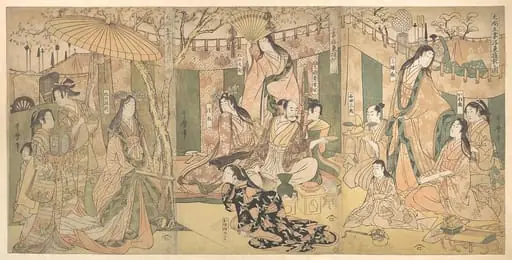 太閤五妻洛東遊観之図|A View of the Pleasures of the Taiko and His Five Wives at Rakutō
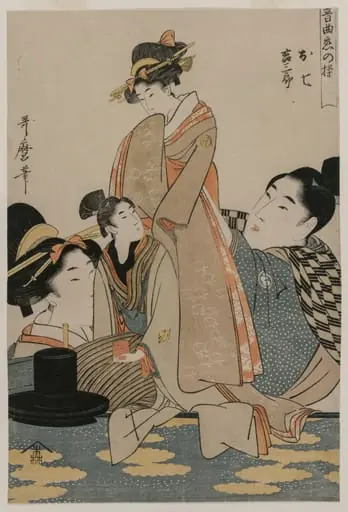 Oshichi and Kichisaburo (from the series Music on the Theme of Constancy in Love)
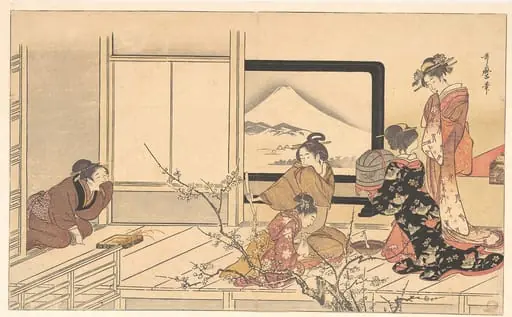 喜多川歌麿画 『男踏歌』 鶯の餌すり|“Preparing Food for the Warbler,” from the album Men’s Stamping Dance (Otoko dōka, uguisu no esa suri)
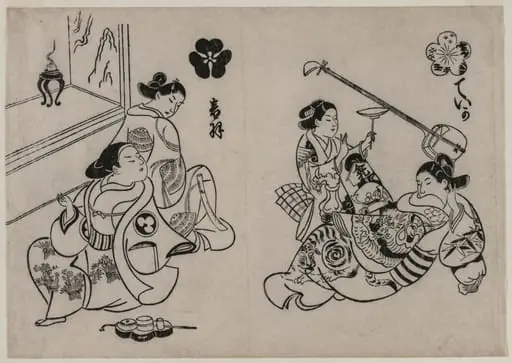 Three Courtesans with a Client
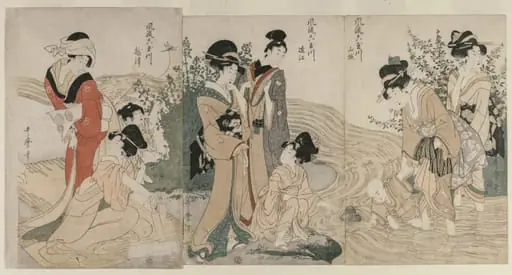 Musashi, Omi, Yamashiro, and Settsu Provinces from the series Fashionable Six Jewel Rivers (Furyu Mu Tamagawa)
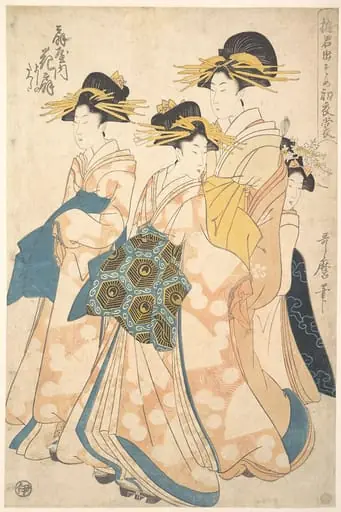 遊君出そめ初衣裳 扇屋内花扇|The Oiran Hanaogi of Ogiya attended by Two Shinzo and Her Kamuro Yoshino
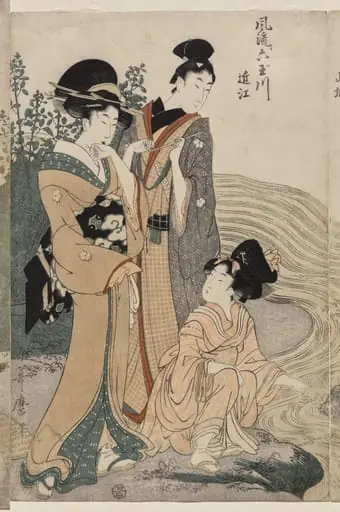 Omi Province from the series Fashionable Six Jewel Rivers (Furyu Mu Tamagawa)
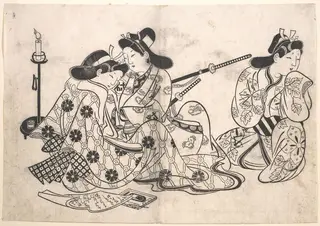 Untitled
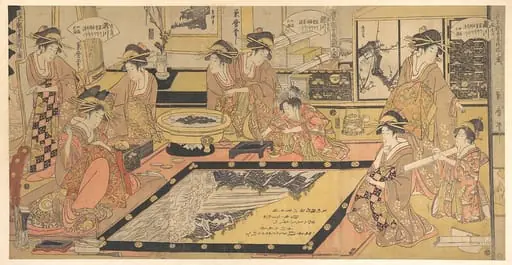 『浅草観音奉掛額之 図』 「扇屋内滝川 富川、粂川、玉川、津川、歌川、清川 め浪、お浪」|A Votive Picture to Be Donated to the Kannon of Asakusa (Asakusa Kannon hō kakegaku no zu), by Takigawa of the Ōgiya, Kamuro Menami and Onami, with Tomikawa, Kumegawa, Tamagawa, Tsugawa, Utagawa, and Kiyokawa