Artwork
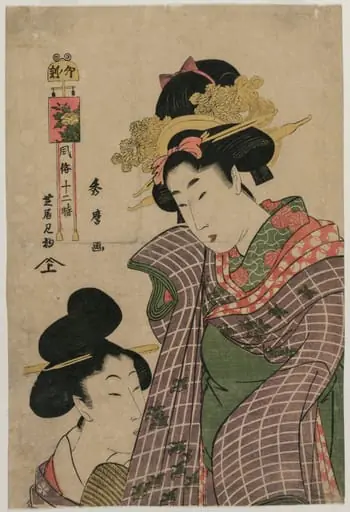
風流七小町 通ひ|Young MotHer Nursing Her Baby
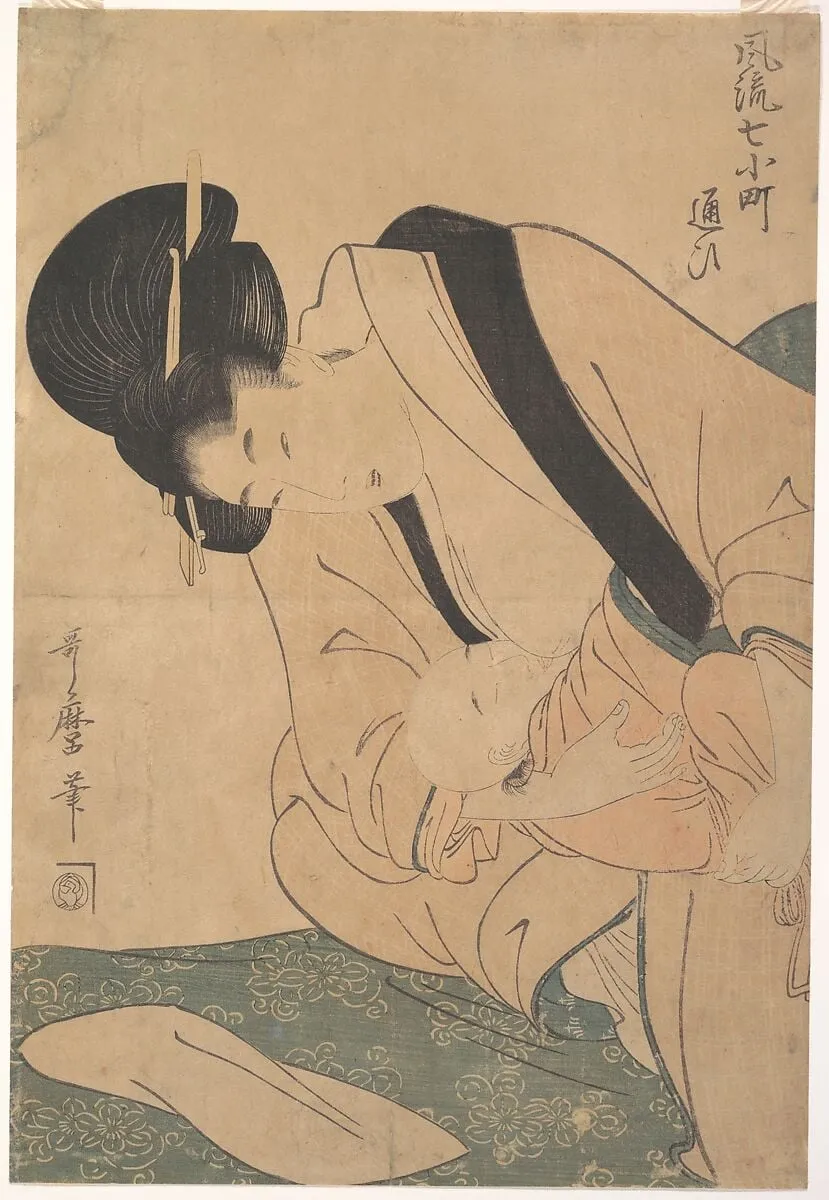
風流七小町 通ひ|Young MotHer Nursing Her Baby is an ink print by the Romanticist artist Kitagawa Utamaro. It dates from 1780 and is held in the collection of the Metropolitan Museum of Art.
- Accession no.
- JP1671
- Credit line
- H. O. Havemeyer Collection, Bequest of Mrs. H. O. Havemeyer, 1929
About this work
Subject & Meaning
The composition pairs the tenderness of maternal nurture with the elegance of an idealized beauty, a hallmark of Kitagawa Utamaro's bijin-ga tradition.
The print depicts a young mother nursing her infant, an intimate domestic scene centered on the act of lactation. The mother is shown with a young child at her breast, while the woman herself is adorned with kanzashi, the decorative hair ornaments characteristic of Edo-period fashion. The composition pairs the tenderness of maternal nurture with the elegance of an idealized beauty, a hallmark of Kitagawa Utamaro's bijin-ga tradition.
In ukiyo-e imagery, the nursing mother often signals themes of fertility, abundance, and the idealized feminine virtues of beauty and devotion. By rendering the subject with refined grooming and graceful posture, Utamaro elevates a private, everyday moment into a poetic vision of womanhood, where maternal care and aesthetic refinement are presented as complementary expressions of feminine ideal.
Technique & Style
This work by Kitagawa Utamaro is executed as a woodblock print utilizing ink and color applied to a paper support. The piece measures 25.4 cm in height and 37.3 cm in width. Stylistically, it belongs to the ukiyo-e genre and depicts a mother nursing her infant, with specific attention given to details such as the kanzashi hair ornament.
The composition focuses on the figures of the woman and child, capturing the intimate act of lactation within the traditional format of Japanese prints.
History & Provenance
The work Young Mother Nursing Her Baby is presently housed in the Metropolitan Museum of Art. No earlier owners, exhibitions, or transfers are mentioned in the sources, so its provenance before acquisition by the museum is undocumented. The sources also do not record any commission, specific date of creation, or details about the print’s production process.
Consequently, the full ownership chain, commissioning circumstances, dating, and creation history of the piece remain unknown based on the available information.
Context
The work is recognized as a ukiyo-e woodblock print by Kitagawa Utamaro, depicting a mother nursing her infant with attention to maternal details such as lactation and infant adornment like kanzashi. Scholars situate this image within Utamaro's broader exploration of domestic and intimate subjects, particularly his nuanced portrayals of women and childcare in Edo-period visual culture. Its inclusion in the Metropolitan Museum of Art's collection underscores its significance as part of the global reception and study of Japanese prints, linking it to canonical ukiyo-e genre themes while highlighting maternal subjectivity in pre-modern Japanese art.
Legacy
The work's legacy is anchored in its representation of maternal care within ukiyo-e, influencing later depictions of domestic intimacy in Japanese printmaking. Its presence in major collections such as the Metropolitan Museum of Art underscores its recognized significance in the history of Japanese art.
The piece is held in the collection of the Metropolitan Museum of Art.
It was created by Kitagawa Utamaro.
Overview
This woodblock print, created by Kitagawa Utamaro around 1780, is a serene depiction of a tender moment between a mother and her baby.
Artist & collection


 Untitled
 Untitled
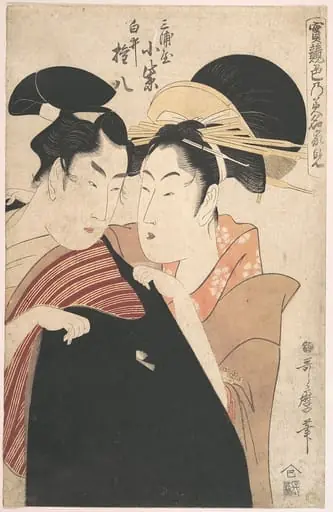 実競色乃美名家見 三浦屋小紫 白井権八|The Lovers Miura-ya Komurasaki and Shirai Gonpachi.
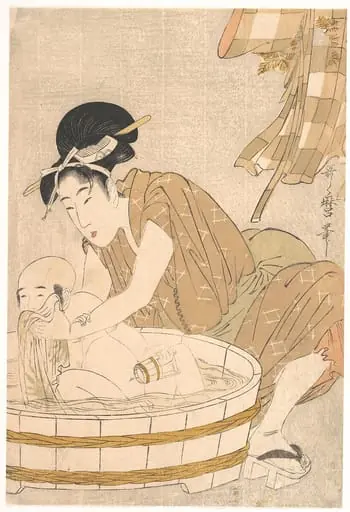 行水|Bathtime (Gyōzui)
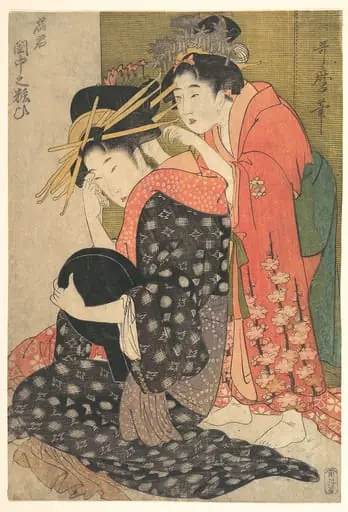 名君 閨中の粧ひ|The Oiran Yoso-oi Seated at Her Toilet
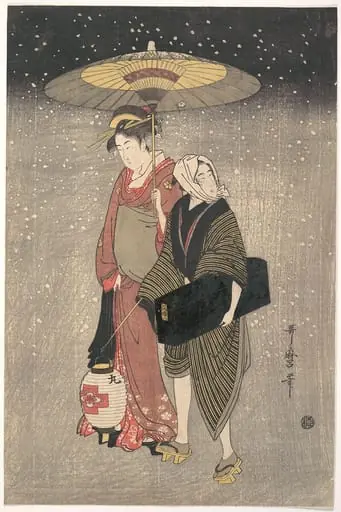 Untitled
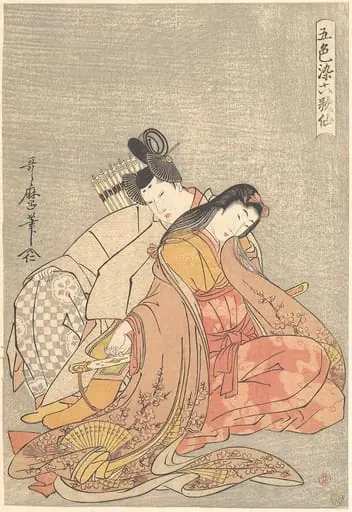 『五色染六歌仙』 在原業平と小野小町|“The Poet Ariwara no Narihira (825–880) and Ono no Komachi,” from the series Five Colors of Love for the Six Poetic Immortals (Goshiki-zome rokkasen)
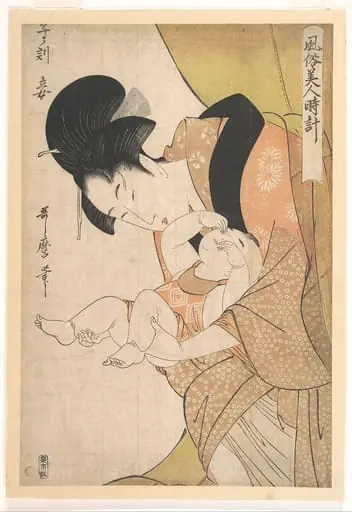
- 風俗美人時計 子ノ刻 妾|Midnight: Mother and Sleepy Child
 Untitled
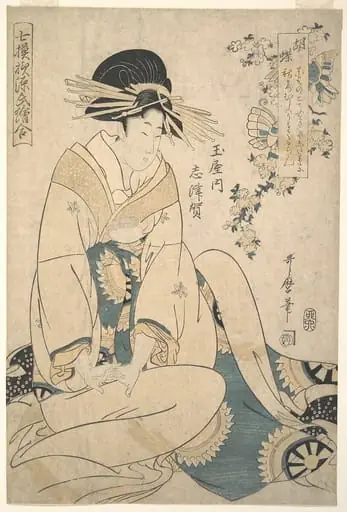 玉屋内 志津賀|A Courtesan
 Untitled
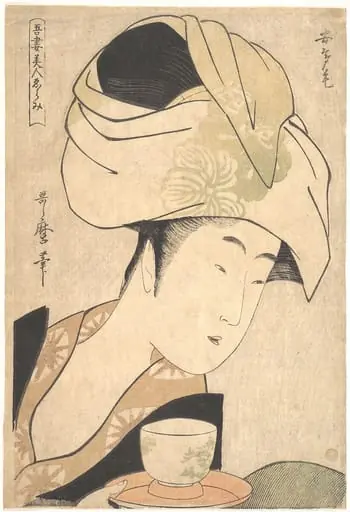 吾妻美人ゑらみ|A Tea-house Waitress
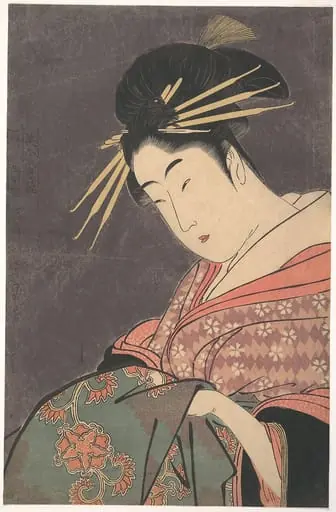 喜多川歌麿画 「美人気量競 五明楼 花扇」|“Hanaōgi of the Gomeirō,” from the series Comparing the Charms of Beauties (Bijin kiryō kurabe: Gomeirō Hanaōgi)
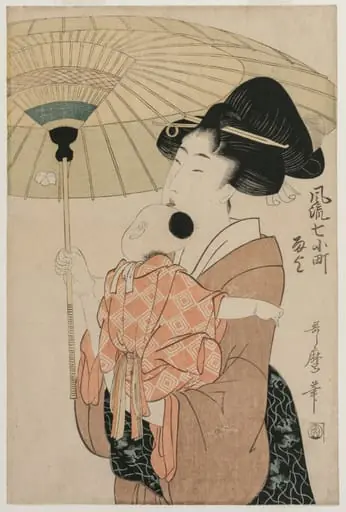 Prayers for Rain, from the series Seven Elegant Komachi
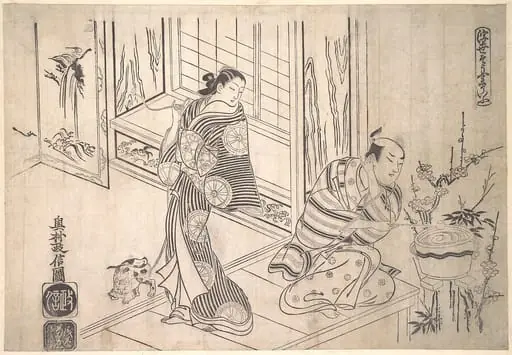 Untitled
 Going to the Kabuki Theater in the Hour of the Hare (From the Series The Twelve Hours with Daily Events)