Artwork
The Forge
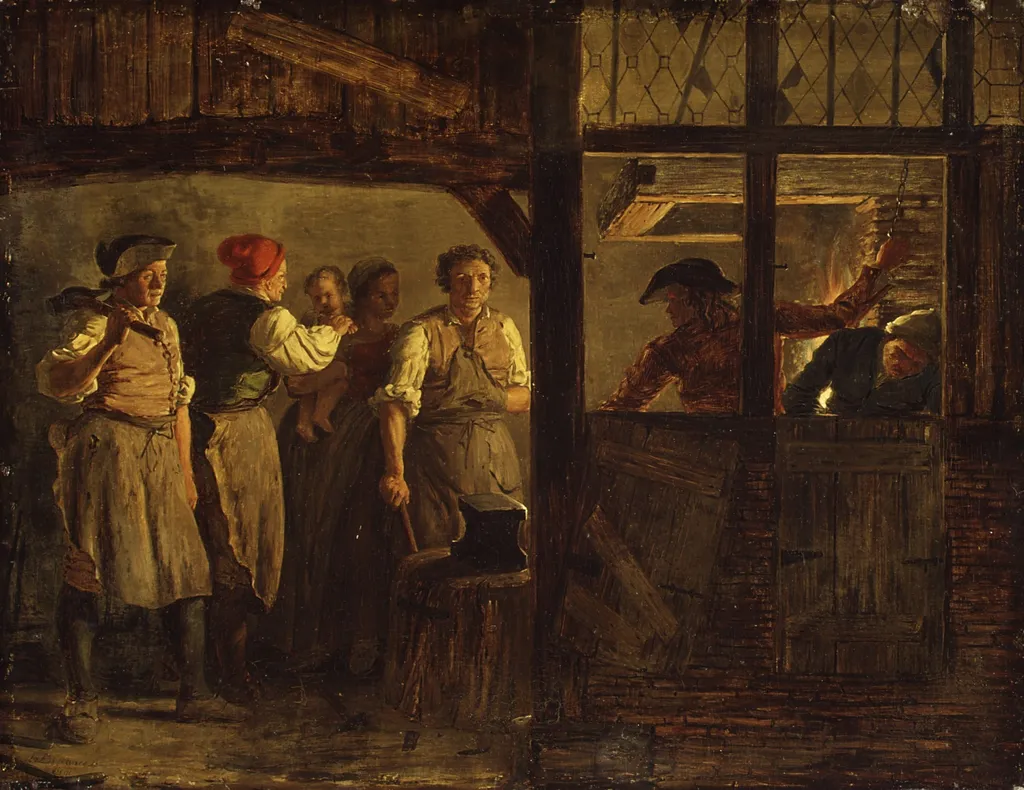
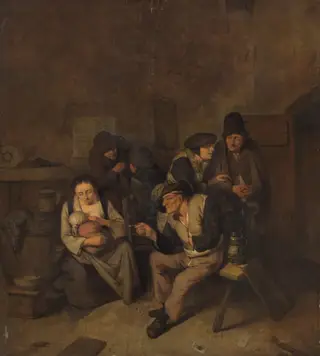
The Forge is an oil painting by the Rococo painting artist Léonard Defrance. It dates from 1790 and is held in the collection of the Metropolitan Museum of Art.
About this work
Technique & Style
The application of oil paint allows for the detailed rendering of these domestic and industrial elements within a compact format.
Executed in 1780, The Forge is an oil painting by Léonard Defrance created on a wooden panel support. The work measures 32.1 cm in height and 41.9 cm in width. Stylistically, the composition focuses on a genre scene depicting figures engaged in labor, specifically featuring a man, a woman, and an infant alongside tools such as a hammer.
The application of oil paint allows for the detailed rendering of these domestic and industrial elements within a compact format. The piece is currently held in the collection of the Metropolitan Museum of Art, having previously been owned by William T. Blodgett.
History & Provenance
The Forge is an oil painting by Léonard Defrance dated to 1780. According to the Wikidata record for the work, it was held in the collection of William T. Blodgett before entering the holdings of the Metropolitan Museum of Art, where it is currently located. The painting is executed in oil on panel.
Beyond these cataloged facts, the sources do not provide additional information regarding the circumstances of its commission, the identity of an original patron, or a more detailed chain of ownership linking Blodgett to the Met.
The Forge, an oil painting by Léonard Defrance dated 1780, is held in the collection of the Metropolitan Museum of Art. According to available records, the work was formerly owned by William T. Blodgett before entering the museum's holdings. The painting is executed in oil on panel and measures 32.1 cm in height by 41.9 cm in width. No specific exhibition history or accession number is documented in the available sources.
Context
The Forge, painted by Léonard Defrance in 1780, exemplifies late‑18th‑century French genre subjects that combine narrative detail with moral undertones. Its depiction of a craftsman, an infant and a woman, accompanied by tools such as a hammer, situates the work within Defrance’s broader exploration of domestic labor and familial interaction. The painting entered the collection of William T. Blodgett and is now housed in the Metropolitan Museum of Art, where it is catalogued as an oil on panel measuring 32.1 × 41.9 cm. Scholars have examined it as a representative example of the period’s interest in everyday scenes that blend anecdotal realism with symbolic commentary.
Overview
Léonard Defrance, a painter from Liège, completed The Forge in 1790. This oil painting depicts an interior scene centered around a blacksmith's workspace, populated by several figures engaged in various activities. The artwork is part of the collection at The Metropolitan Museum of Art, offering insight into late 18th-century genre painting.
Subject & Meaning
The painting presents a bustling forge interior where five individuals are depicted. Two women, one cradling an infant, stand near a table, while two men attend to the forge itself, one actively working with a hammer. Outside a window, two additional figures are visible, suggesting a colder, external environment.
This composition contrasts domesticity with industrial labor, hinting at the daily life and social dynamics of the period.
Own this work as a print
Artist & collection
Artist
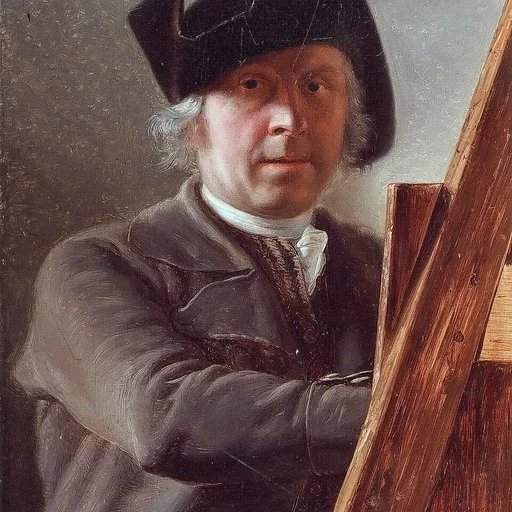
Léonard Defrance (French pronunciation: ), born at Liège in 1735, was a scholar of J.