Artwork
Allegory of Transitoriness
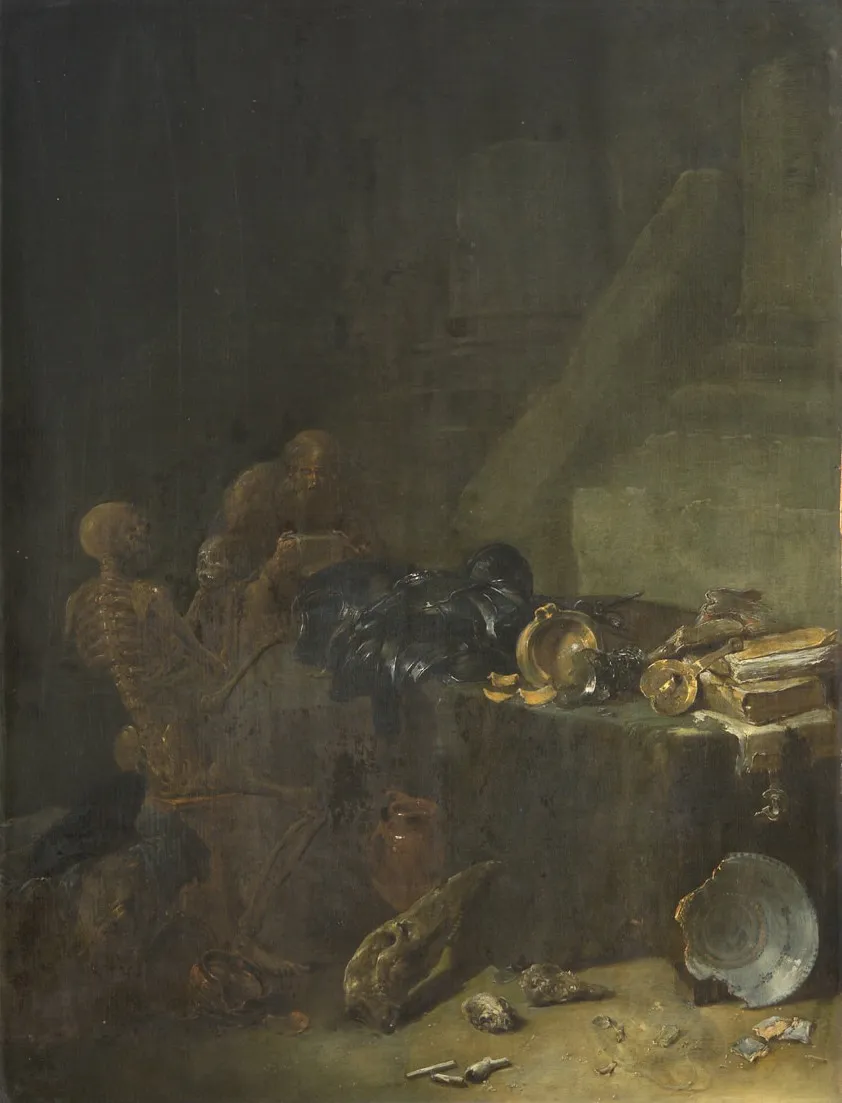
Allegory of Transitoriness is a wood painting by the Dutch Golden Age artist Leonaert Bramer. It dates from 1640 and is held in the collection of the Kunsthistorisches Museum.
About this work
Subject & Meaning
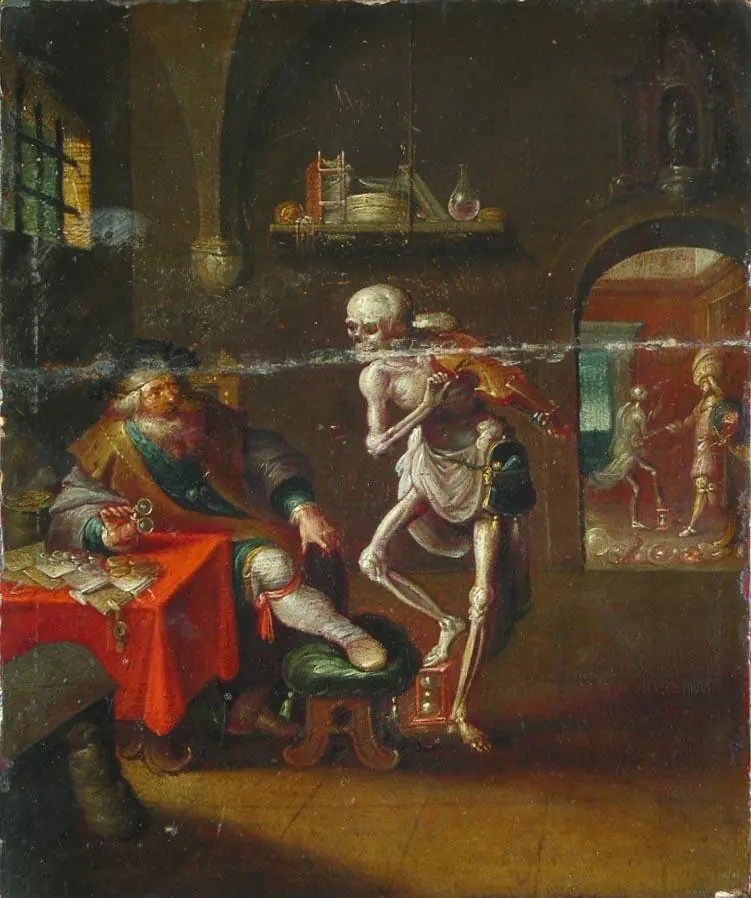
Leonaert Bramer's 1640 Allegory of Transitoriness allegorizes mortality through vanitas motifs. The painting depicts a skeleton wearing body armor alongside an old man, symbolizing the inevitability of death across all social standings. As part of the Kunsthistorisches Museum's collection in Vienna, the work employs typical allegorical conventions to convey the fleeting nature of life.
Technique & Style
Visually, the composition incorporates vanitas elements, featuring a skeleton alongside figures such as an old man and representations of body armor.
Executed in 1640, this allegorical panel by Leonaert Bramer utilizes oil paint applied to an oak wood support. The work measures 81.3 cm in height and 62 cm in width. Visually, the composition incorporates vanitas elements, featuring a skeleton alongside figures such as an old man and representations of body armor. These formal components serve the painting's thematic focus on transitoriness through a structured arrangement of symbolic imagery.
History & Provenance
Leonaert Bramer created Allegory of Transitoriness in 1640. Executed on an oak panel, the work measures 81.3 cm in height and 62 cm in width and depicts vanitas imagery such as a skeleton, body armor, and an elderly figure. It is held in the collection of the Kunsthistorisches Museum in Vienna, recorded as its owner.
No intermediate ownership records or specific commissioning patron are detailed in the available documentation, nor is a specific accession number or exhibition history provided.
Legacy
The painting is discussed as an example of 17th-century vanitas symbolism, its juxtaposition of a skeleton in armor with an aged figure illustrating the theme of ephemerality in Northern European art. It remains part of the permanent collection at the Kunsthistorisches Museum in Vienna, where it is studied as an example of Bramer's engagement with temporal transience.
Overview
Created in 1640 by Dutch painter Leonaert Bramer, this oil work on oakwood belongs to the period known as the Dutch Golden Age. The composition presents a dimly lit interior filled with discarded war objects, a skeletal figure, and an elderly man, all arranged to emphasize the fleeting nature of human existence. The painting is part of the permanent collection of the Kunsthistorisches Museum in Vienna.
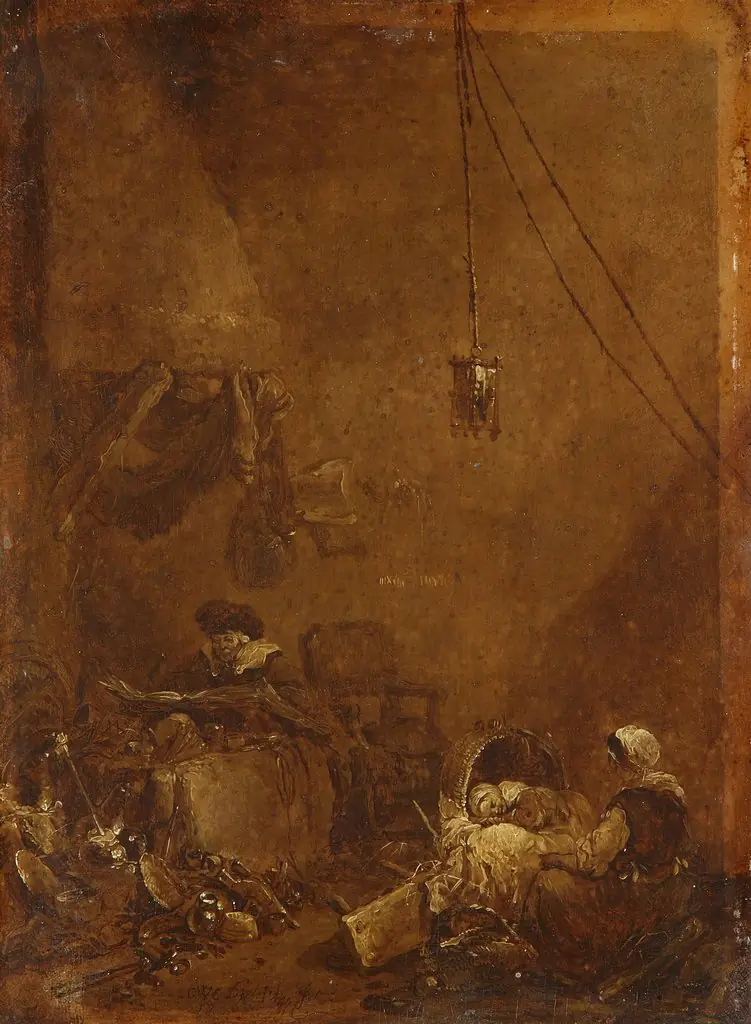
Artist & collection
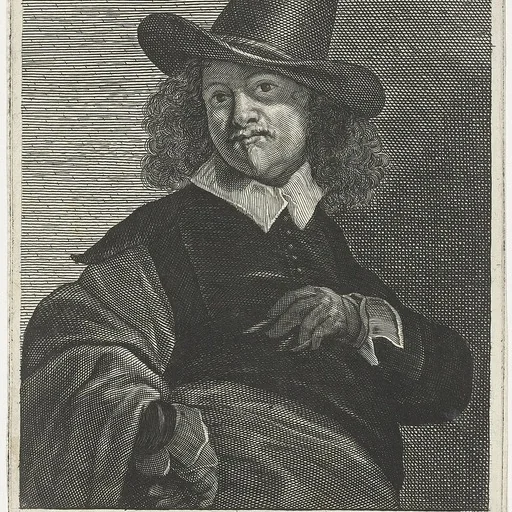
Artist
Leonaert Bramer, also Leendert or Leonard (24 December 1596 – before 10 February 1674 (date of burial)), was a Dutch painter known primarily for genre, religious, and history paintings.

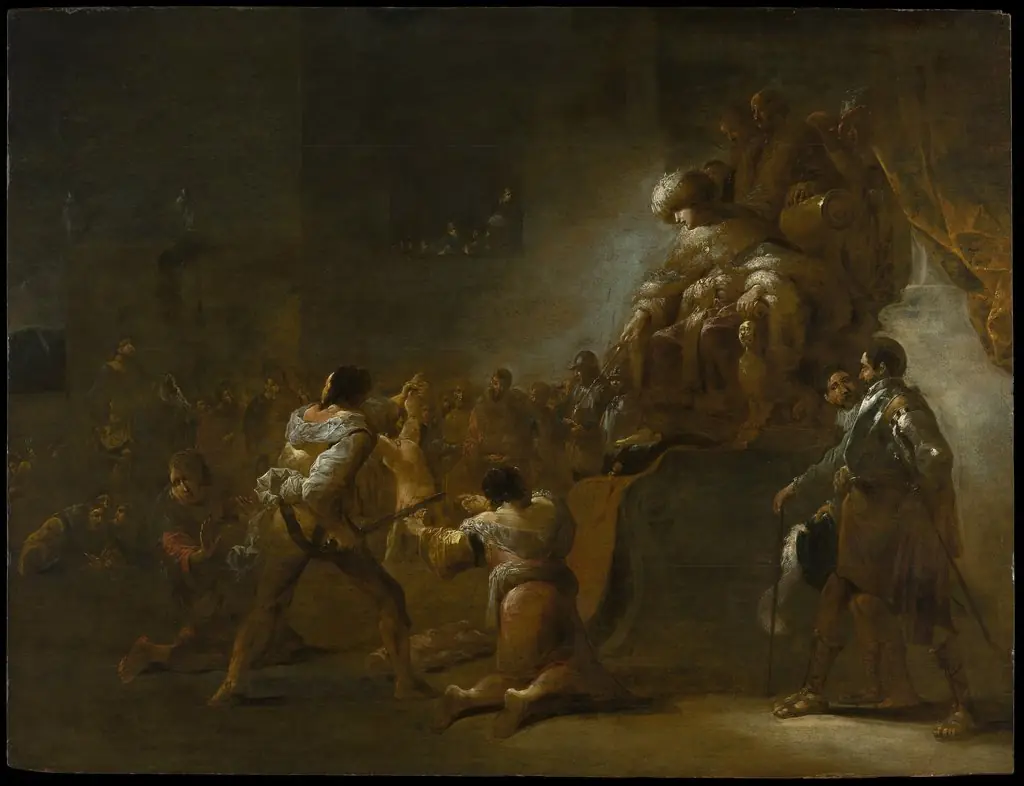
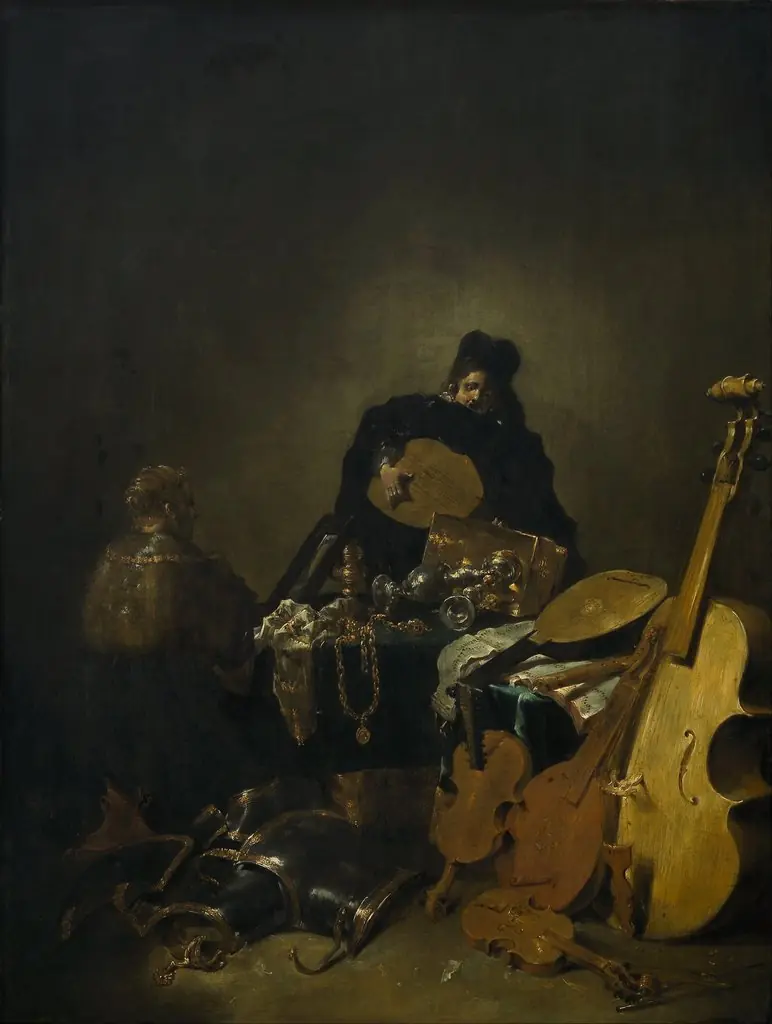
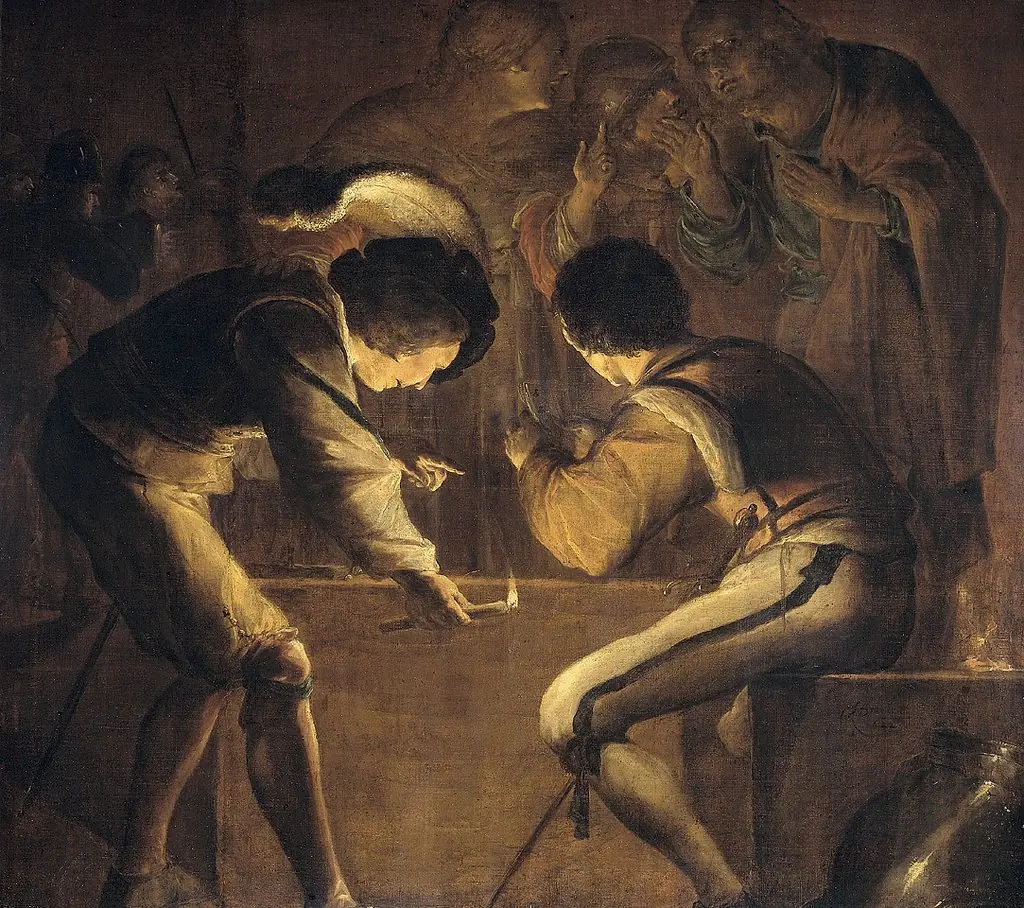
- An Alchemists' Workshop
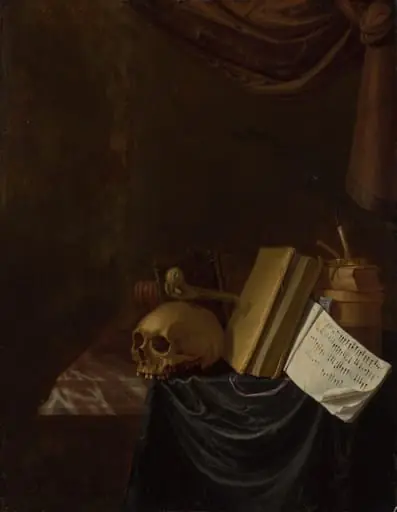 Untitled
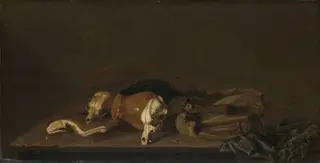 Still Life with Suckling-Pig Skulls
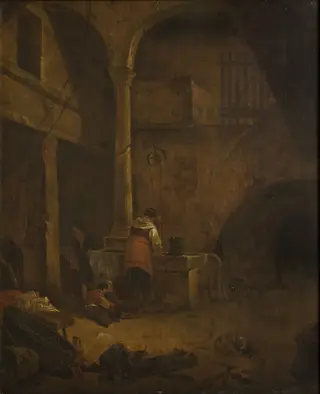 Woman at a Well in an Italian Farmhouse
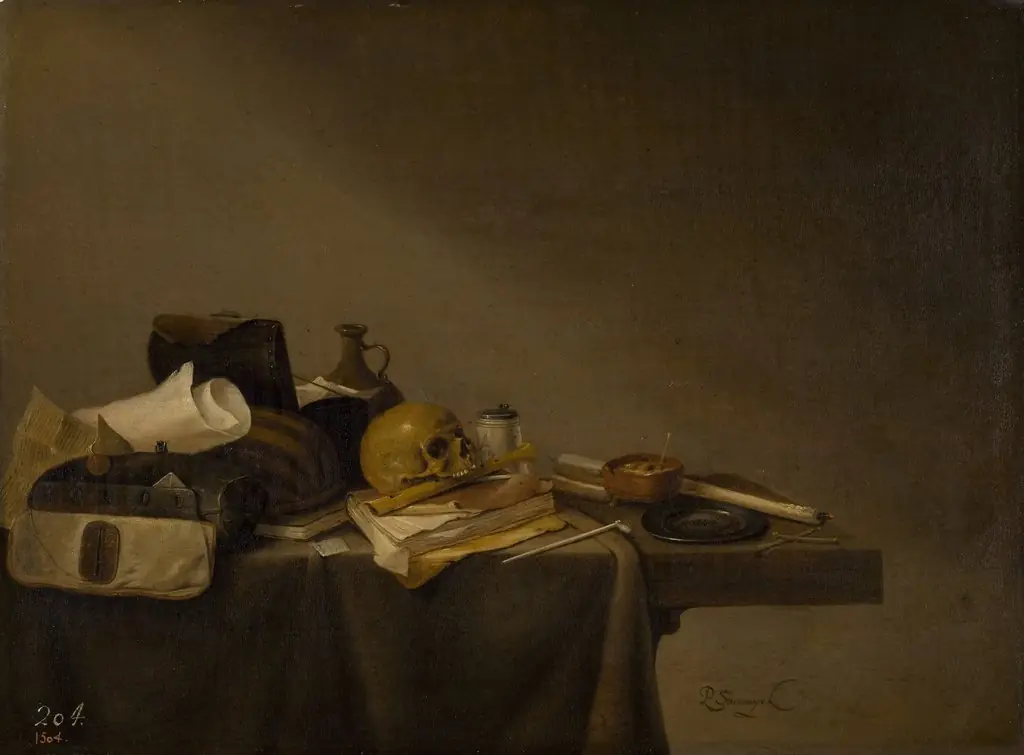 Emblem of Death
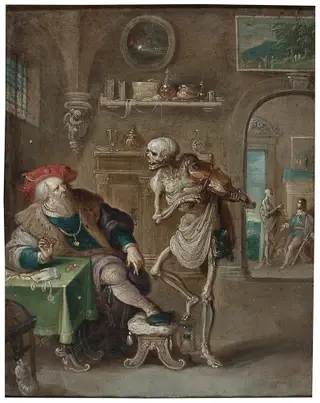 Der Reiche und der Tod
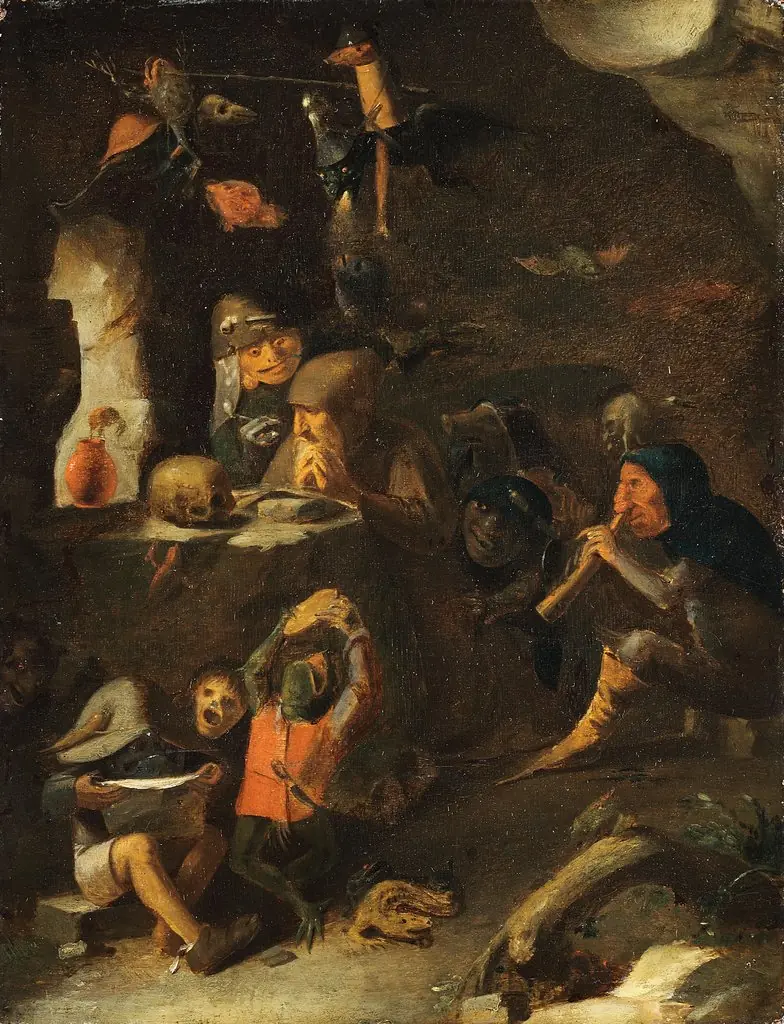 The temptation of St Anthony
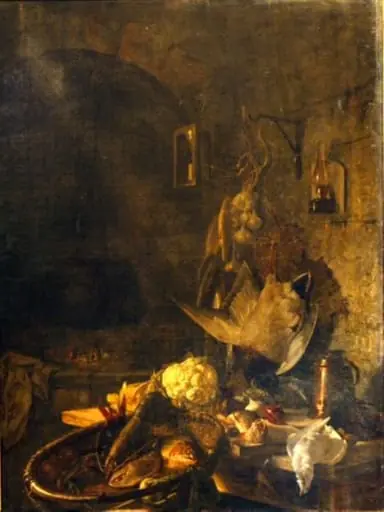 Alegorie: cele patru elemente (Pământul, Apa, Aerul, Focul)
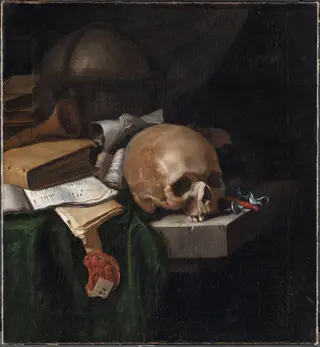 Vanitas Still Life
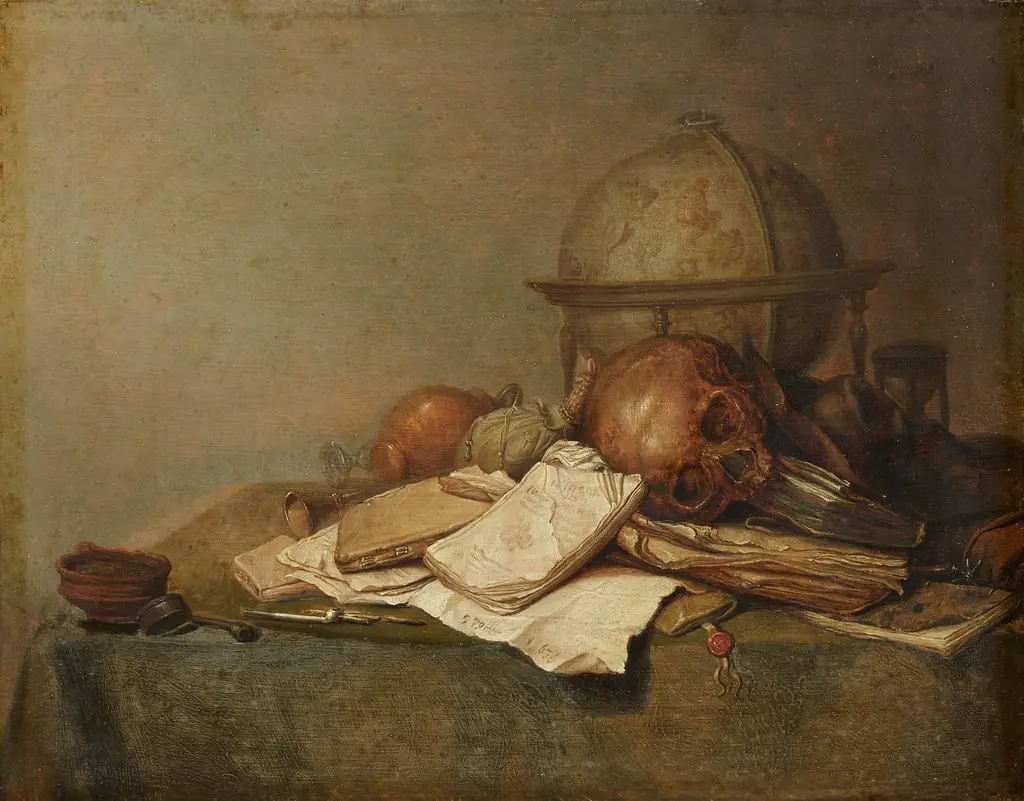 Vanitas Still Life
 Flower Piece
 Death Playing the Violin (Death and a Money-Lender)