Artwork
Emblem of Death
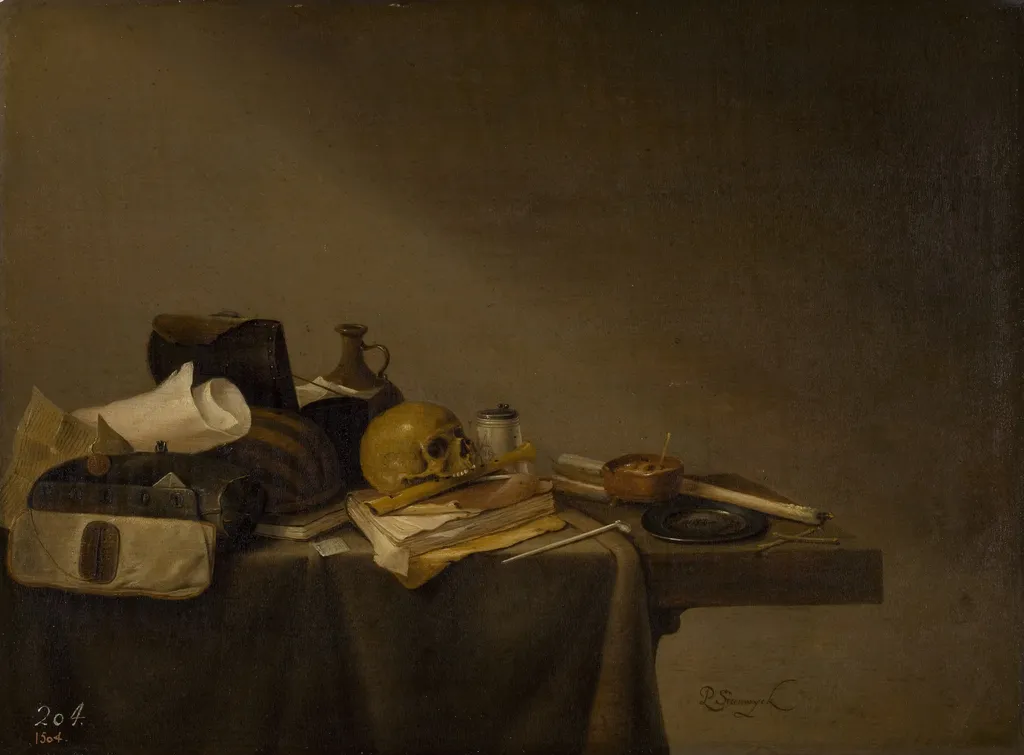
Emblem of Death is an unspecified painting by the Flemish Baroque painting artist Pieter Steenwijck. It dates from 1635 and is held in the collection of the Museo del Prado.
About this work
Subject & Meaning
The inclusion of a container and a table further grounds the scene in a domestic setting where such worldly goods are ultimately rendered meaningless by death.
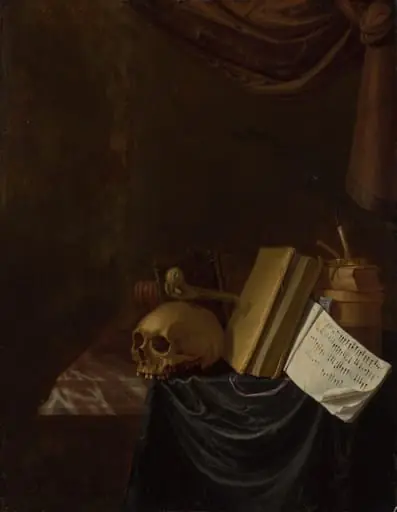
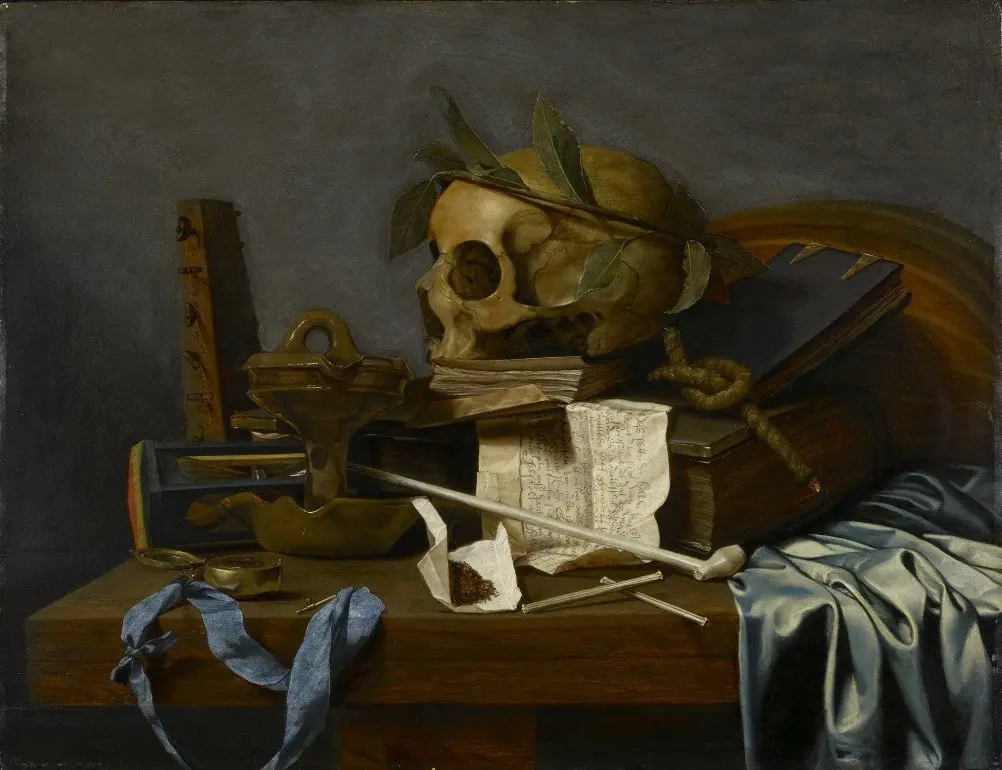
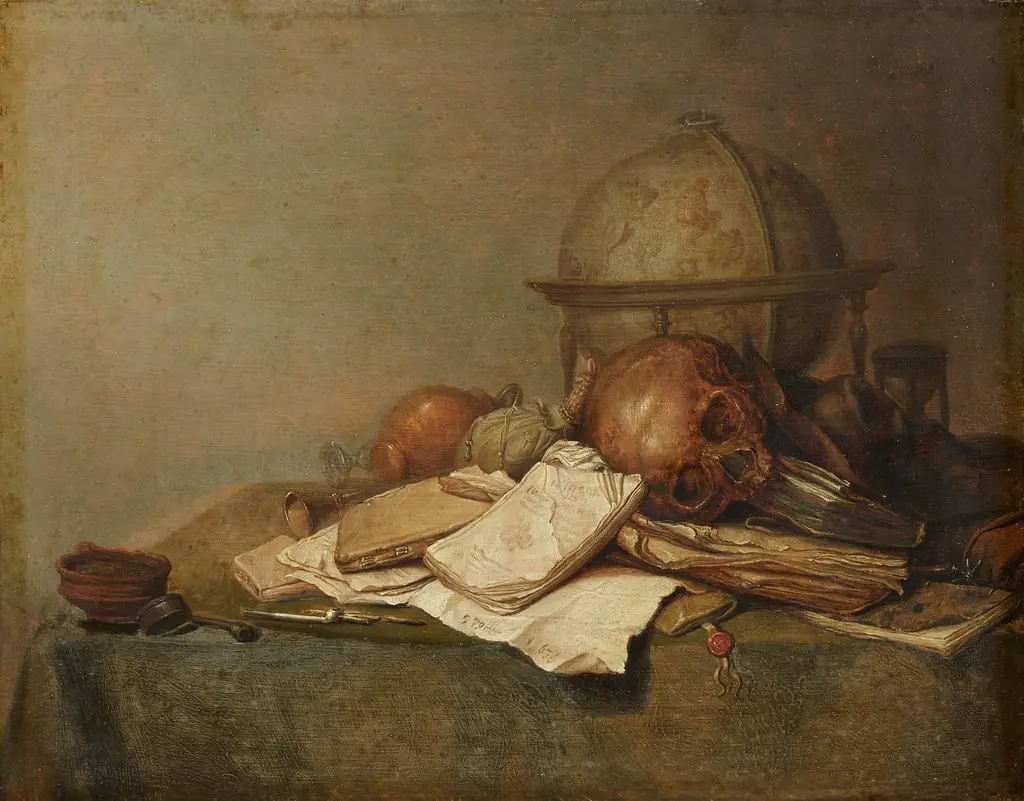
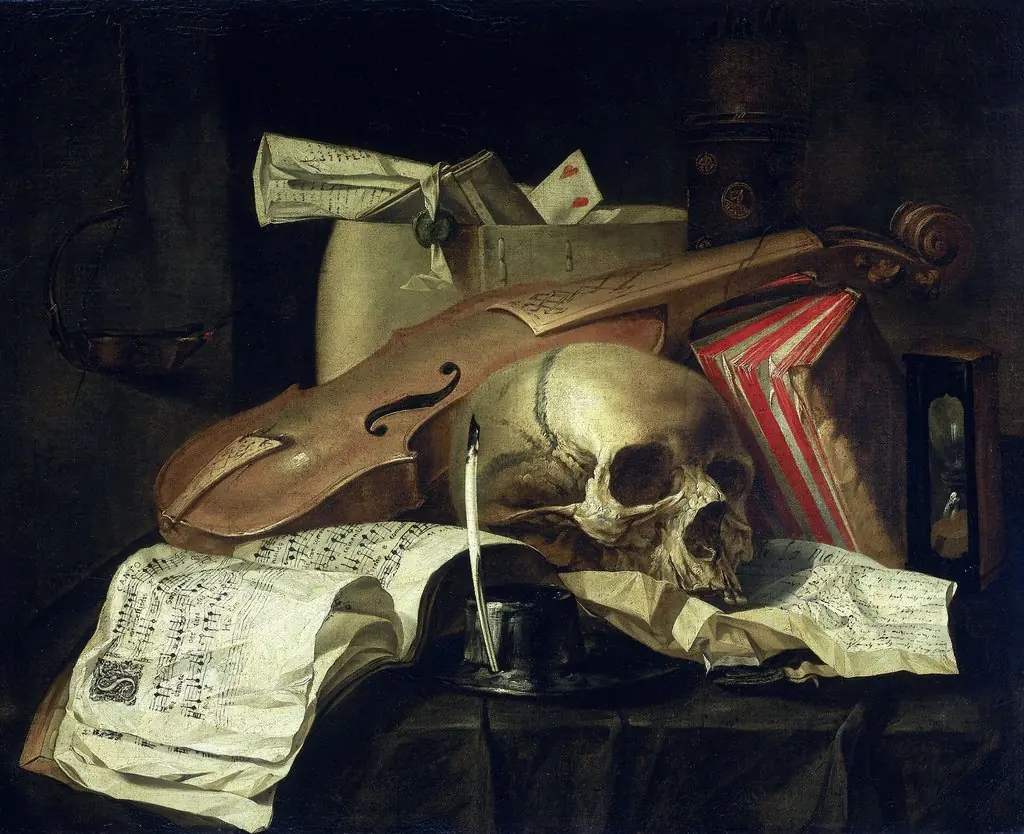
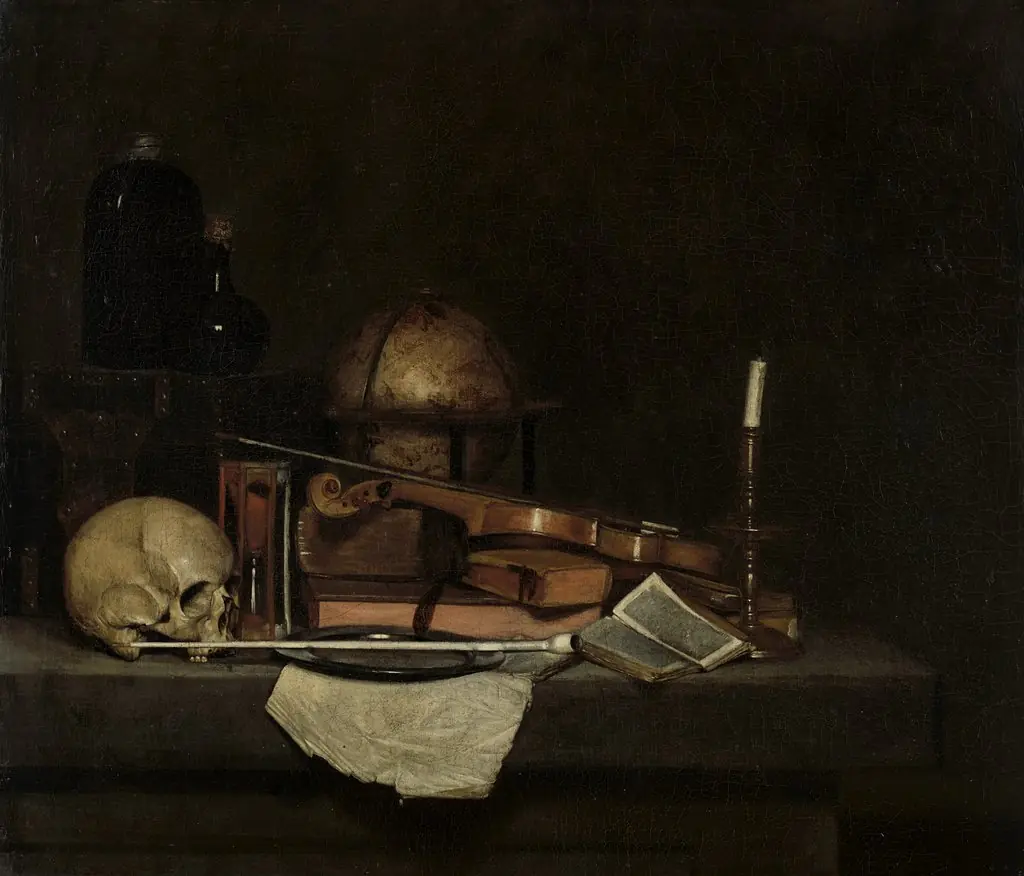
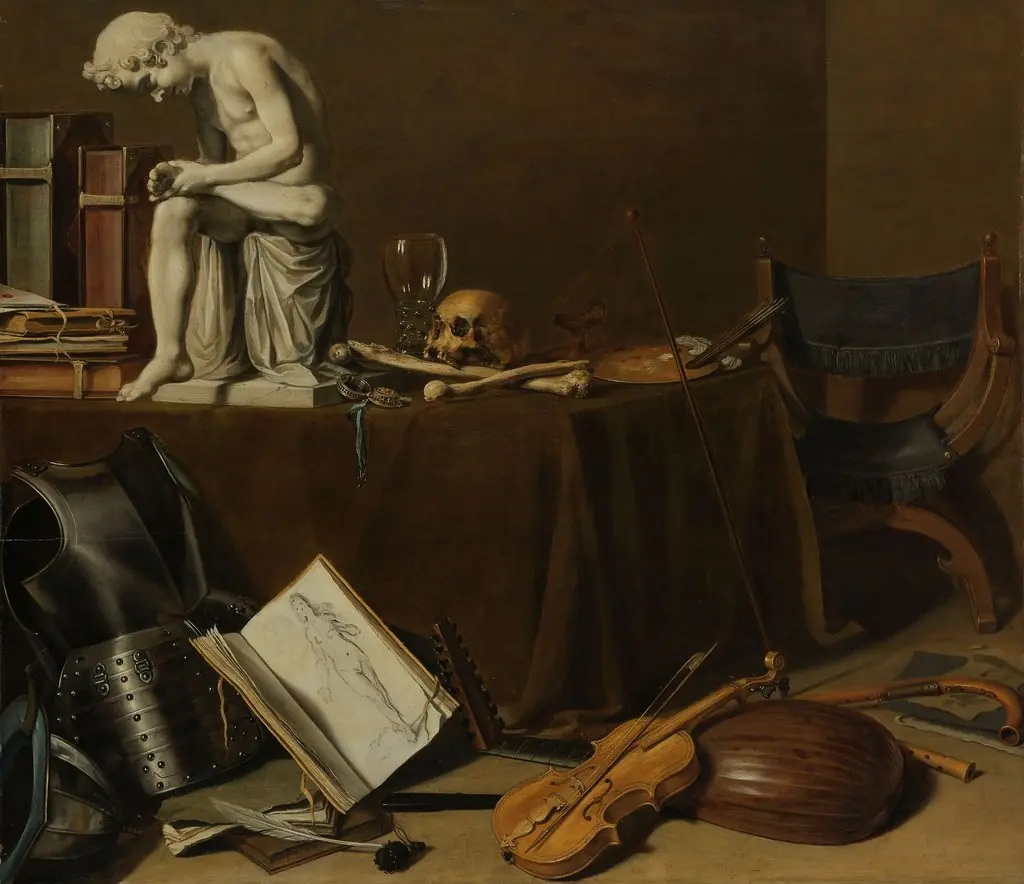
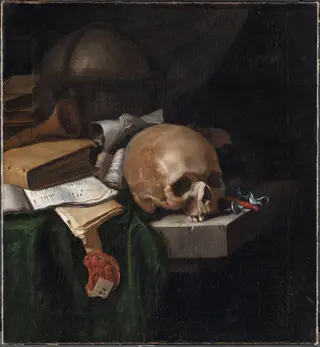
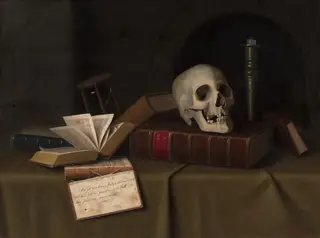
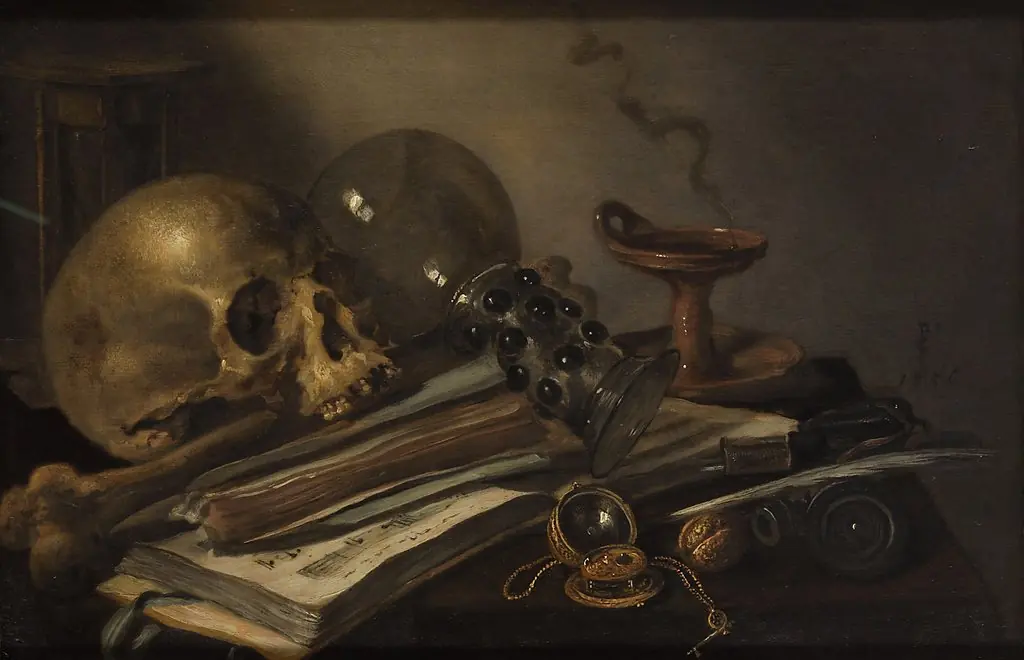
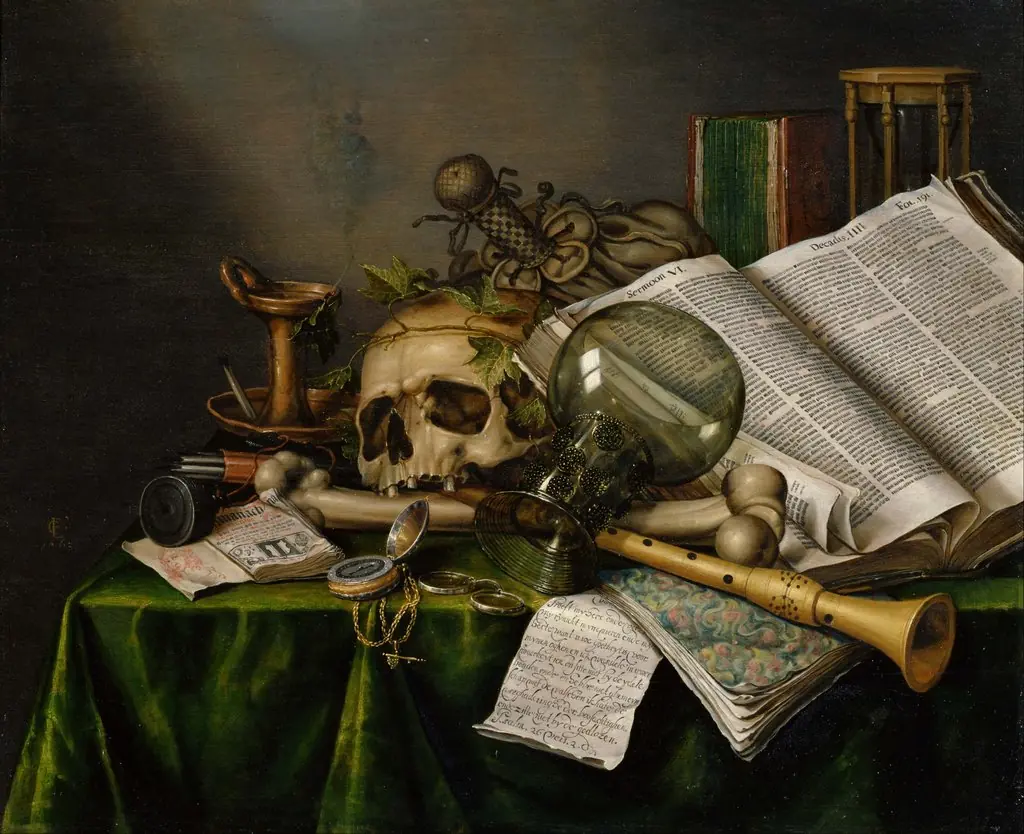
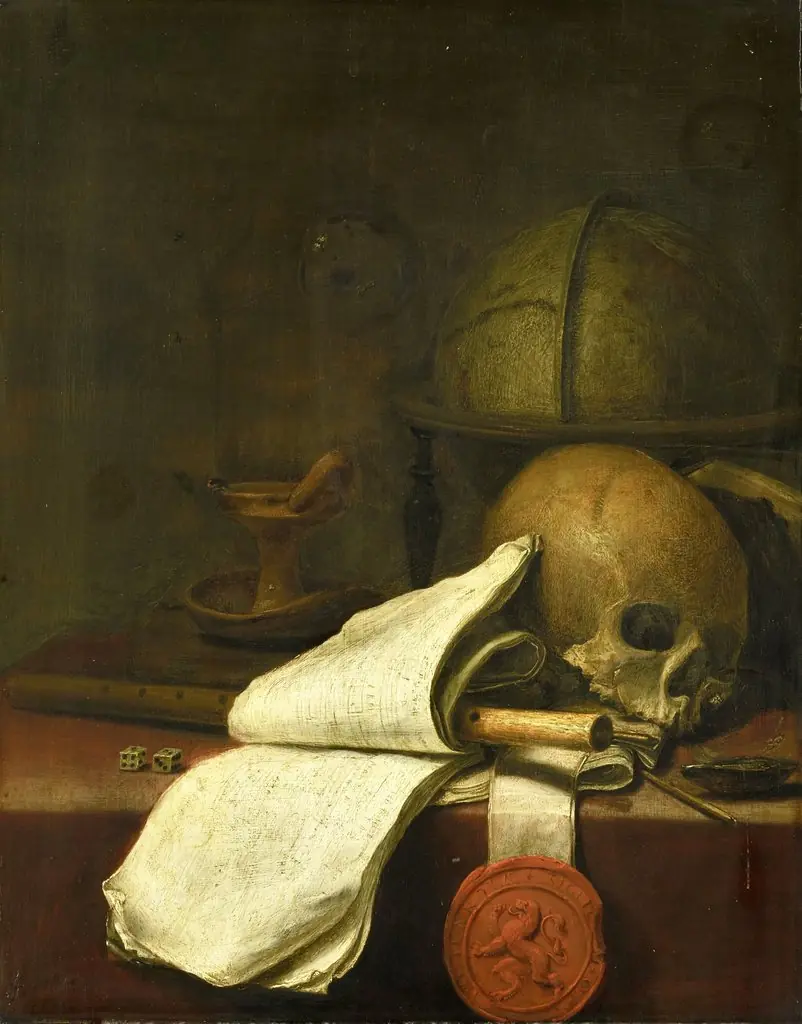
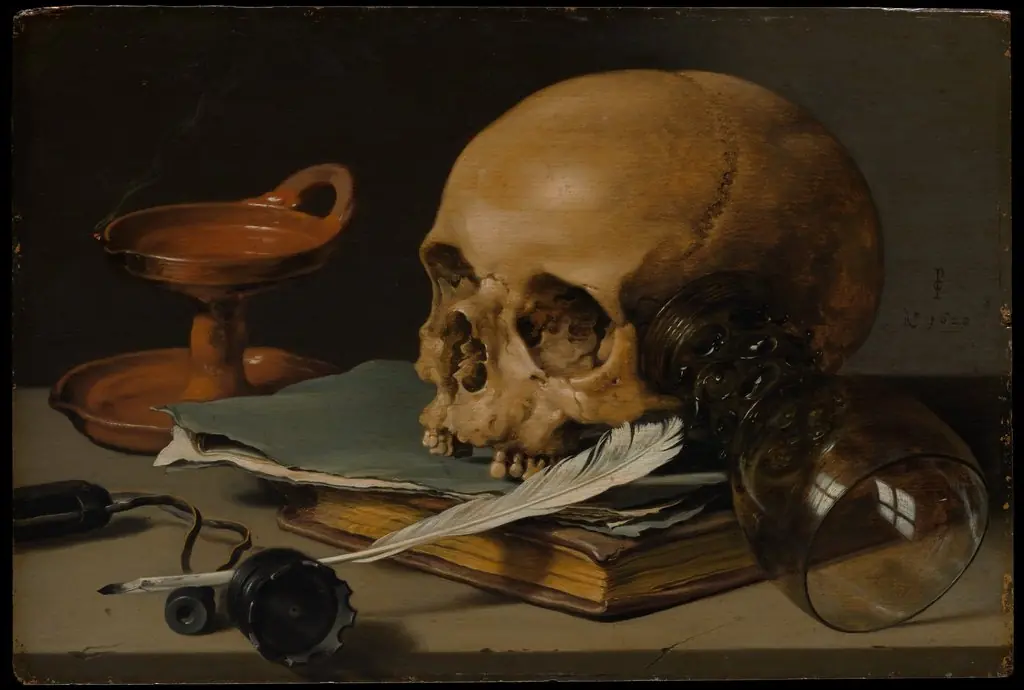
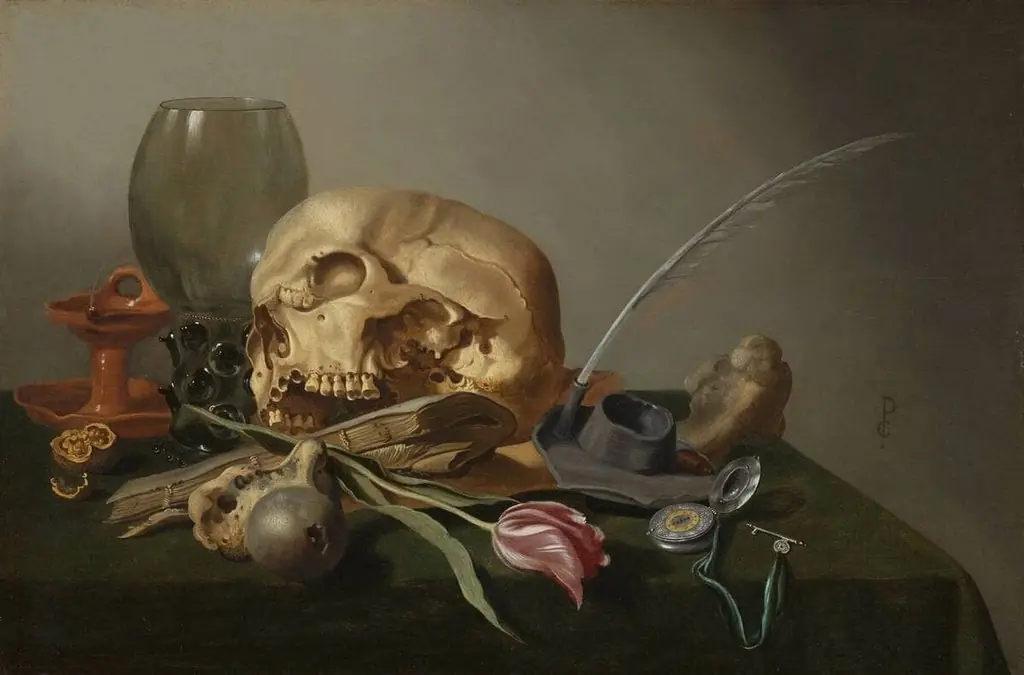
Pieter Steenwijck's Emblem of Death is a vanitas painting that uses specific still-life objects to symbolize the transience of earthly life and the inevitability of mortality. The composition centers on a human skull, the primary memento mori, which is presented alongside a lute, a recorder, and a book. These items represent the fleeting nature of music, intellectual pursuits, and sensory pleasures.
The inclusion of a container and a table further grounds the scene in a domestic setting where such worldly goods are ultimately rendered meaningless by death. Created in 1635, the work serves as a visual meditation on the brevity of human existence, urging the viewer to reflect on spiritual matters rather than material accumulation.
Technique & Style
The painting is executed in oil on canvas, a technique consistent with Steenwijck’s known practice in vanitas still lifes of the 1630s. The composition is rendered with precise, linear delineation and a restrained palette dominated by earthy browns and ochres, broken by the luminous highlights on the skull and metal vessel.
A table supports the vanitas emblem, arranged with a human skull, a cylindrical container, a lute, a recorder, and a closed book. The objects are depicted with a cool, detached realism, their surfaces carefully modeled to convey texture and reflect light, while the shallow spatial recession and muted lighting focus attention on the symbolic grouping.
History & Provenance
Emblem of Death is a vanitas painting by Pieter Steenwijck, dated 1635.
The work entered the Spanish royal collection and was recorded as owned by Ferdinand VII of Spain.
It was later accessioned into the Museo del Prado and is displayed in the Royal Palace of Aranjuez.
The painting measures 36 cm by 46 cm and depicts a skull, lute, recorder, book and table.
The painting Emblem of Death by Pieter Steenwijck is housed in the Museo del Prado, situated in the Royal Palace of Aranjuez. It is displayed as part of the museum’s Spanish Baroque collection and occupies a wall space measuring 36 cm in height by 46 cm in width. The work was executed in 1635 and entered the Spanish royal collection, where it remained in the possession of King Ferdinand VII before being transferred to the national museum.
Its accession into the Prado’s holdings marks a documented shift from private royal ownership to public museum custody.
Overview
Pieter Steenwijck's painting, Emblem of Death, created in 1635, presents a still life composition. This work features an arrangement of objects, including a skull and musical instrument, carefully placed on a surface. The painting is characterized by its subdued color palette and dramatic lighting, which contribute to its reflective atmosphere. It is currently housed in the collection of the Museo del Prado.
Own this work as a print
Artist & collection