Artwork
Still Life with Suckling-Pig Skulls
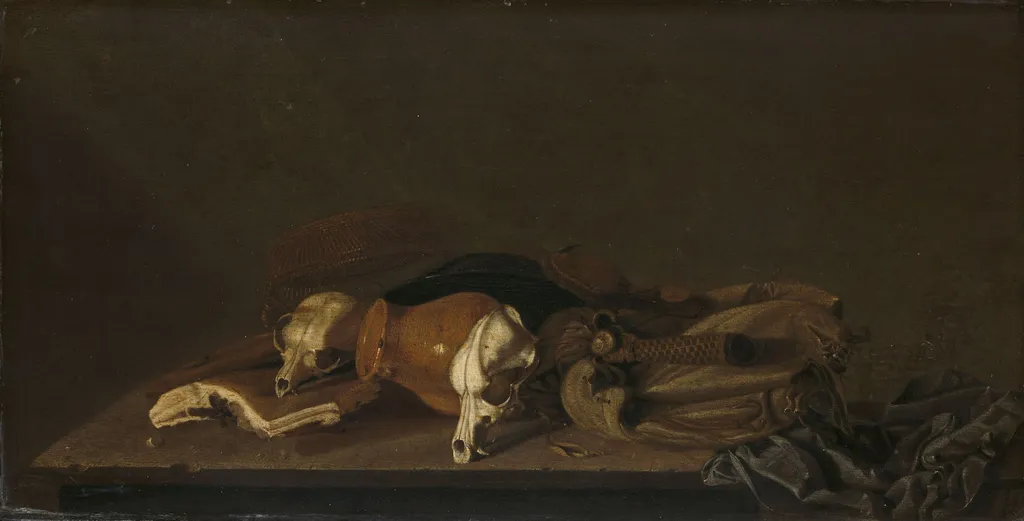
Still Life with Suckling-Pig Skulls is an oil painting by the Dutch Golden Age artist Unknown. It dates from 1630 and is held in the collection of the Rijksmuseum.
About this work
Technique & Style
The painting’s surface shows fine brushwork along the edges of the skull and subtle glazing that unifies the overall tonal harmony.
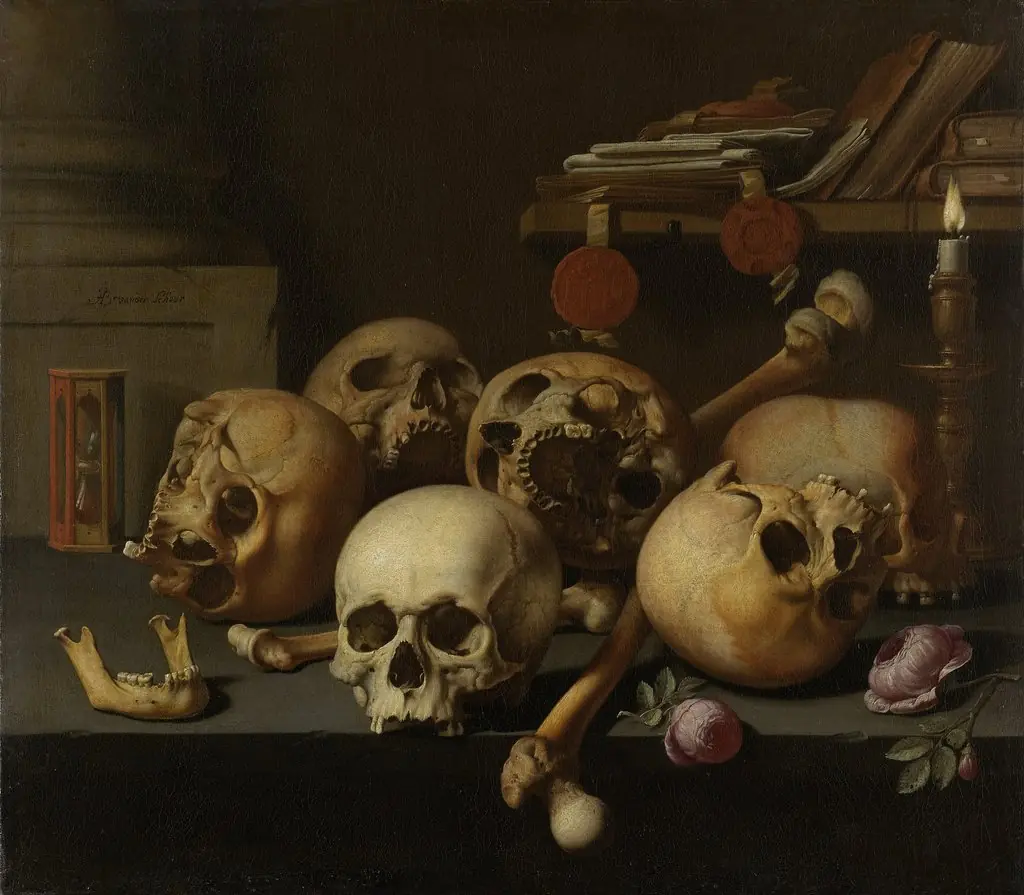
Oil paint applied to a wooden panel in the Leiden workshop around 1630, the work measures 27 cm in height by 53 cm in width. The composition presents a vanitas still life featuring a suckling pig’s skull rendered in a restrained palette of earth tones, with a smooth handling of light and texture that reflects the influence of Dutch realism. The painting’s surface shows fine brushwork along the edges of the skull and subtle glazing that unifies the overall tonal harmony.
History & Provenance
The work was created in 1630 in Leiden as an anonymous oil painting on panel measuring 27 by 53 centimeters. It belongs to the still life genre and was originally held in a private collection before entering the Rijksmuseum's collection, where it remains on display.
Still Life with Suckling-Pig Skulls is held by the Rijksmuseum in Amsterdam, where it belongs to the museum's collection of still-life paintings. The work is catalogued within the Rijksmuseum's holdings as an oil-on-panel painting produced in Leiden in 1630, measuring 27 cm in height by 53 cm in width.
As an anonymous Leiden still life from the early 1630s, the painting forms part of the Rijksmuseum's broader representation of seventeenth-century Dutch still-life painting. The provided sources do not document specific exhibition loans, temporary displays, or detailed provenance transactions beyond its current institutional placement.
Overview
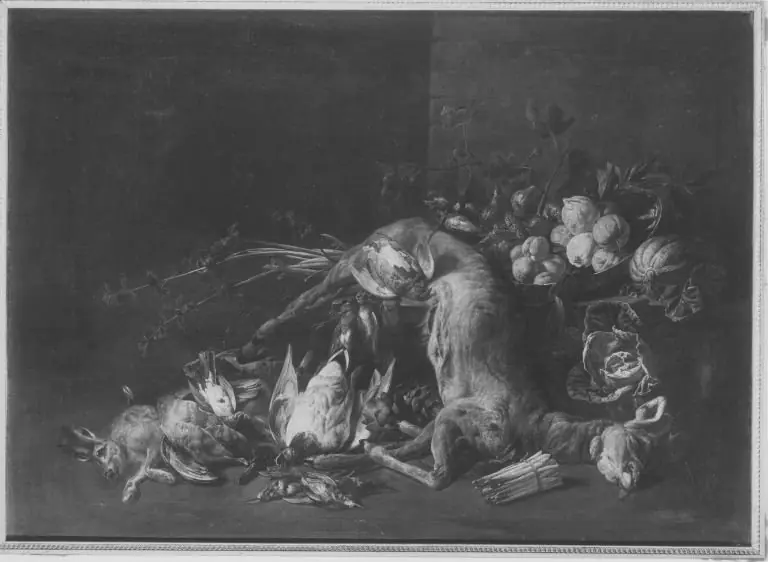
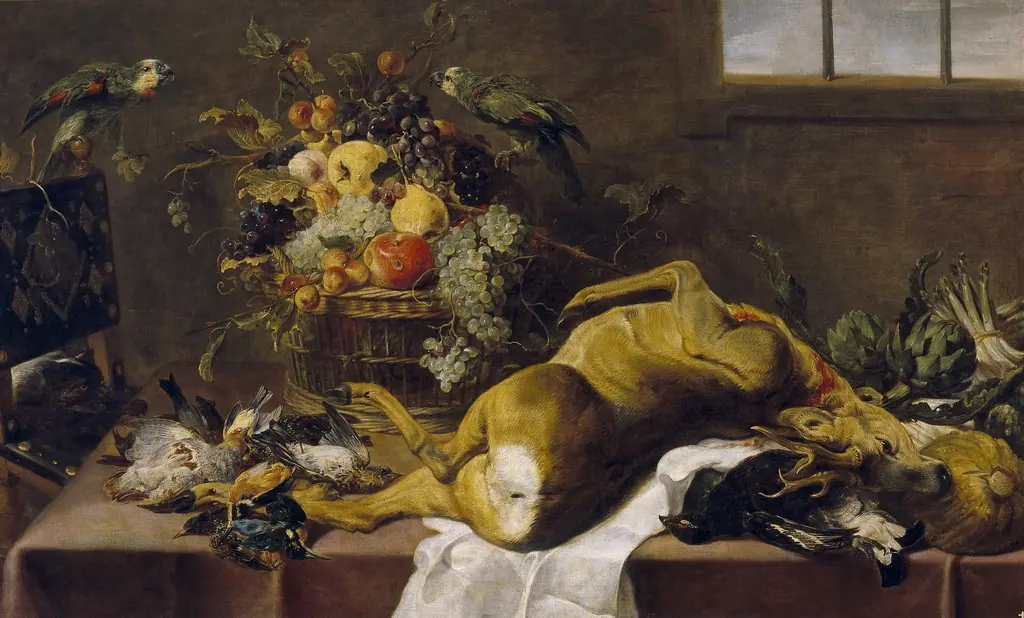
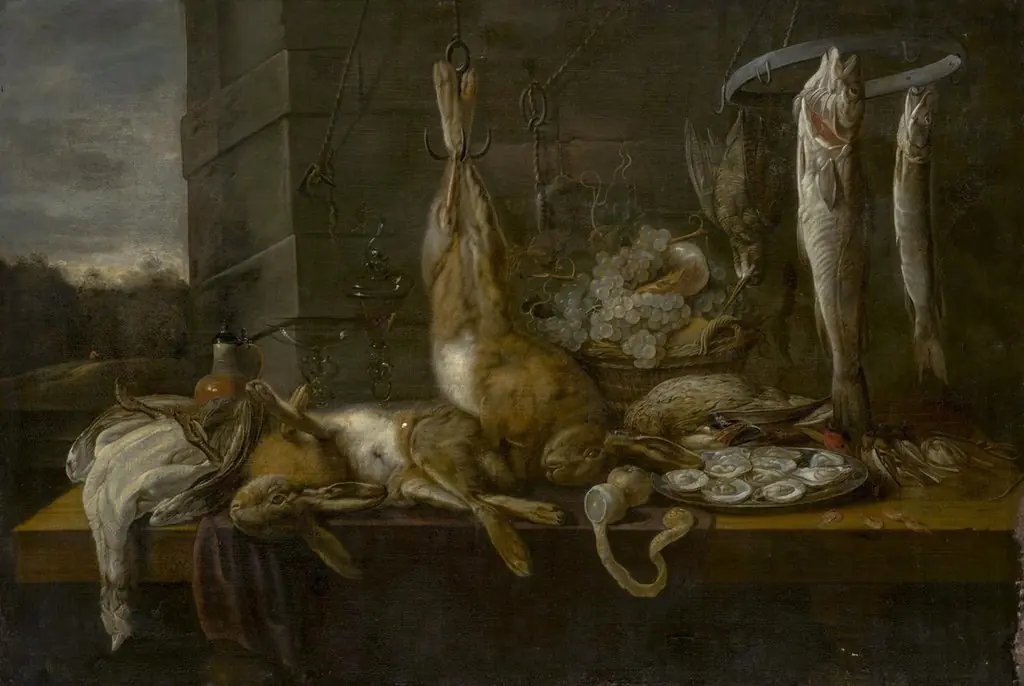
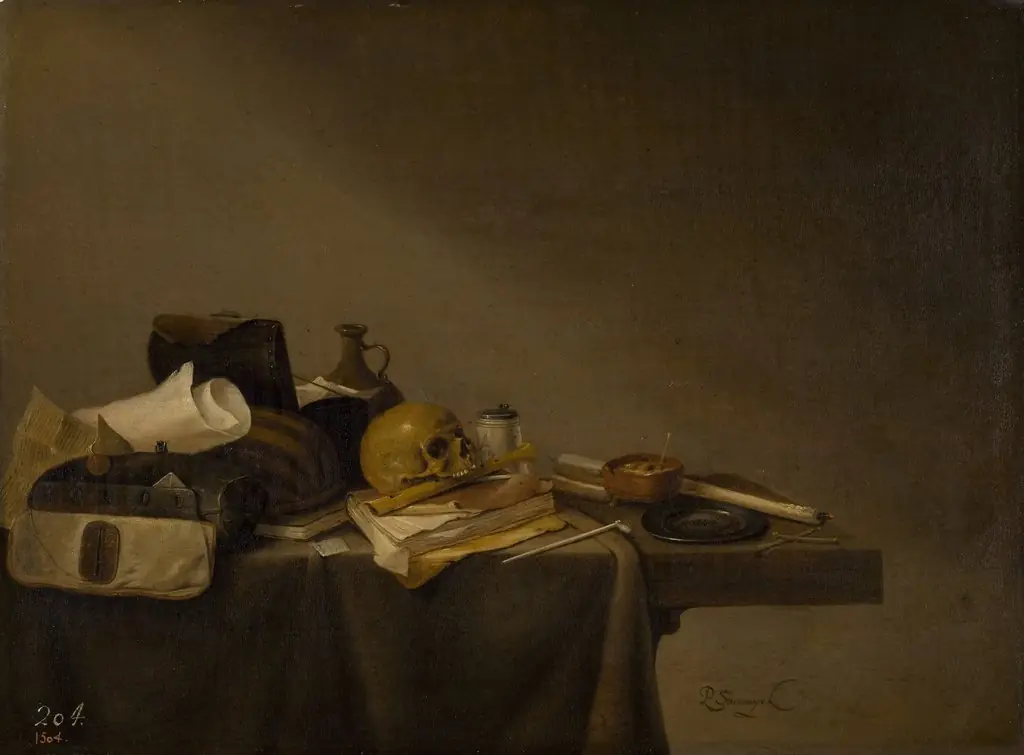
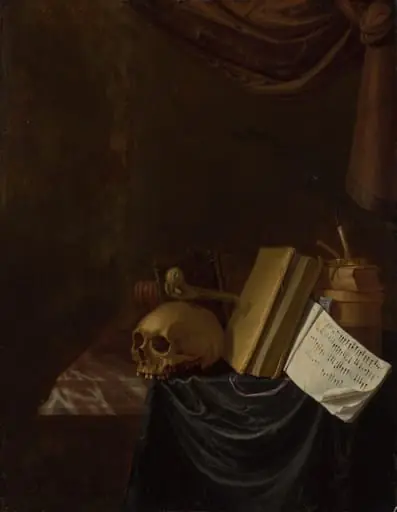
The oil painting presents a dimly lit tabletop strewn with a collection of objects: two pig skulls, one supporting a small clay jug, the other lying on its side, a dead fish with an open mouth, assorted bones, and a wilted plant. The background is nearly black, allowing the objects to emerge sharply from the darkness.
Subject & Meaning
The arrangement of animal remains and a fragile plant suggests a meditation on mortality and the transience of life. By juxtaposing skeletal forms with a decaying vegetal element, the work invites contemplation of the cycle of decay and the fleeting nature of material existence.
Context
Works that focus on still‑life arrangements of dead animals and objects have a long tradition in European art, often serving as vanitas symbols. This painting continues that lineage, using a minimalist dark background to isolate the subjects and heighten their symbolic resonance.
Artist & collection