Artwork
St. Joseph and Christ Child
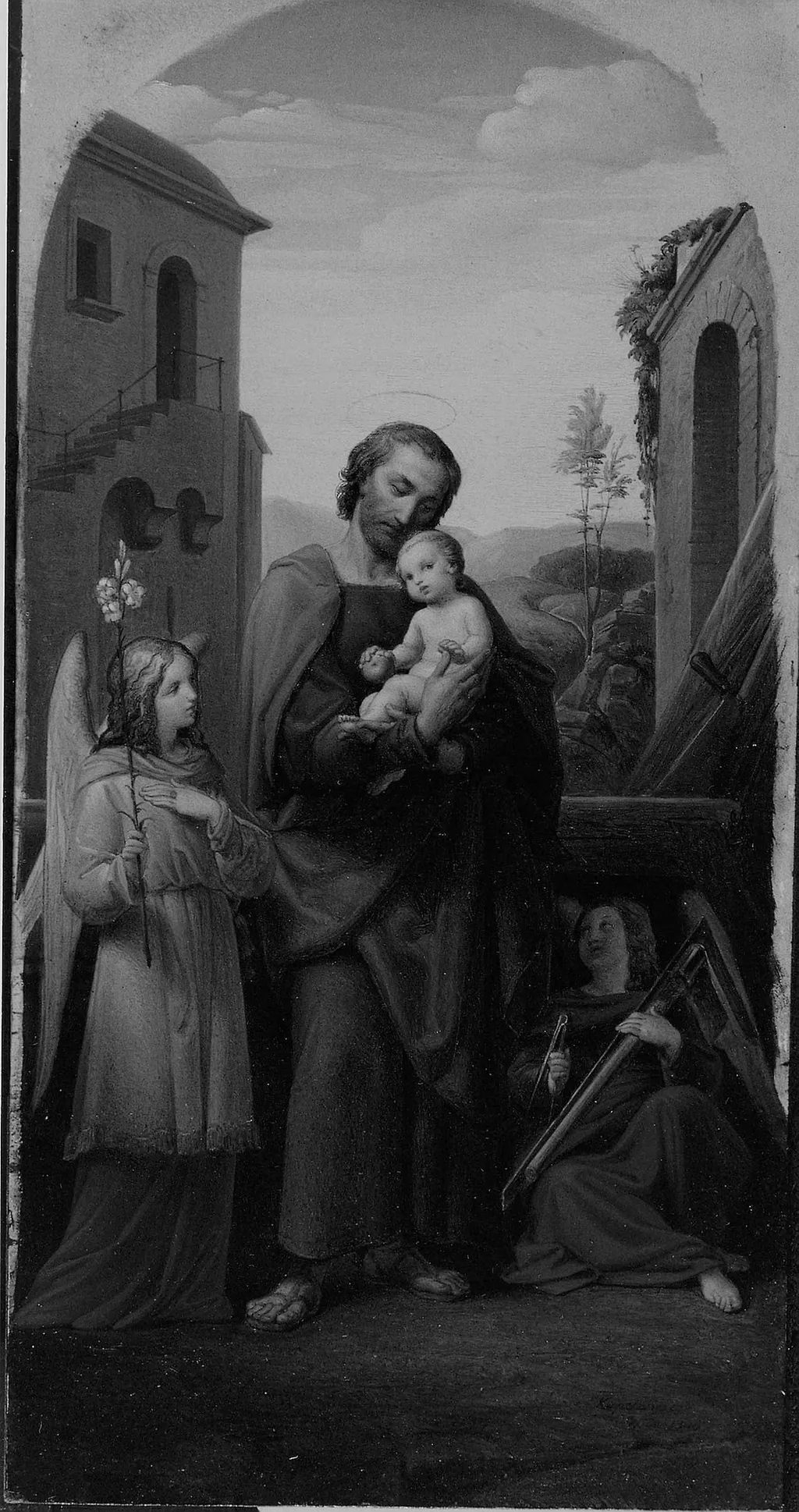
St. Joseph and Christ Child is an unspecified painting by the Biedermeier artist Leopold Kupelwieser. It dates from 1840 and is held in the collection of the Art Institute of Chicago.
About this work
Subject & Meaning
The inclusion of an angel reinforces the sacred nature of the scene, signaling divine presence and protection surrounding the figures.
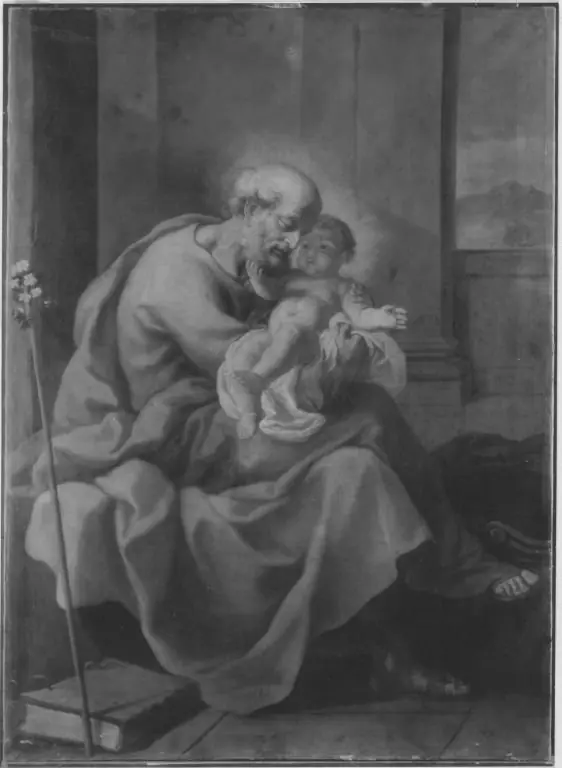
The painting depicts Saint Joseph alongside the Christ Child, with an angel also present in the composition. As a work of religious art, it engages with the traditional iconography of the Holy Family, in which Joseph is shown as the earthly guardian of the young Jesus, often in tender interaction with the child. The inclusion of an angel reinforces the sacred nature of the scene, signaling divine presence and protection surrounding the figures.
Together, these elements frame the work as a devotional image centered on themes of guardianship, divine care, and the sanctity of Christ's infancy, consistent with the religious genre identified for the painting.
History & Provenance
St. Joseph and Christ Child was created by Leopold Kupelwieser in 1840. The painting passed through the hands of two recorded owners before entering its present collection. It was held by S. Kende and subsequently by Maria Hussa, and is now in the collection of the Art Institute of Chicago.
The work is classified as a religious painting, consistent with its subject matter of Joseph, the Christ Child, and an angel.
St. Joseph and Christ Child is held by the Art Institute of Chicago, where it is catalogued under the accession number 1954.1040.
The painting entered the museum's collection through ownership by Maria Hussa, who bequeathed it to the institution.
Its exhibition history includes a display in the museum's European Paintings gallery in 1955.
Context
Leopold Kupelwieser's 1840 religious painting St. Joseph and Christ Child depicts Joseph alongside the Christ Child and an angel, reflecting his focus on devotional subjects within the Biedermeier era's spiritual climate. The work belongs to his mature period characterized by precise religious storytelling rather than grand historical narratives, situating it within 19th-century Austrian religious art production. Its thematic emphasis on domestic holiness aligns with contemporary Catholic devotional trends in Central Europe.
Overview
Leopold Kupelwieser’s 1840 oil painting, titled St. Joseph and Christ Child, belongs to the Austrian Biedermeier era and reflects the artist’s association with the Nazarene circle. Executed during a period of renewed interest in devotional subjects, the work is now part of the Art Institute of Chicago’s collection.
Technique & Style
Kupelwieser employs a restrained palette and careful modeling of light, creating subtle chiaroscuro that gives volume to the figures against the plain stone façade. The soft, diffused sky and delicate handling of fabric drapery reflect Biedermeier sensibilities for clarity, modesty and domestic serenity.
Artist & collection

Artist
Leopold Kupelwieser (17 October 1796, Markt Piesting – 17 November 1862, Vienna) was an Austrian painter, often associated with the Nazarene movement.

- Virgin and Child with the Infant Saint John the Baptist
 Mary and child enthroned with two saints
 Den hellige familie
 Virgin and Child with Saint Francis
 Maria mit Kind und Heiligen (Schule)
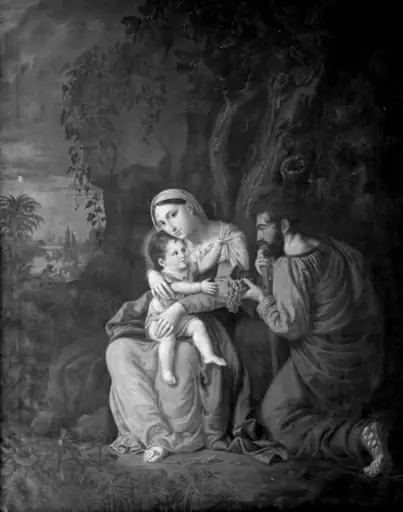 Den hellige familie
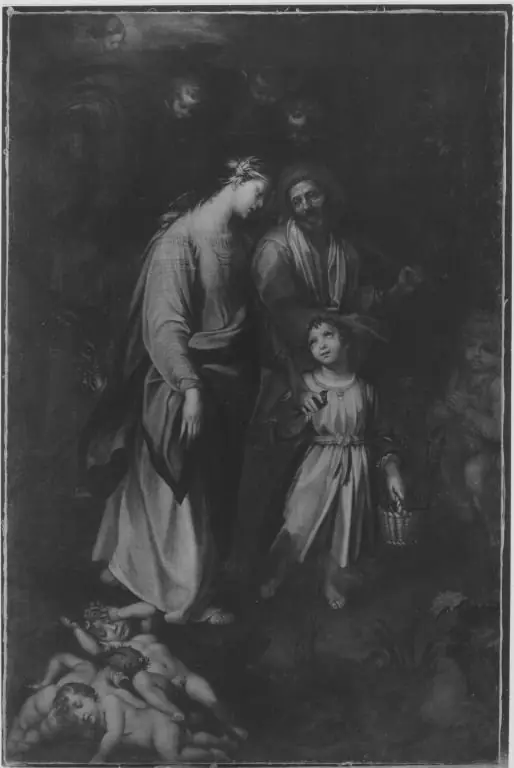 Heimkehr aus Ägypten
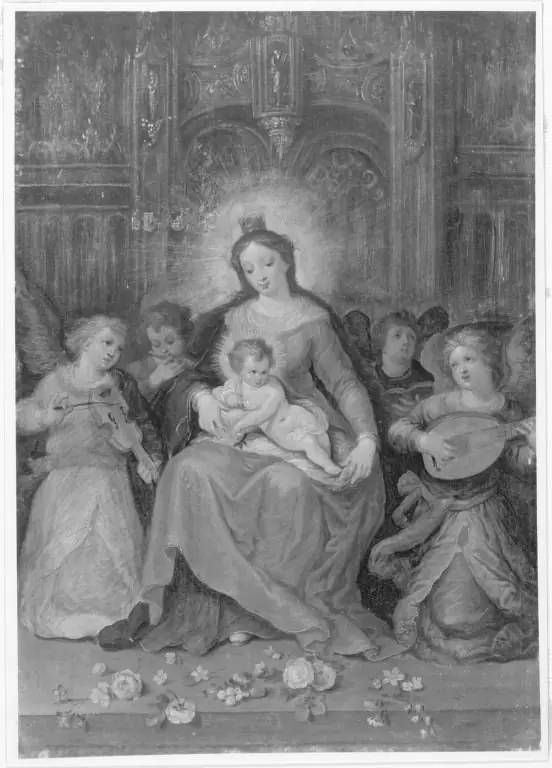 Madonna mit musizierenden Engeln
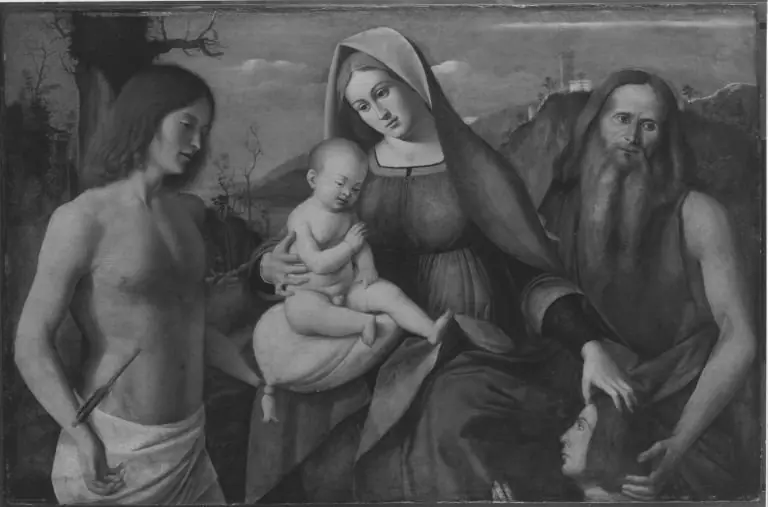 Madonna and Child, Saints Jeronimo, Sebastian und a donor
 Mary adoring the child
 Geburt Christi
 Hl. Joseph mit dem Kinde