Artwork
Sericulture (The Process of Making Silk)

Sericulture (The Process of Making Silk) is an unspecified painting by the Song dynasty painting artist Liang Kai. It dates from 1204 and is held in the collection of the Cleveland Museum of Art.
- Accession no.
- 1977.5
- Credit line
- John L. Severance Collection
About this work
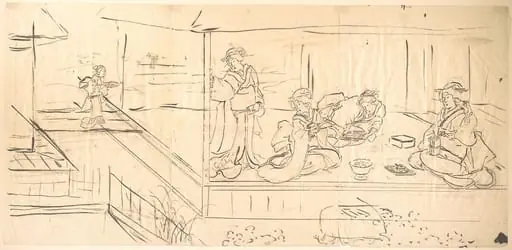
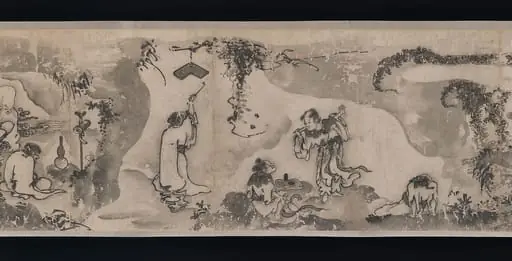
Tiny figures bend over trays, spin wheels, and stretch threads, all in black ink on pale paper.
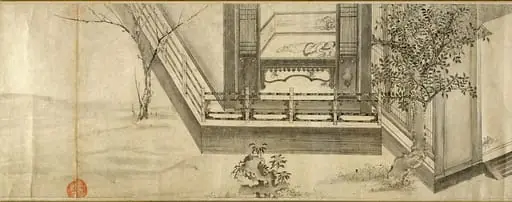
This handscroll shows fourteen steps of silk-making, from feeding worms to weaving cloth. Tiny figures bend over trays, spin wheels, and stretch threads, all in black ink on pale paper.
The painting copies an earlier work by Lou Shou, but Liang Kai made it feel alive. His brushstrokes are quick and light, like a sketch. You can almost hear the rustle of leaves and the hum of looms.
To see how other artists showed daily work, look up china, southern song dynasty (1127-1279).
Overview
Sericulture (The Process of Making Silk) is a handscroll painting depicting the 14 stages of silk production, from silkworm cultivation to weaving.
Subject & Meaning
The scroll illustrates the sericulture process in three sections, echoing Lou Shou's earlier 'Pictures of Tilling and Weaving'. It reflects the significance of the silk industry in the lower Yangzi delta during the Southern Song period.
Technique & Style
Executed in black ink on pale paper, the painting features quick, light brushstrokes, creating a sense of movement and life. The artist groups scenes under open structures, diverging from Lou Shou's format.
History & Provenance
The painting follows the tradition established by Lou Shou's 'Pictures of Tilling and Weaving', created around 1145 in Hangzhou. It is attributed to the Southern Song period, a time when the silk industry thrived in the lower Yangzi delta.

Artist & collection