Artwork
Waterfowl and Reeds
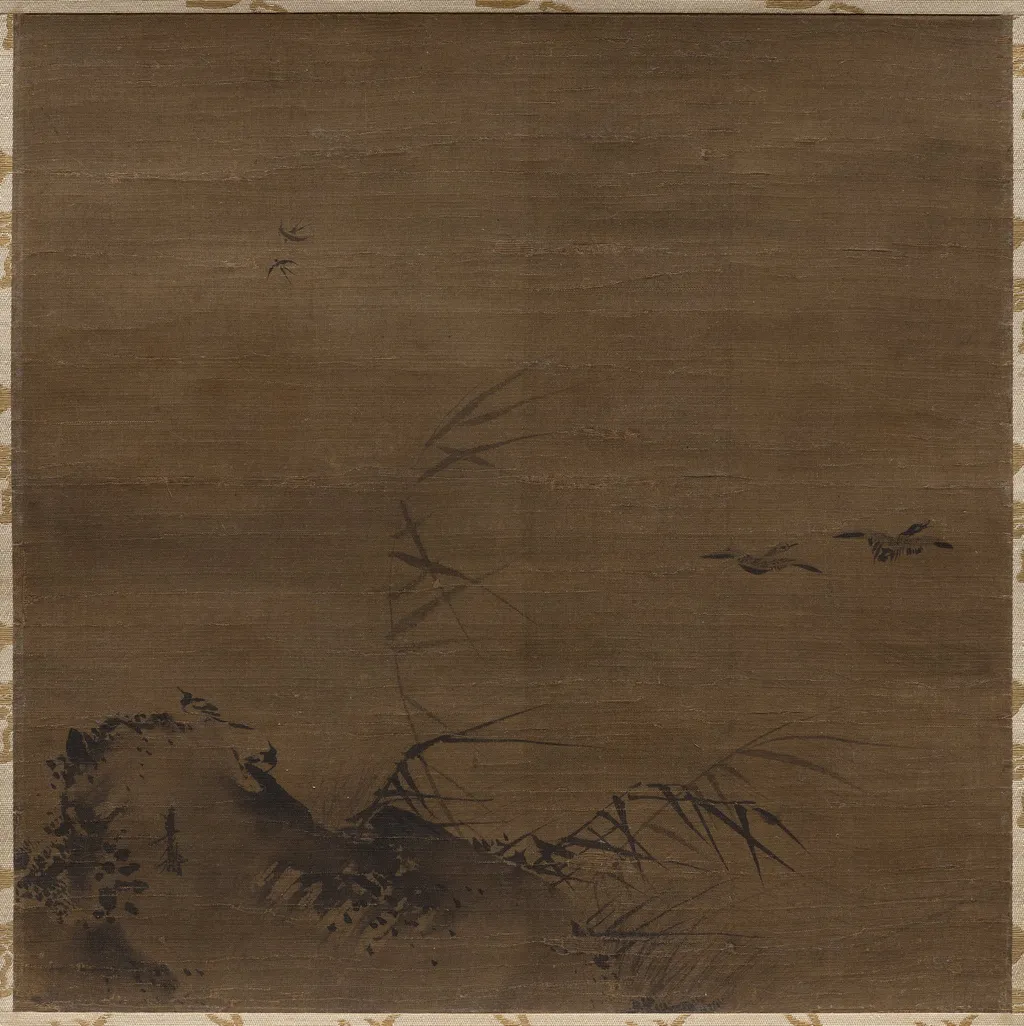
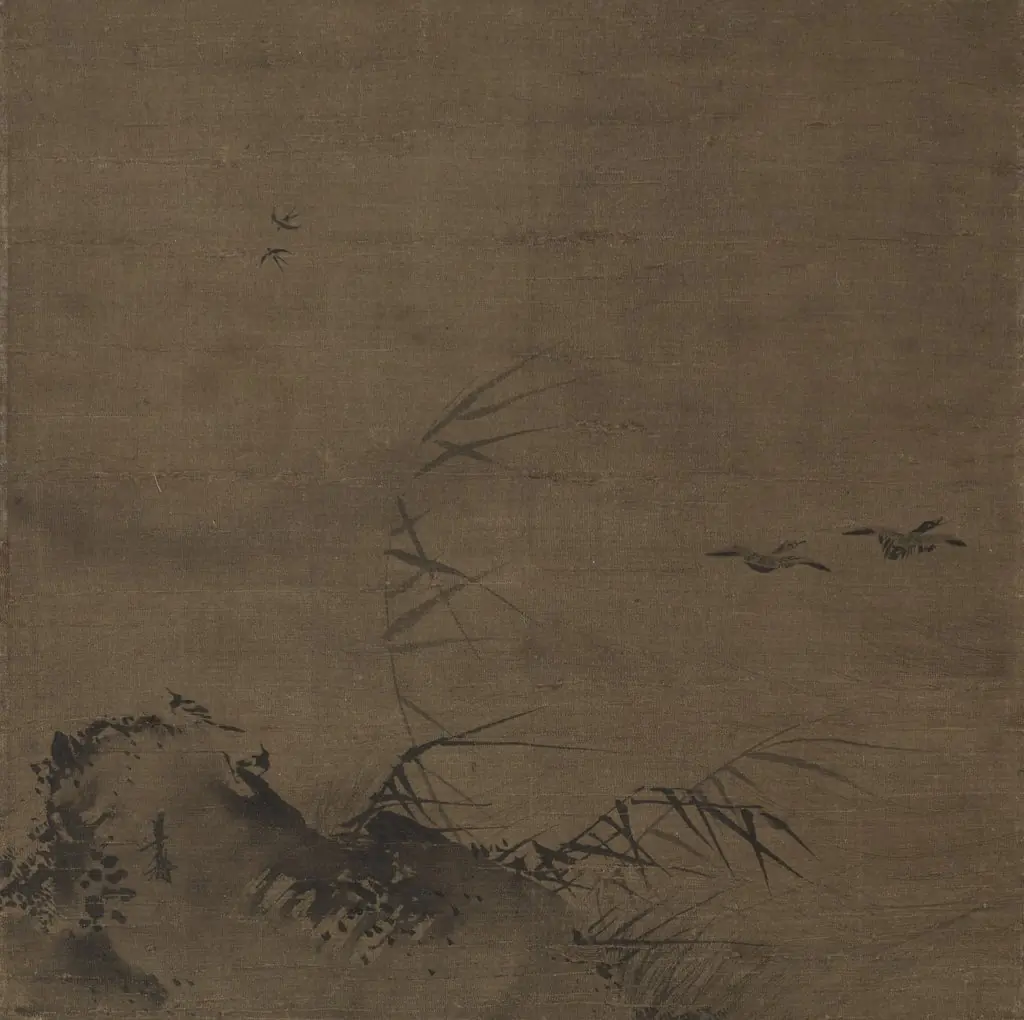
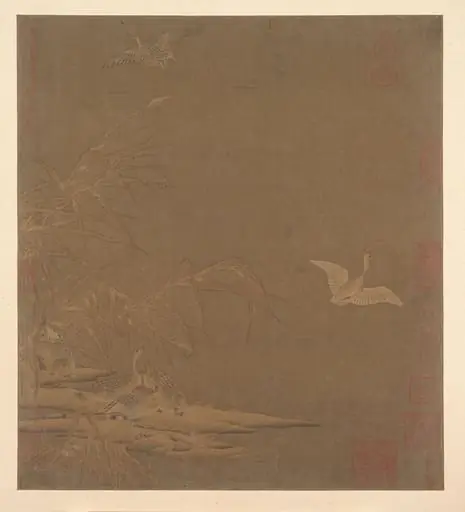
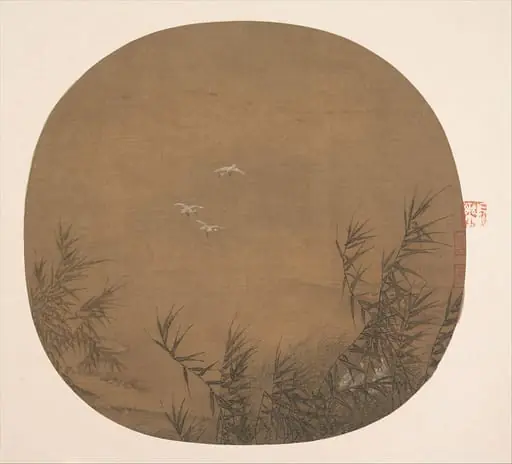
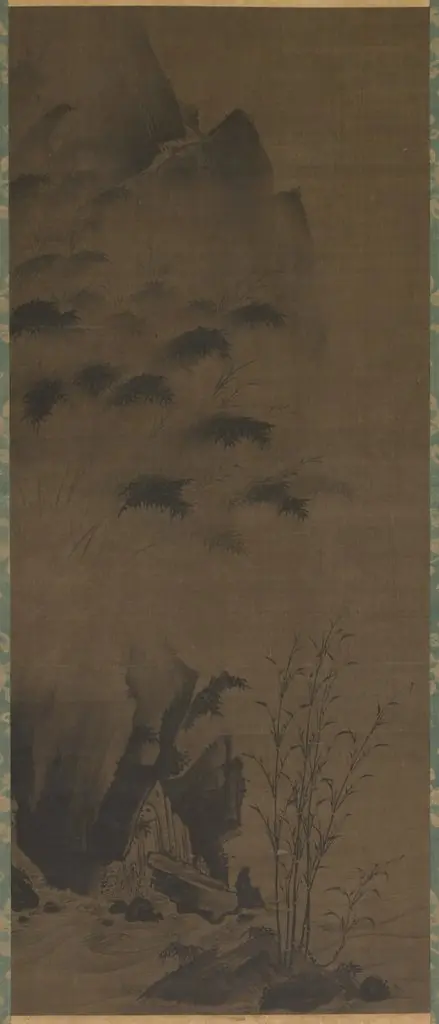
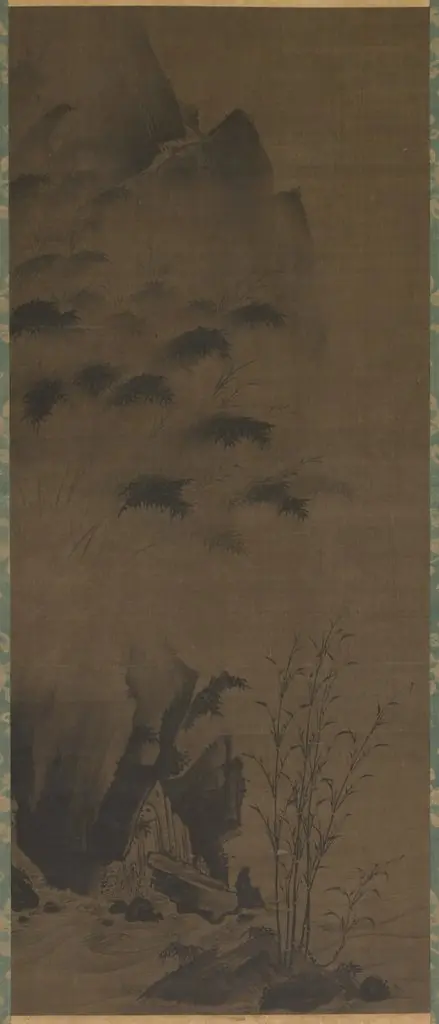
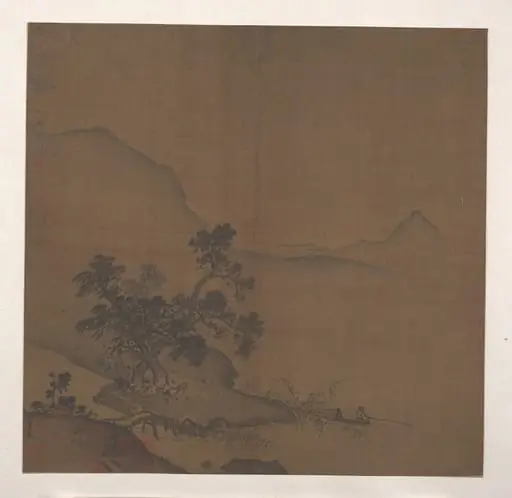
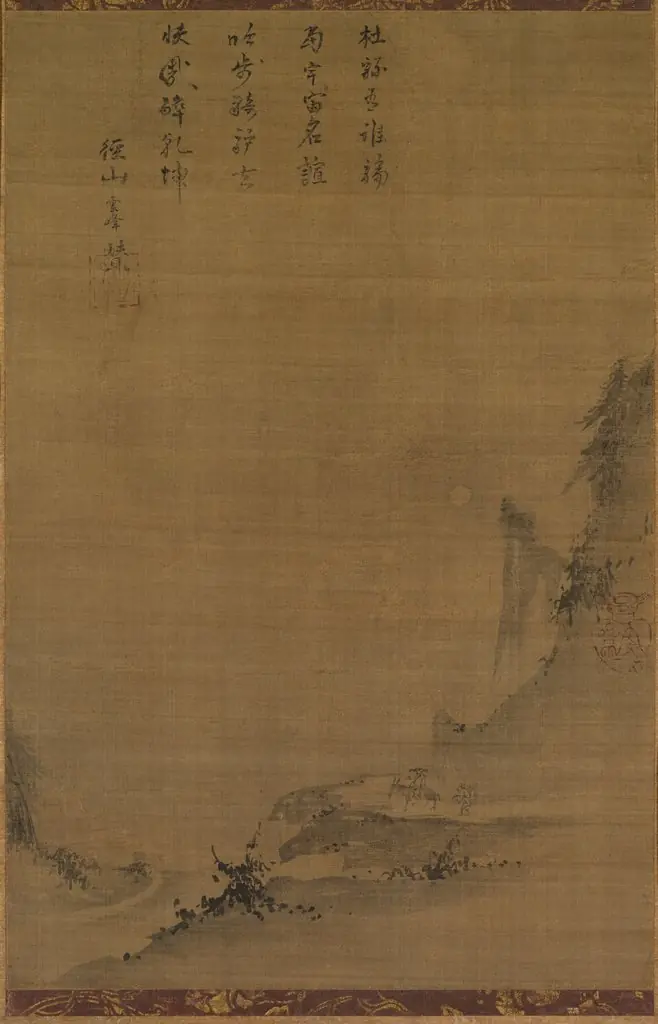
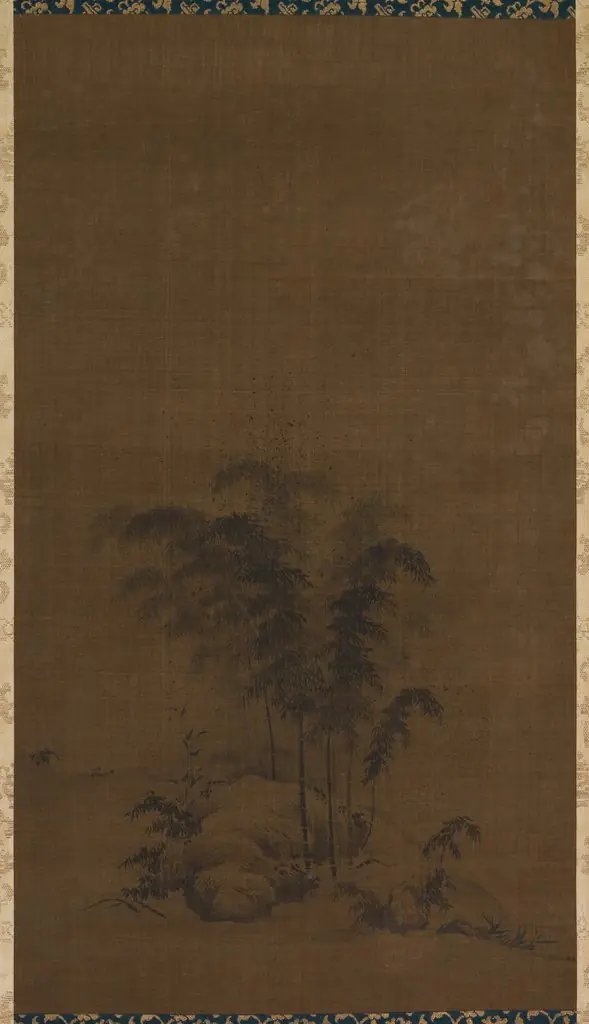
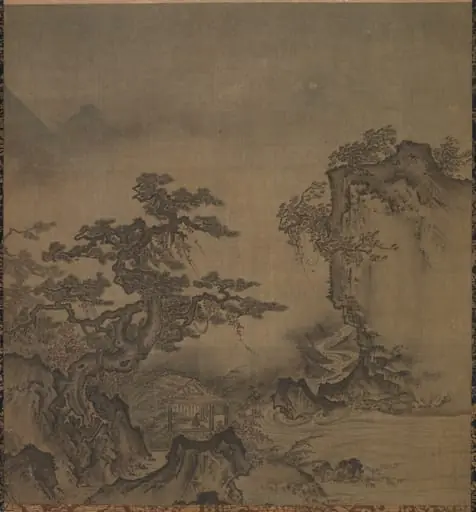
Waterfowl and Reeds is an unspecified painting by the Song dynasty landscape artist Liang Kai. It dates from 1204 and is held in the collection of the Cleveland Museum of Art.
- Accession no.
- 1984.42
- Credit line
- Leonard C. Hanna Jr. Fund
About this work
Overview
This ink painting on album leaf, later mounted as a hanging scroll, is attributed to Liang Kai, a painter active in the Southern Song dynasty.
This ink painting on album leaf, later mounted as a hanging scroll, is attributed to Liang Kai, a painter active in the Southern Song dynasty. Originally employed at the imperial court, he abandoned his official post to live as a Buddhist recluse. The work exemplifies his distinctive approach: minimal brushwork, asymmetrical composition, and deliberate use of empty space to evoke stillness and contemplation.
Subject & Meaning
The scene depicts a pair of waterfowl resting among tall, swaying reeds beside still water. The birds are rendered with swift, economical strokes, their forms suggested rather than detailed. The reeds, bent by an unseen breeze, imply quiet movement.
The composition avoids narrative or symbolism, instead inviting quiet reflection, a quality aligned with Chan Buddhist ideals of simplicity and presence.
Technique & Style
Liang Kai employed monochrome ink with varying brush pressure to suggest form and texture. His strokes are loose and spontaneous, avoiding fine detail in favor of expressive suggestion. The one-corner composition leaves much of the paper bare, enhancing the sense of atmospheric space.
This restraint contrasts with the elaborate detail typical of court painting, reflecting a shift toward personal, meditative expression.
History & Provenance
Liang Kai served as a court painter under Emperor Ningzong, who awarded him the Gold Belt for his skill. He relinquished this honor to withdraw from court life, embracing monastic solitude. The painting’s original format was likely an album leaf; its later mounting as a hanging scroll reflects changing display practices. Its survival suggests early appreciation among collectors who valued its spiritual resonance over imperial prestige.
Context
During the Southern Song, court painting favored ornate detail and narrative clarity, while Chan Buddhist circles favored austere, suggestive imagery. Liang Kai’s work bridges these worlds: trained in court technique but aligned with monastic aesthetics. His use of empty space and abbreviated forms resonated with Chan principles, influencing later painters who sought to convey inner states rather than external appearances.
Legacy
Liang Kai’s style became a touchstone for Chan-inspired ink painting in East Asia. His emphasis on spontaneity, restraint, and spatial harmony influenced generations of Buddhist painters in China, Japan, and Korea. Though his court career was brief, his legacy endured through works like this one, which redefined the expressive potential of ink on paper beyond decorative or didactic functions.
Own this work as a print
Artist & collection