Artwork
River God with an Eagle
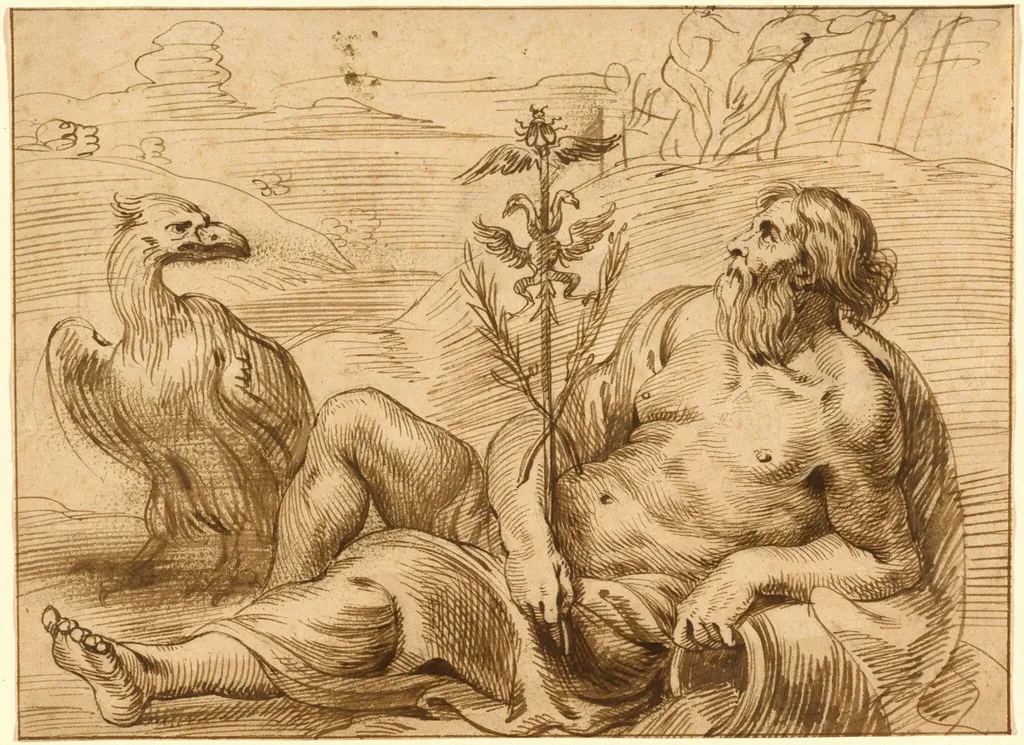
River God with an Eagle is an ink drawing by the Baroque artist Jan Lievens. It dates from 1640 and is held in the collection of the National Gallery of Art.
- Inscription
- Inscribed:in later hand, lower left verso: J Lievens.; lower center verso: [f?]r.e; upper right verso: 61B
About this work
Overview
Jan Lievens’ drawing River God with an Eagle (1640) is executed in pen and brown ink applied over faint black‑chalk underdrawings on laid paper. The composition presents a bearded, long‑haired river deity seated on the right, a poised eagle on the left, and a small bird perched atop a plant held by the god, all set within a gently rolling landscape of hills and clouds.
Subject & Meaning
The work juxtaposes a mythological river god with a predatory eagle, suggesting a dialogue between the tranquil, nurturing aspects of water and the fierce, soaring qualities of the sky. The inclusion of a tiny bird perched on the god’s plant may symbolize a fleeting moment of harmony between earth, water, and air, a theme common in 17th‑century allegorical art.
Technique & Style
Lievens employs a fine pen line and brown ink to define form, while the underlying black‑chalk sketches reveal his preparatory process. The texture of the laid paper contributes subtle tonal variation, and the rendering of musculature, feather detail, and landscape foliage reflects the Baroque emphasis on realistic, dynamic representation through careful observation.
History & Provenance
Born in Leiden, Lievens trained in Amsterdam alongside Rembrandt, sharing a studio early in his career. After establishing himself as a portraitist and history painter, he worked in several European cities beyond the Dutch capital. The drawing, dated 1640, belongs to the period when Lievens was consolidating his reputation in both narrative and figurative drawing.
Context
River God with an Eagle illustrates Lievens’ engagement with classical mythology, a subject favored by Baroque artists seeking to merge learned themes with naturalistic detail. The piece exemplifies his skill in translating complex allegorical ideas into a compact, drawing‑based format, contributing to the broader Dutch Golden Age tradition of integrating scholarly content with technical virtuosity.
Own this work as a print
Artist & collection

Artist
Jan Lievens (24 October 1607 – 4 June 1674) was a Dutch Golden Age painter who was associated with his close contemporary Rembrandt, a year older, in the early parts of their careers.

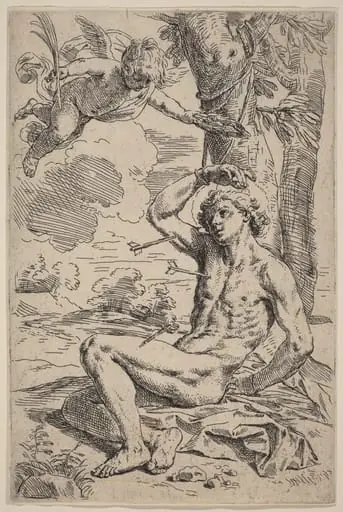 Saint Sebastian
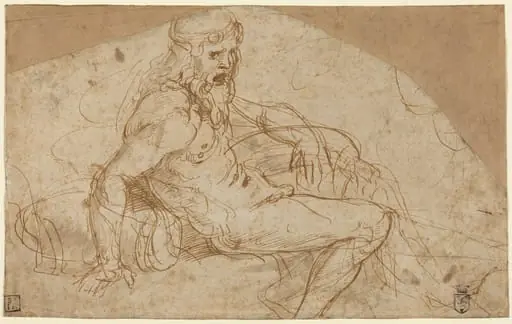
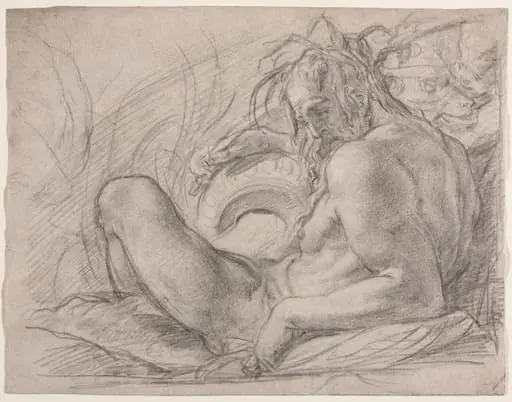 The River God Tiber (Study for a fresco, Miracle of the Snow, or the Foundation of Santa Maria Maggiore, Rome in the Canigiani chapel of S. Felicita, Florence)
 The Boy and Two Old Men
 Saint Jerome Reading in the Wilderness
 Jupiter
 Saint John the Baptist
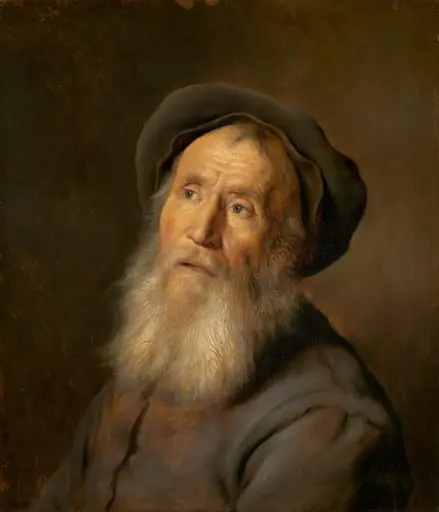
 Head of a Man
 Saint Jerome
 Mercury Lulling Argus to Sleep
 Saint Jerome