Artwork
Le printemps
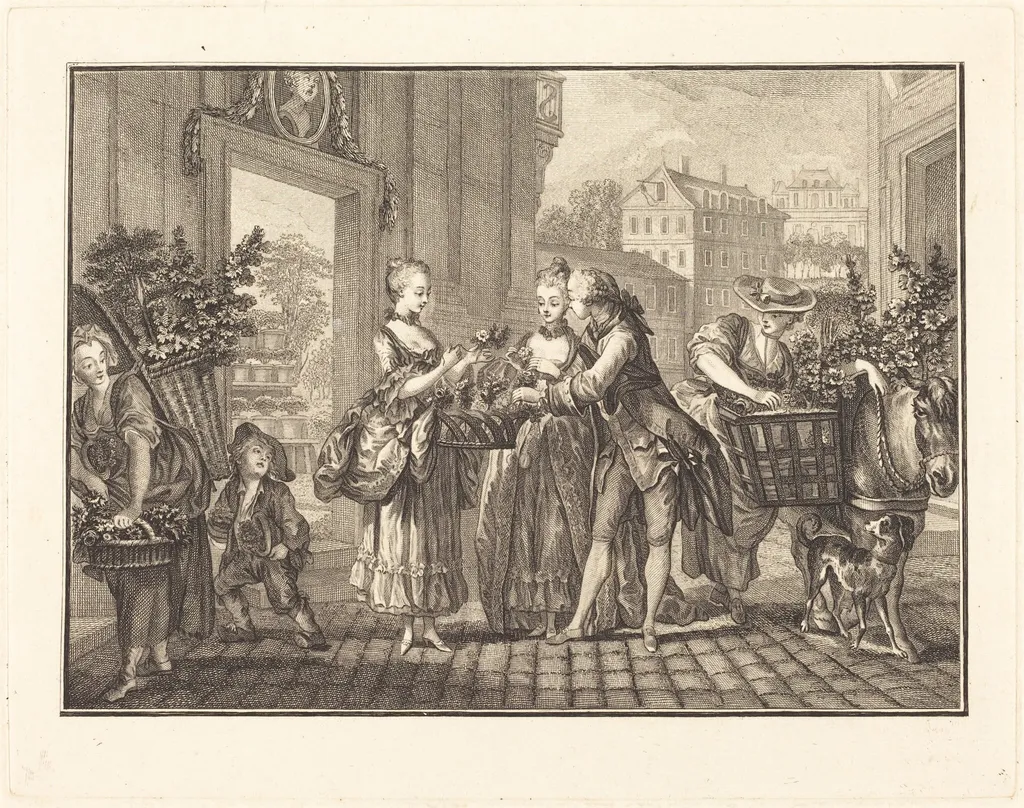
Le printemps is an ink print by the Baroque artist Joseph de Longueil. It dates from 1761 and is held in the collection of the National Gallery of Art.
About this work
Overview
The scene is framed by architectural elements and foliage, suggesting an idealized outdoor space rather than a literal location.
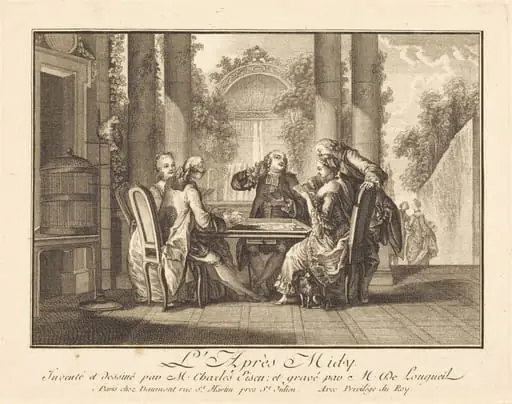
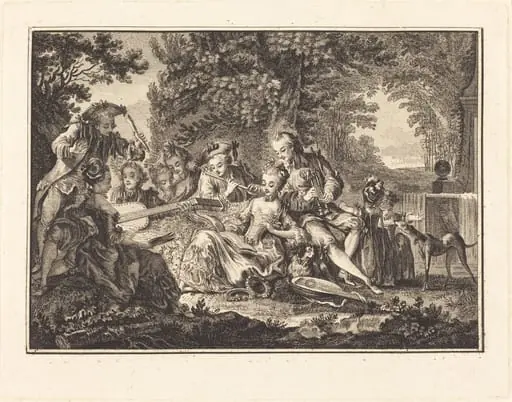
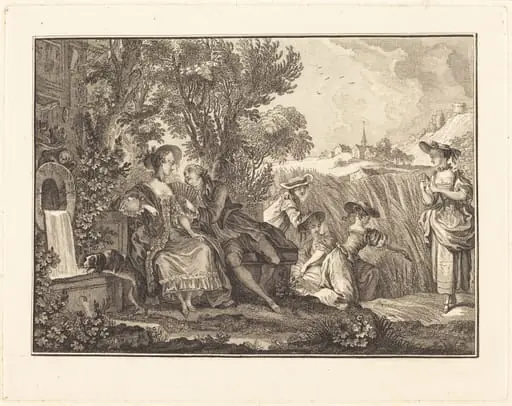
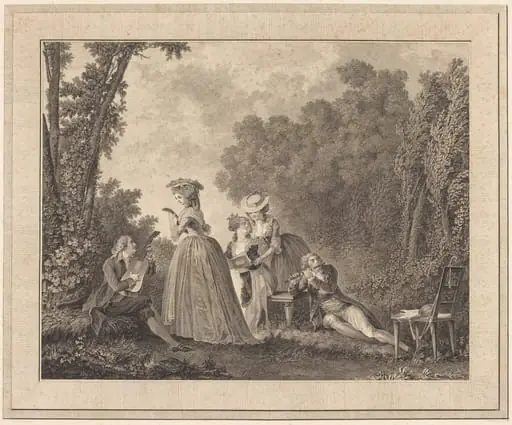
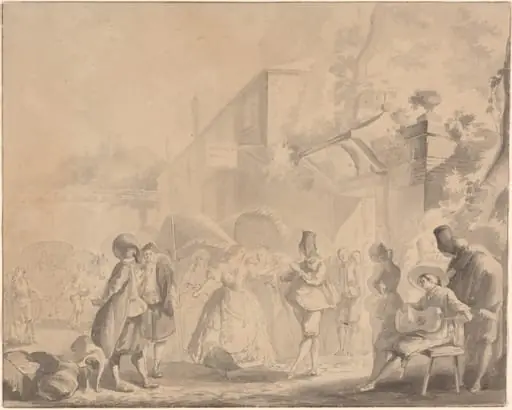
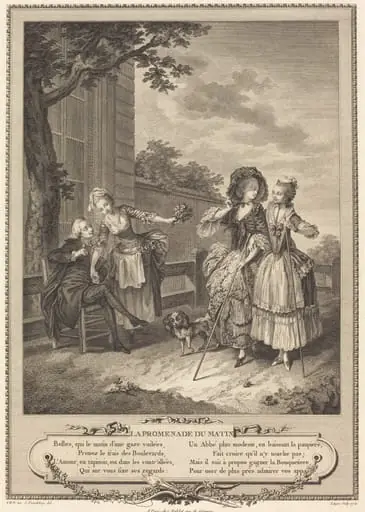
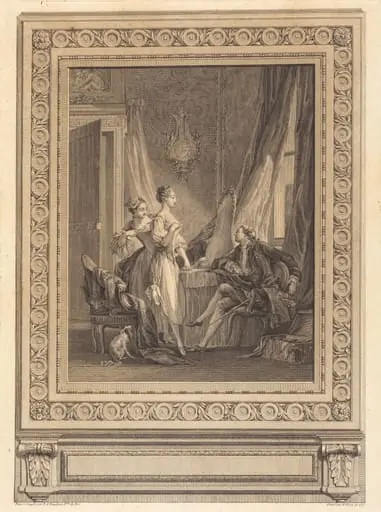
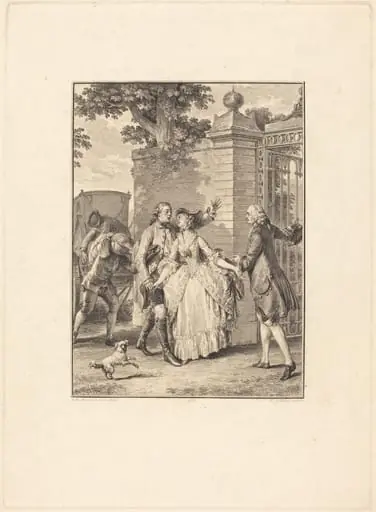
Le printemps is a black-and-white print created by Joseph de Longueil in 1761, combining etching and engraving techniques. It depicts a springtime gathering of elegantly dressed figures in a landscaped setting. The composition centers on a man presenting flowers to a woman, with additional characters engaged in quiet, varied actions.
The scene is framed by architectural elements and foliage, suggesting an idealized outdoor space rather than a literal location.
Subject & Meaning
The scene evokes the season of spring through gestures of courtship and renewal. The exchange of flowers symbolizes affection, while the presence of children, baskets, and a leashed dog implies domestic leisure. The figures are arranged with deliberate grace, reflecting 18th-century ideals of refined sociability.
Though not narrative in a literary sense, the image conveys a quiet celebration of seasonal transition and social harmony.
Technique & Style
Longueil employed fine, controlled lines typical of engraving to render textures of fabric, hair, and foliage with precision. The contrast between dense shadow and delicate hatching creates depth without color. The figures are posed with naturalistic ease, yet their arrangement is carefully composed, lending the scene a theatrical stillness. The technique emphasizes detail over spontaneity, characteristic of academic printmaking of the period.
History & Provenance
Created in 1761, the print was likely produced for a private or aristocratic audience interested in refined visual culture. No documented early ownership records are widely known, but its style aligns with French prints circulated among educated elites. It may have been part of a seasonal series, though no confirmed companion pieces survive. The work remains in institutional collections today, preserved as an example of mid-18th-century graphic art.
Context
In mid-18th-century France, prints like this served as accessible art for the upper classes, often inspired by painting and theater. The pastoral setting and genteel behavior reflect Rococo sensibilities, where nature was idealized as a backdrop for social ritual. Etching and engraving were favored for their reproducibility, allowing such scenes to circulate beyond the confines of royal or noble collections.
Legacy
Le printemps exemplifies the technical skill and aesthetic priorities of French academic printmaking before the Revolution. While not widely known today, it contributes to understanding how seasonal themes and social rituals were visually codified in the 1700s. Its preservation in museum collections ensures its role as a reference for studying the intersection of print culture and elite leisure in Enlightenment Europe.
Own this work as a print
Artist & collection