Artwork
Cestello Annunciation
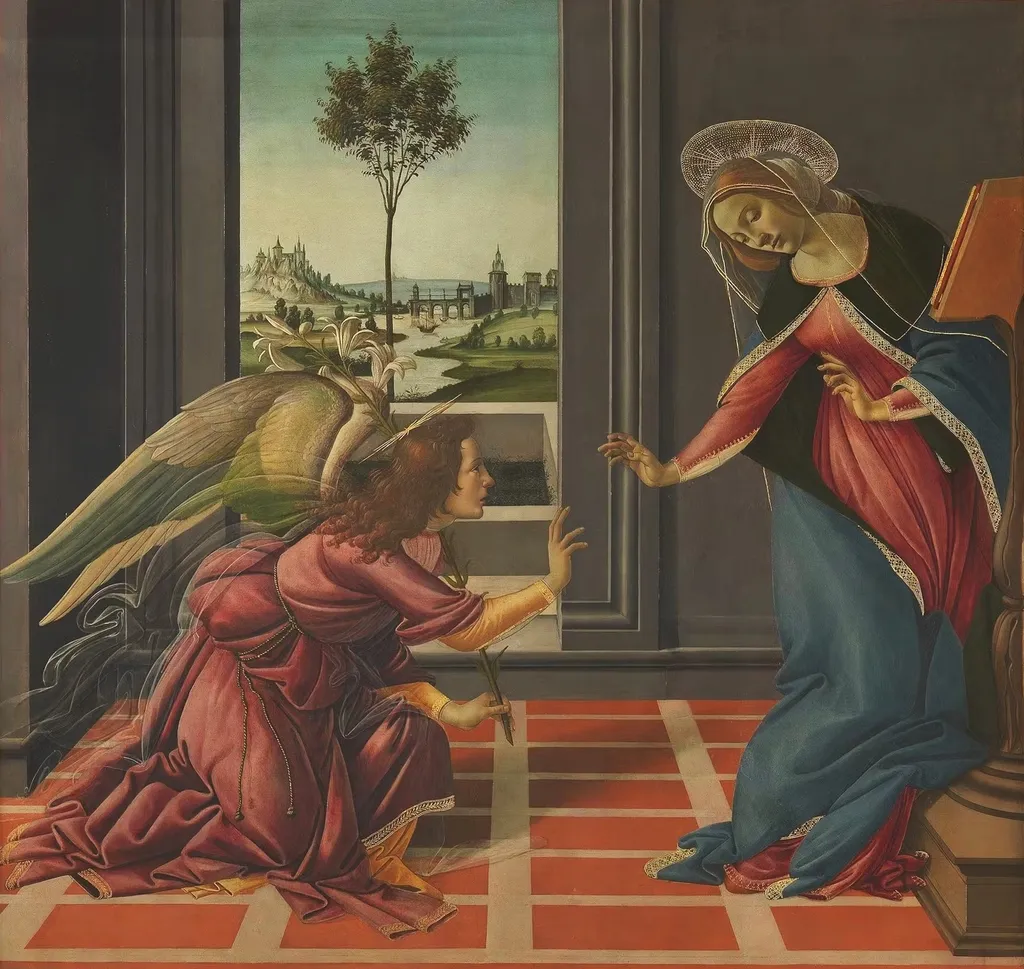
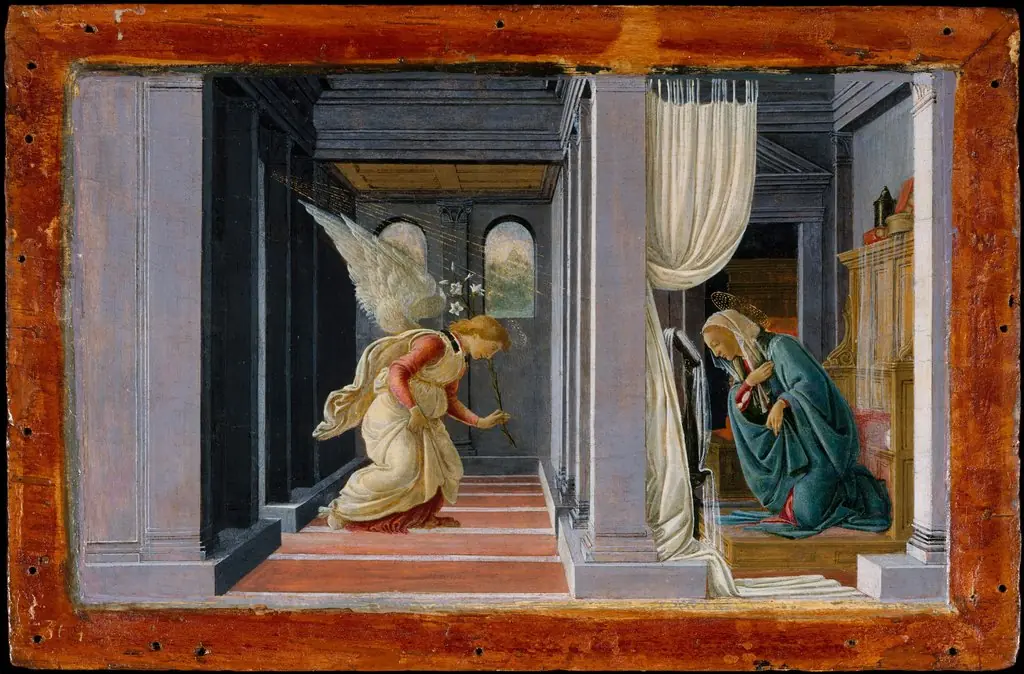
Cestello Annunciation is a tempera painting by the Early Renaissance artist Sandro Botticelli. It dates from 1495 and is held in the collection of the Uffizi Gallery.
About this work
Subject & Meaning
The Cestello Annunciation depicts the biblical episode where the Archangel Gabriel informs the Virgin Mary that she has been chosen to bear the Christ child.
The Cestello Annunciation depicts the biblical episode where the Archangel Gabriel informs the Virgin Mary that she has been chosen to bear the Christ child. Mary is interrupted while reading a book on a lectern, symbolizing her piety and the Old Testament prophecy of the Messiah. Gabriel presents a white lily, a traditional symbol of Mary's purity and virginity, which is further reinforced by the walled garden (hortus conclusus) visible through the doorway.
The background landscape represents the lost Paradise that Christ will redeem, while a young oak tree symbolizes temporal infinity.
The composition divides the scene into two realms: the open landscape behind Gabriel signifies his heavenly origin, while the enclosed architectural space surrounding Mary reflects her earthly purity. Theological writings of the 15th century divided the Annunciation into four stages, beginning with Mary's initial confusion and alarm. Botticelli captures this first stage through Mary's startled, twisting posture and gesturing hands, which simultaneously greet the angel and express her surprise.
The visual boundary between the figures, emphasized by the architectural frame and Gabriel's index finger resting on the door molding, reflects the doctrine of a virgin birth occurring without physical contact. The original frame's Latin inscriptions from Luke 1:35 and 1:38 record the angel's proclamation and Mary's obedient acceptance (fiat), framing the depicted moment as the bridge between heavenly announcement and human consent.
History & Provenance
The Cestello Annunciation was commissioned on 14 May 1489 by Benedetto di Ser Francesco Guardi, who paid thirty ducati for the work intended for his family chapel in the monastery of Cestello (now Santa Maria Maddalena de' Pazzi) in Florence. Painted in tempera on panel between 1489 and 1490, the altarpiece remained on the side altar of the church at least until the mid‑18th century, being mentioned by Vasari in 1550 and still observed by Richa around 1754. After the monastery passed to the nuns of Santa Maria Maddalena de' Pazzi, the painting was moved to the chapel of San Martino at the Fiesolan villa of Terenzano, where it was rediscovered in 1870 and transferred two years later to the Uffizi Gallery. A later restoration, completed in 1986, repaired 19th‑century damage, particularly to the azurite sky.
The Cestello Annunciation is held by the Uffizi Gallery in Florence. Originally commissioned for the Florentine monastery of Cestello (later Santa Maria Maddalena de' Pazzi), the painting remained on a lateral altar there until the mid-eighteenth century. It was subsequently moved to the san Martino chapel at the monastery's villa in Terenzano, Fiesole.
The work was rediscovered at the villa in 1870 and transferred to the Uffizi Gallery two years later, in 1872. The painting underwent a restoration in 1978, followed by another completed in 1986 to repair damage from a nineteenth-century intervention. No specific exhibition history or inventory/accession numbers are provided in the sources.
Context
The Cestello Annunciation entered the historical record soon after its completion: Vasari noted it in 1550, and later critics such as Bettini remarked on its colour, while a 1986 restoration repaired earlier damage (6). The work remains in its original frame, which scholars attribute to Botticelli’s workshop, and its predella inscriptions have prompted theological readings that relate the pose to fifteenth‑century discourses on the Annunciation (4). Recent scholarship, notably Daniel Arasse’s studies of Botticelli’s Annunciations, has examined its perspective construction and symbolic hortus conclusus (5).
Placed within the artist’s late‑1480s output, the painting reflects the influence of Savonarola’s preaching and exemplifies Early Renaissance concerns with spatial depth and symbolic garden motifs, linking it to Botticelli’s earlier and later Annunciation treatments (2,3,6).
Overview
Created in 1489, the Cestello Annunciation is a tempera panel painting by the Florentine artist Sandro Botticelli. Commissioned by the merchant Benedetto di Ser Giovanni Guardi, the work originally decorated the church of the Cestello monastery, today known as Santa Maria Maddalena de' Pazzi in Florence.
Technique & Style
Executed in egg tempera on wood, the painting showcases Botticelli’s characteristic linear elegance and delicate coloration. The fine brushwork and subtle modeling of figures reflect the artist’s mastery of the medium, allowing for luminous surfaces and precise detailing typical of late‑15th‑century Florentine practice.
Own this work as a print
Artist & collection
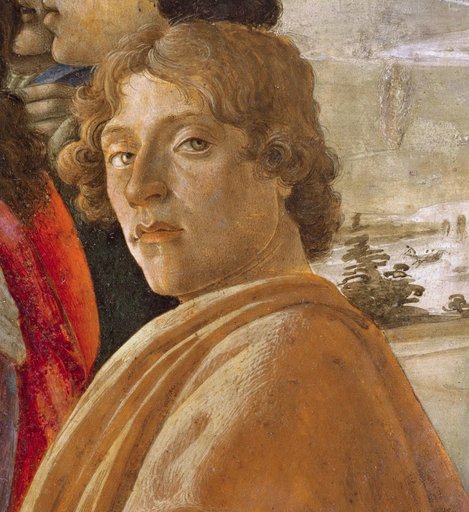
Artist
Alessandro di Mariano di Vanni Filipepi, better known as Sandro Botticelli or simply Botticelli, was an Italian painter of the Early Renaissance.