Artwork
The Annunciation
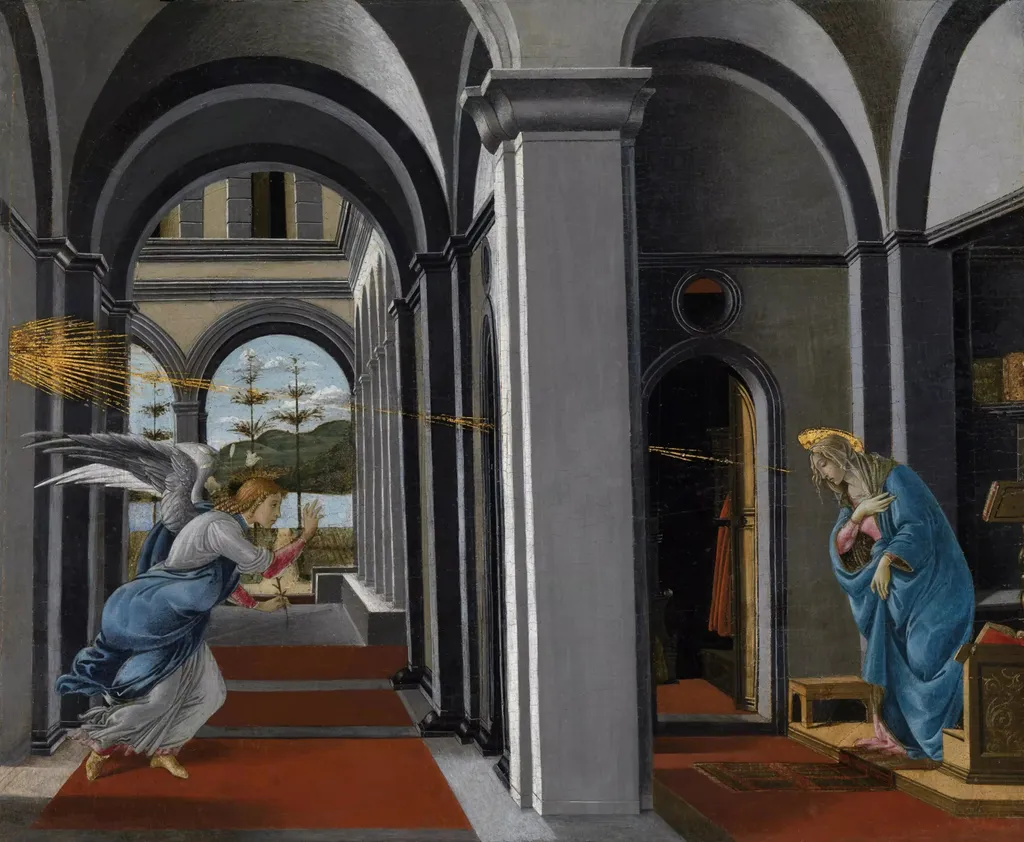
The Annunciation is a tempera painting by the Early Renaissance artist Sandro Botticelli. It dates from 1494 and is held in the collection of the Kelvingrove Art Gallery and Museum. The tempera panel, measuring roughly 49.
About this work
Subject & Meaning
The work is part of Botticelli’s broader exploration of the Annunciation theme, reflecting Renaissance interests in spatial depth and iconographic detail.
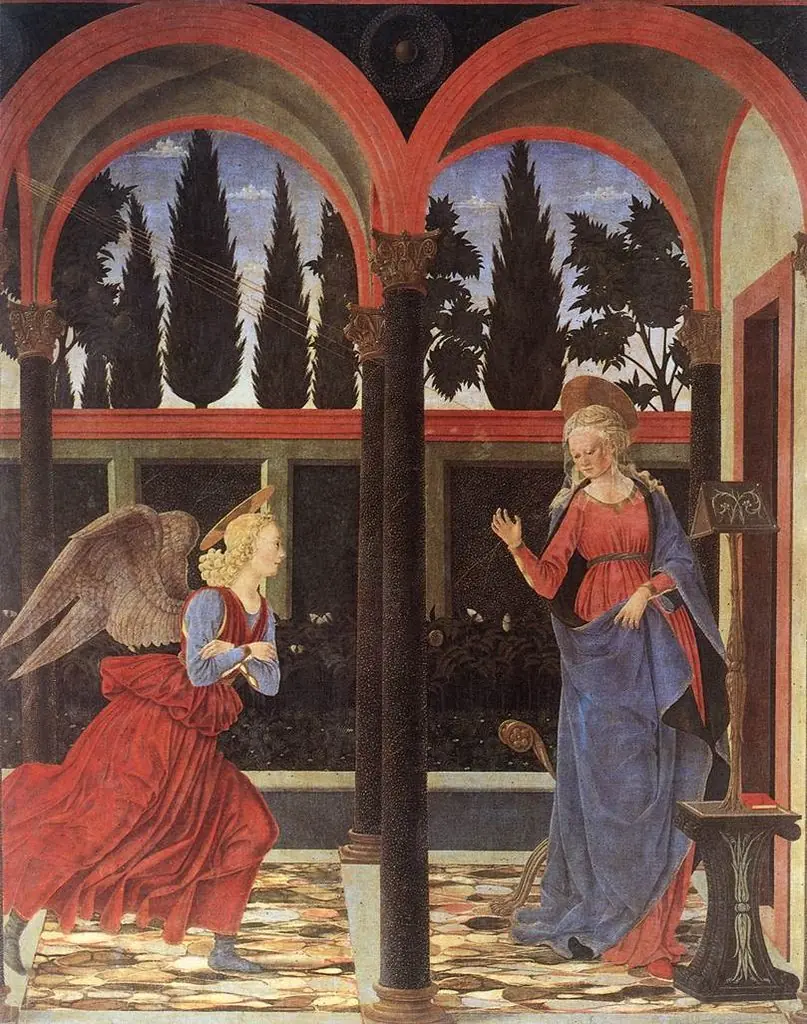
The painting depicts the moment of the Archangel Gabriel announcing to the Virgin Mary the conception and birth of Jesus, a scene drawn from the biblical Annunciation. The composition places Gabriel on the left, descending through an open architectural space marked by columns and a colonnade that frames a distant landscape, while Mary is shown in surprised contemplation within an interior with a lectern and book. Symbolic elements such as the Lilium, garden, and domestic furnishings reference Marian purity and the domestic setting of the divine announcement.
Botticelli’s use of linear perspective and architectural framing underscores the theological significance of the event as a pivotal moment of divine intervention. The work is part of Botticelli’s broader exploration of the Annunciation theme, reflecting Renaissance interests in spatial depth and iconographic detail.
The painting measures 49.5 cm in height and 58.5 cm in width, and is executed in tempera on panel. It was created around 1490, likely in Botticelli’s studio, and originally came from the Church of San Barnaba in Florence before entering the collection of Archibald McLellan and later the Kelvingrove Art Gallery and Museum in Glasgow.
Technique & Style
The Annunciation is executed in tempera on panel, a small-scale work measuring 49.5 cm in height by 58.5 cm in width. Botticelli and his studio built the scene around a rigorous perspectival structure: a succession of columns and pilasters divides the space between the Archangel Gabriel and the Virgin Mary, while the receding tiled floor reinforces the orthogonal scheme. The colonnade on the left opens onto a distant landscape of lake and trees, lending believable three-dimensional depth to the flat surface.
The architectural framework has been linked to forms associated with Giuliano da Sangallo, lending the composition a sober, Early Renaissance monumentality. The Italian sources note, however, that the perspective grid Botticelli employs does not align precisely with the true diagonals, revealing the constructed, artificial character of the recession.
History & Provenance
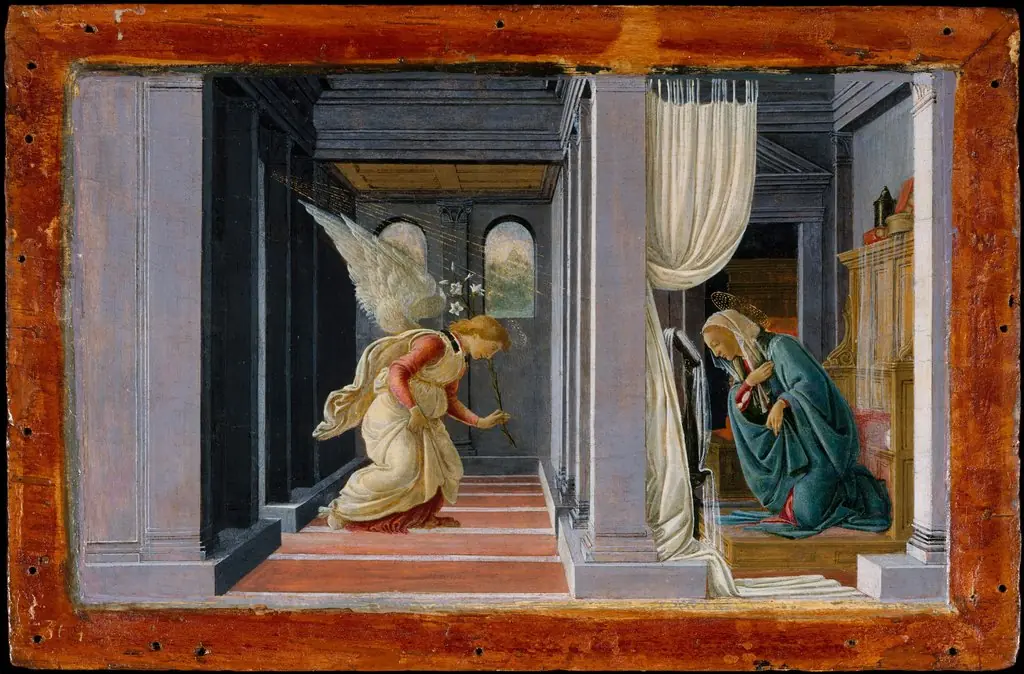
The Annunciation was painted by Sandro Botticelli and his studio around 1490, likely shortly after his earlier version of the scene, now in the Metropolitan Museum of Art, New York. The work was created for the Church of Saint Barnaba in Florence, as indicated by an inscription on the reverse of the panel. It entered the collection of Archibald McLellan, who later sold it to the Kelvingrove Art Gallery and Museum in Glasgow in 1856, where it remains on display.
The painting measures 49.5 cm in height and 58.5 cm in width, executed in tempera on panel. Its provenance traces back to the Church of Saint Barnaba in Florence before its acquisition by McLellan. The work reflects Botticelli's use of contemporary architectural perspective, with a colonnade framing the angel Gabriel and the Virgin Mary in a spatially composed interior.
The painting is held by the Kelvingrove Art Gallery and Museum in Glasgow, Scotland, where it is catalogued under accession number 174. It entered the collection as part of the Archibald McLellan Collection, purchased in 1856.
An inscription on the reverse of the panel records that the work originally came from the Church of San Barnaba in Florence, establishing its Florentine provenance before it passed into McLellan's ownership and subsequently to the Glasgow museum.
Context
The painting’s integration of early Renaissance perspective is central to its critical reception. Commentators highlight Botticelli’s use of a grid of columns and tiled floors to construct a measurable space, though analyses note the perspectival scheme is intentionally adjusted rather than strictly correct, revealing the artist’s deliberate manipulation of spatial illusion.
Scholarship has emphasized the work’s iconographic program, particularly the symbolic barrier of columns separating Gabriel and Mary, interpreted as prefiguring Christ as the mediating column. This motif recurs in four of Botticelli’s seven known Annunciations, underscoring a thematic consistency across his oeuvre.
Within Botticelli’s late production, the Glasgow panel aligns with a cluster of Annunciations dated circa 1490, including a closely related version now in the Metropolitan Museum of Art. Such works reflect the artist’s sustained engagement with the subject amid broader Florentine experimentation with perspectival systems and sacred narrative.
Legacy
The painting’s later reputation has been shaped by its provenance from the Florentine church of San Barnaba and its exhibition in Glasgow’s Kelvingrove Art Gallery and Museum since the mid-nineteenth century. Scholars have emphasized its sophisticated use of perspective, particularly the colonnade leading to a distant landscape, as emblematic of Botticelli’s engagement with Early Renaissance spatial innovations. Comparisons with other Annunciations by the artist highlight recurring architectural motifs, such as the interposed columns symbolizing Christ, which have been analyzed in studies of Italian Annunciations.
Its presence in public collections and reproductions has sustained scholarly interest in Botticelli’s thematic variations and iconographic precision.
The work’s legacy is further anchored by its inclusion in catalogues and thematic studies, including analyses by Daniel Arasse, which situate it within broader discussions of fifteenth-century religious painting and perspective theory.
Overview
The tempera panel, measuring roughly 49.5 by 58.5 centimetres, presents the biblical moment when the archangel Gabriel informs the Virgin Mary of her forthcoming role in the birth of Christ. Executed by Sandro Botticelli and his workshop, the work now hangs in Glasgow’s Kelvingrove Art Gallery and Museum.
Own this work as a print
Artist & collection
Artist
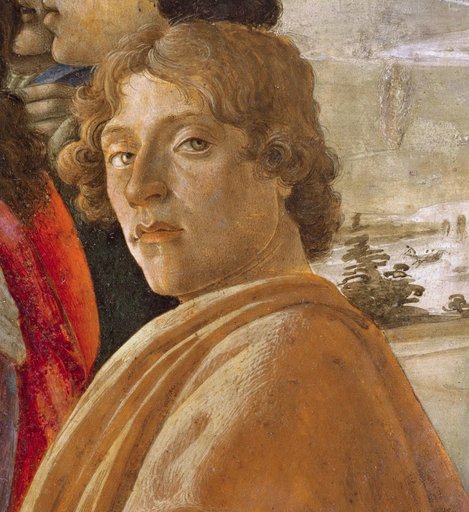
Alessandro di Mariano di Vanni Filipepi, better known as Sandro Botticelli or simply Botticelli, was an Italian painter of the Early Renaissance.

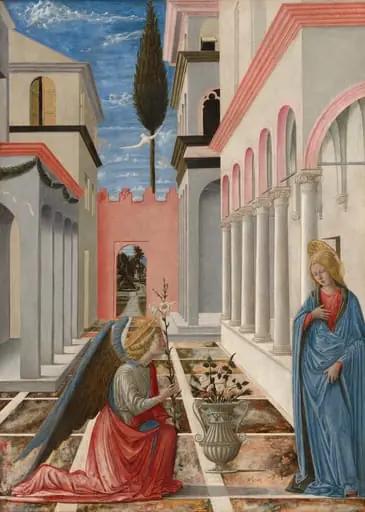 The Annunciation
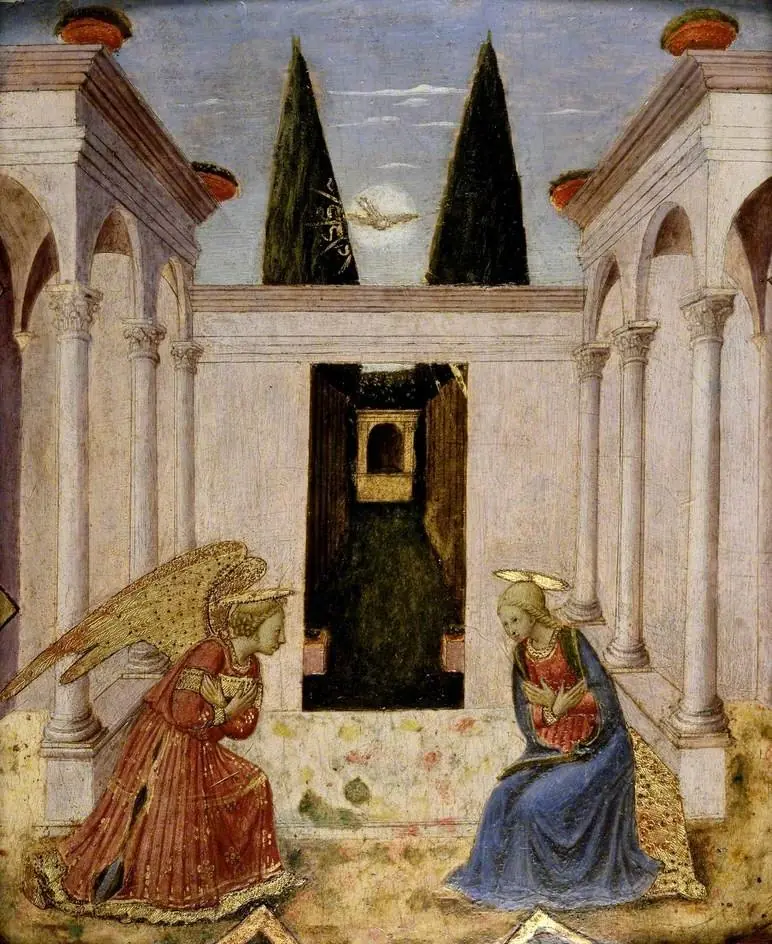 The Annunciation
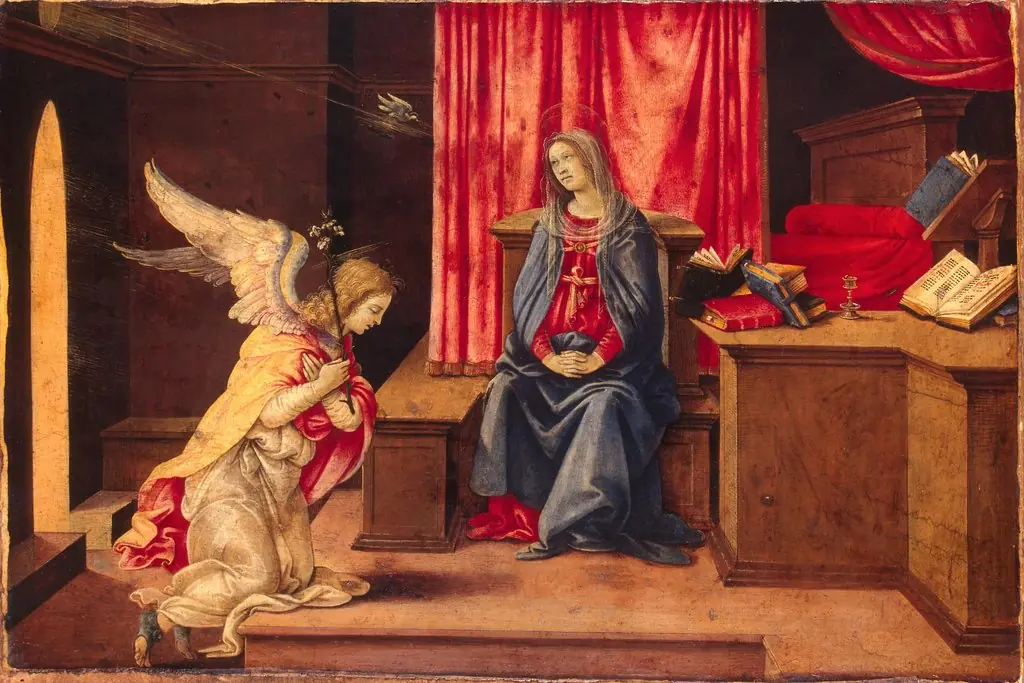 The Annunciation
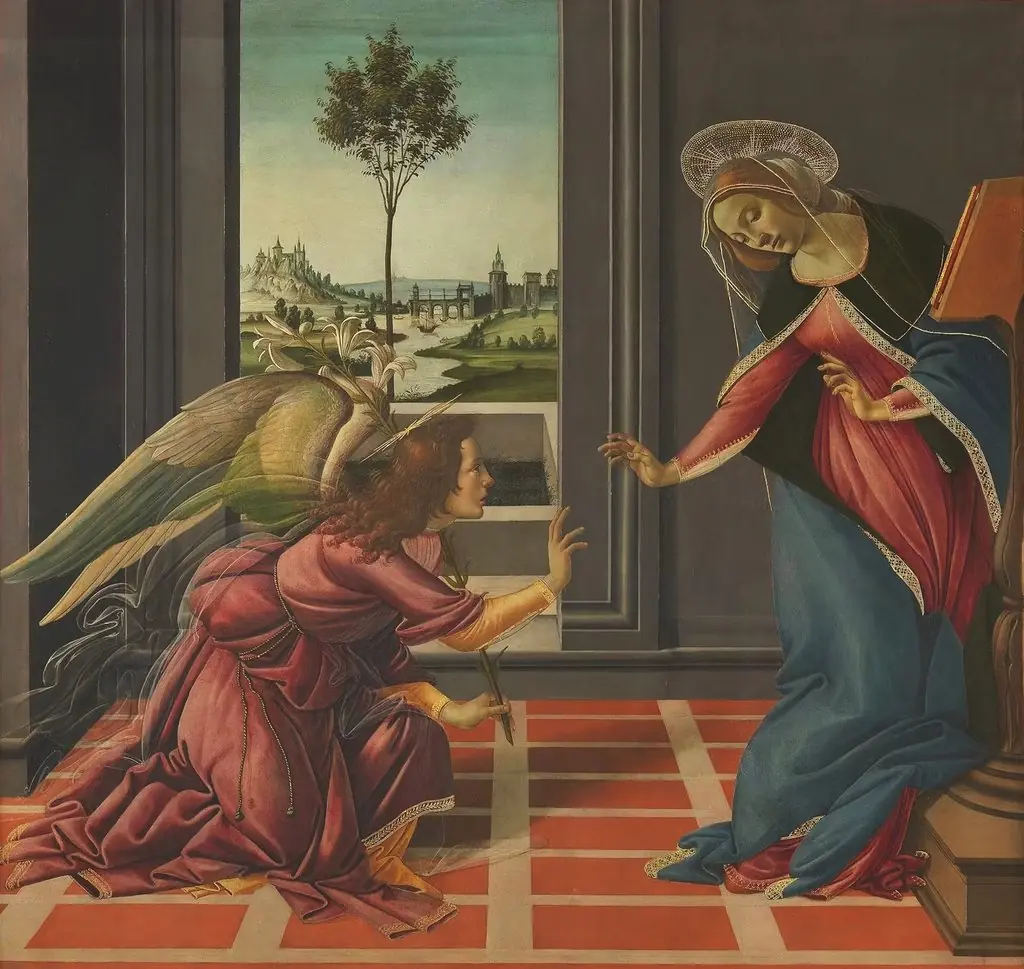 Cestello Annunciation
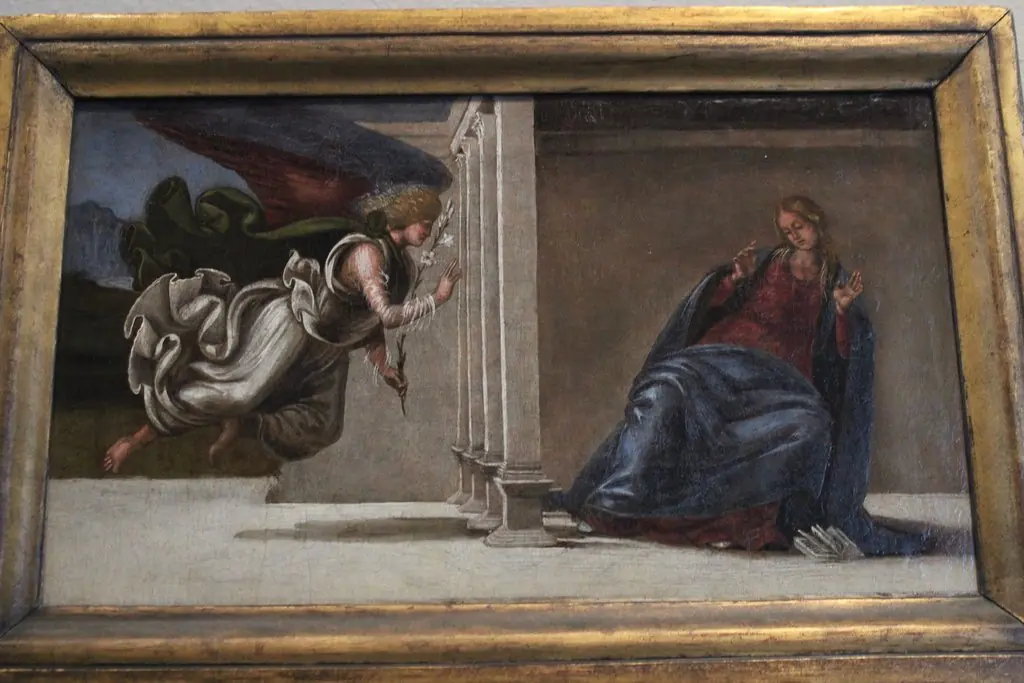 The Annunciation
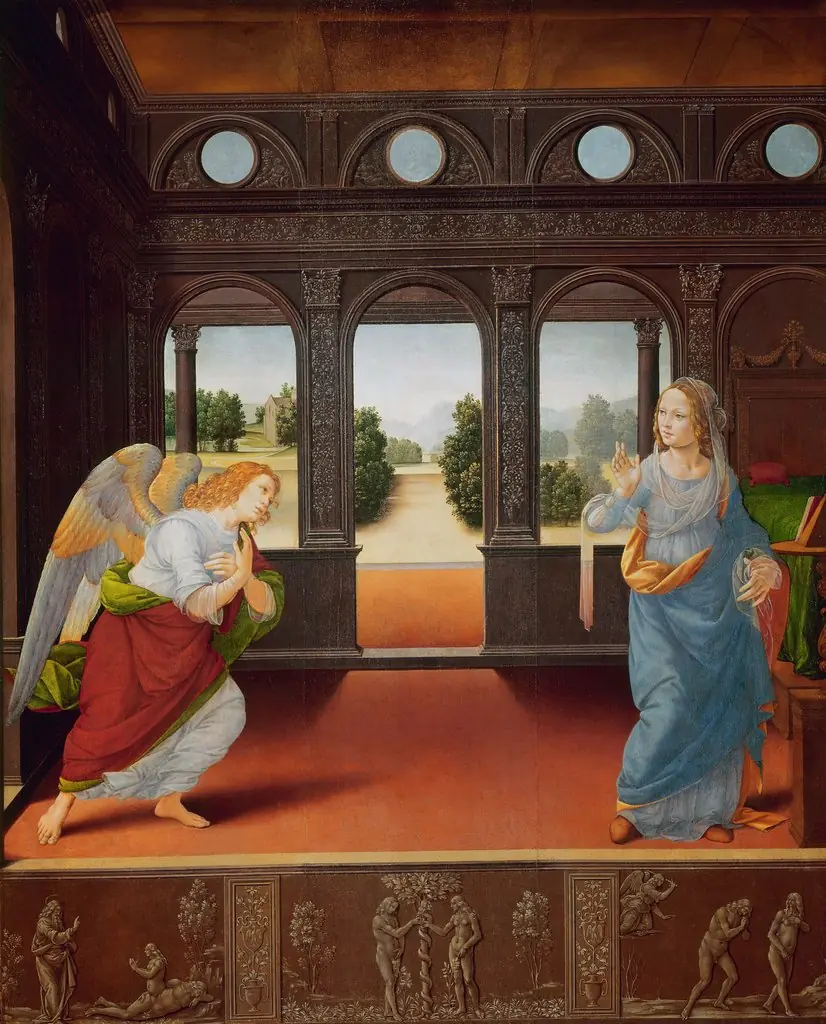 The Annunciation
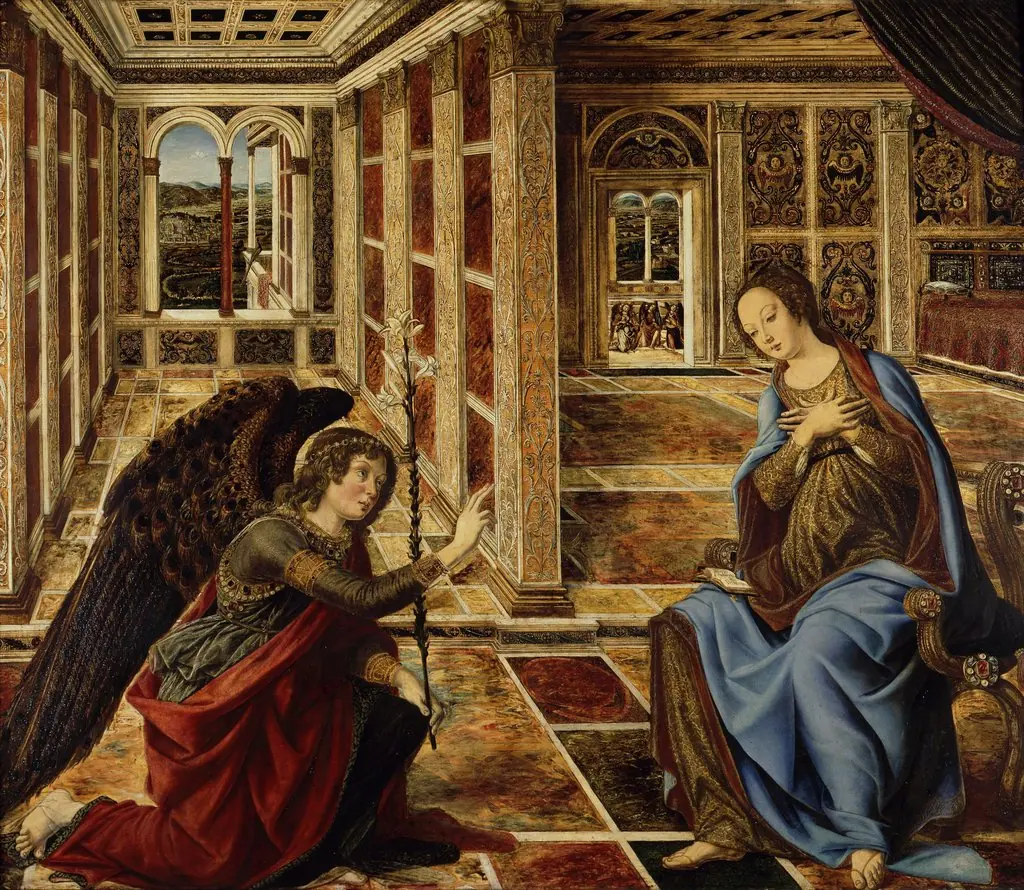 Annunciation
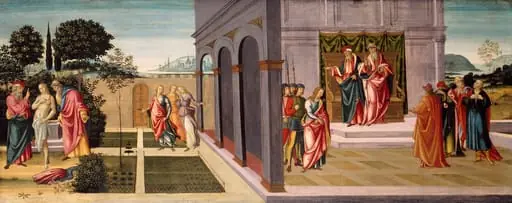 Susanna and the Elders in the Garden, and the Trial of Susanna before the Elders
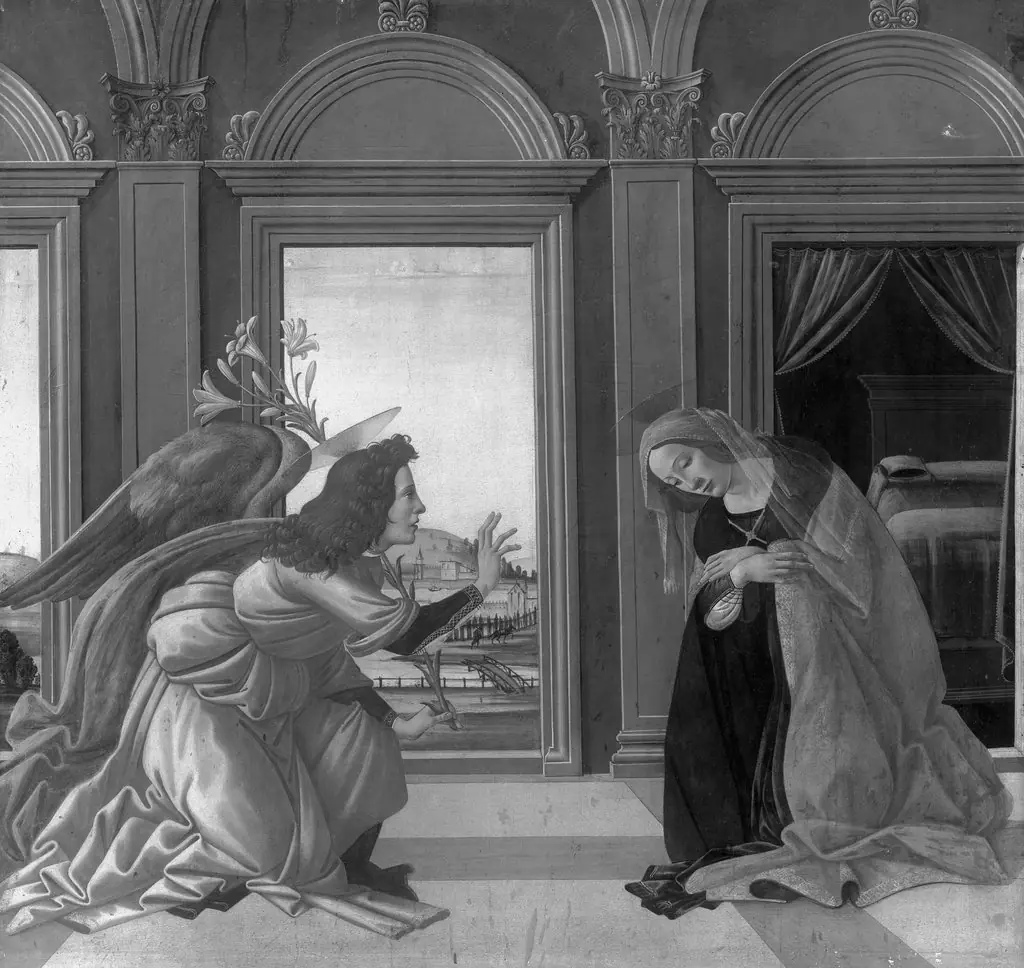 Annunciation to Mary
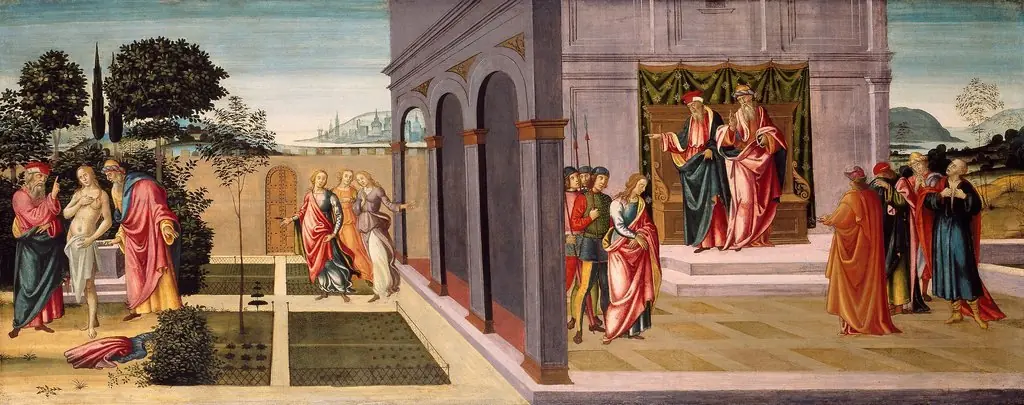 Susanna and the Elders in the Garden, and the Trial of Susanna before the Elders
 Annunciation