Artwork
The Resurrection
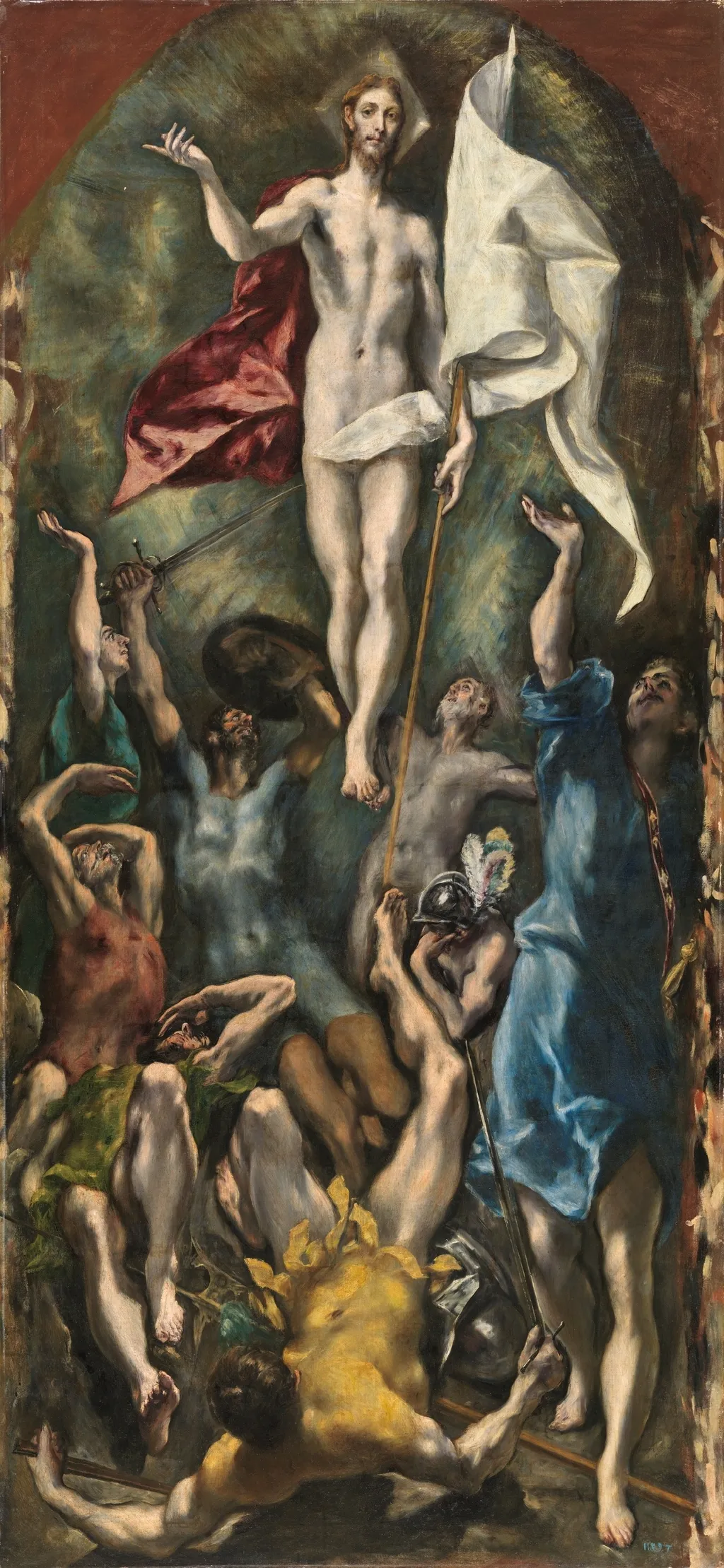
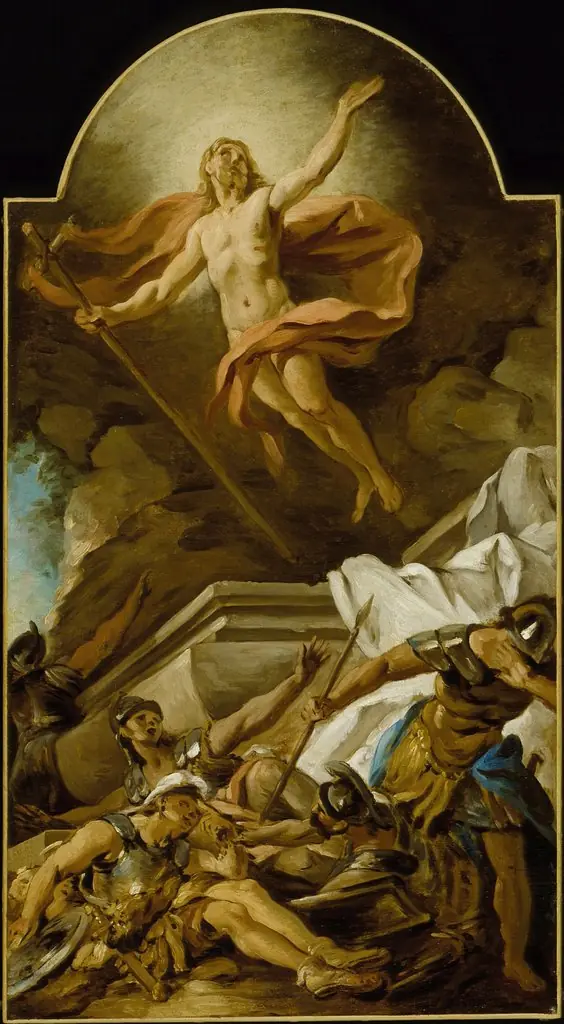
The Resurrection is an oil painting by the Mannerist artist El Greco. It dates from 1600 and is held in the collection of the Museo del Prado.
About this work
The altarpiece was created for the chapel of the Colegio de la Encarnación in Madrid between 1596 and 1599.
The Resurrection is an oil painting by El Greco, dated 1598. It was part of the Doña María de Aragón Altarpiece.
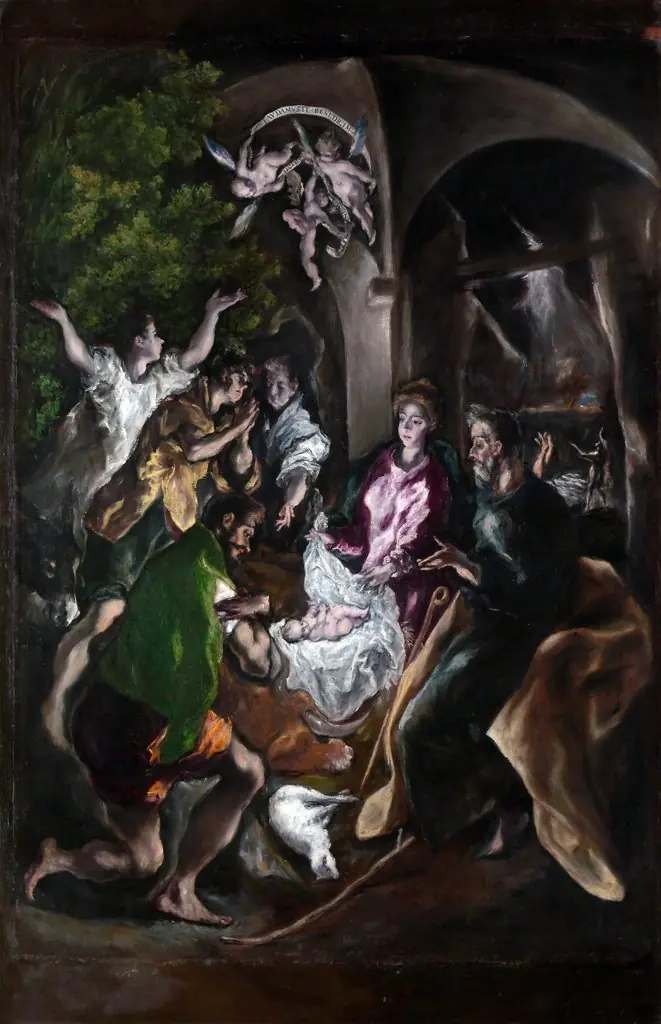
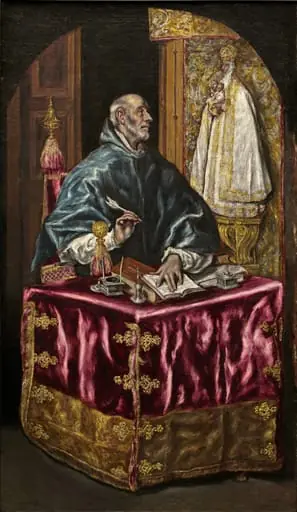
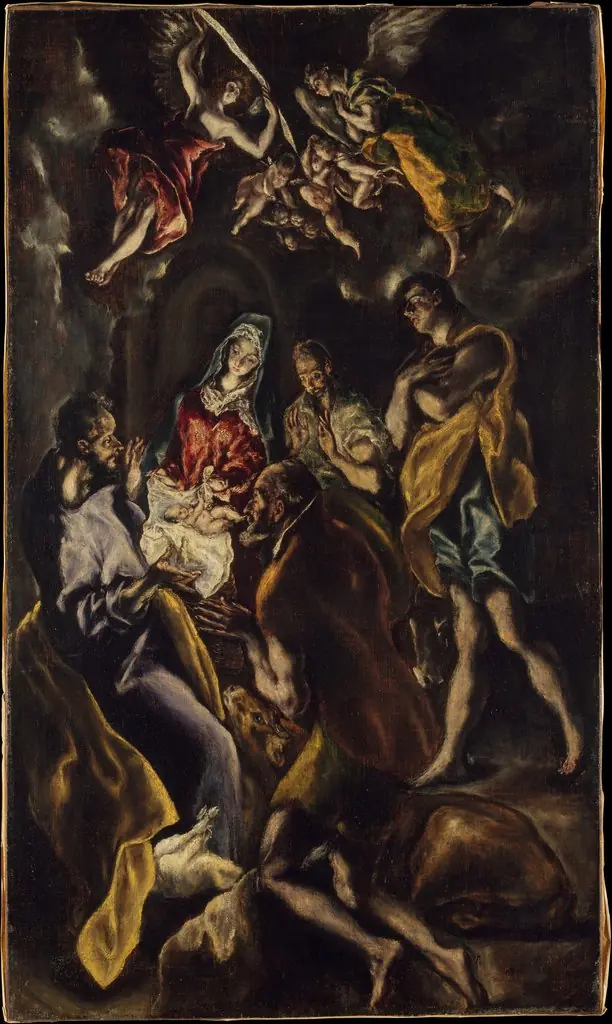
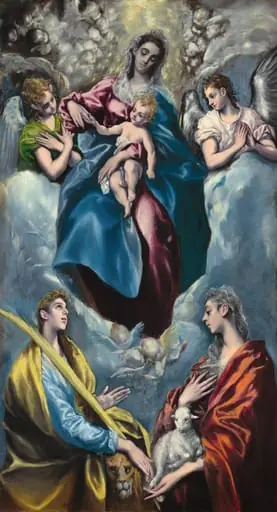
The altarpiece was created for the chapel of the Colegio de la Encarnación in Madrid between 1596 and 1599. The work was later dismantled and most of its panels are now in the Prado. Five of the six surviving canvases are in the Prado, while one is in Bucharest.
If you want to see more, check out the Museo del Prado.
Subject & Meaning
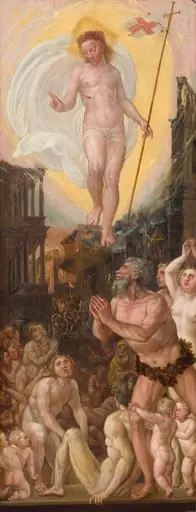
The painting depicts the Resurrection of Jesus, a scene not explicitly narrated in the canonical Gospels but derived from apocryphal traditions, such as the Gospel of Peter. Christ appears in the upper half of the composition, holding a white banner of victory and gazing directly at the viewer. His figure is frontal and hieratic, evoking Byzantine art, with feet joined as if still on the Cross and surrounded by a rhomboid halo.
Below, eight Roman soldiers react with varied agitation to the divine event; some raise their arms in awe while others attempt to shield themselves with swords and spears. By omitting the tomb and environmental details, the artist minimizes historical context to emphasize spiritual symbolism: the rebirth of humanity through Salvation. The elongated forms and intense contrasts of light create an unreal, emotional space that prioritizes theological meaning over physical realism.
Technique & Style
The Resurrection is an oil painting executed on canvas in a vertical format measuring 275 × 127 cm, dating to 1598. The work is rendered in oil paint, employing the loose, expressive brushwork characteristic of El Greco’s late period. Figures are elongated and stylized, with stark contrasts of light and vivid, unnatural colors that heighten the dramatic tension.
Christ appears half‑upper, holding a white resurrection standard, while Roman soldiers below react with dynamic gestures. The composition emphasizes symbolic over narrative detail, creating a hieratic, almost Byzantine aura through flattened space and intensified color.
History & Provenance
The Resurrection was painted by El Greco as part of the Doña María de Aragón Altarpiece, commissioned in 1596 for the chapel of the Colegio de la Encarnación (Colegio de doña María de Aragón), an Augustinian seminary in Madrid. The patron was María de Córdoba y Aragón, lady of Queen Anne of Austria; after her death the Council of Castile assumed responsibility for the works. Documents record a three-year timeline and a valuation of just over sixty-three thousand reales, the highest fee of El Greco's career, though they do not specify the altarpiece's structure or subjects.
Dating is given as 1597–1600 by the Museo del Prado, while Harold Wethey proposed a date around 1605 and questioned the canvas's membership in the altarpiece.
The recorded provenance runs: Colegio de María de Aragón, Madrid, 1600–1813; Church of San Felipe el Real and the Inquisition House, Madrid, 1813–1835; Real Academia de Bellas Artes de San Fernando, Madrid, 1835–1838; Museo de la Trinidad, 1838–1872, after which it entered the Museo del Prado, where it remains.
The painting is currently held in the Museo del Prado in Madrid, having previously been part of the collection at the Museo de la Trinidad between 1838 and 1872. Its provenance traces back to the Colegio de María de Aragón around 1600, followed by transfers to the Church of San Felipe el Real and the Real Academia de Bellas Artes de San Fernando during the early nineteenth century. While generally associated with the Doña María de Aragón Altarpiece, some scholars dispute this attribution, suggesting it may instead originate from the Basilica of Atocha based on historical descriptions.
The work measures 275 by 127 centimeters and bears the artist's signature in Greek characters at the lower right. Catalogue raisonnés list the piece under number 111 by Wethey and number 145 by Frati.
Context
The Resurrection is generally thought to have belonged to the Doña María de Aragón Altarpiece, commissioned in 1596 from El Greco for the chapel of the Augustinian Colegio de la Encarnación in Madrid, though scholars including Wethey and Gudiol have disputed its inclusion in that ensemble. The altarpiece was the most highly valued commission of El Greco's career, priced at just over sixty-three thousand reales, and was dismantled after the college was secularised. The painting is now held at the Museo del Prado.
Stylistically, the work exemplifies El Greco's mature mannerist idiom: elongated figures, accentuated light contrasts, and an emotionally charged atmosphere that the Italian source notes drew criticism in later generations before being rediscovered in the twentieth century for its modernity. The frontal, hieratic Christ, with feet joined as on the Cross and a rhomboidal halo, recalls Byzantine art, while the omission of the tomb reflects Counter-Reformation theological guidance. The canvas is regarded as a reinterpretation of El Greco's earlier Resurrection for Santo Domingo el Antiguo, intensifying the spiritual and expressive elements of that prototype.
Legacy
The painting's distinctive style, characterized by elongated figures and unnatural, vibrant colors, faced criticism from immediate successors who found these elements unconventional. However, this same expressive deformation and spiritual intensity were re-evaluated and highly appreciated during the twentieth century for their perceived modernity.
Scholars note that the work represents a reinterpretation of the artist's earlier Resurrection, emphasizing emotional atmosphere over historical realism. By eliminating specific environmental references and flattening the space, the composition focuses on the symbolism of human rebirth through salvation, creating an irreal atmosphere that anticipates later artistic developments.
Overview
The oil painting titled "The Resurrection," completed by El Greco in 1598, was an integral component of the expansive Doña María de Aragón Altarpiece. This significant commission was produced for the chapel of the Colegio de la Encarnación in Madrid. The work exemplifies El Greco's distinctive artistic vision, characterized by its dramatic composition and spiritual intensity, reflecting his mature period.
Artist & collection
Artist
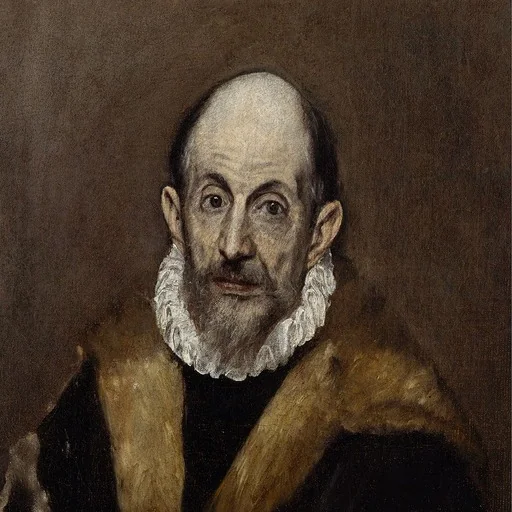
Doménikos Theotokópoulos was born in 1541 in Candia (modern Heraklion), the capital of Venetian-ruled Crete, where he was trained in the post-Byzantine tradition of icon painting.