Artwork
Christ taking leave of his Mother
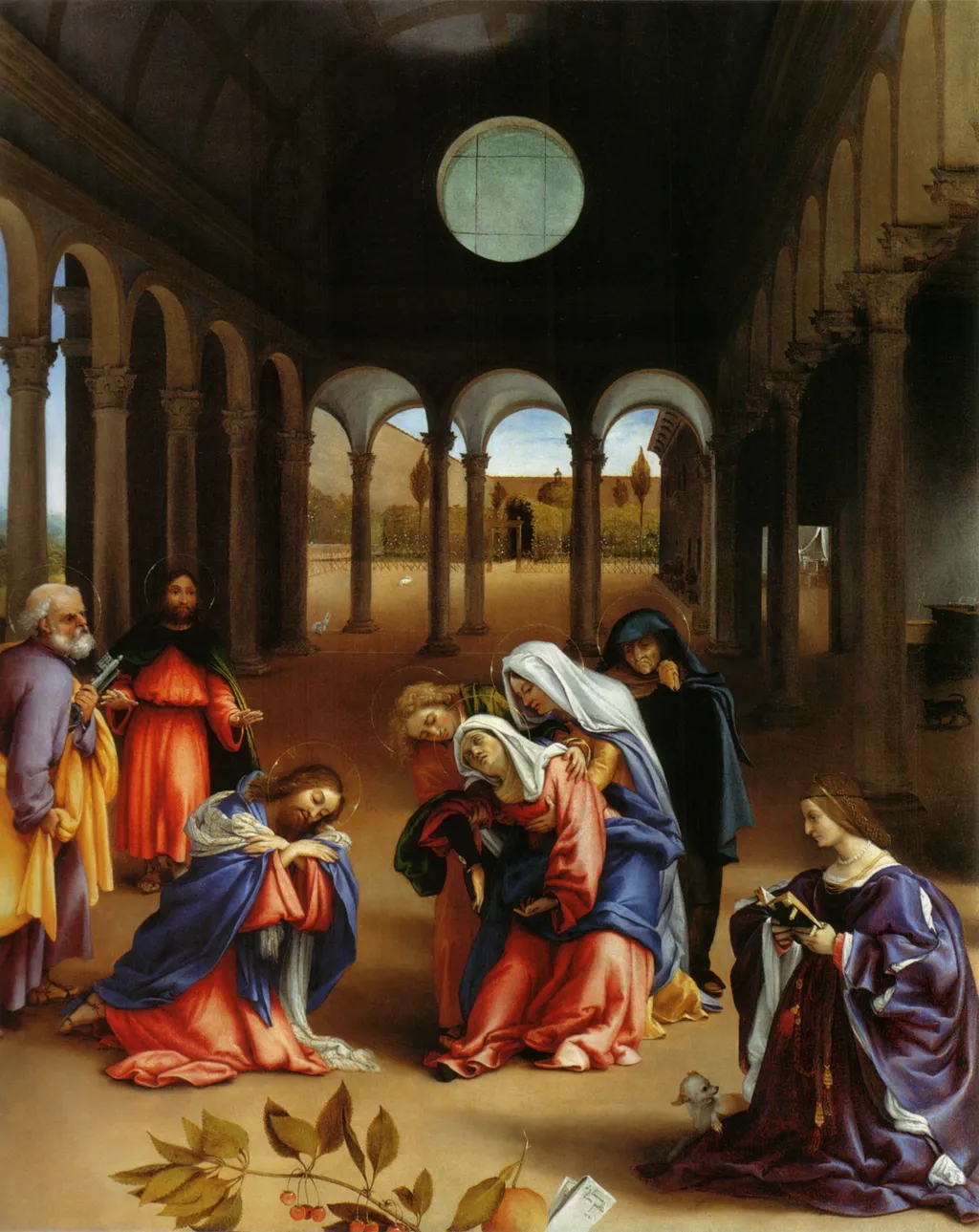
Christ taking leave of his Mother is a paint painting by the Mannerist artist Lorenzo Lotto. It dates from 1521 and is held in the collection of the Gemäldegalerie Berlin.
About this work
This painting shows Mary saying goodbye to Jesus before he leaves. It’s an oil painting made in 1521. The artist is Lorenzo Lotto.
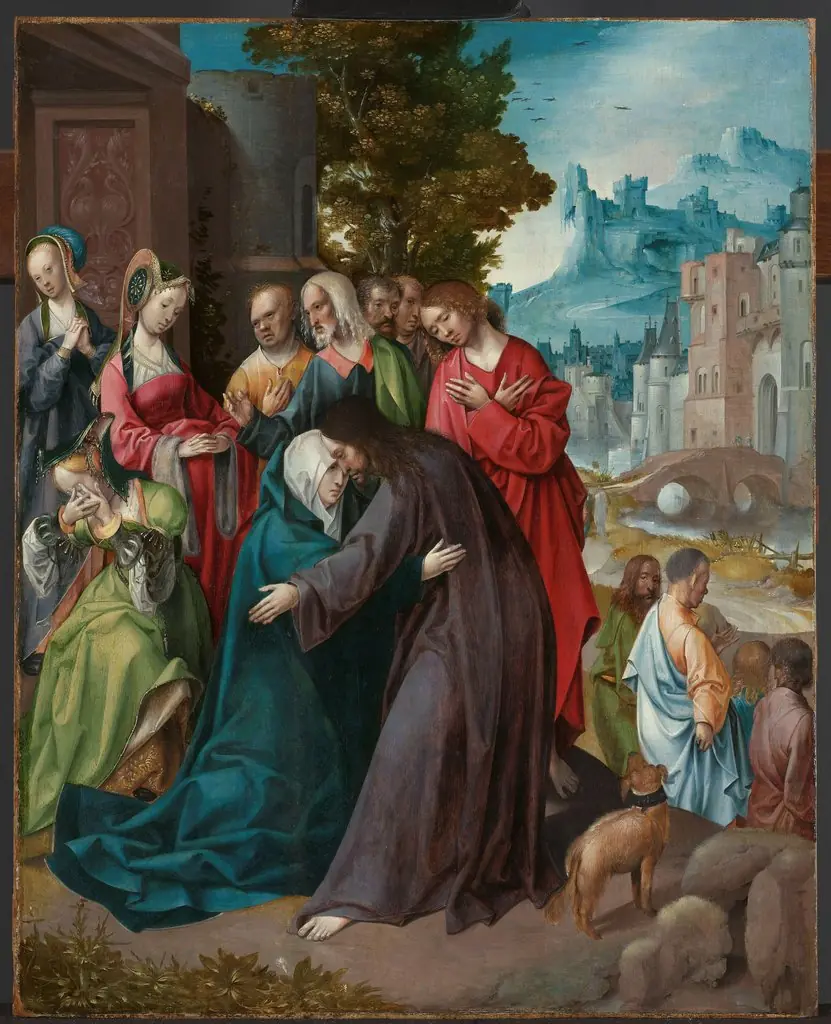
Lotto painted the scene with care. The mood feels quiet, almost like a private moment. His work here has some things in common with Correggio’s smaller version of the same scene.
Check out another painting by Correggio at the National Gallery in London.
Subject & Meaning
Mary, overcome with grief, faints while supported by John the Apostle and female saints, while Peter and James the Great observe from the left.
Lorenzo Lotto's 1521 painting depicts Christ bidding farewell to the Virgin Mary before his journey to Jerusalem and subsequent crucifixion, a scene rooted in devotional literature rather than the Gospels. The composition mirrors the Annunciation, set within a domestic interior featuring an enclosed garden (hortus conclusus) and a barrel-vaulted ceiling illuminated by an oculus, symbolizing the dawn of a new Christian era through Christ's sacrifice. Mary, overcome with grief, faints while supported by John the Apostle and female saints, while Peter and James the Great observe from the left.
The work includes the donor, Elisabetta Rota, kneeling in prayer at the right with a dog representing fidelity; she appears detached from the main event, suggesting a mental visualization consistent with contemporary devotional practices. Foreground elements include a trompe-l'œil cartellino with the artist's signature alongside cherries and citrus fruit, which carry symbolic meanings that remain partially undefined. A stealthy cat and realistic lighting effects further ground the sacred narrative in a tangible, everyday reality.
Technique & Style
Executed in 1521, this work is an oil painting on canvas measuring approximately 127 by 102 centimeters. The artist signed and dated the piece via a cartellino positioned at the lower margin, creating a trompe-l'œil effect where the paper appears slipped between the canvas and its original frame. The composition features monumental figures arranged under a barrel-vaulted ceiling illuminated by a large oculus, suggesting dawn.
Lotto employed vivid, contrasting colors to heighten the expressive pathos of the scene, particularly in the depiction of the fainting Virgin supported by attendants. Formal realism is evident in detailed elements such as a stealthy cat with light-reflecting pupils and a partial still life of cherries and an orange in the foreground. The spatial arrangement utilizes perspective to bridge the virtual pictorial space with the viewer's reality, while the overall scheme echoes traditional Annunciation layouts.
History & Provenance
Lorenzo Lotto executed this oil-on-canvas painting in 1521, the same year he completed the Santo Spirito and San Bernardino altarpieces. The work was commissioned by Elisabetta Rota, a noblewoman from Bergamo, who is depicted kneeling in the lower right corner reading a book. Her husband, Domenico Tassi, also patronized Lotto, ordering a St Jerome and a Nativity; the latter likely originally formed a pendant pair with this Berlin canvas.
The painting bears the signature "Laurentjo / Lotto Pictor / 1521" on a cartellino situated near a still-life arrangement of fruit at the bottom edge. Acquired in 1821, the artwork entered the collection of the Gemäldegalerie in Berlin, where it remains housed.
The painting is held by the Gemäldegalerie in Berlin, Germany, where it has been preserved since its acquisition in 1821. According to the Italian-language source, the canvas measures 126 × 99 cm, while the Wikidata entry records slightly different dimensions of 127.4 × 102 cm. No specific inventory or accession number is provided in the available sources.
The work is signed and dated "Laurentjo / Lotto Pictor / 1521," the same year Lotto executed the Santo Spirito Altarpiece and the San Bernardino Altarpiece for the Bergamasque noblewoman Elisabetta Rota, who is depicted kneeling at the lower right of the composition. Rota was the wife of Domenico Tassi, who commissioned a St Jerome and a Nativity from Lotto; the Nativity, which contains Tassi's portrait, is thought to have originally formed a pendant with the Berlin painting. No further exhibition history is documented in the sources reviewed.
Context
Painted in 1521, the same year Lorenzo Lotto produced the Santo Spirito and San Bernardino altarpieces for the Bergamasque noblewoman Elisabetta Rota, Christ Taking Leave of his Mother belongs to a particularly productive phase of the artist's career. The canvas was likely conceived as a pendant to a Nativity commissioned by Rota's husband Domenico Tassi, linking the work to Lotto's network of private patrons in Bergamo. The painting shows affinities with the small Christ Taking Leave of his Mother by Correggio in London, a comparison that has prompted scholars to consider possible contact between the Venetian and Emilian painters, though no documentary evidence of their relationship survives.
Stylistically, the monumental figures and popular pathos recall the sculptural ensembles of Gaudenzio Ferrari at the Sacro Monte di Varallo, situating the work within the expressive devotional culture of early sixteenth-century Lombardy. The scene, drawn from non-canonical devotional literature rather than the Gospels, is composed on the schema of an Annunciation, a structural choice that places Lotto's canvas within a broader iconographic tradition of Marian imagery. The painting has been discussed in standard monograph studies of the artist, including those by Carlo Pirovano and Roberta D'Adda.
Legacy
The Berlin canvas has long been read alongside Correggio's smaller London treatment of the same subject, the two works sharing compositional affinities that have led scholars to suggest Lotto may have known his Emilian contemporary's panel, though no documentary evidence of a direct relationship survives. Within Lotto's own output, the 1521 painting is grouped with the Santo Spirito and San Bernardino altarpieces executed the same year for Elisabetta Rota, and it is thought to have originally formed a pendant with a Nativity commissioned by her husband Domenico Tassi.
The work entered the Berlin collection in 1821 and remains in the Gemäldegalerie, where it is documented through the Bildindex bpk photographic archive and the Fondazione Federico Zeri. Italian-language scholarship by Pirovano, D'Adda, and Zanchi has sustained its place in the Lotto literature, while the painting continues to be cited as a touchstone for the expressive, popular-piety strain in Lombard devotional imagery of the Cinquecento.
Overview
Lorenzo Lotto’s oil on canvas, dated 1521, portrays the biblical episode in which Christ bids farewell to his mother before departing for Jerusalem. The work, now housed in Berlin’s Gemäldegalerie, measures a modest size and is signed by the artist with the inscription “Laurentjo / Lotto Pictor / 1521.”
Own this work as a print
Artist & collection
Artist
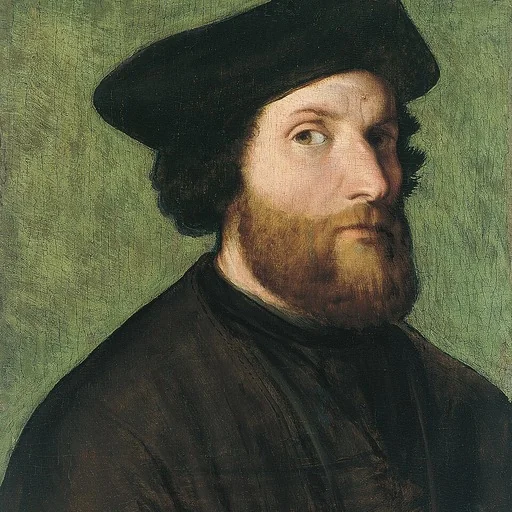
Lorenzo Lotto (c. 1480 – 1556/57) was an Italian Renaissance painter, draughtsman, and illustrator, traditionally placed in the Venetian school, though much of his career was spent in other north Italian cities. He…




 The Visitation with Saint Nicholas and Saint Anthony Abbot
 The Adoration of the Magi
 The Adoration of the Magi
 L'Annonciation
 Annunciation
 Scenes from the Life of Saint John the Baptist
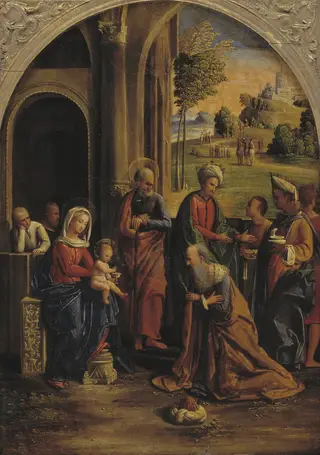 The Adoration of the Kings
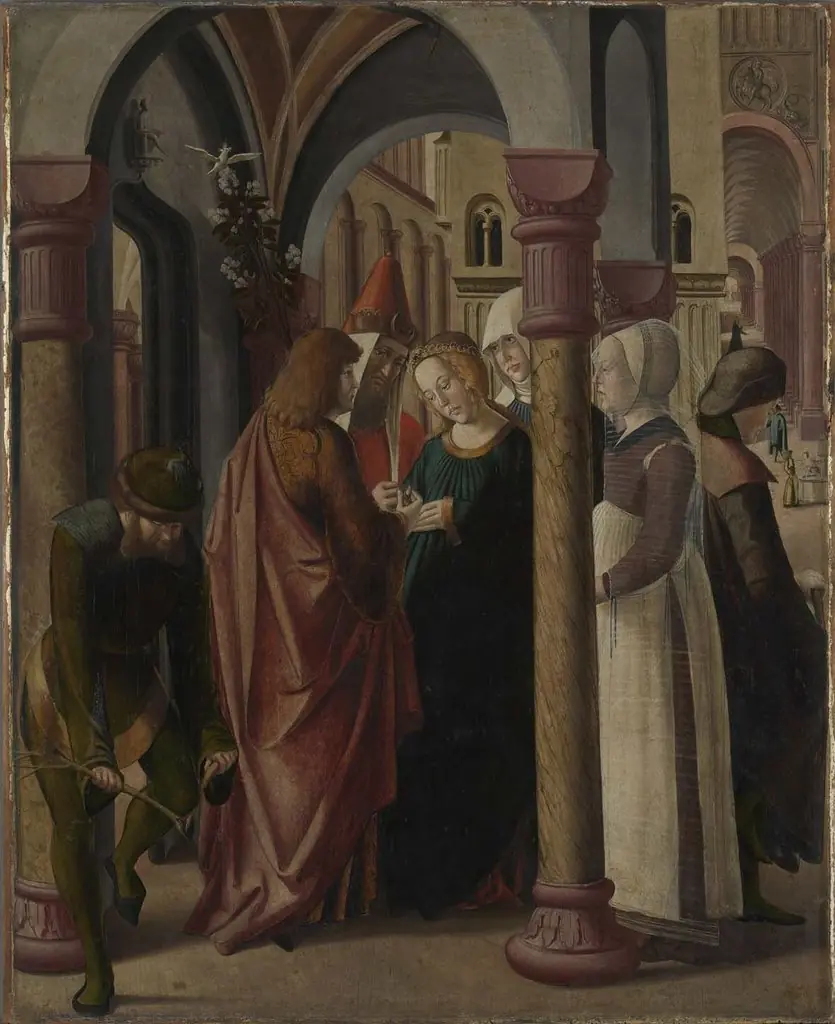 Marienaltar: Vermählung Mariae
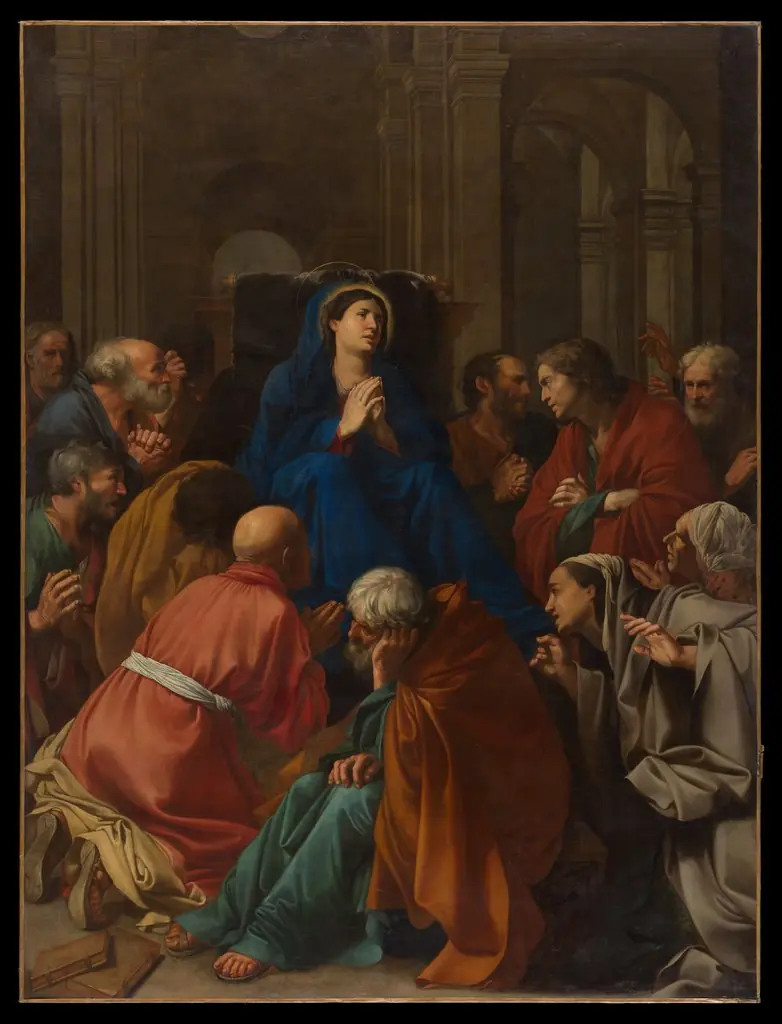 The Dormition of the Virgin
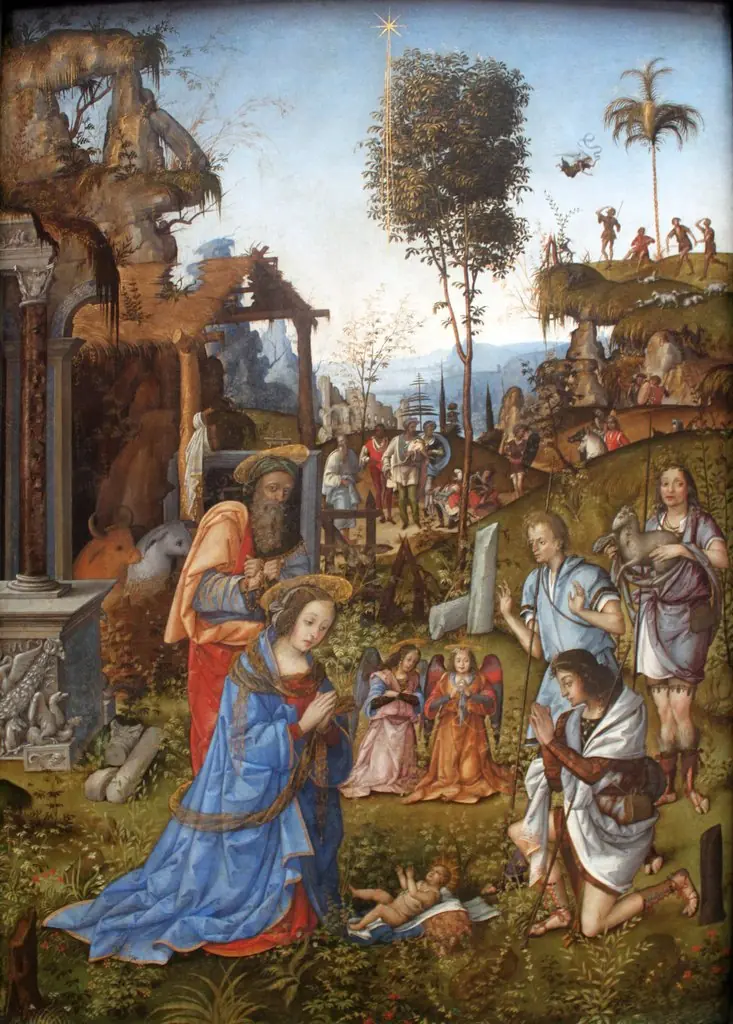 The Adoration of the Shepherds
 Presentation of Christ Child in the temple
- Christ Taking Leave of his Mother