Artwork
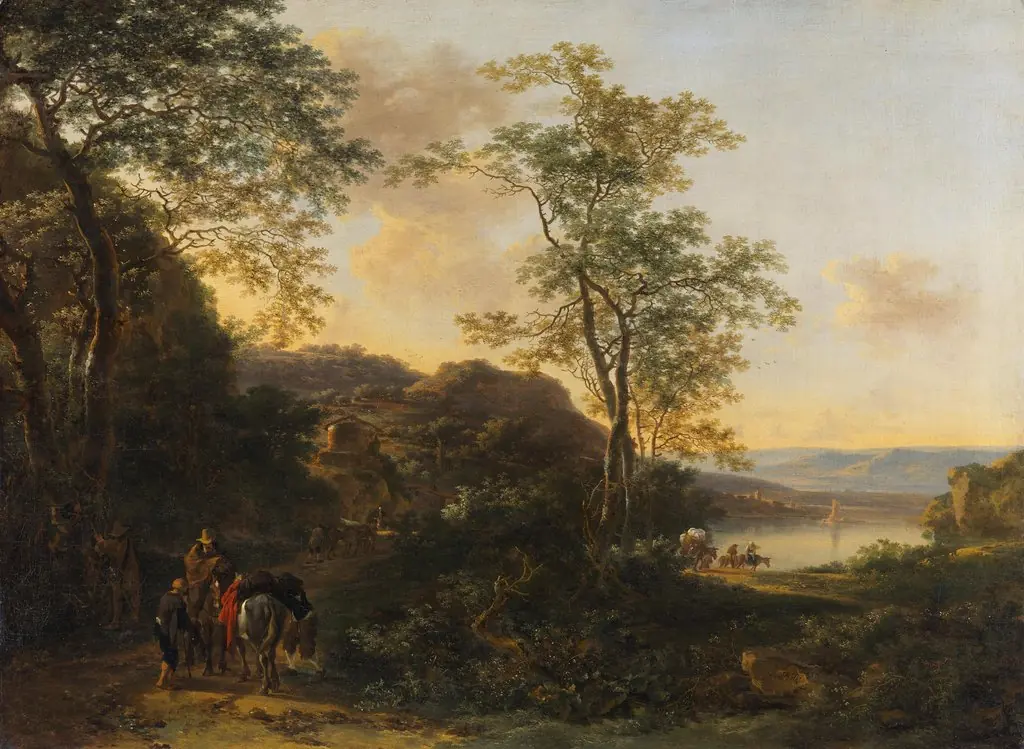
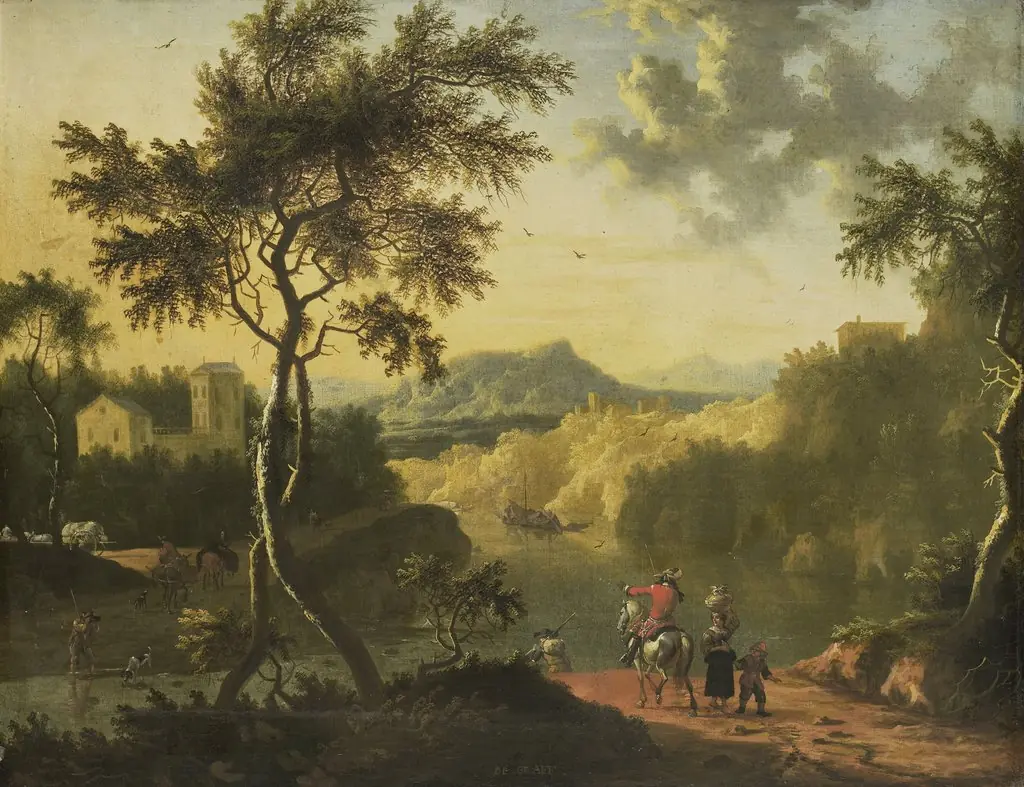
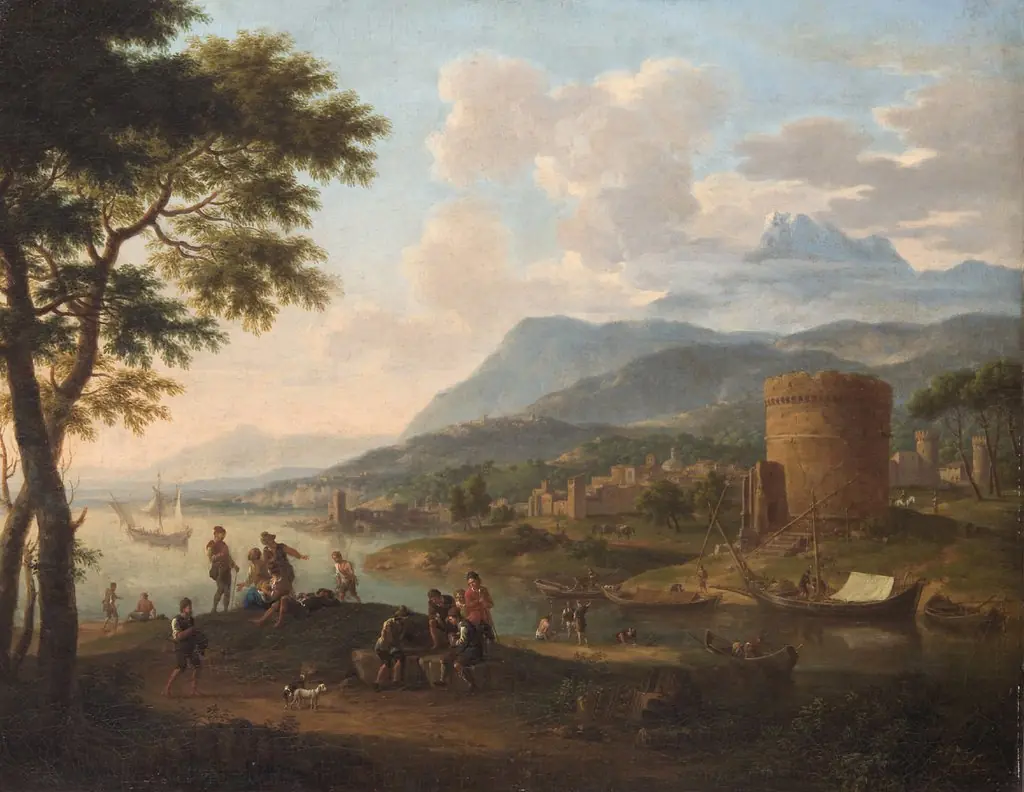
Landscape with Merchants
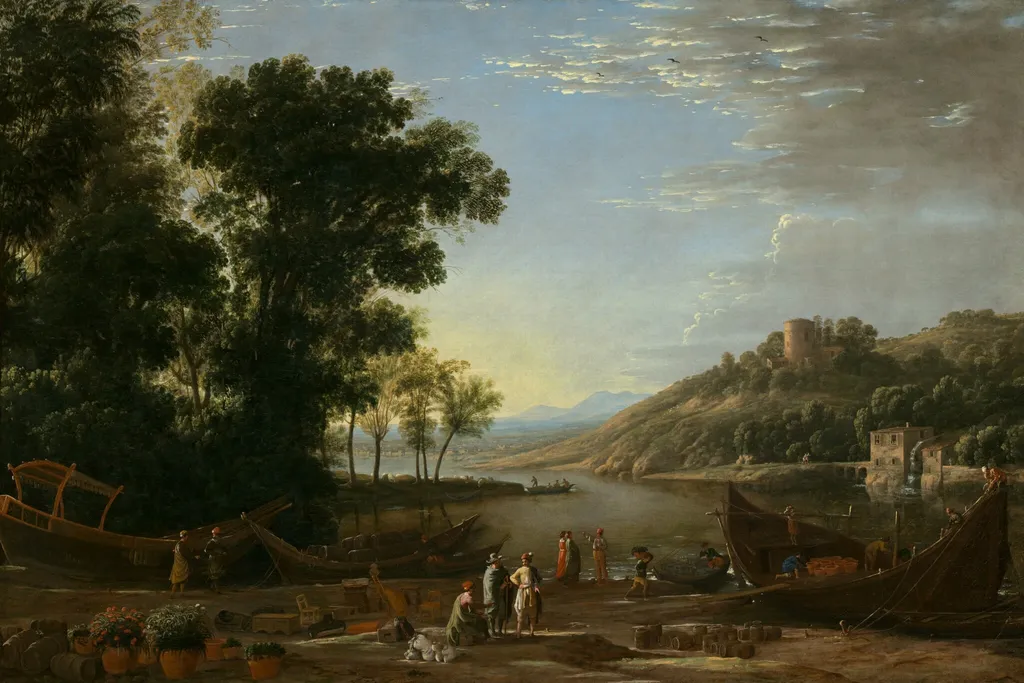
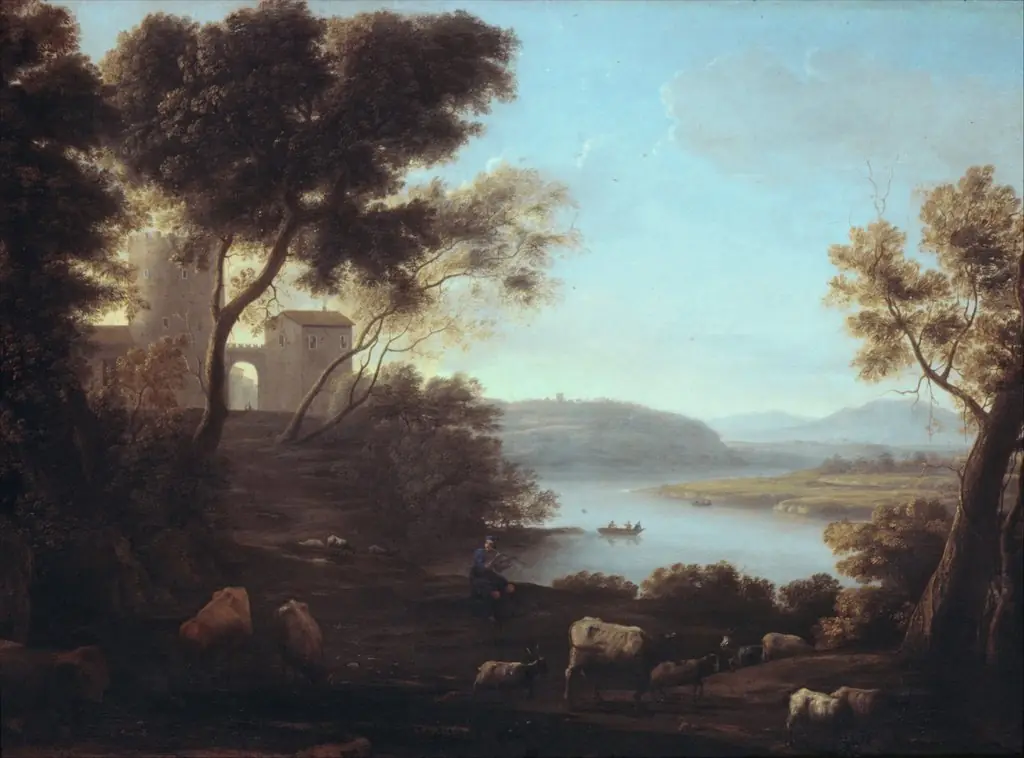
Landscape with Merchants is an oil painting by the Barbizon school artist Claude Lorrain. It dates from 1629 and is held in the collection of the National Gallery of Art.
- Inscription
- Inscribed:lower left on gunwale of boat in brown paint: CLAVDIO o I_Vo16_9[R?]OM_
About this work
Technique & Style
No details about the artist’s handling, surface condition, or specific stylistic techniques are provided in the sources.
Landscape with Merchants is an oil painting on canvas executed in 1629. The work uses oil paint applied to a woven canvas support, a typical medium for Claude Lorrain’s landscapes. Classified as a landscape painting, the composition depicts merchants within a broad, atmospheric vista.
No details about the artist’s handling, surface condition, or specific stylistic techniques are provided in the sources. The painting remains in the collection of the National Gallery of Art, Washington, D.C.
History & Provenance
Claude Lorrain executed Landscape with Merchants in 1629. The painting's documented ownership begins with Robert Trevor Hampden, 1st Viscount Hampden, by 1771, a date corroborated by a reproductive print bearing his name. Following a complex sequence of inheritances within the Hampden family involving the 2nd and 3rd Viscounts and their wives, the work was sold at Christie & Manson in London on April 19, 1834, to a Mr. Brown.
It later appeared at a Paris auction at Hôtel Drouot in 1920 and was held by Galerie Jean Charpentier by 1926.
Wildenstein & Co. subsequently acquired the canvas, selling it to the Samuel H. Kress Foundation in 1947. The foundation donated the painting to the National Gallery of Art in Washington, D.C., in 1952.
Landscape with Merchants has been held by the National Gallery of Art in Washington, D.C., since 1952, when it was given to the institution by the Samuel H. Kress Foundation, which had acquired it through Wildenstein & Co. (Paris, New York, and London) in 1947. The painting forms part of the Samuel H. Kress Collection at the NGA.
Prior to its acquisition by the Kress Foundation, the work passed through Galerie Jean Charpentier in Paris by 1926 and was offered at the Hôtel Drouot in Paris on 18 December 1920 (lot 38). It had earlier been purchased at the Hampden sale conducted by Christie & Manson in London on 19 April 1834 (lot 85) by a Mr. Brown. The NGA catalog references the painting's provenance to Robert Trevor Hampden, 1st Viscount Hampden, by 1771, and traces subsequent inheritance through the Hampden family.
Overview
Claude Lorrain, a French Baroque painter, created Landscape with Merchants around 1629 using oil on canvas. This work exemplifies his pioneering focus on landscape as a primary subject, a genre he largely developed while residing in Italy. The composition features a tranquil natural setting enlivened by small human figures, a recurring element in his oeuvre that helped elevate landscape painting.
Subject & Meaning
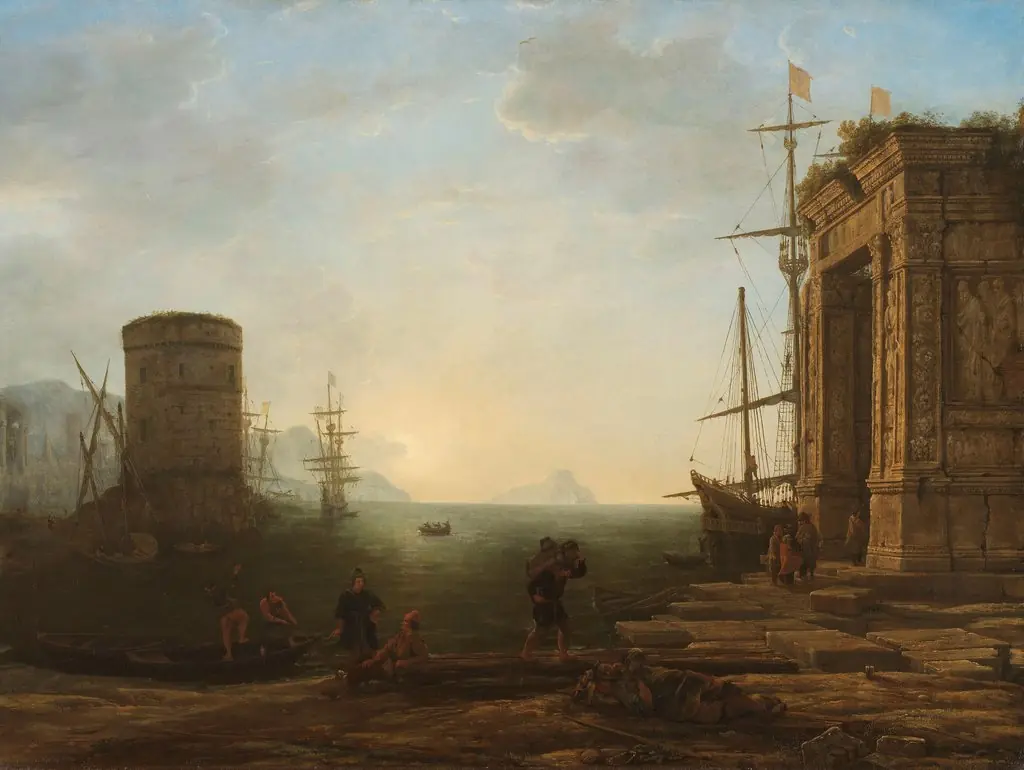
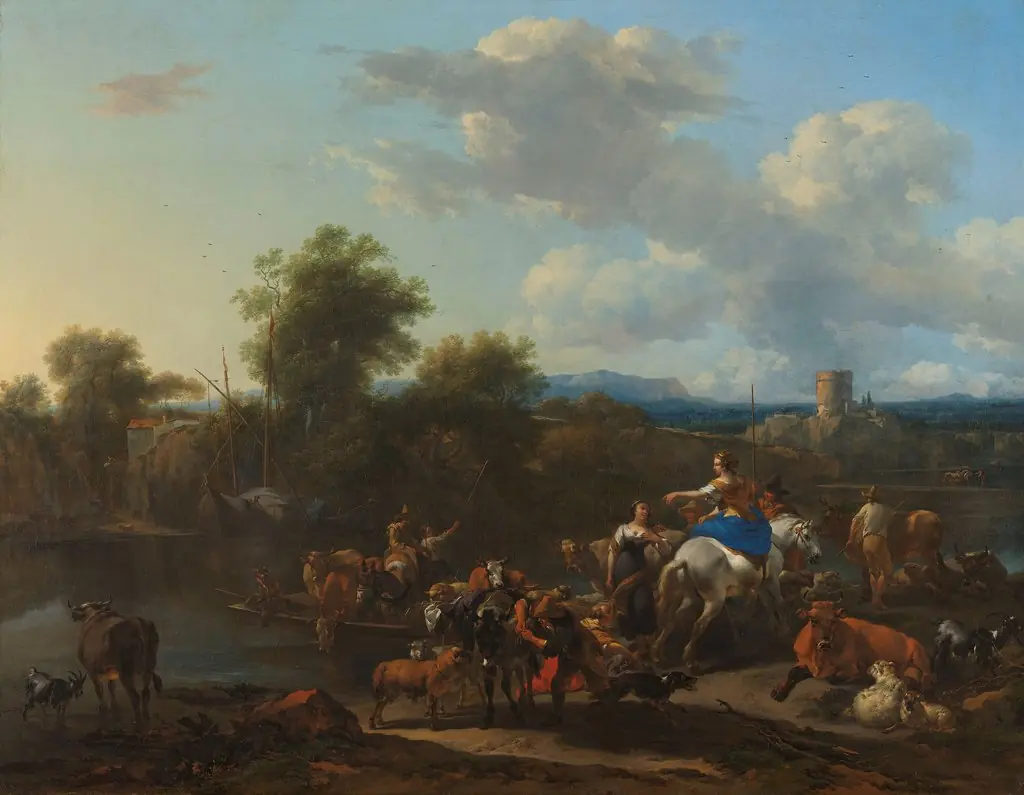
The painting presents a calm riverine scene, where a group of merchants engages in activity along the bank, with boats nearby. Though the human presence is minor in scale, these figures serve to imbue the expansive natural vista with narrative potential, elevating the landscape beyond mere scenery. This approach was characteristic of Lorrain's innovative compositions, blending genre elements with grand natural settings.
Context
Born in the Duchy of Lorraine, Claude spent most of his career in Italy, where he became a pivotal figure in the development of landscape painting. He was among the first artists to dedicate his practice almost exclusively to this genre, transforming it from a mere backdrop into a central theme. His work significantly influenced subsequent generations of artists, establishing new conventions for landscape art.
Legacy
Although created centuries earlier, Landscape with Merchants is recognized for its thematic resonance with the Barbizon School. This later 19th-century movement, also centered on naturalistic landscape depiction, shared Lorrain's emphasis on direct observation and the portrayal of tranquil, unidealized outdoor scenes. This connection highlights the enduring impact of his early contributions to the genre and its continued relevance.
Own this work as a print
Artist & collection
Artist
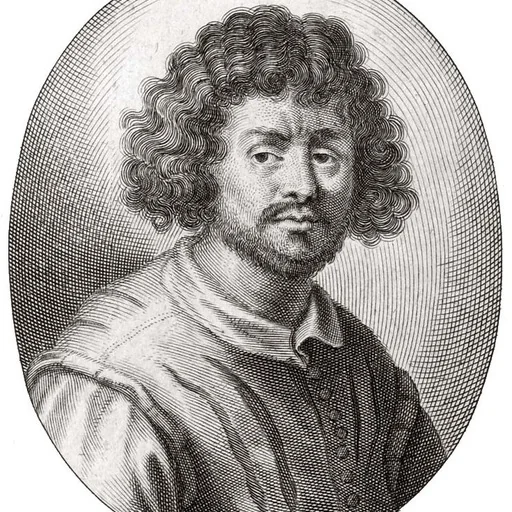
Claude Lorrain (French:; born Claude Gellée, called le Lorrain in French; traditionally just Claude in English; c.