Artwork
Venus, Bacchus and Ceres with Mortals in a Garden of Love
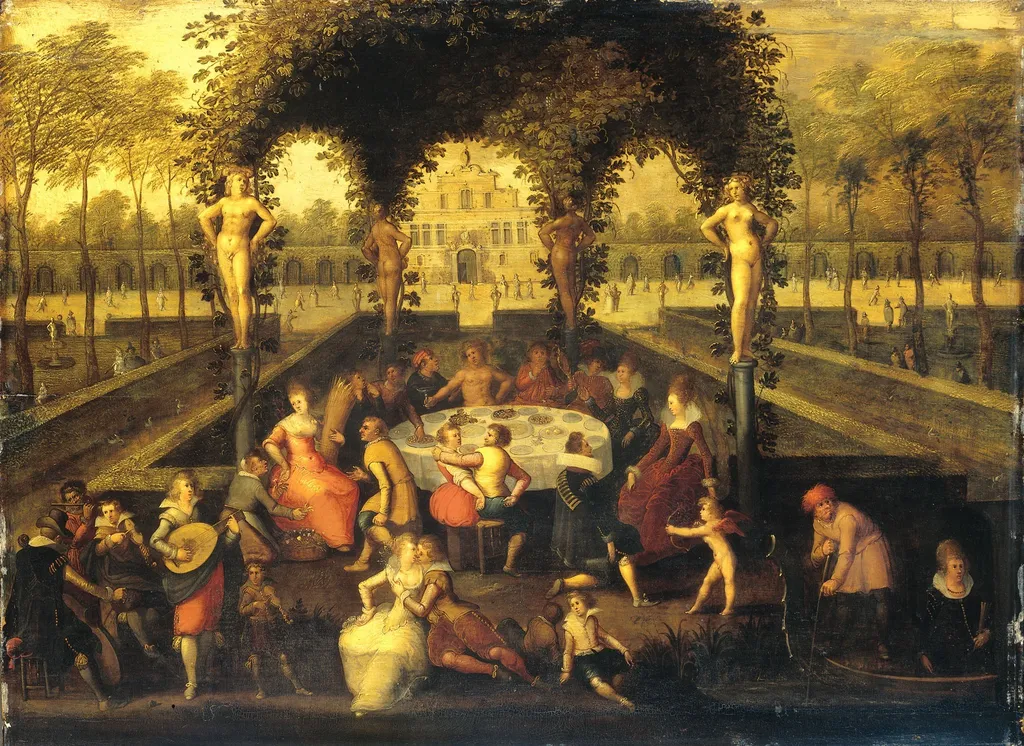
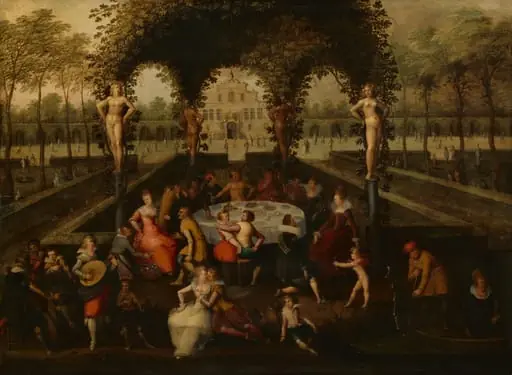
Venus, Bacchus and Ceres with Mortals in a Garden of Love is an oil painting by the Early Baroque Italian artist Louis de Caullery. It dates from 1605 and is held in the collection of the Rijksmuseum.
About this work
Subject & Meaning
The inclusion of Bacchus introduces themes of wine, festivity, and sensual indulgence, while Ceres evokes agricultural fertility and the bounty of the harvest.
Louis de Caullery's painting brings together classical deities and unnamed human figures within a single pastoral setting identified as a Garden of Love. The composition centers on three Olympian figures named in the title, Venus, Bacchus, and Ceres, whose presence transforms the garden into an allegorical space where divine abundance, love, and pleasure converge with everyday human life.
The work draws on the long-standing iconographic tradition of the Garden of Love, in which Venus presides over a cultivated landscape populated by lovers, musicians, and revellers. The inclusion of Bacchus introduces themes of wine, festivity, and sensual indulgence, while Ceres evokes agricultural fertility and the bounty of the harvest. Trees frame the scene and reinforce the locus amoenus, or ideal place, that links erotic love with natural fruitfulness.
By mingling mortals with the gods in this idealized garden, the painting celebrates the harmonious coexistence of human desire, celebration, and prosperity under the benevolent rule of classical mythology.
Technique & Style
Venus, Bacchus and Ceres with Mortals in a Garden of Love is executed in oil paint on panel, a support combination characteristic of early seventeenth-century Flemish cabinet pictures. The work measures 54.5 cm in height by 74 cm in width, a horizontal format suited to its densely populated garden scene.
Stylistically, the painting belongs to the mythological genre tradition associated with Louis de Caullery, who is documented as its creator in 1605. The composition brings together figures of Venus, Bacchus, and Ceres alongside mortals within a wooded setting, reflecting the artist's known interest in allegorical gatherings rendered in the small-scale, finely detailed manner typical of Netherlandish panel painting of the period.
History & Provenance
The painting was created by Louis de Caullery in 1605, executed in oil paint on panel. It depicts a mythological scene featuring Venus, Bacchus, and Ceres alongside mortals in a garden of love. The work is held in the collection of the Rijksmuseum, where it is currently located.
No further details about its commission, intermediate ownership, or chain of custody prior to its acquisition by the museum are documented in the available sources.
Legacy
The composition influenced Baroque allegorical painting through its integration of mythological figures with mortal participants in a garden setting. Its depiction of Venus, Bacchus and Ceres alongside humans in an idyllic landscape informed later interpretations of mythological harmony. The work's visual language appears in 17th-century decorative programs that blended classical narrative with sensual allegory.
Contemporary scholarship cites its compositional balance as a reference point for garden scenes featuring divine and human subjects. The painting's presence in the Rijksmuseum collection has contributed to renewed academic attention on Dutch mythological works from the early 1600s.
Overview
Louis de Caullery’s 1605 oil painting, Venus, Bacchus and Ceres with Mortals in a Garden of Love, presents a bustling garden scene in which mythological deities mingle with elegantly dressed revelers. The composition balances a formal banquet on the left with four nude figures on the right, all set against a luminous, golden‑toned landscape that includes a distant architectural façade.
Context
The composition reflects the early Baroque fascination with allegory and the integration of classical mythology into contemporary social scenes. Caullery’s treatment of a garden party aligns with the period’s interest in idealized nature, courtly leisure, and the moralizing potential of mythic figures observing human behavior.
Own this work as a print
Artist & collection
Artist
Louis de Caullery, Caulery or Coulery (ca.1580–1621) was a Flemish painter who is known for his architectural scenes, city views, genre scenes, allegorical compositions, religious and history paintings.

 Merry-making in a park
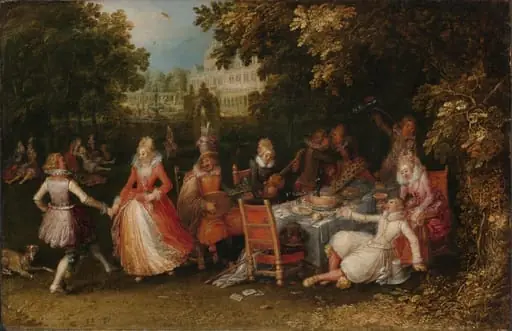 The Fête Champêtre
 Garden Festival
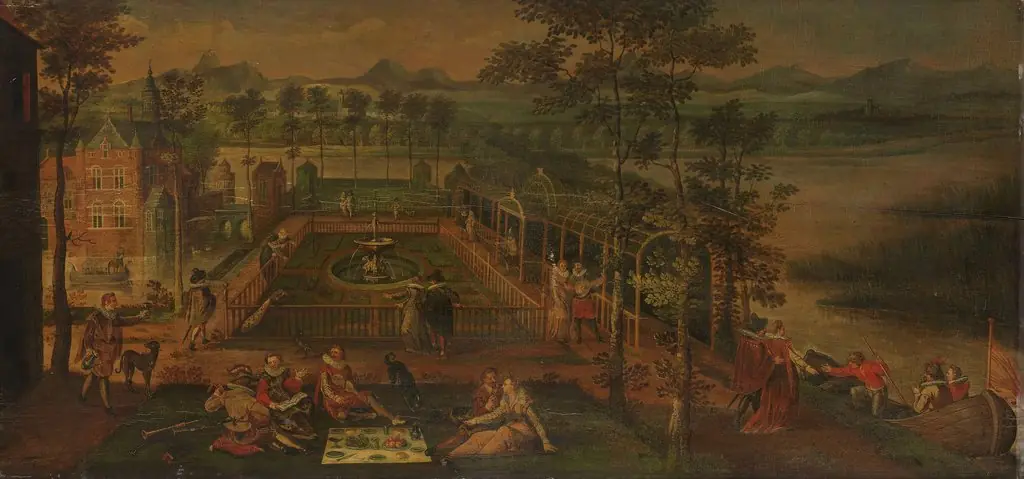 Pleasure Garden
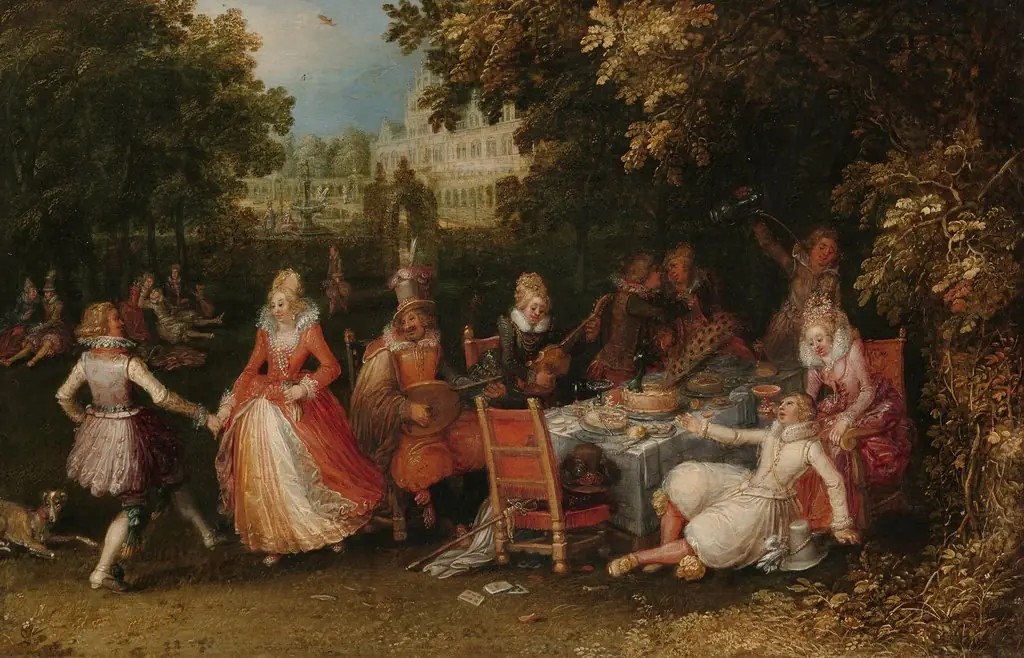 The fête champêtre
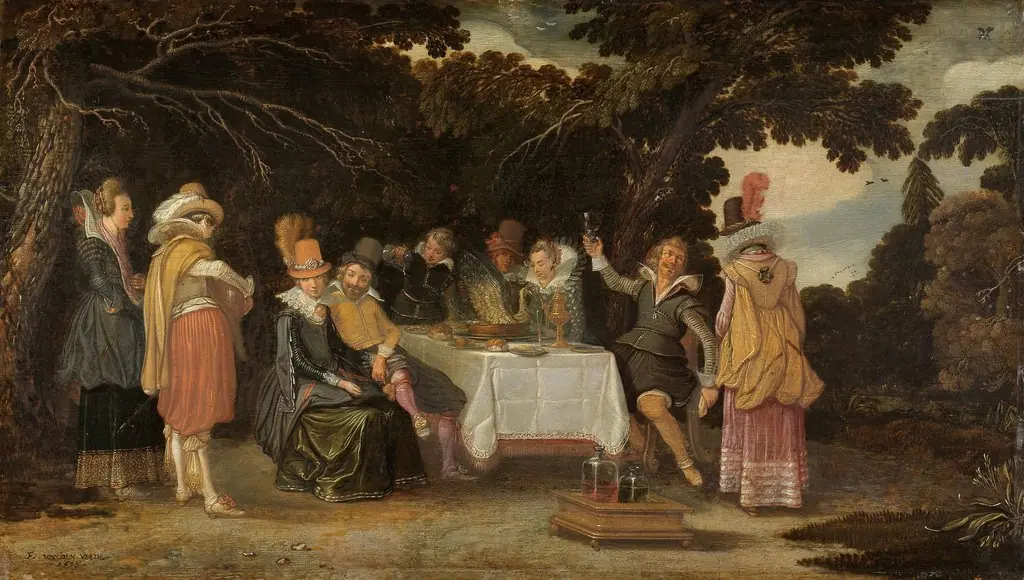 Elegant company dining in the open air
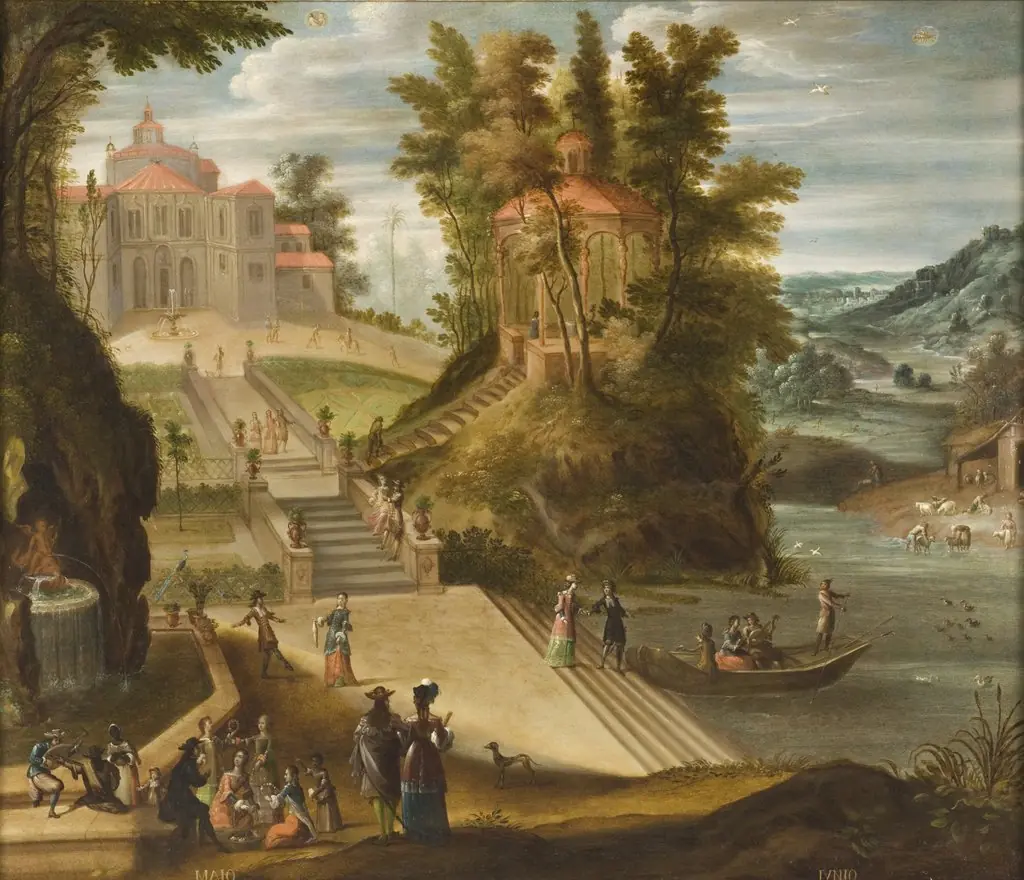 The Twelve Months of the Year (Los doce meses del año)
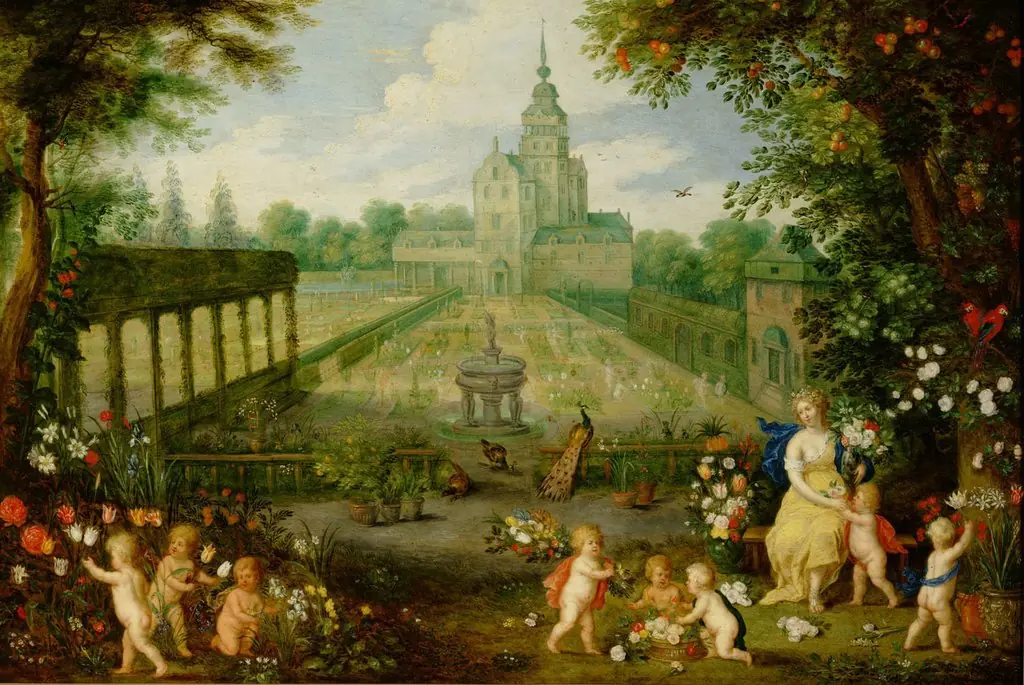 Flora in the Garden
 Festive Gathering and Figures from a Commedia dell'Arte in a Gallery
 Company in the garden
 The marriage trap: an allegory of marriage
- Venus, Bacchus and Ceres with Mortals in a Garden of Love