Artwork
The Family of Philip V
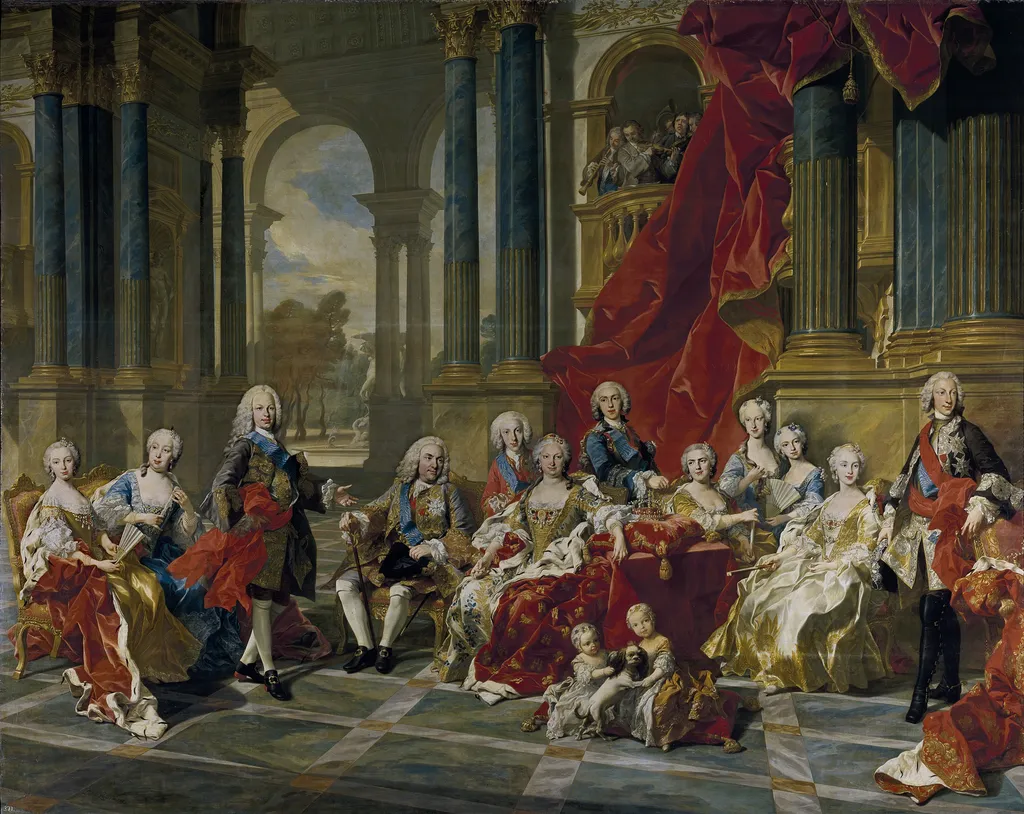
The Family of Philip V is an oil painting by the Rococo painting artist Louis-Michel van Loo. It dates from 1743 and is held in the collection of the Museo del Prado.
About this work
Louis-Michel van Loo painted a big group portrait in 1743 called The Family of Philip V. The royal family stands life-sized in a made-up room. It’s oil paint on canvas and mixes French baroque and rococo looks.
The Prado owns this version, one of three paintings with the same name. Two earlier ones were done by Jean Ranc in 1723 and 1738.
If you like this, look up the Museo del Prado.
Subject & Meaning
Central to the iconography is Queen Elisabeth Farnese, whose arm rests near the crown, a deliberate symbol of her significant political power.
The painting depicts the House of Bourbon in a fictional, spacious room opening onto a garden, serving as a visual declaration of the dynasty's strength following Philip V's 1700 succession. Central to the iconography is Queen Elisabeth Farnese, whose arm rests near the crown, a deliberate symbol of her significant political power. The composition emphasizes dynastic continuity by including the heir, Ferdinand, Prince of Asturias, alongside children and grandchildren from various European branches, such as the future rulers of Portugal, Parma, and Naples.
The setting features a theatrical red curtain and a balcony with a musical ensemble, creating an atmosphere of pomp. The work's vibrant colors, rich fabrics, and detailed jewels reference the Flemish school, marking a departure from traditional Spanish somberness to celebrate the monarchy's suntuosa fastuosidad and glorious lineage.
Technique & Style
The Family of Philip V is an oil-on-canvas painting measuring 408 by 520 cm, executed in 1743 by Louis-Michel van Loo and held at the Museo del Prado in Madrid. The work is classified within the French Baroque and Rococo styles, drawing additionally on Flemish school influences and on the legacy of Rubens, Van Dyck, Rigaud, and Mignard.
Van Loo renders the textiles, jewels, and ornaments of the sitters with extreme detail, employing a vivid, coloristic palette that marked a clear departure from the traditionally dark and somber Spanish portrait tradition descended from Velázquez and Sánchez Coello. The composition is framed by a sweeping theatrical red curtain falling from above, partially concealing a balcony where an ensemble performs a concert with instruments including a violin and oboe. The royal family is arranged within a fictional, palatial interior opening onto a garden, lending the scene its stately, ceremonial character.
History & Provenance
Louis-Michel van Loo completed the oil-on-canvas painting The Family of Philip V in 1743, succeeding Jean Ranc as the French court painter in Spain in 1737. The work was prepared over several years, a process evidenced by preparatory sketches held at the Real Academy of Fine Arts of San Fernando. During the creation phase, van Loo adjusted the composition, repositioning Infanta Maria Antonia and adding the king's granddaughters to the central space.
The painting was commissioned to establish a new official image for the Bourbon dynasty, reflecting the king's preference for French Baroque and Rococo styles over traditional Spanish dark palettes. It depicts the royal family within a fictional interior featuring a garden view and a balcony orchestra, symbolizing the dynasty's strength and continuity. The artwork is currently housed in the Museo del Prado in Madrid.
The Family of Philip V is held at the Museo del Prado in Madrid, where it remains part of the museum's collection. The painting is documented on the Museo del Prado's own website and in its encyclopedia entry, and is linked from Wikimedia Commons under the Prado's attribution. Related preparatory sketches by Van Loo are preserved at the Real Academia de Bellas Artes de San Fernando.
The sources do not provide a specific Prado inventory or accession number for the work, nor do they document any loan history or temporary exhibitions beyond its current display at the museum.
Context
Completed in 1743, The Family of Philip V by Louis-Michel van Loo represents a pivotal shift in Spanish court portraiture, marking the transition from the somber, dark traditions of the Velázquez school to a vibrant, coloristic French Baroque and Rococo style. Van Loo, who replaced Jean Ranc as court painter in 1737, synthesized influences from the Flemish school, Rubens, and Van Dyck to create an image of Bourbon dynastic continuity and regal pomp. The work is distinguished by its theatrical composition, featuring a fictional interior with bright fabrics and jewels previously unseen in Spanish art, alongside a symbolic representation of Queen Elisabeth Farnese's power.
Art historians regard this as Van Loo's masterpiece, where he successfully captured the psychological traits of the sitters while establishing a new official visual language for the Spanish monarchy. The painting exists as the final iteration in a trio of similar royal group portraits, following versions by Ranc in 1723 and 1738.
Legacy
The Family of Philip V is regarded as Louis-Michel van Loo's defining achievement as a portraitist. According to the Spanish-language analysis, it is described as the artist's great work, marking his realization as a portrait painter and allowing him to forge his own style drawing on Hyacinthe Rigaud, Pierre Mignard, and the Italian school. The painting also marked a turning point in Spanish royal portraiture, displacing the tradition of Velázquez and Sánchez Coello with a colorful, ornate, detail-laden approach introduced through Van Loo's French-Bourbon patronage.
The work's preparation is documented by several surviving sketches held at the Real Academia de Bellas Artes de San Fernando, evidence of a long gestation during which Van Loo revised the composition, repositioning the Infanta María Antonia behind the wife of the future Charles III and filling the central space with Philip V's granddaughters. It is also linked to a related Jean Ranc composition of the same subject from 1723, situating Van Loo's canvas within a continuing Bourbon visual program of dynastic representation.
Overview
Louis-Michel van Loo completed The Family of Philip V in 1743, an expansive oil-on-canvas group portrait. This large-scale work depicts Philip V of Spain alongside his family, rendered life-sized within an imagined interior setting. The painting exemplifies a blend of French Baroque grandeur and Rococo elegance, characteristic of court portraiture during the mid-18th century. It serves as a significant visual record of the Spanish royal household at that time.
Own this work as a print
Artist & collection

 Felipe V e Isabel Farnesio
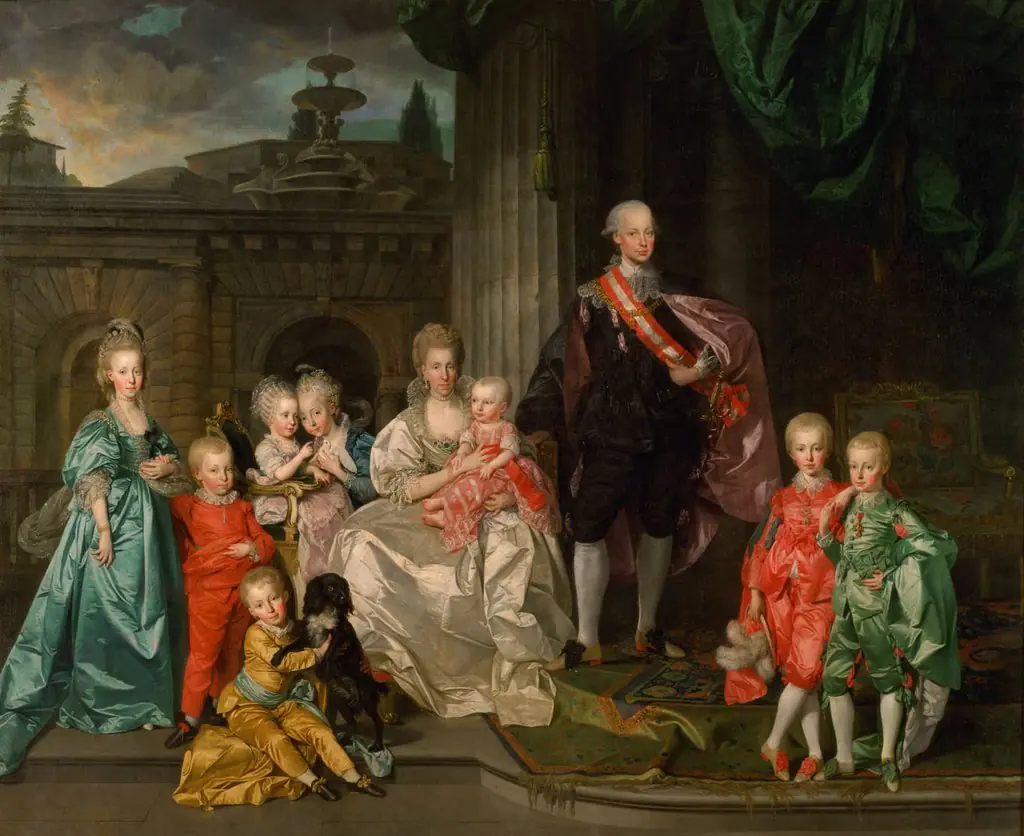 Leopold I, Grand Duke of Tuscany with his wife Maria Luisa and their children
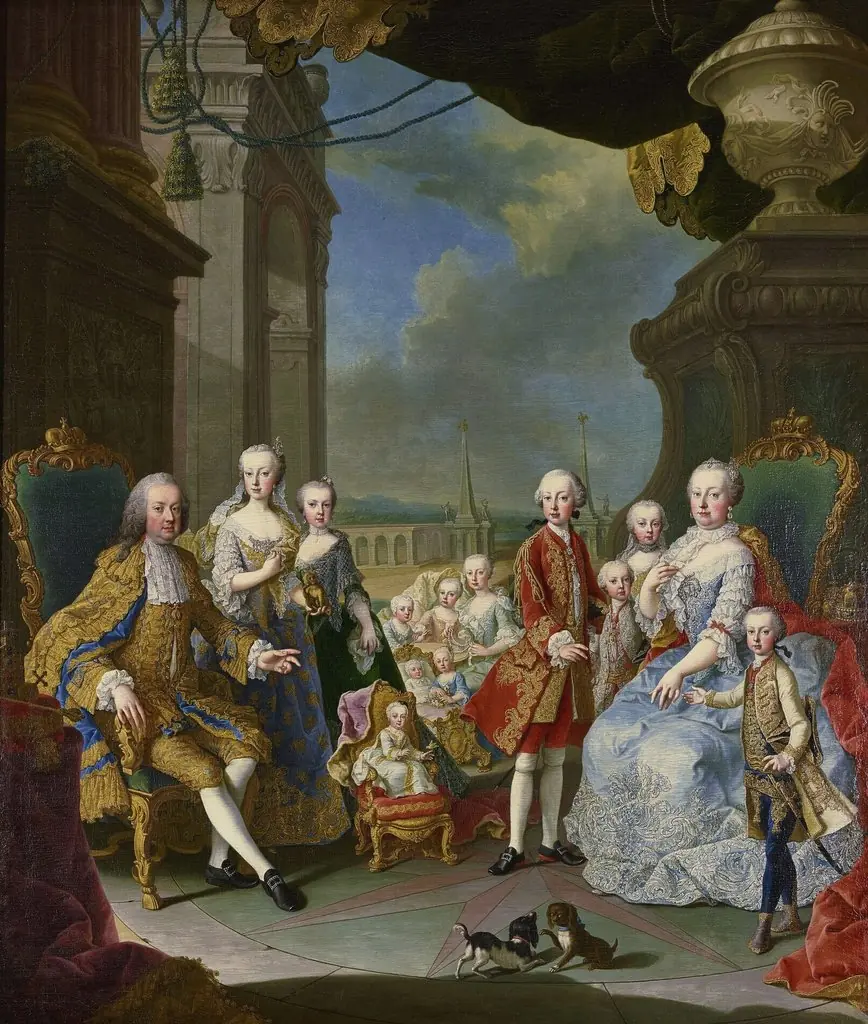 The Imperial family in 1756
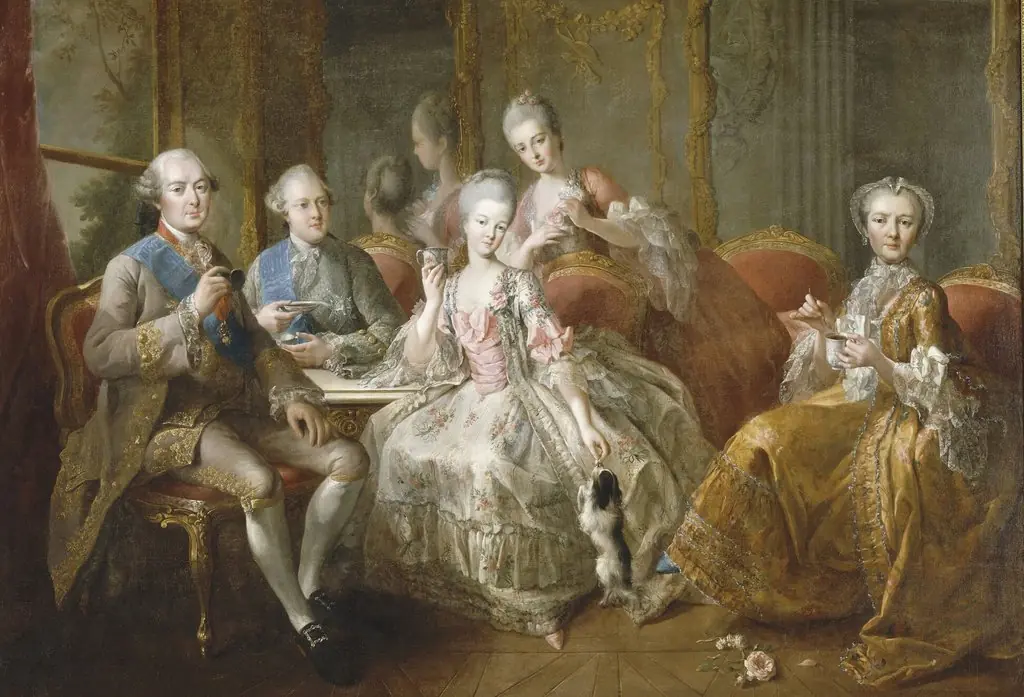 The family of the Duke of Penthièvre called la tasse de chocolat
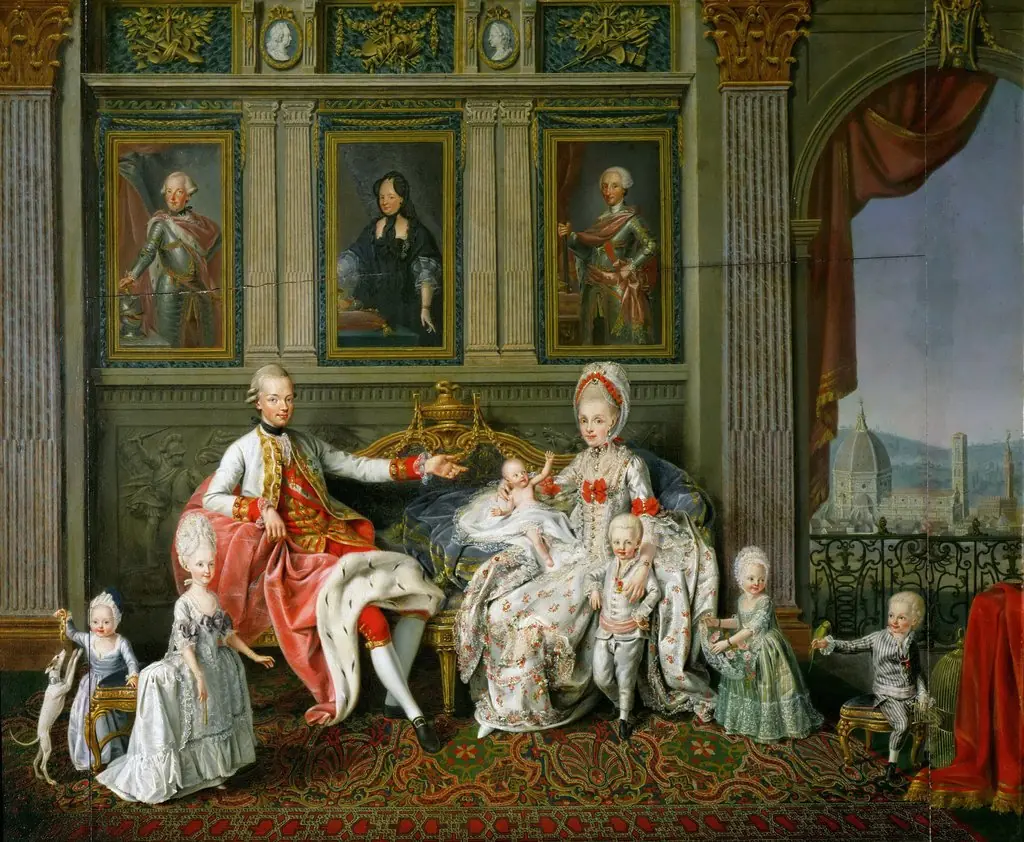 Grand Duke Leopold with his family (Emperor Leopold II, 1747-1792)
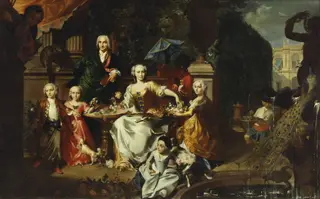 A Family Group on a Terrace in the Grounds of a Villa. Possibly the English Businessman George Jackson and his Family
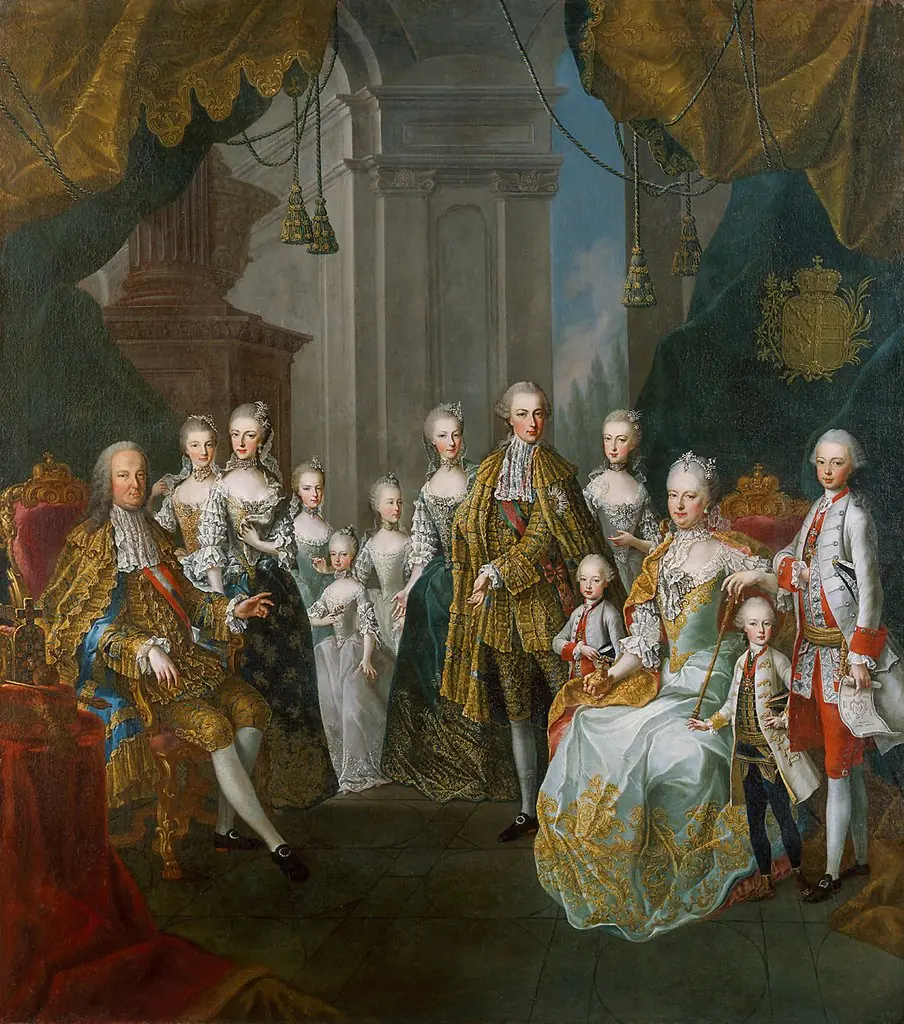 Franz I. Stephan und Maria Theresia mit elf Kindern
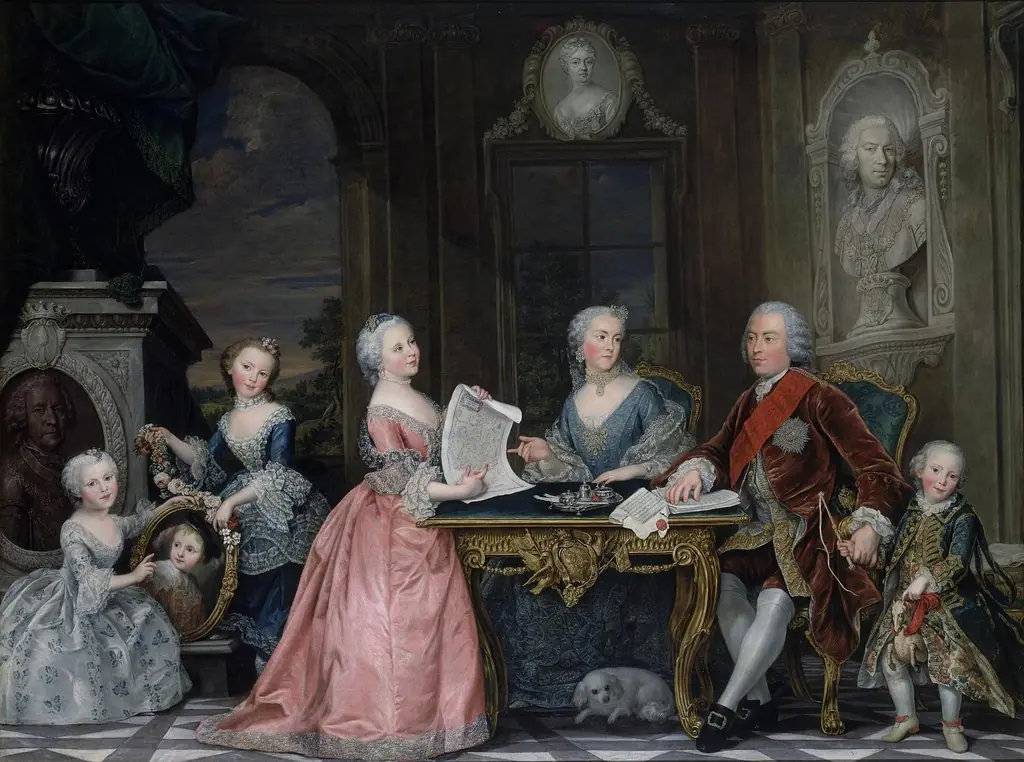 Portrait of Ambassador P.G. Chernyshev with Family
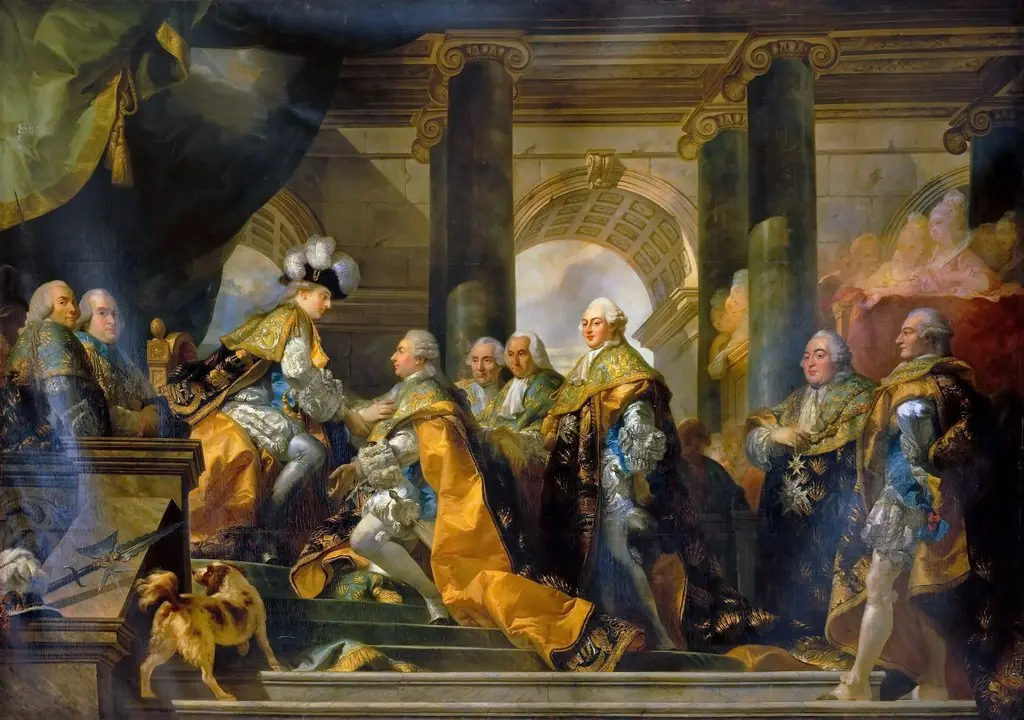 Louis XVI receives homage from the Knights of the Holy Spirit in Reims, June 13, 1775
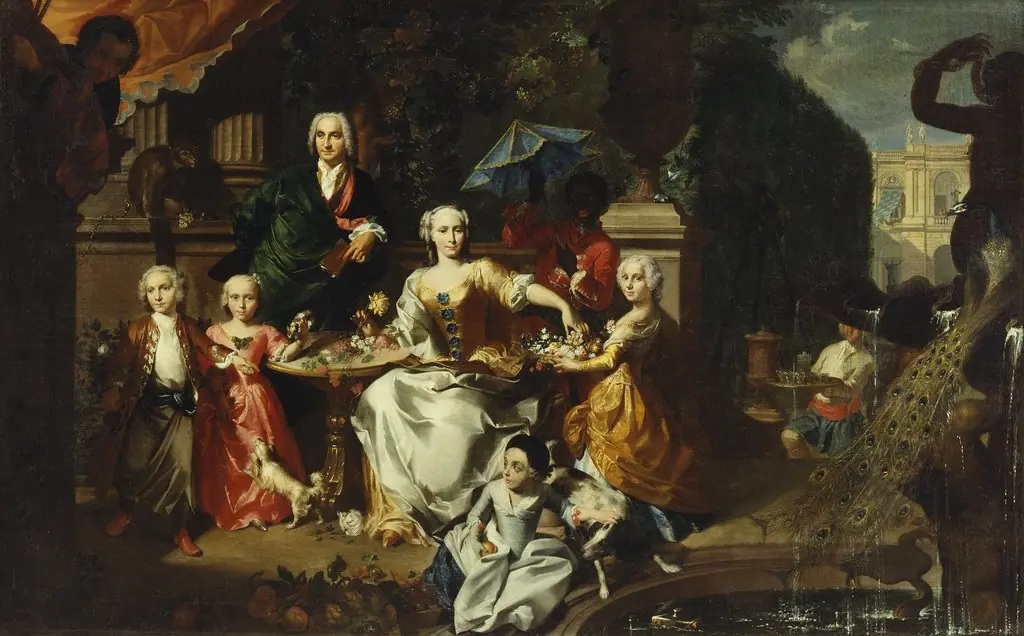 A Family Group on a Terrace in the Grounds of a Villa. Possibly the English Businessman George Jackson and his Family
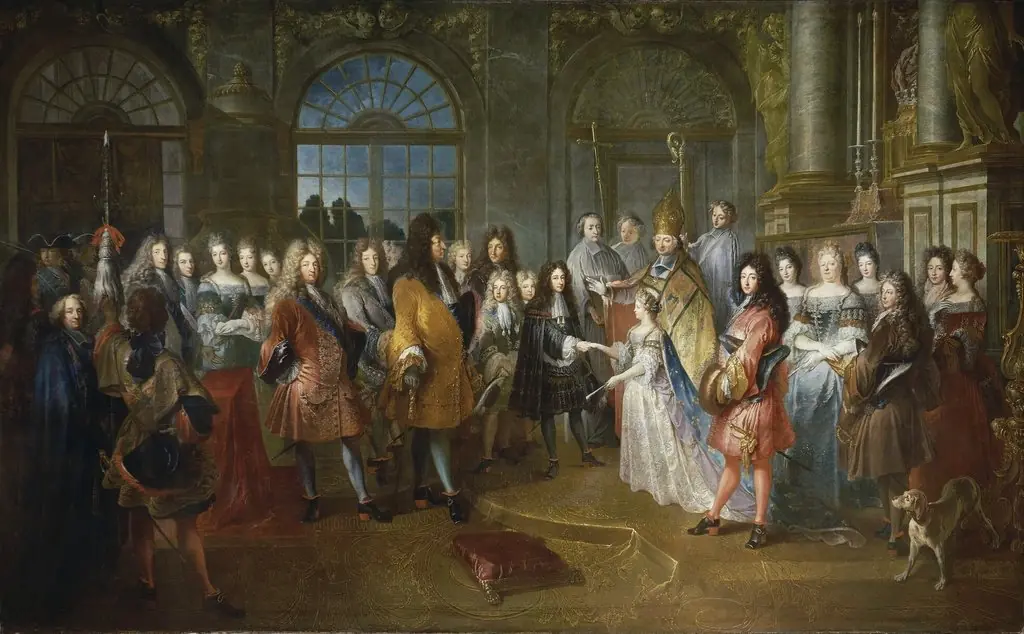 Mariage de Louis de France, duc de Bourgogne et de Marie-Adélaïde de Savoie, 7 décembre 1697
- The Elector's family