Artwork
Jacob y Raquel en el pozo
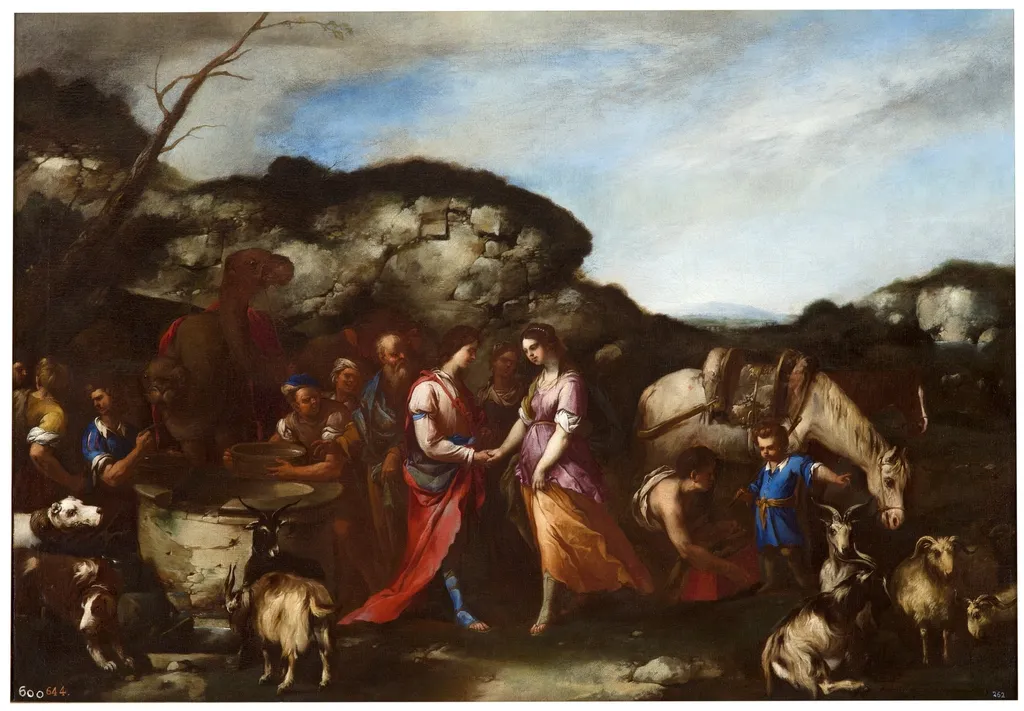
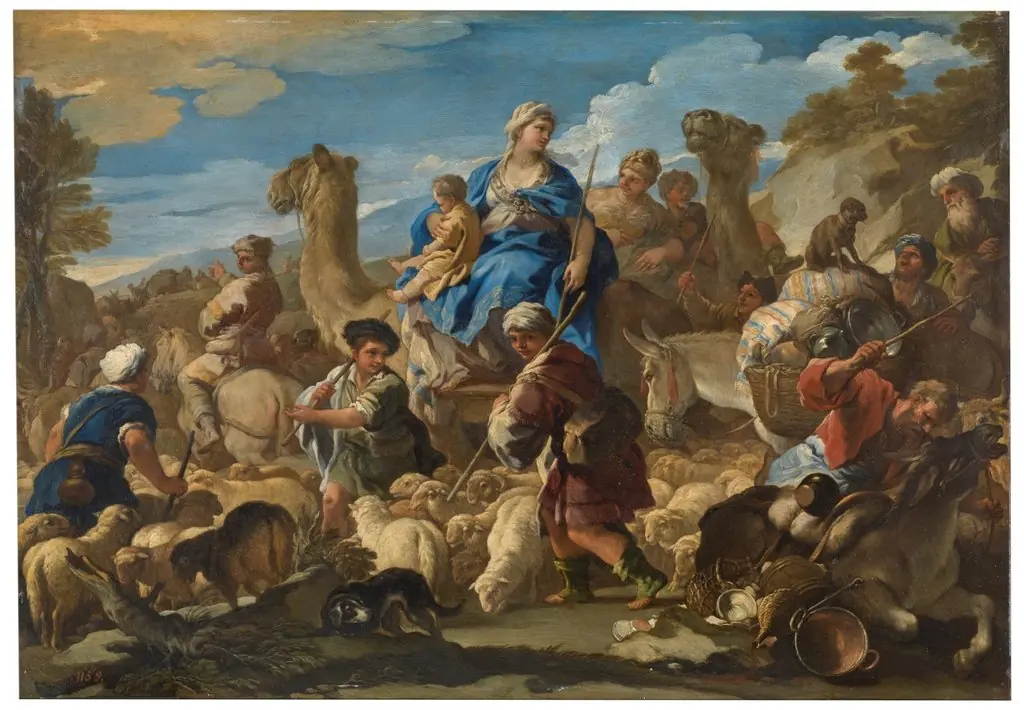
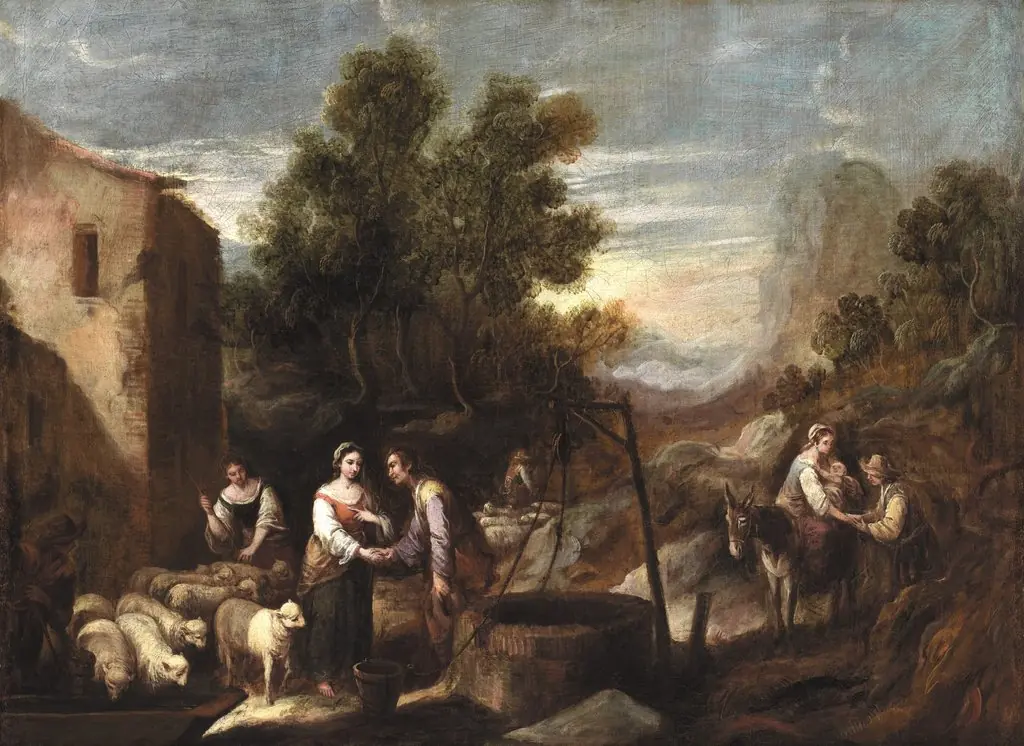
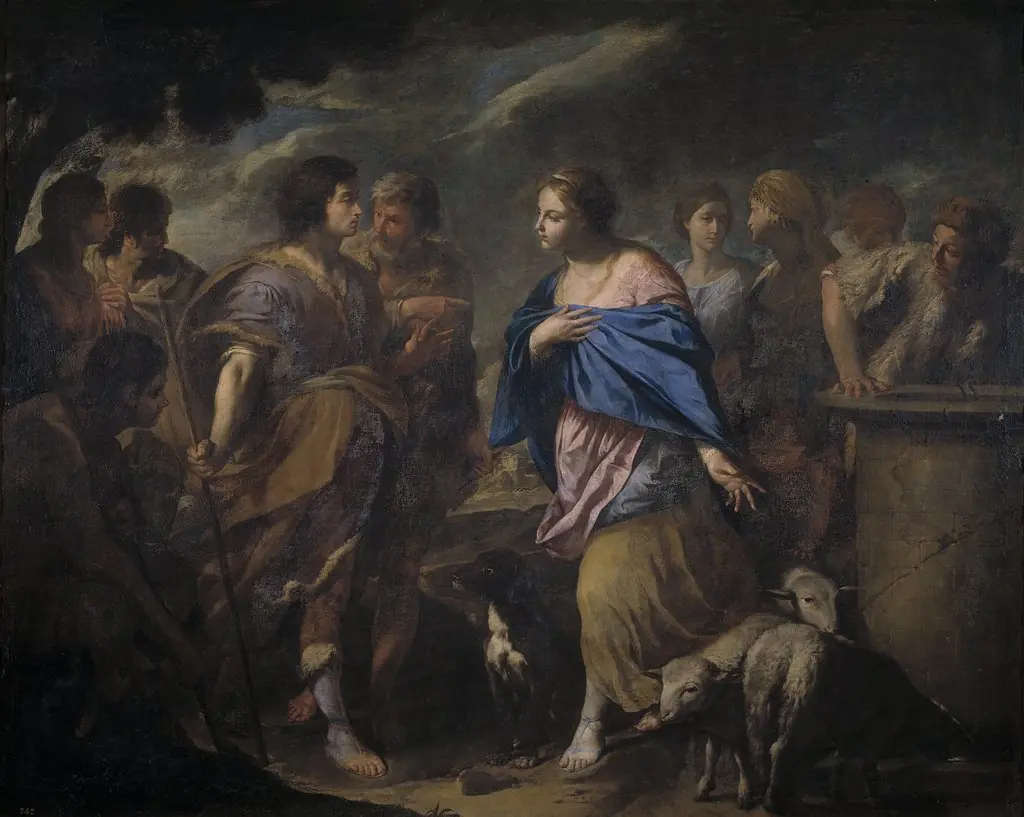
Jacob y Raquel en el pozo is an oil painting by the Early Baroque Italian artist Luca Giordano. It dates from 1653 and is held in the collection of the Museo del Prado.
About this work
Subject & Meaning
The painting's presence in royal collections underscores its role as a political and spiritual statement within the Spanish Habsburg cultural agenda.
The painting depicts the biblical moment when Jacob meets Rachel at a well, a scene rich in symbolism of divine providence and marital destiny. The well functions as a symbolic threshold where personal encounter transforms into sacred covenant, reflecting Baroque-era theological emphasis on providential guidance in human affairs. Rendered in oil on canvas, Giordano captures the dynamic interaction between the figures with dramatic chiaroscuro, emphasizing Rachel's gesture of drawing water as both literal action and metaphor for spiritual nourishment.
This composition aligns with Counter-Reformation artistic directives to convey biblical narratives with emotional immediacy and doctrinal clarity, serving as visual theology for elite Spanish patrons.
The work's significance lies in its synthesis of narrative tension and symbolic depth, where the meeting at the well becomes emblematic of faith rewarded through perseverance. Its creation during Giordano's tenure as court painter to Philip IV reflects the monarch's patronage of religious art that reinforced dynastic legitimacy through biblical typology. The painting's presence in royal collections underscores its role as a political and spiritual statement within the Spanish Habsburg cultural agenda.
Technique & Style
Executed in oil paint on canvas in 1653, the work measures 84 cm in height and 122 cm in width. The handling aligns with Giordano’s fluid, rapid brushwork typical of mid-seventeenth-century Neapolitan painting, favoring dynamic movement and luminous modeling over minute detail. The composition centers on the biblical figures of Jacob and Rachel at a well, rendered with a warm, golden palette that heightens the scene’s dramatic encounter.
Stylistically, the painting exemplifies Giordano’s capacity to fuse Venetian colorism with Baroque dynamism, evident in the sweeping gestures and softly blended transitions that animate the figures and landscape.
History & Provenance
Luca Giordano created the oil-on-canvas painting Jacob y Raquel en el pozo in 1653. The work depicts the biblical figures Jacob and Rachel at a water well and measures 84 by 122 centimeters. Its ownership history traces through the Spanish royal lineage, beginning with Philip V and Elisabeth Farnese.
The collection subsequently included Charles III and Ferdinand VII of Spain. The painting is currently held by the Museo del Prado, having also been associated with the Royal Palace of Aranjuez and the Royal Palace of La Granja de San Ildefonso.
Jacob y Raquel en el pozo, an oil painting on canvas measuring 84 cm by 122 cm, was created in 1653 by Luca Giordano. It is part of the collection of the Museo del Prado, where it has been housed at the Royal Palace of Aranjuez and the Royal Palace of La Granja de San Ildefonso. The work entered the royal collection through Ferdinand VII of Spain and remained in the Spanish monarchy's holdings, later associated with Charles III, Elisabeth Farnese, and Philip V of Spain.
The painting has been exhibited in major displays at the Museo del Prado, including retrospectives on Giordano's career and thematic exhibitions on Spanish Baroque art. It is also featured in scholarly exhibitions on religious subjects from the Spanish Golden Age, reinforcing its significance within the museum's permanent collection and historical narrative.
Overview
Luca Giordano’s 1653 oil painting, titled Jacob y Raquel en el pozo, is part of the Museo del Prado’s collection. The work illustrates a biblical episode in which Jacob meets Rachel at a well, rendered in a bustling outdoor setting that combines narrative detail with a lively landscape.
Context
The work reflects the 17th‑century Italian Baroque fascination with biblical narratives rendered in everyday settings. Giordano’s choice to place the biblical figures amid a bustling, almost genre‑like scene aligns with contemporary trends that sought to make sacred stories accessible to contemporary viewers.
Own this work as a print
Artist & collection

Artist
Luca Giordano was an Italian late-Baroque painter and printmaker in etching. Giordano was one of the most celebrated artists of the Neapolitan Baroque, whose vast output included altarpieces, mythological paintings and…