Artwork
The Holy Family di Parte Guelfa
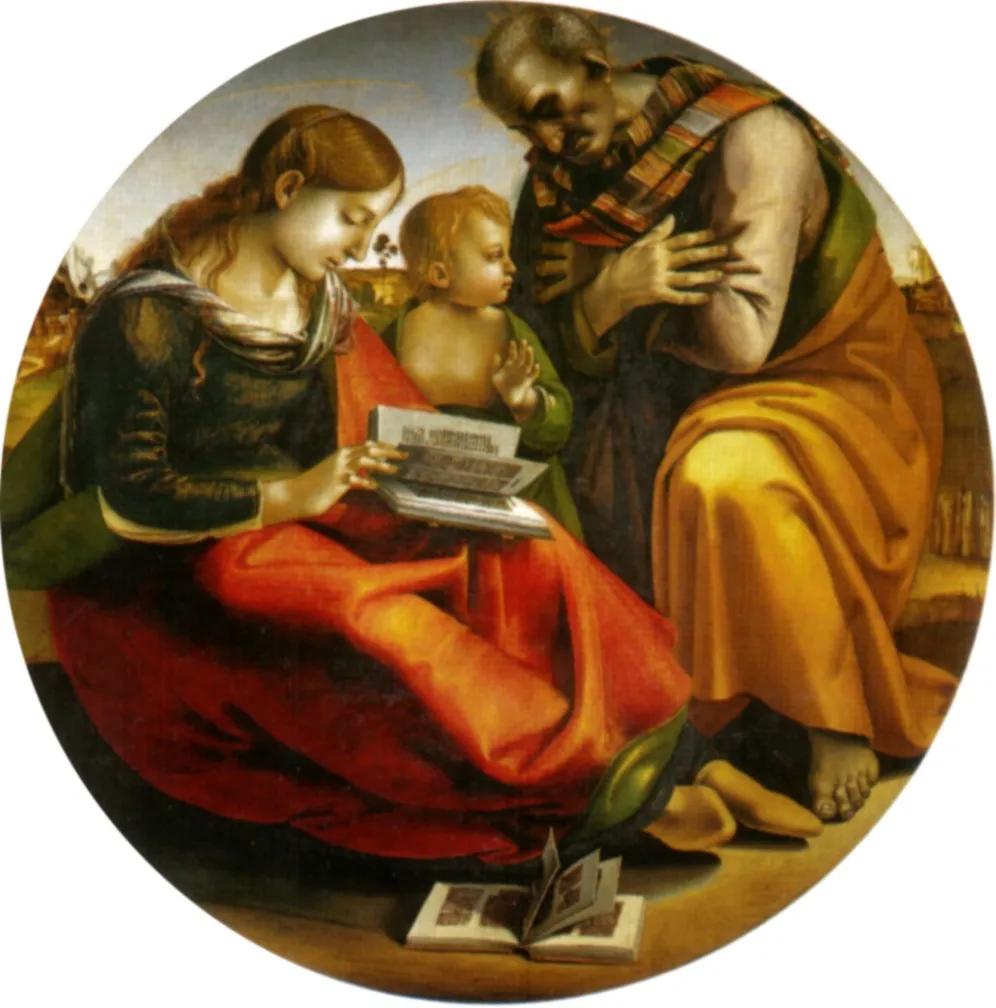
The Holy Family di Parte Guelfa is an oil painting by the Early Renaissance artist Luca Signorelli. It dates from 1490 and is held in the collection of the Uffizi Gallery.
About this work
Subject & Meaning
The painting depicts the Holy Family, Mary, Joseph, the Christ Child, and a young boy, within a domestic interior that emphasizes their familial bond.
The painting depicts the Holy Family, Mary, Joseph, the Christ Child, and a young boy, within a domestic interior that emphasizes their familial bond. Mary is shown seated and reading a book, while Joseph kneels in adoration, his hand resting on his chest; the infant gazes toward him, raising a hand in surprise. A second open book lies on the floor, and a patterned scarf drapes over Joseph’s shoulder, a detail that appears in several contemporary works. The composition is set against a faint landscape with distant travelers, suggesting a narrative context beyond the immediate scene. The work’s iconography underscores themes of devotion and familial intimacy, reflecting Renaissance ideals of sacred domesticity. Its dynamic chiaroscuro and sculptural rendering of figures convey a sense of movement that influenced later artists such as Michelangelo.
Technique & Style
The Holy Family di Parte Guelfa is a tondo executed in tempera on panel, measuring 124 cm in diameter. It was painted for the Palazzo di Parte Guelfa and later transferred to the Uffizi, where it underwent restoration in 2000. Stylistically, the work is regarded as one of the artist's finest tondi and one of his earliest treatments of the Holy Family in the circular format. The Madonna is arranged transversally, absorbed in reading a book, with a second open volume lying on the ground before the figures. Behind her, the Christ Child turns back toward Saint Joseph, who kneels in adoration with his hands crossed over his chest and wears a striped scarf-like cloth that was a fashionable accessory of the period. The strong chiaroscuro modeling lends the figures an almost sculptural relief, projecting them outward toward the viewer. Signorelli's handling reflects influences from Piero della Francesca, evident in the naturalistic treatment of hair, while the inclined head of Joseph recalls the shepherds in Hugo van der Goes's Portinari Triptych. A small landscape glimpse opens at the left, with travelers on a road leading toward a castle.
History & Provenance
The tondo was commissioned for the Palazzo di Parte Guelfa in Florence, where it remained until its transfer to the Uffizi in 1802.
It was painted around 1490 and is documented in the Camera della Comunità (Sala delle Udienze) of the Palazzo di Parte Guelfa before being moved to the Uffizi. Authorisation for the transfer was granted in 1800, and the painting was installed at the Uffizi on 27 January 1802. The work is listed in Giorgio Vasari’s *Lives of the Artists*.
The work is held in the Uffizi Gallery, Florence, inventoried as the Parte Guelfa Holy Family. It was painted for the Palazzo di Parte Guelfa and later installed in the Camera della Comunità (Sala delle Udienze) before transfer to the Uffizi.
It was moved to the Uffizi on 27 January 1802 following authorization granted in 1800. The painting has been restored, most recently in 2000.
Context
The Holy Family di Parte Guelfa is recognized as one of Luca Signorelli's earliest and most significant treatments of the tondo format featuring the Holy Family. Cited by Giorgio Vasari in his *Lives of the Artists*, the work was originally painted for the Palazzo di Parte Guelfa in Florence before its transfer to the Uffizi Gallery in 1802. Art historians regard the painting as a pivotal piece that likely influenced the young Michelangelo, particularly serving as a conceptual model for the later Tondo Doni. The composition is noted for its intense chiaroscuro and monumental figures that appear to break through the physical frame, a quality that Scarpellini described as projecting the subjects toward the viewer. Stylistically, the work synthesizes influences from Signorelli's master, Piero della Francesca, seen in the naturalistic rendering of hair, and Northern European art, such as the resemblance of Joseph's head to figures in Hugo van der Goes's *Portinari Triptych*.
Legacy
The painting's energetic figural style left a notable mark on subsequent art. Scholarly analysis has identified it as the closest model to Michelangelo's Tondo Doni, though the relationship is understood as suggestive influence rather than direct derivation. The work's programmatic display of sculptural energy, with figures that seem to burst beyond the frame, is thought to have particularly impressed the young Michelangelo, who developed similar effects in his own compositions. The painting's reputation was already established by the time of Giorgio Vasari, who mentioned it in his *Lives of the Artists*. After serving its original civic-religious function in the Palazzo di Parte Guelfa, the work was authorized for transfer to the Uffizi in 1800 and moved there on 27 January 1802. It underwent conservation treatment in 2000.
Artist & collection
Artist
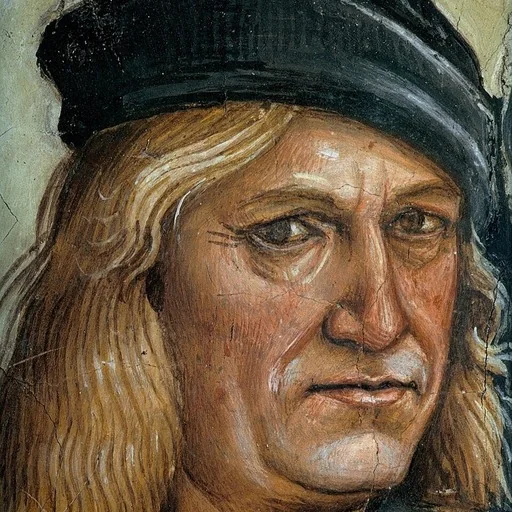
Luca Signorelli (c. 1441/1445 – 16 October 1523) was an Italian Renaissance painter from Cortona, in Tuscany, who was noted in particular for his ability as a draftsman and his use of foreshortening. His massive frescos…

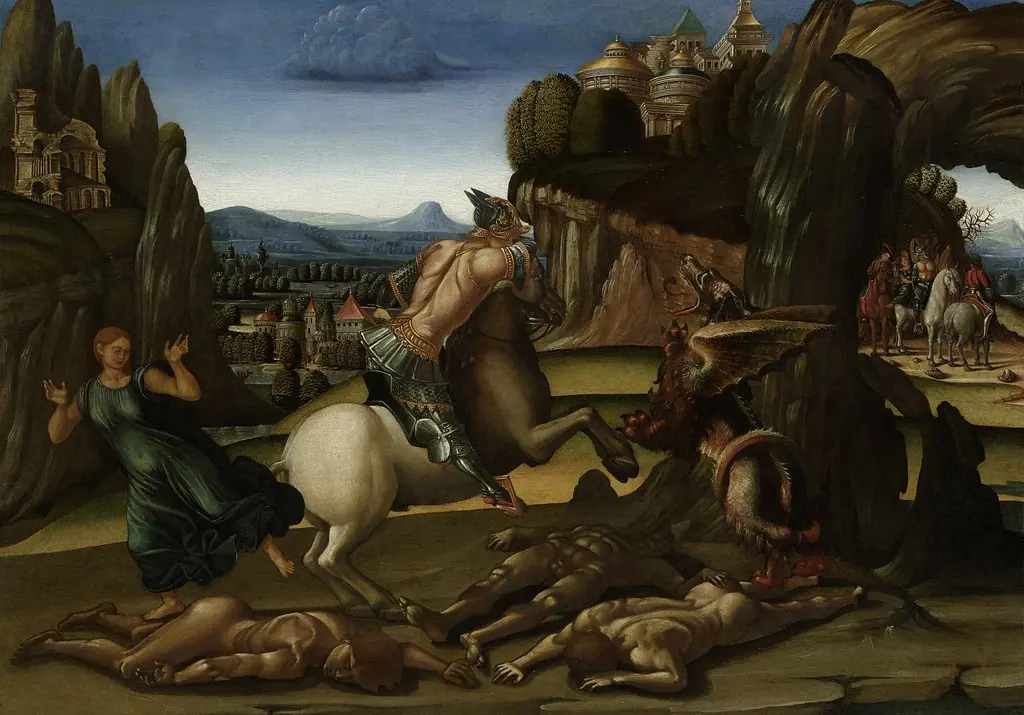
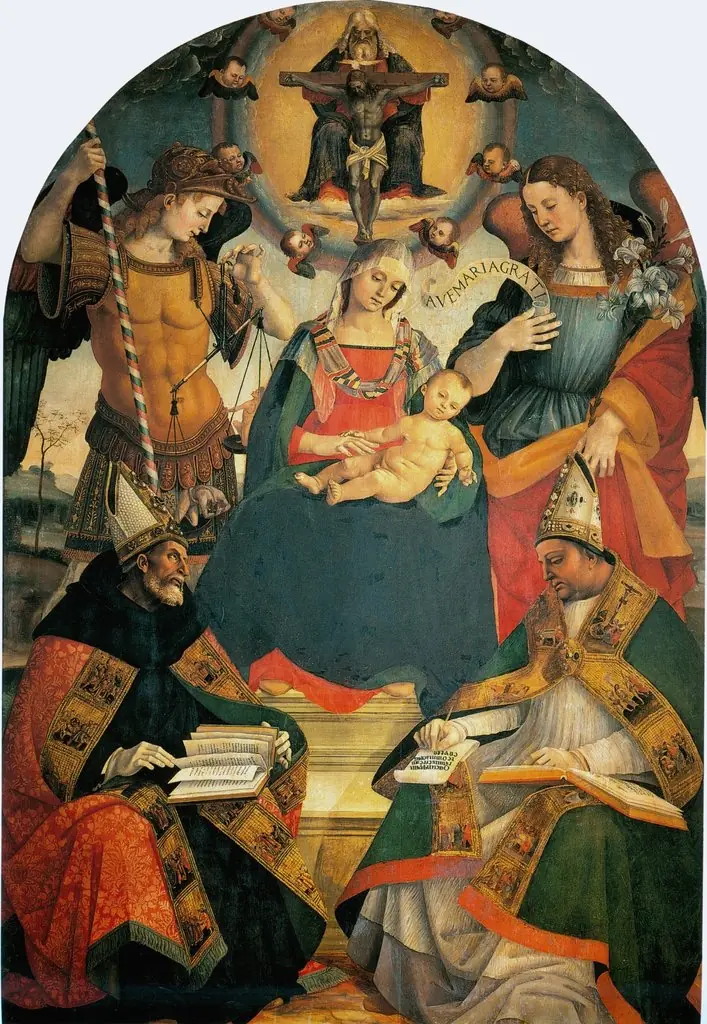
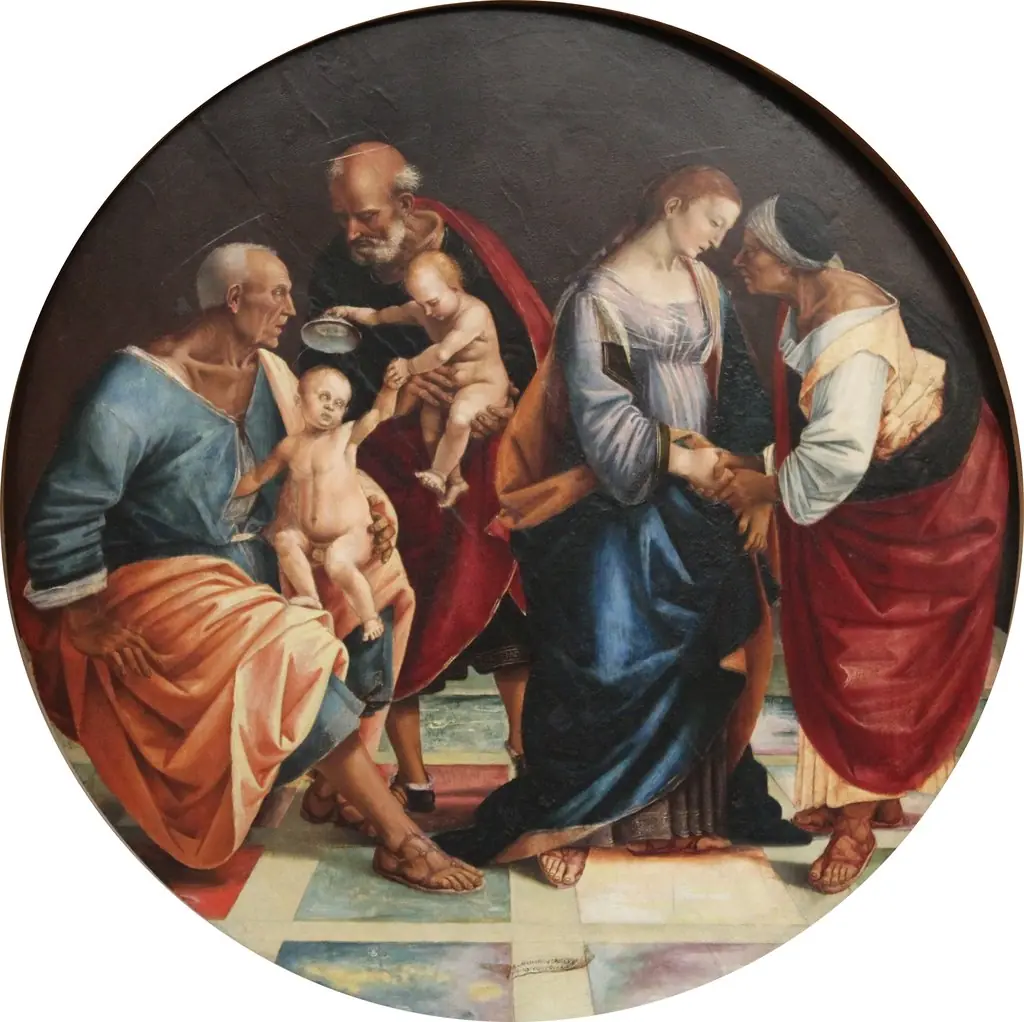
- The Holy Family
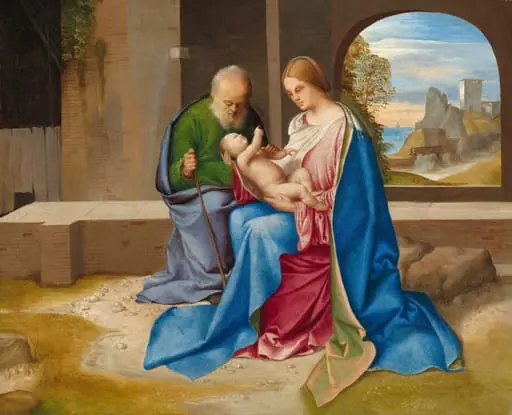 The Holy Family
 The Holy Family With a Palm Tree
 The Adoration of the Child
 Adoration of the Child
 Holy Family
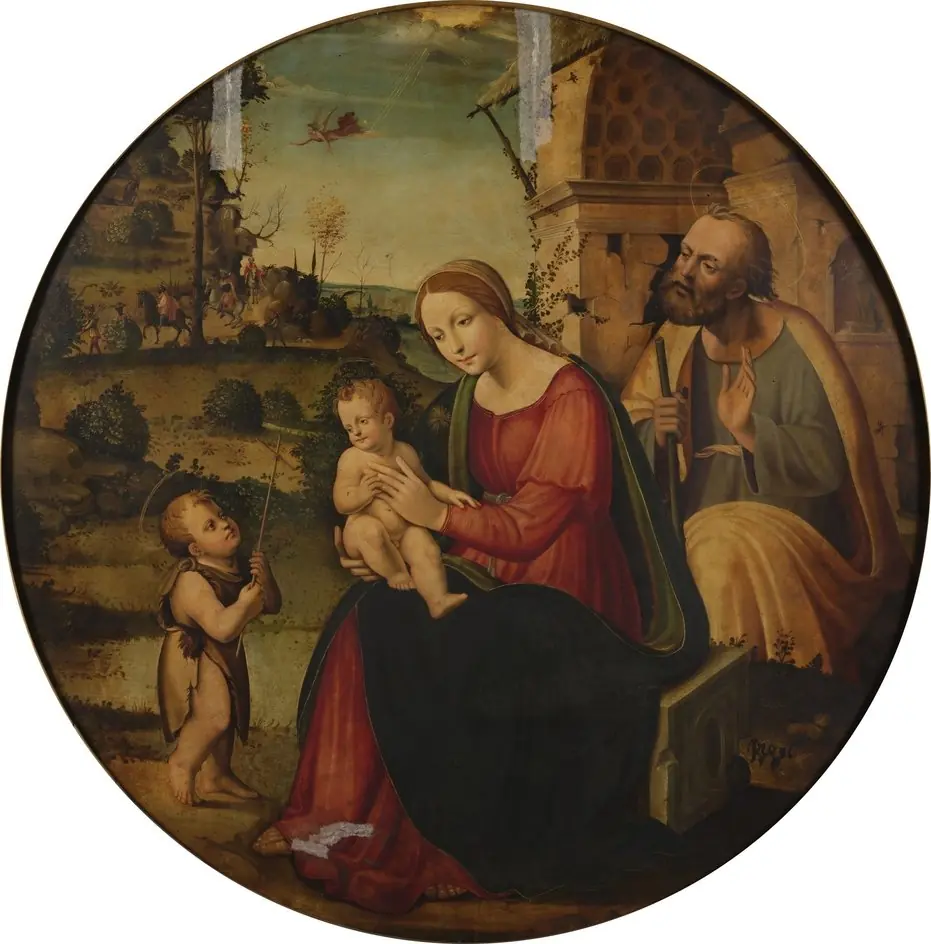 The Holy Family with the young St John the Baptist
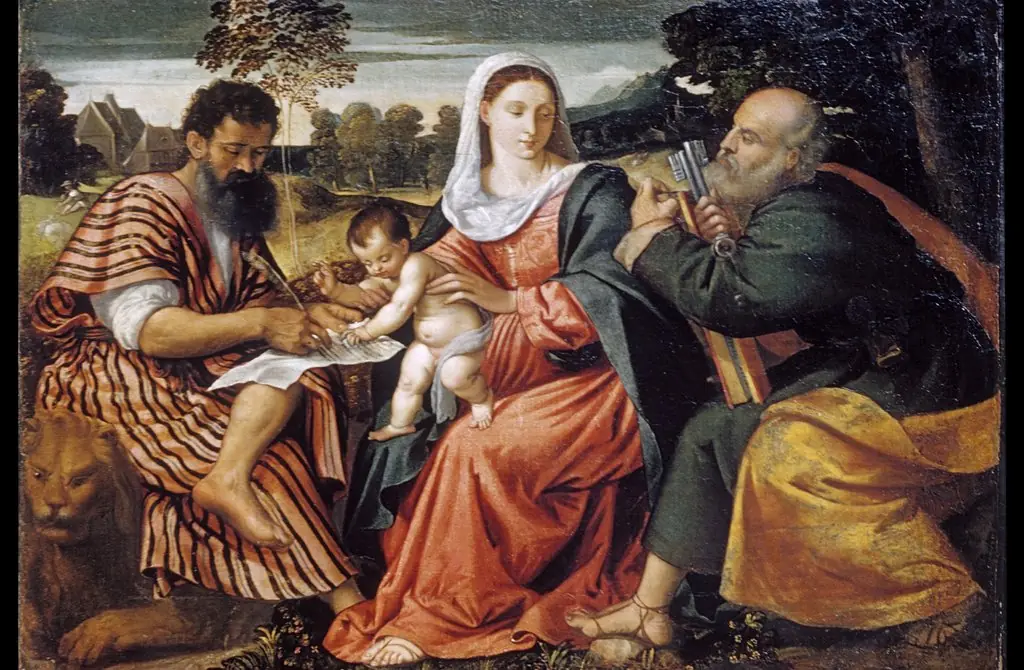 Madonna and Child with Saints Mark and Peter
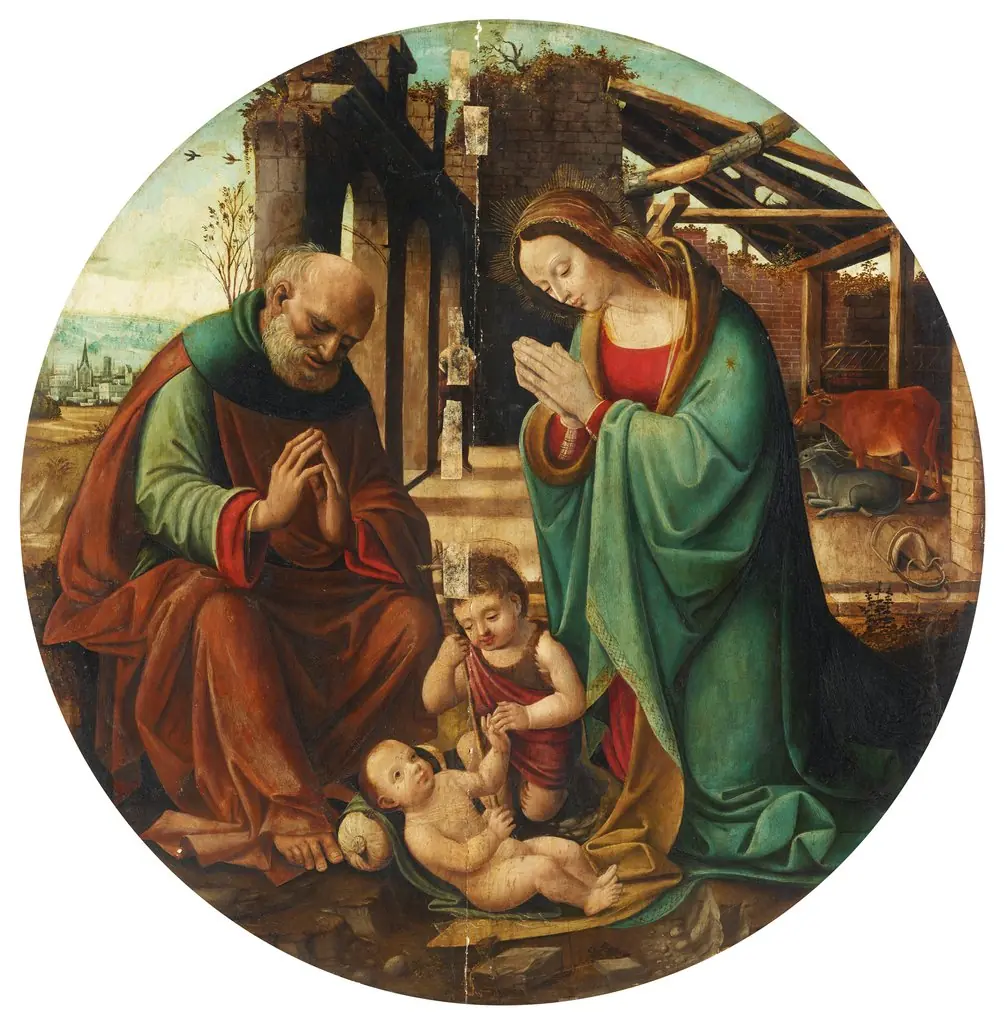 The Holy Family with Young St. John, Adoring the Child
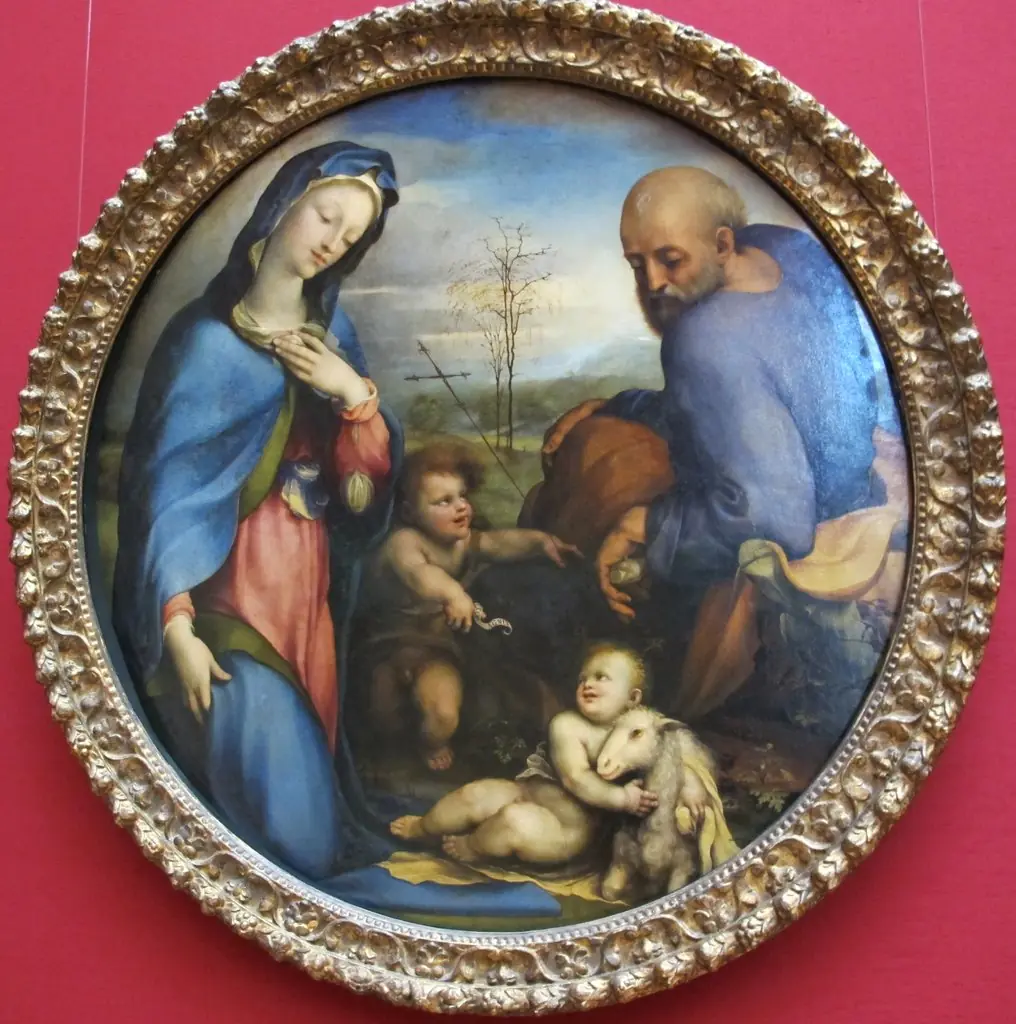 Holy Family with the Infant Saint John the Baptist and a Sheep
 Holy Family