Artwork
Holy Family
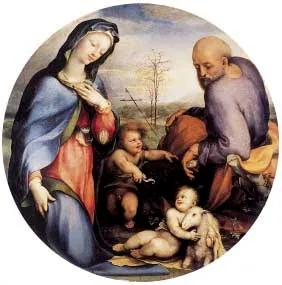
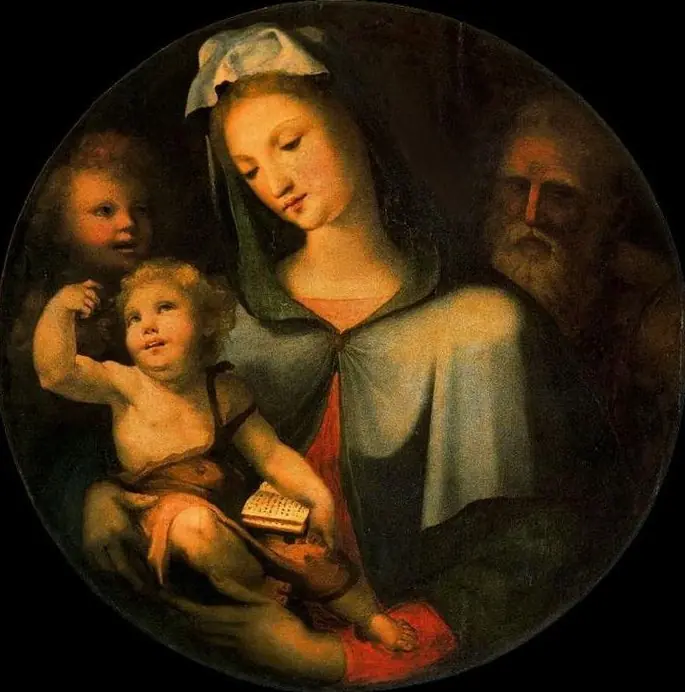
Holy Family is an unspecified painting by the Mannerist artist Domenico Beccafumi. It dates from 1521 and is held in the collection of the Bavarian State Painting Collections.
About this work
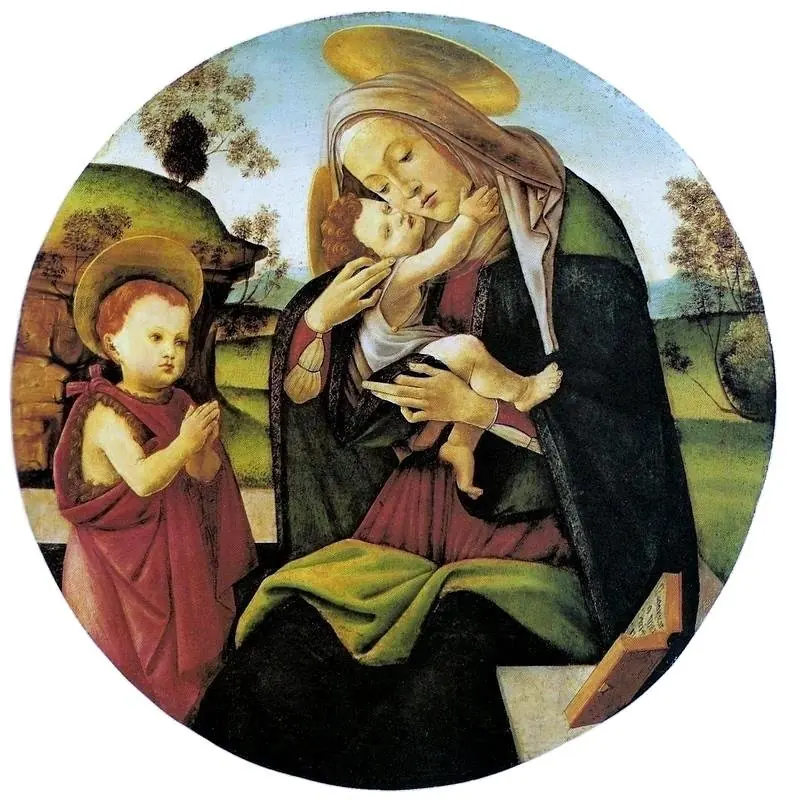
Domenico Beccafumi painted Holy Family around 1521–1522. The work shows Mary, the Christ Child, and young John the Baptist. Beccafumi used oil on panel to capture this quiet scene.
The painting moved from Siena to Munich in 1816. Prince Ludwig paid 975 scudi for it. Later, it joined the Alte Pinakothek in 1850.
This is one of Beccafumi’s few works outside Italy. Look up Domenico Beccafumi.
Technique & Style
The circular format and balanced composition reveal the influence of late-15th- and early-16th-century Florentine painting, particularly Raphael.
The Holy Family is an oil painting on panel, executed in a circular tondo format with a diameter of 113 cm. Beccafumi resolved the compositional challenge of the tondo by tilting the flanking figures of Joseph and Mary forward, placing them in an elegant contrapposto, one frontal, one turned away, while the elongated, fluid forms of the Madonna and the serpentine pose of Joseph, whose arm rests on a sack, reflect the artist's characteristic handling and a reflection on Michelangelo's figures. At the center, the young Saint John is rendered with fluid, rapid brushwork, gesturing toward the Christ Child who embraces the lamb, while the open central space allows a delicate landscape with a small withered tree that visually merges with the Baptist's cross. The work shows a tonal, atmospheric softness linked to the example of Leonardo da Vinci, and its overall effect has been described as vaguely restless, with figures converging toward the center as if reflected in a convex mirror, unified by corresponding gestures and gazes. The circular format and balanced composition reveal the influence of late-15th- and early-16th-century Florentine painting, particularly Raphael.
History & Provenance
The work titled Holy Family with the Infant Saint John the Baptist was painted by Domenico Beccafumi around 1521–1522. It is an oil-on-panel circular composition measuring 113 cm in diameter and depicts the Holy Family alongside Saint John the Baptist, with Mary and Joseph framing the central figures of Jesus and the infant Baptist. The painting entered the Alte Pinakothek in Munich in 1850 after being acquired in 1816 from the Marsili family in Siena for 975 scudi by Prince Ludwig.
Its provenance traces back to the Marsili collection, where it remained until its purchase and export to Munich. The attribution to Beccafumi was initially contested, notably by Adolfo Venturi, who mistakenly assigned it to Bacchiacca due to a poor photographic reproduction, but it is now universally accepted as Beccafumi's work. The circular format and balanced composition reflect the influence of early 16th-century Florentine art, particularly the style of Raphael, and demonstrate Beccafumi's engagement with High Renaissance aesthetics.
The work shows compositional innovations, including a forward-inclining arrangement of figures and a serpentine pose for Joseph, reflecting Michelangelo's influence. The Christ Child is interpreted as embracing a lamb, symbolizing the 'Lamb of God,' while the infant Baptist gestures toward him. The painting's tonal effects and spatial depth echo Leonardo da Vinci's techniques, and the overall composition conveys a dynamic, almost mirrored tension centered on the lamb. This synthesis of stylistic elements underscores its significance within Beccafumi's oeuvre and the broader Renaissance context.
The work is held by the Bavarian State Painting Collections at the Alte Pinakothek in Munich. It entered the museum in 1850 after being acquired from the casa Marsili in Siena in 1816 for 975 scudi by Prince Ludwig. The painting, titled Holy Family with the Infant Saint John the Baptist, is an oil-on-panel work created around 1521–1522 by Domenico Beccafumi.
It is cataloged with an accession number reflecting its entry into the Alte Pinakothek collection. The work has been part of exhibitions at the Alte Pinakothek, including those highlighting Renaissance paintings from the Bavarian State collection. It is also featured in scholarly publications such as those by Anna Maria Francini Ciaranfi and in exhibition catalogs from the Alte Pinakothek Munich. The painting's provenance includes its origin in Siena, transfer to Munich, and subsequent inclusion in public display.
Context
The painting is regarded as an early example of Beccafumi’s mature synthesis of High Renaissance compositional balance and Mannerist dynamism, particularly noted for its circular format that reflects Florentine preferences of the early 16th century. Scholars emphasize how the work’s curved spatial arrangement and serpentine gestures reveal both Raphaelistic influence and Michelangelesque anatomical study, while the delicate tonal modeling echoes Leonardo’s atmospheric effects. Its iconography, depicting the Holy Family alongside the infant John the Baptist and a symbolic lamb, was interpreted in contemporary sources as a meditation on the child’s sacrificial destiny, a theme that informed later Counter-Reformation devotional practices.
The attribution to Beccafumi, once contested by Venturi, is now considered definitive, bolstered by archival records of its 1816 acquisition from the Marsili collection and its subsequent display at the Alte Pinakothek since 1850.
Legacy
The painting has been recognized as an influential example of early 16th-century Florentine religious art, particularly noted for its circular format and balanced composition that reflect the influence of Raphael and the broader Renaissance aesthetic. Its depiction of the Holy Family with the Infant Saint John the Baptist, rendered in oil on panel, demonstrates compositional innovations such as forward-leaning figures and serpentine poses that engage with Michelangelo's style, while the use of chiaroscuro and atmospheric effects echoes Leonardo da Vinci's techniques. The work's legacy is anchored in its provenance from the Marsili collection in Siena to its acquisition by the Bavarian State Painting Collections for the Alte Pinakothek in Munich in 1850, where it remains part of the permanent display.
Art historical scholarship, including entries in both Italian and English encyclopedic sources, consistently affirms its attribution to Beccafumi and underscores its significance within the trajectory of Renaissance sacred imagery.
Overview
Domenico Beccafumi’s Holy Family was painted circa 1521–1522. Executed on a wooden panel with oil paints, the composition presents a tranquil domestic scene of the Virgin Mary with the infant Christ and a youthful John the Baptist. The work exemplifies the artist’s early mature style and reflects the devotional interests of early‑sixteenth‑century Siena.
Subject & Meaning
The three figures are arranged in an intimate grouping that emphasizes familial bonds and the prophetic connection between Christ and John. Mary is shown tenderly holding the Christ Child, while the small John, identifiable by his modest attire, gestures toward the infant, hinting at his future role as the forerunner of the Messiah.
Artist & collection
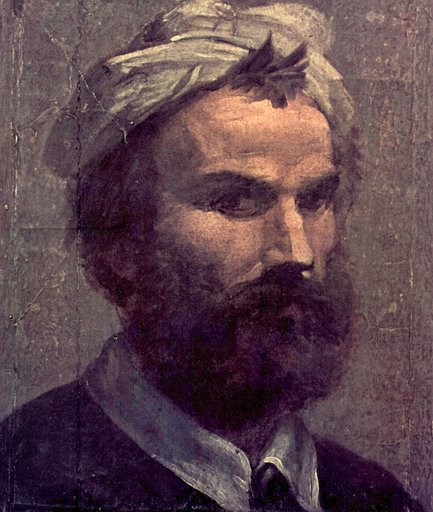
Artist
Domenico di Pace Beccafumi was an Italian Renaissance-Mannerist painter active predominantly in Siena. He is considered one of the last undiluted representatives of the Sienese school of painting.