Artwork
Trinity, the Virgin, and Two Saints
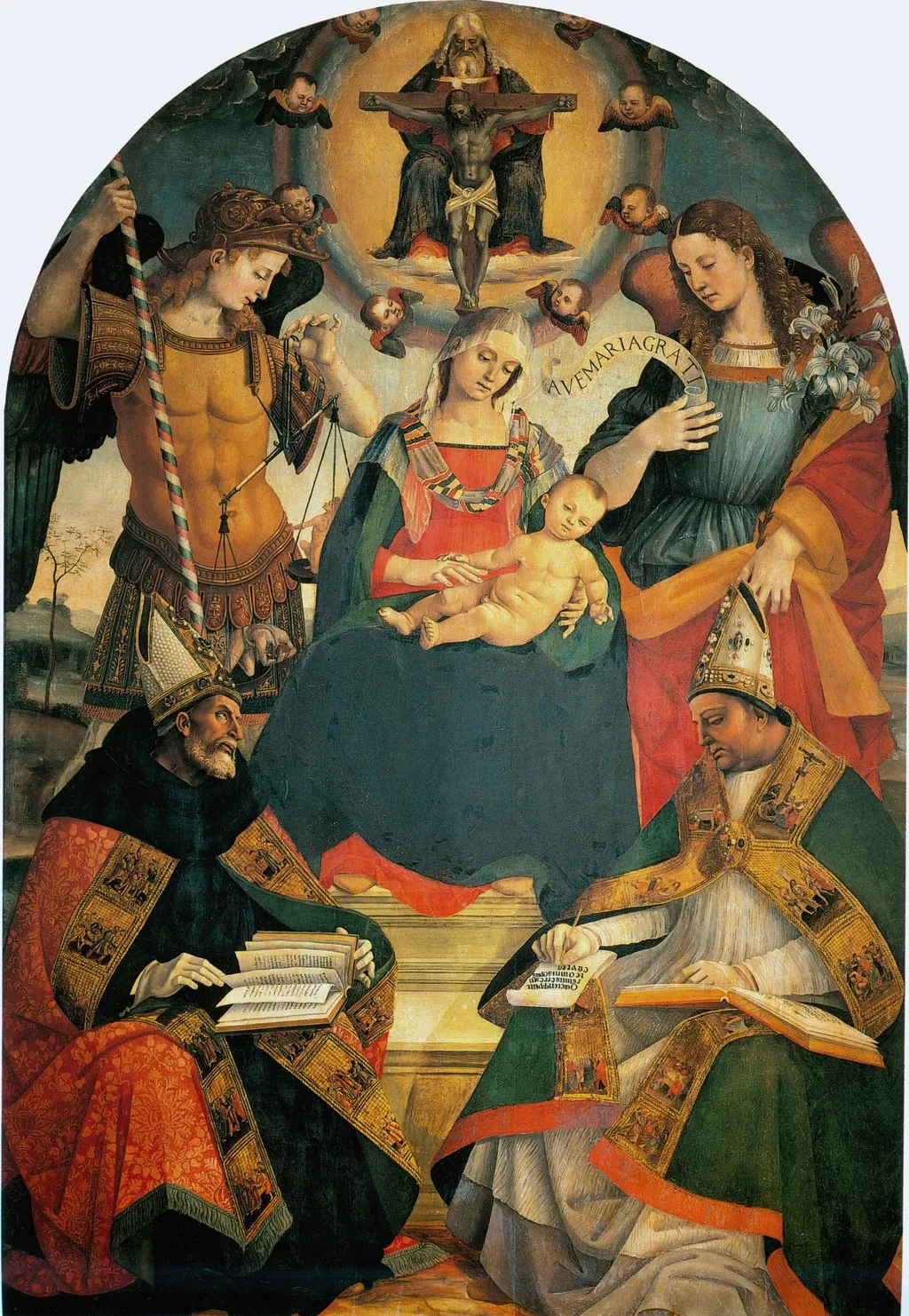
Trinity, the Virgin, and Two Saints is a tempera painting by the Early Baroque Italian artist Luca Signorelli. It dates from 1510 and is held in the collection of the Uffizi Gallery.
About this work
This painting shows the Virgin Mary holding the Christ Child.
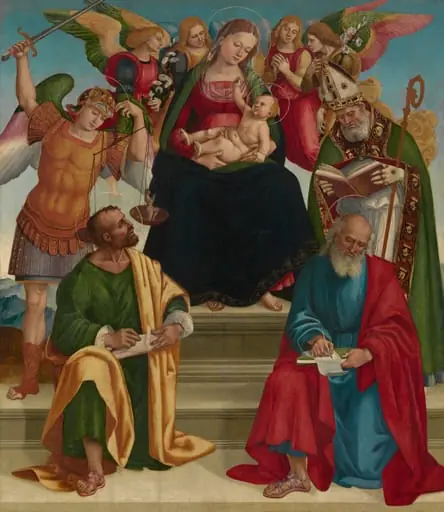
This painting shows the Virgin Mary holding the Christ Child. She sits high on a throne. Four holy figures stand around her. Michael and Gabriel hover above. Augustine and Athanasius flank her sides. The whole scene is framed by the Holy Trinity at the top.
The artist used tempera, a paint made with egg yolk. That gives the colors a soft glow. The work dates to 1510.
To see more by this hand, look up Luca Signorelli.
Subject & Meaning
The painting depicts a sacra conversazione, a sacred conversation in which the enthroned Virgin and Child are flanked by saints and heavenly figures. At the center, the Madonna holds the Christ Child, surrounded by the archangels Michael and Gabriel; Michael carries his attributes of a warrior’s armor and the scales of souls, while Gabriel holds a lily and a scroll bearing the opening words of the Hail Mary. Below the throne kneel the bishops Augustine of Hippo and Athanasius of Alexandria, identifiable by their miters and open books.
Above, within a mandorla of cherubim, God the Father supports the crucified Christ, with the dove of the Holy Spirit descending between them, embodying the Trinitarian theme of the Throne of Grace. The composition thus unites the earthly church with the divine Trinity, underscoring the intercession of the saints and the mediation of Mary and the Christ Child.
Technique & Style
The work is executed in tempera on panel, measuring 272 by 180 cm. The composition is a sacra conversazione organized within a frame arched at the top. At the apex, God the Father supports the crucified Christ within a nimbus surrounded by a mandorla of cherubs, with the dove of the Holy Spirit above. The Virgin and Child are flanked by the archangels Michael, in Roman armor with a breastplate, helmet, and the scales for weighing souls, and Gabriel, holding a lily branch and an Annunciation scroll.
Two seated bishop-saints, Augustine and Athanasius of Alexandria, occupy the base of the throne, each with an open book; Athanasius is identified by a legible verse on his parchment. Both wear richly embroidered vestments bearing scenes from the Gospels.
The painting's tightly packed composition draws on Peruginesque models and appears stylistically belated relative to contemporary developments, while the Virgin's striped shawl recycles a late-Quattrocento motif. Signorelli compensates for the crowded, heavy arrangement with a profusion of decorative detail, producing a showy, sumptuous surface likely tailored to provincial patrons. A glimpse of terrestrial landscape appears beneath the angels' wings, and the sky darkens toward the top. The floor and the front panel of the pedestal are decorated with inlaid (chiqueté) marble patterning.
History & Provenance
Created in 1510, this tempera-on-panel work by Luca Signorelli was originally commissioned by the Confraternity of the Trinity for pilgrims in Cortona, the artist's birthplace. The painting remained in this context before entering the San Niccolò Monastery in Cafaggio, where it was housed from 1810 until 1919. During its history, the original predella, which depicted scenes of the Wedding at Cana, Christ at Gethsemane, and the Flagellation of Christ, was detached.
These predella panels were subsequently transferred to the Galleria dell'Accademia in Florence. The main panel is now held in the Uffizi Gallery in Florence.
Luca Signorelli's Trinity, the Virgin, and Two Saints is currently held in the Uffizi Gallery in Florence, specifically located in the Leonardo da Vinci room. The work, executed in tempera on panel in 1510, was originally commissioned by the Confraternity of the Trinity for pilgrims in Cortona. Following its initial placement, the painting resided at the San Niccolò Monastery in Cafaggio from 1810 until 1919, when it was transferred to its present location.
While the main panel remains in the Uffizi, its detached predella, depicting scenes of the Passion, was moved to the Galleria dell'Accademia in Florence. The predella scenes include the Last Supper, the Prayer in the Garden, and the Flagellation of Christ.
Context
Scholars characterize this 1510 altarpiece as a composition that appears stylistically delayed relative to contemporary developments. The tightly arranged figures derive from models by Perugino, yet the work lacks the revolutionary approach to the sacra conversazione theme already established by Raphael during this period. Critics note that the painting's crowded and heavy structure is offset by an abundance of decorative details, such as the Virgin's striped scarf, a motif typical of the late fifteenth century.
This ornate quality likely catered to the provincial tastes of patrons in the Marche, Umbria, and eastern Tuscany regions where Signorelli worked during his later years. Despite assessments of uneven pictorial quality, the panel remains a significant example of the artist's late religious output, blending traditional iconography with lavish surface ornamentation.
Overview
Created in 1510 by Luca Signorelli, this tempera panel depicts a sacra conversazione now housed in the Uffizi, Florence. The composition centers on the Virgin enthroned with the Christ Child, surrounded by a hierarchy of saints and the Holy Trinity, illustrating a devotional scene originally intended for a pilgrimage confraternity.
Own this work as a print
Artist & collection
Artist
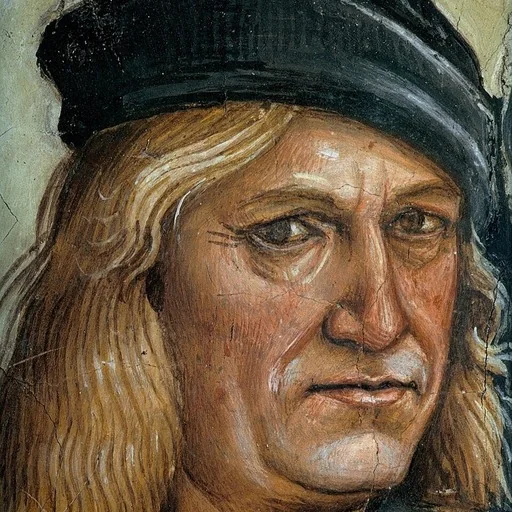
Luca Signorelli (c. 1441/1445 – 16 October 1523) was an Italian Renaissance painter from Cortona, in Tuscany, who was noted in particular for his ability as a draftsman and his use of foreshortening. His massive frescos…

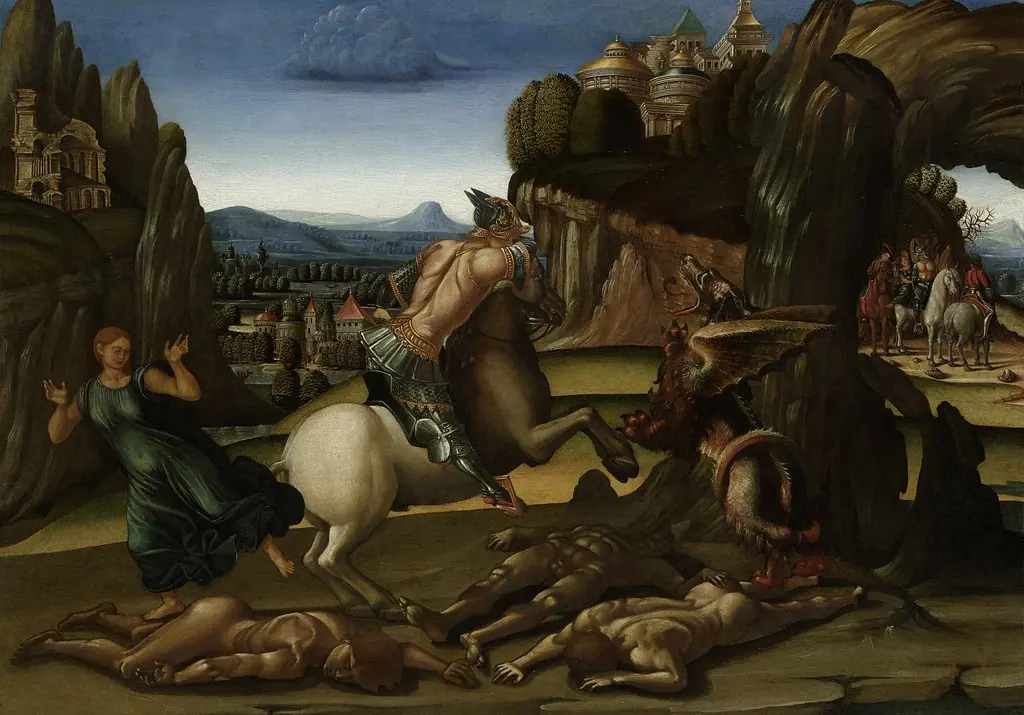
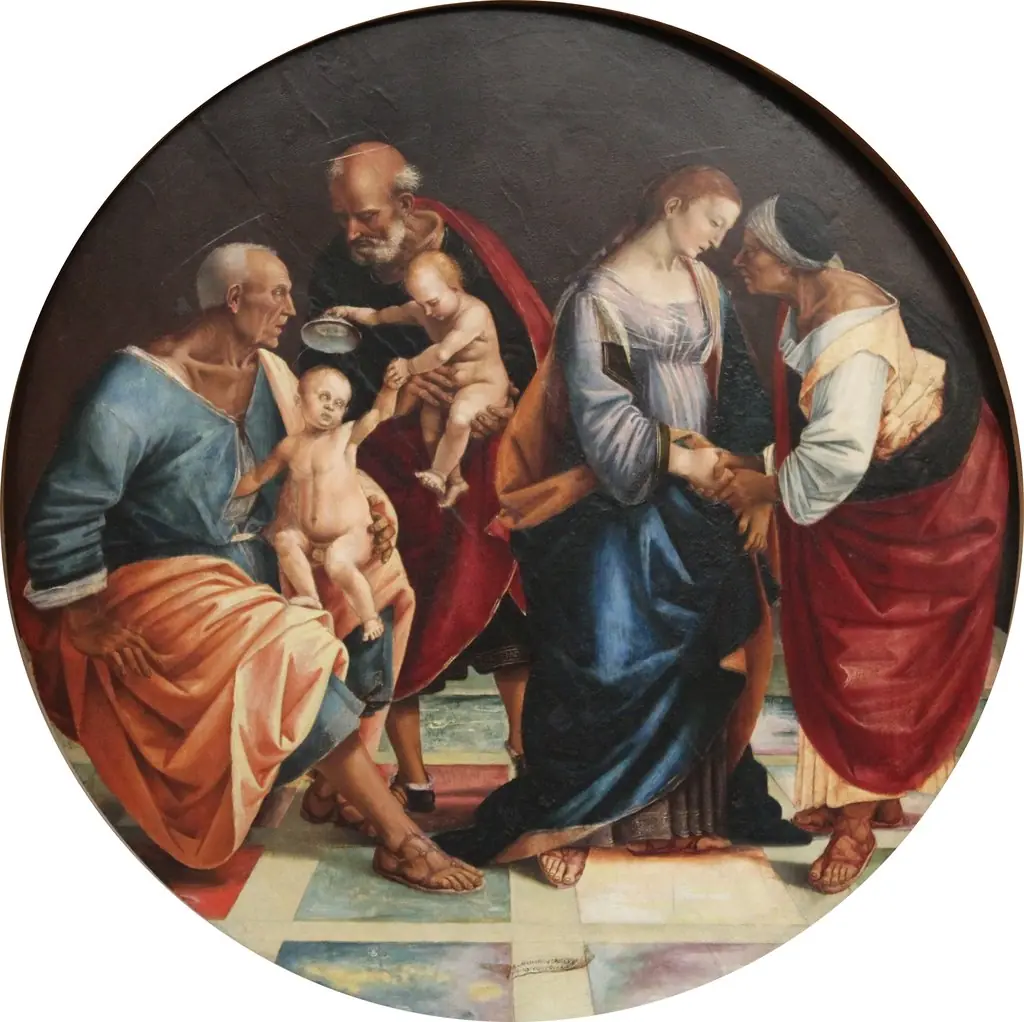
- Madonna and Child Enthroned with Saints and Angels
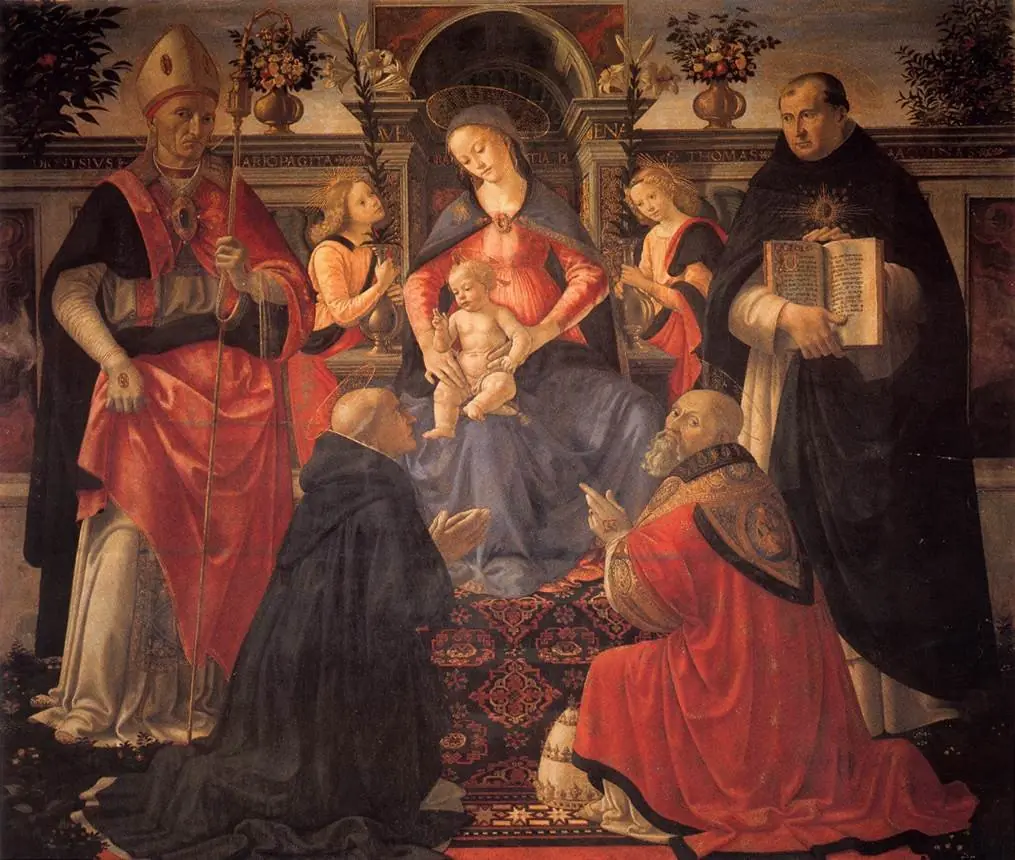 Madonna and Child Enthroned between Angels and Saints
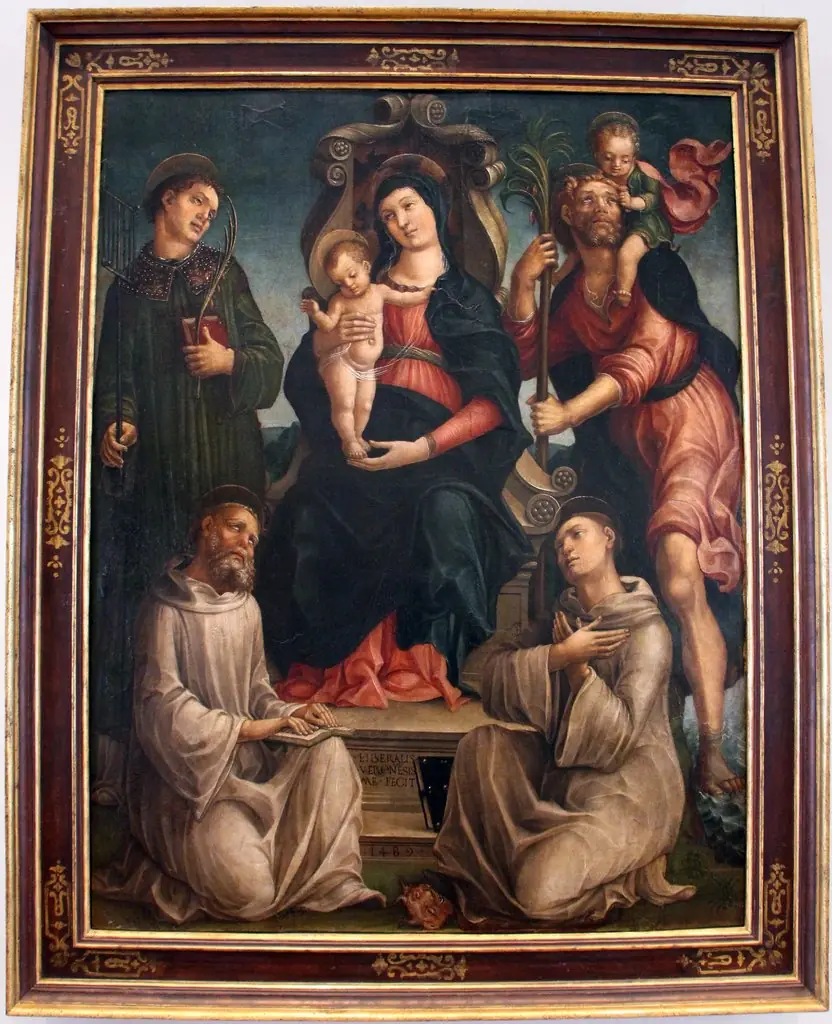 Thronende Maria mit dem segnenden Kind und den Heiligen Benedikt von Nursia, Laurentius und Bernhard von Clairvaux
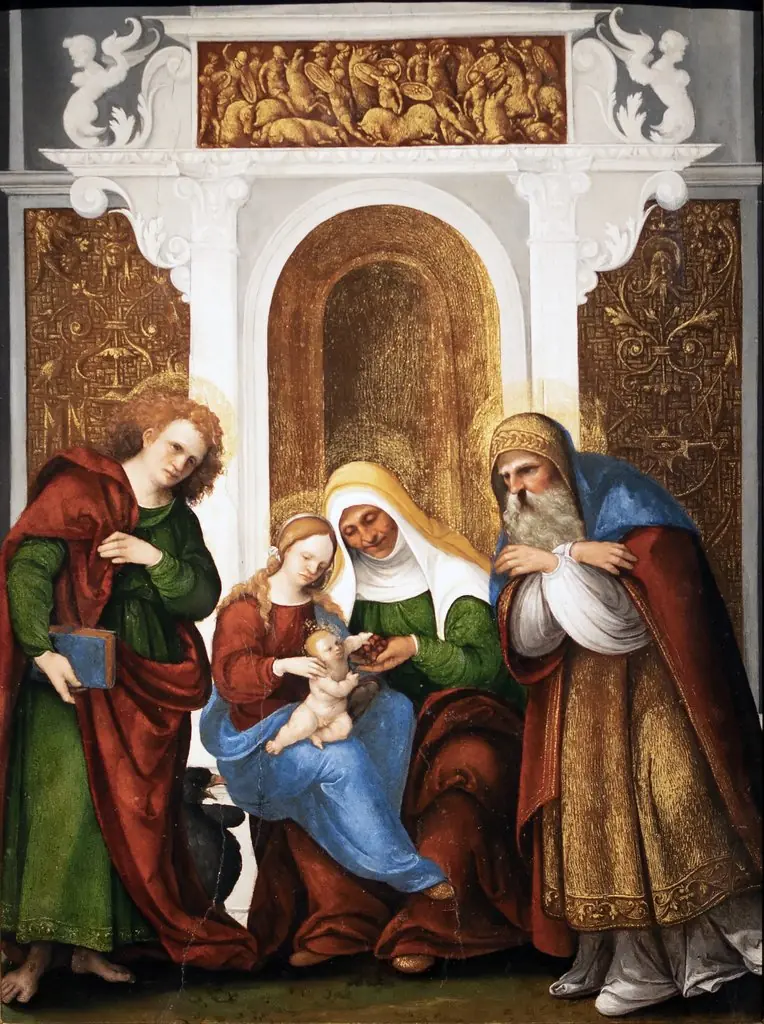 Madonna with Child and Saints
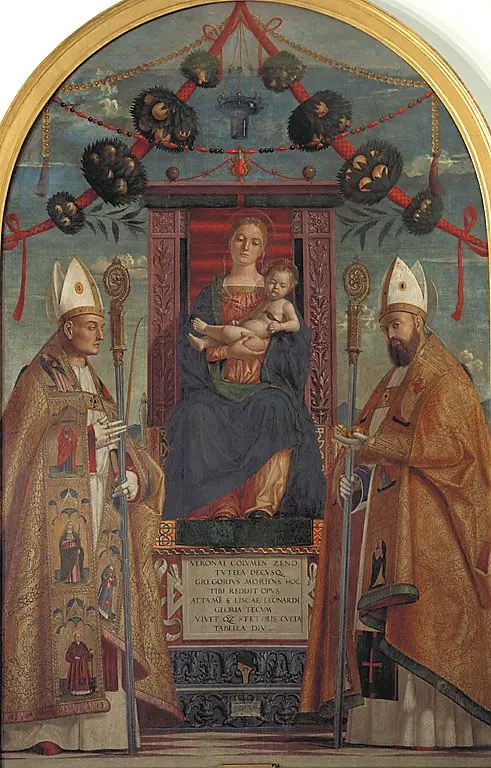 Madonna in trono con il Bambino e i Santi Zeno e Nicolò
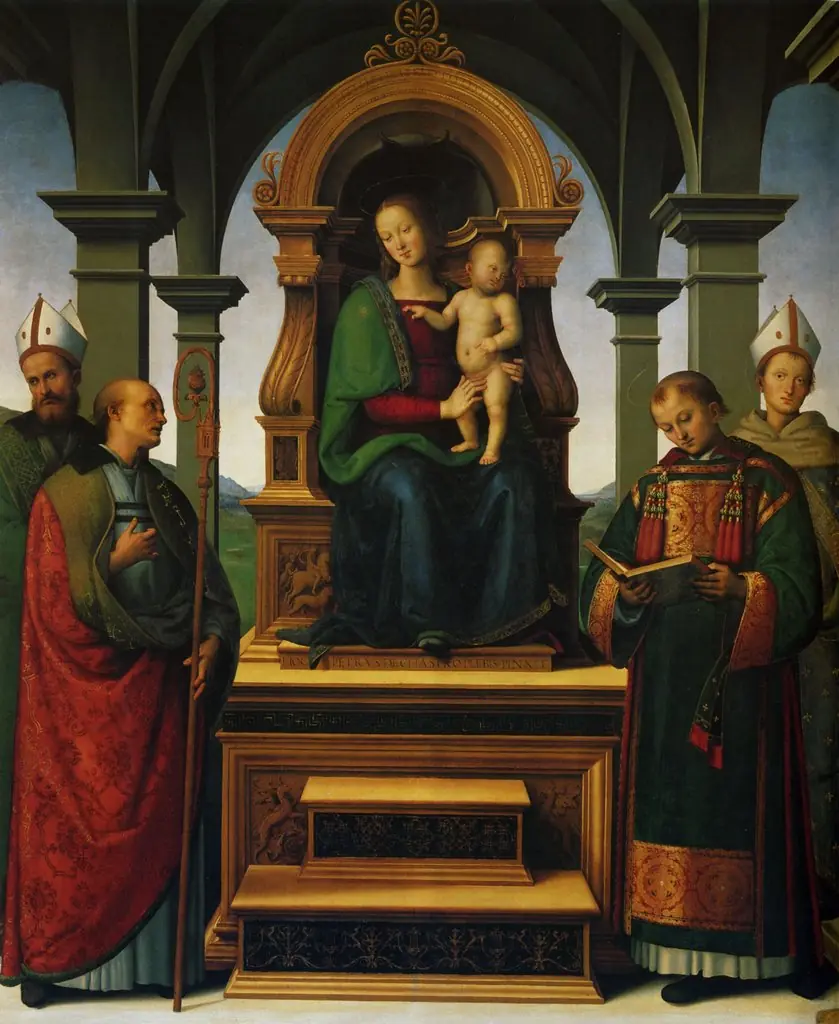 Decemviri Altarpiece
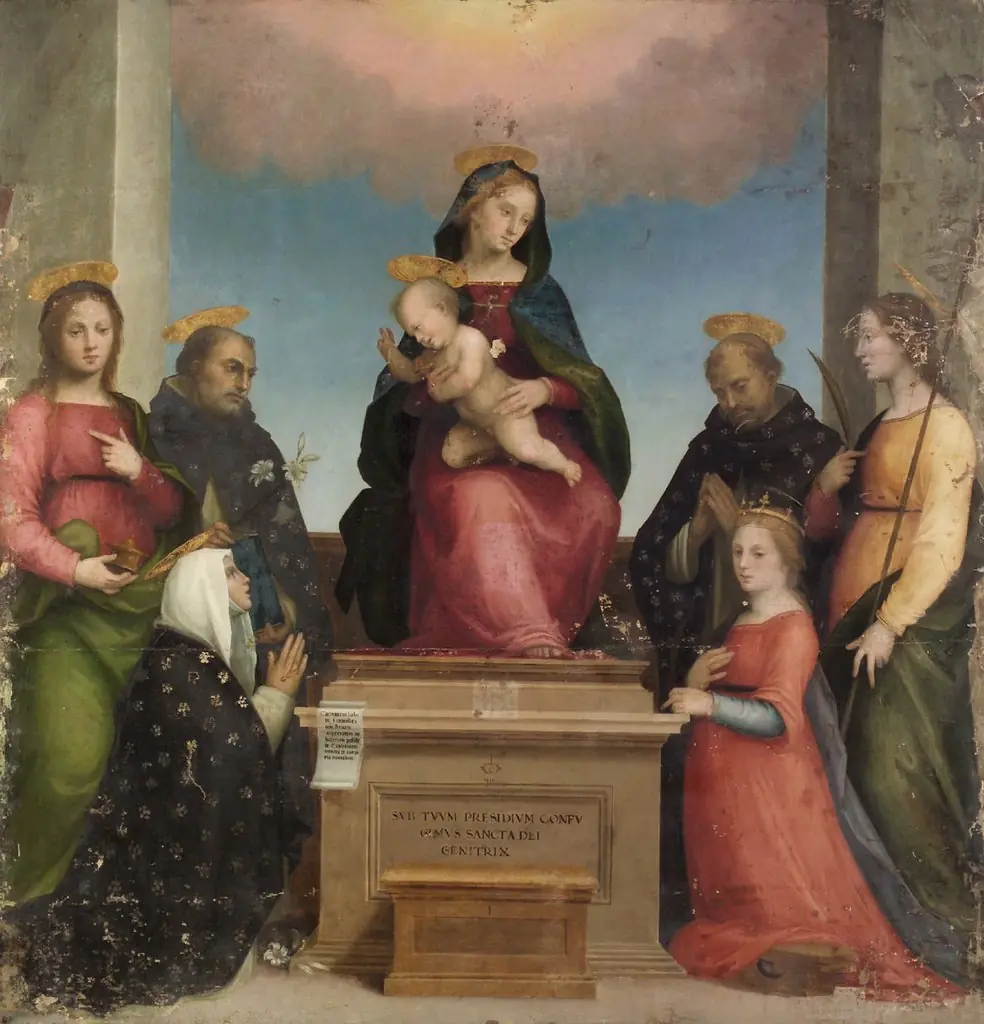 Maria mit Kind und den Hll. Katharina von Siena, Katharina von Alexandrien, Maria Magdalena, Dominikus, Petrus Martyr und einer Märtyrerin
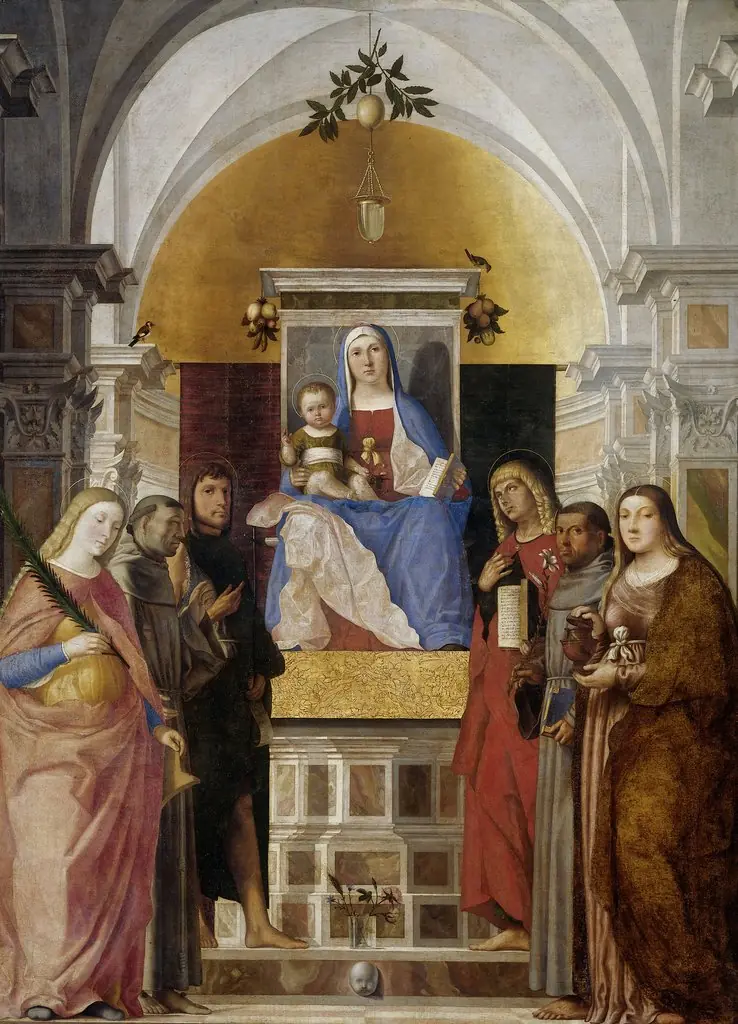 Virgin and Child with Saints Catherine, Francis, John the Baptist, Mary Magdalene, Antony of Padua, John the Evangelist
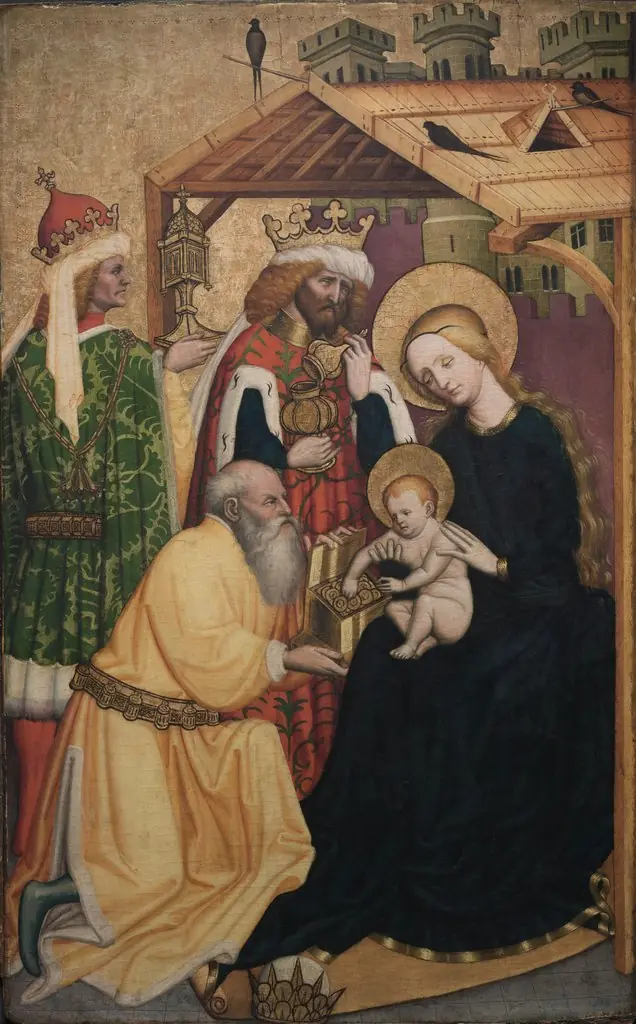 Adoration of the Magi
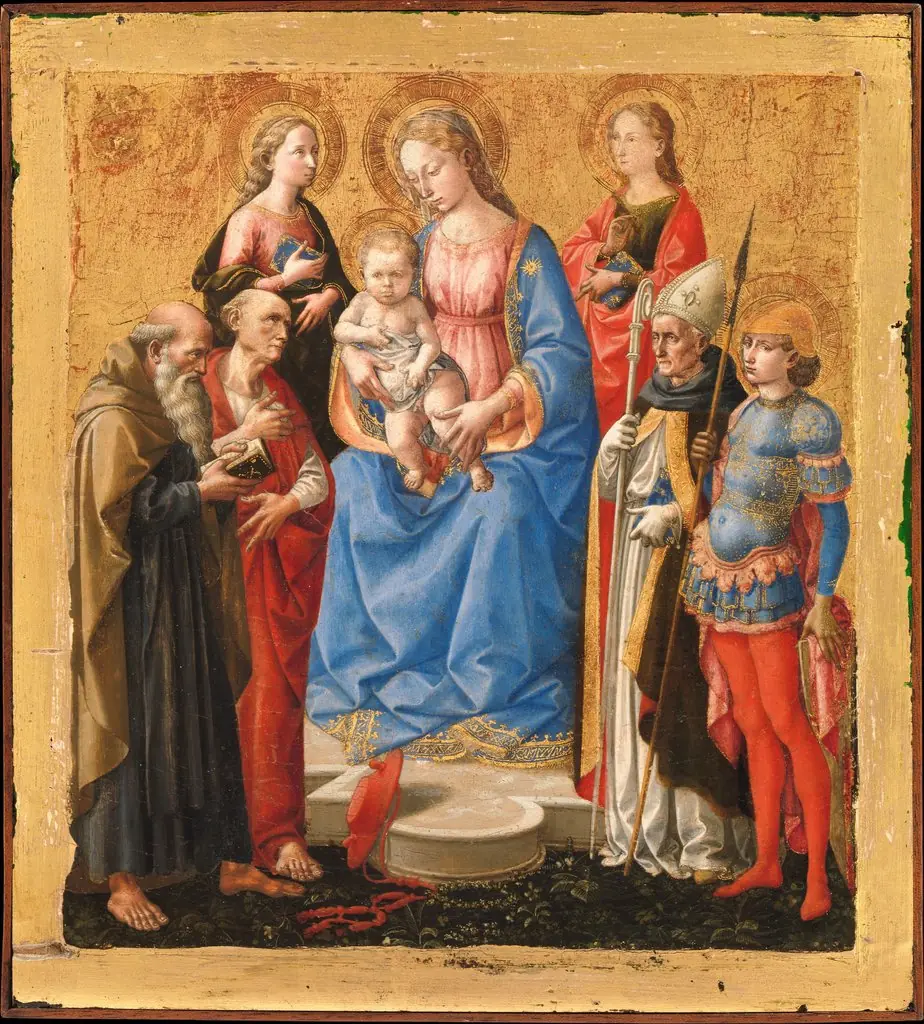 Madonna and Child with Six Saints
 The Virgin and Child enthroned with St. Stephanus and St. Jerome