Artwork
Christ Crucified between the Two Thieves
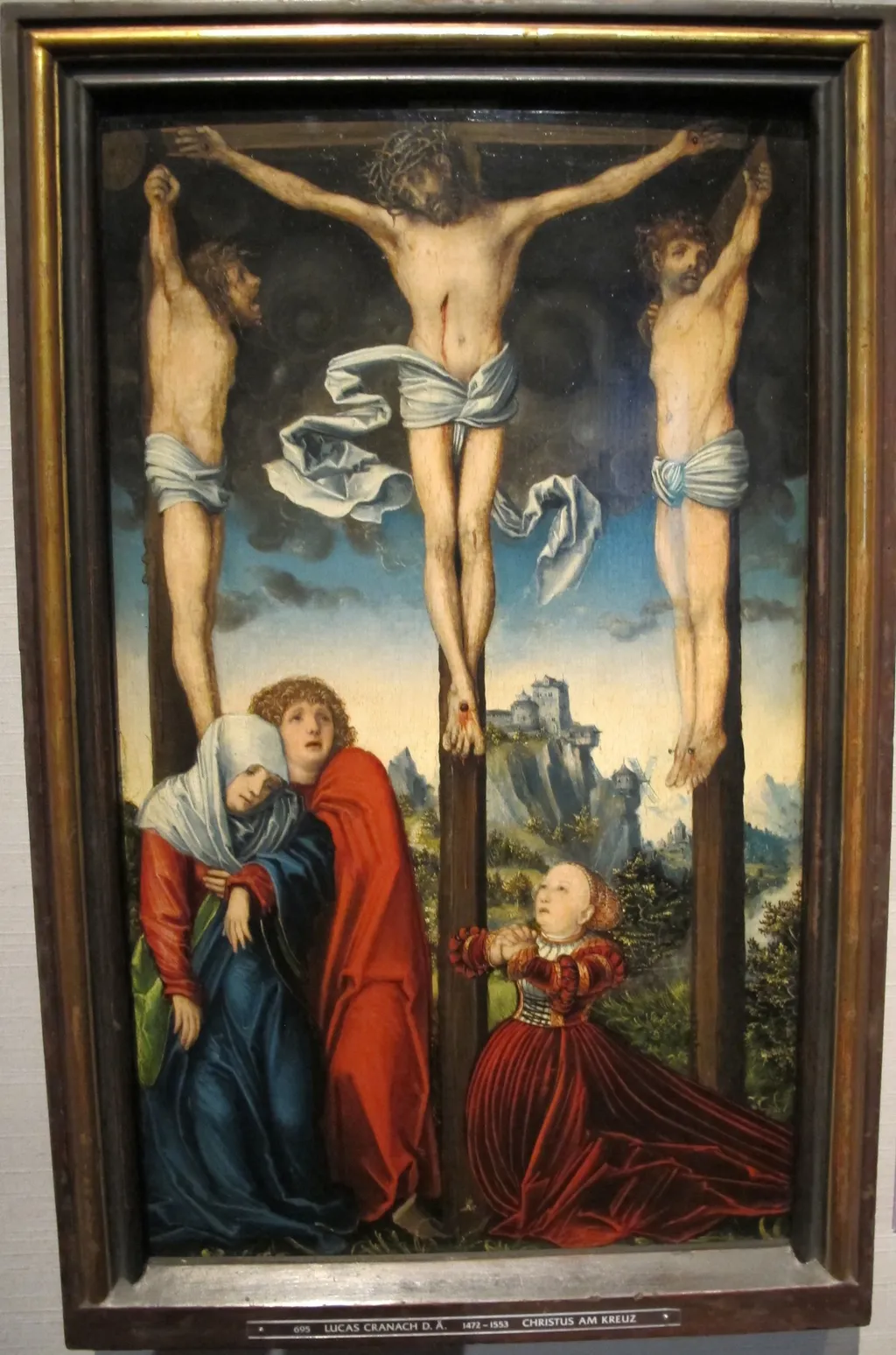
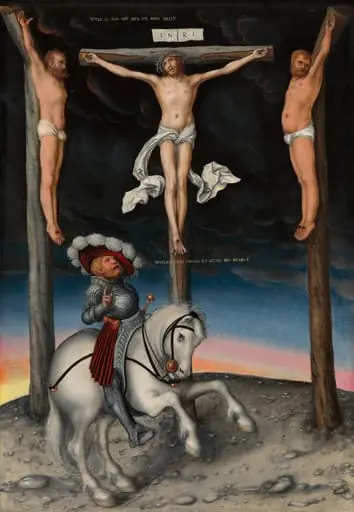
Christ Crucified between the Two Thieves is an unspecified painting by the Northern Renaissance artist Lucas Cranach the Elder. It dates from 1517 and is held in the collection of the Bavarian State Painting Collections.
About this work
Subject & Meaning
The flanking malefactors, one repentant and the other defiant, frame the scene with contrasting postures that underscore moral choice at the moment of death.
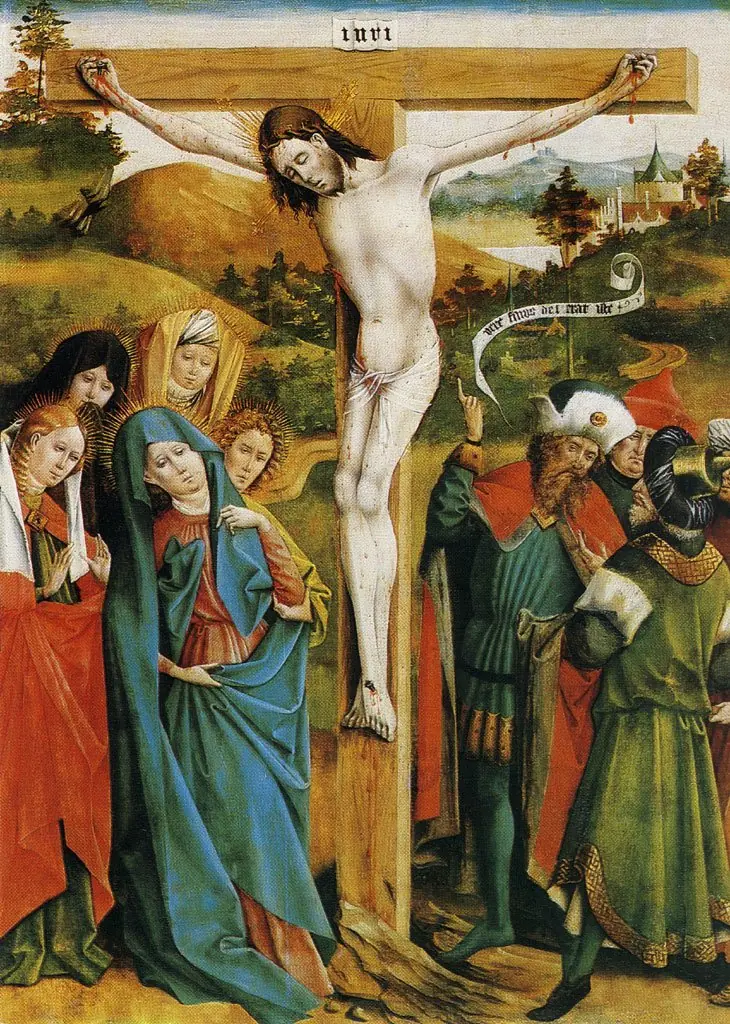
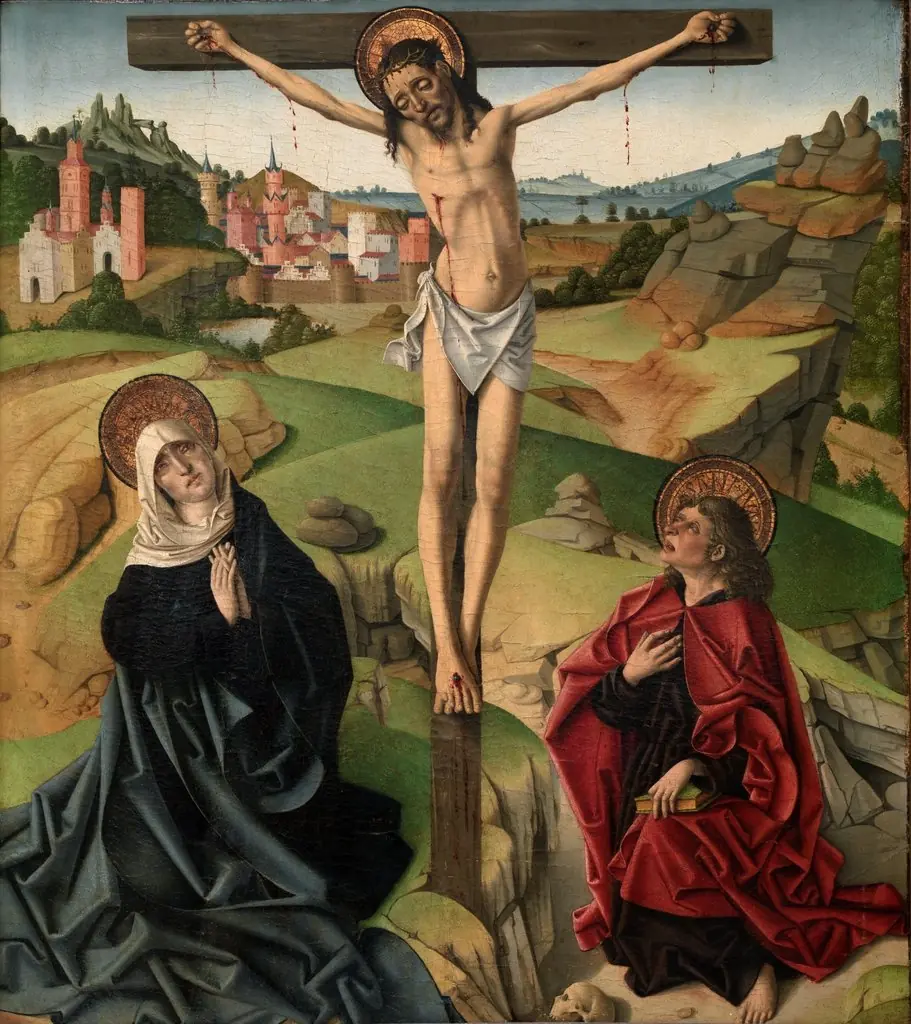
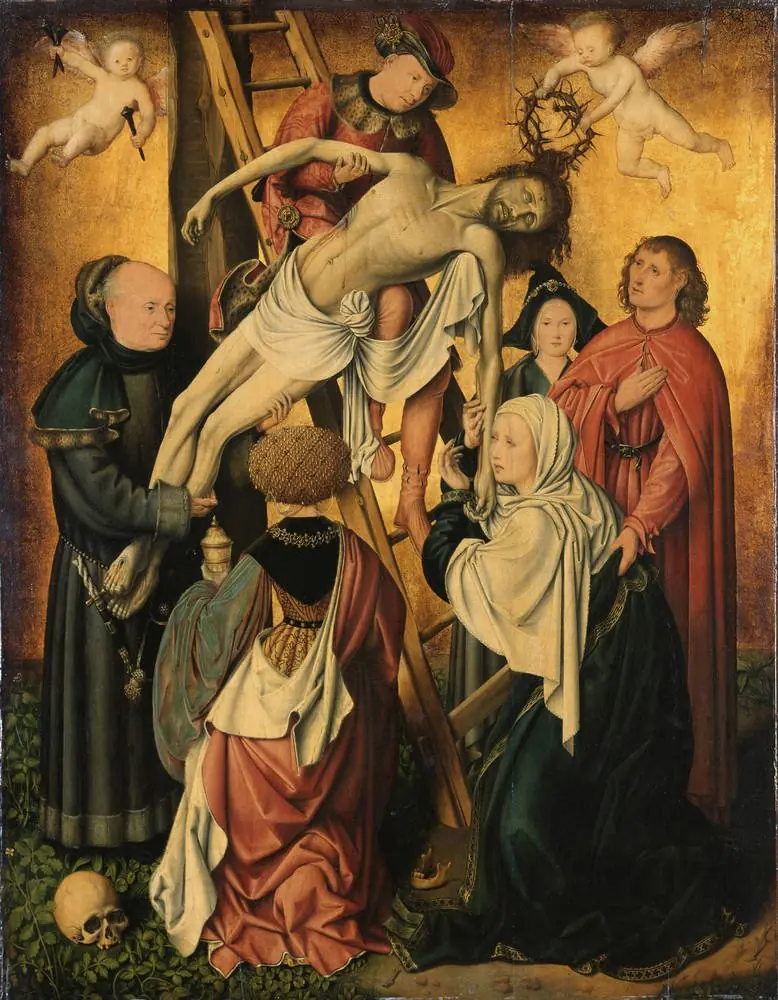
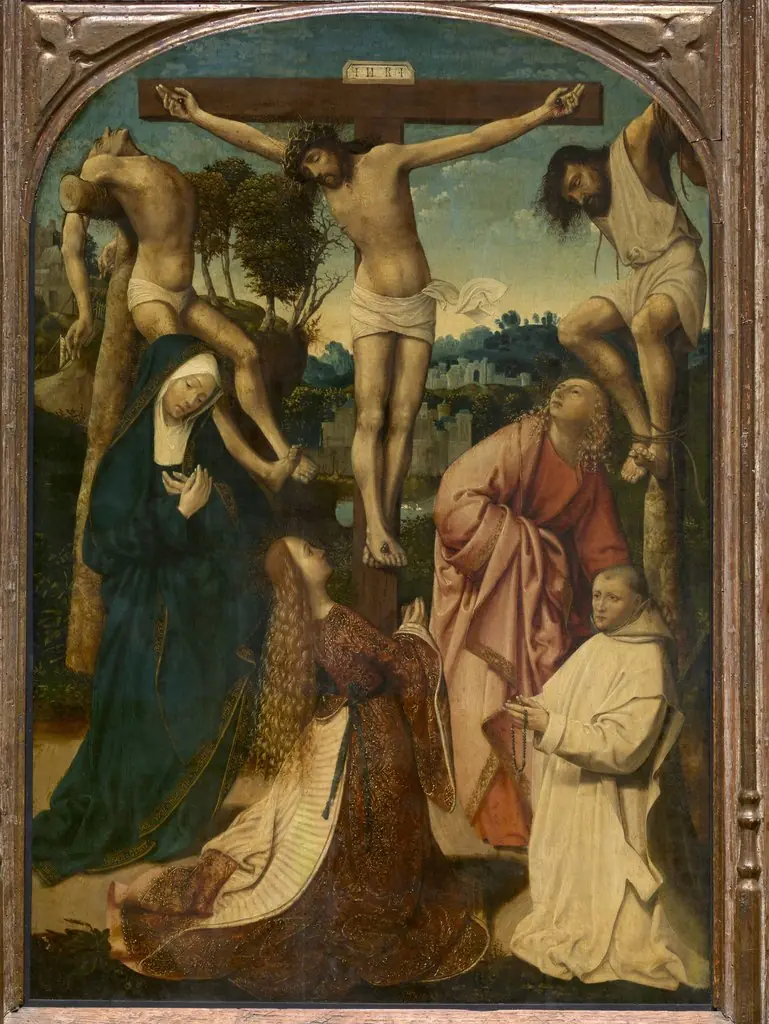
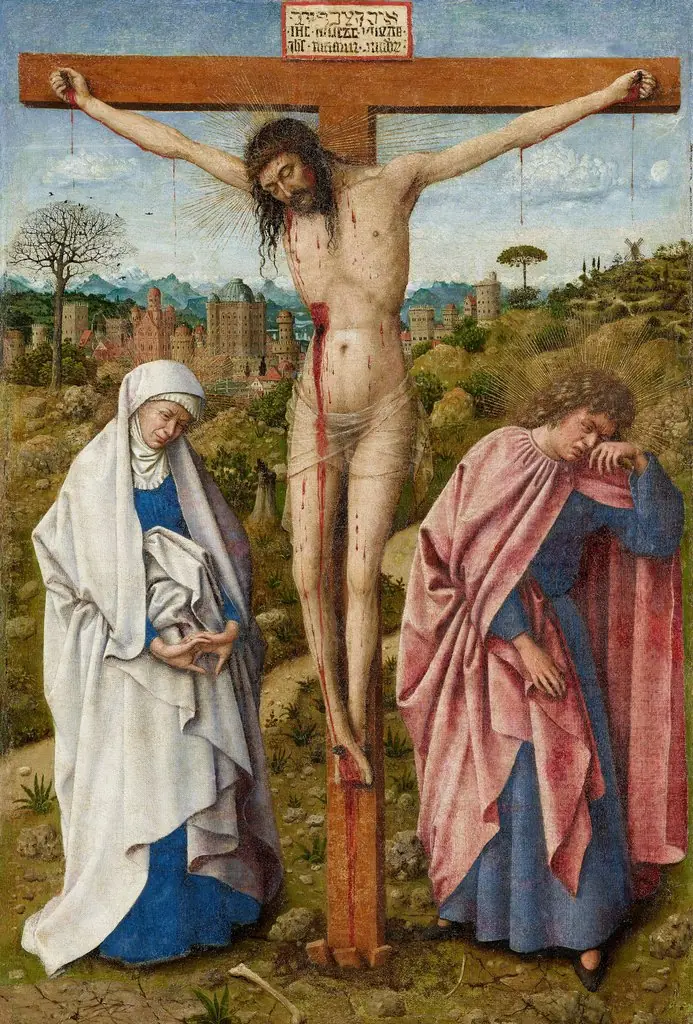
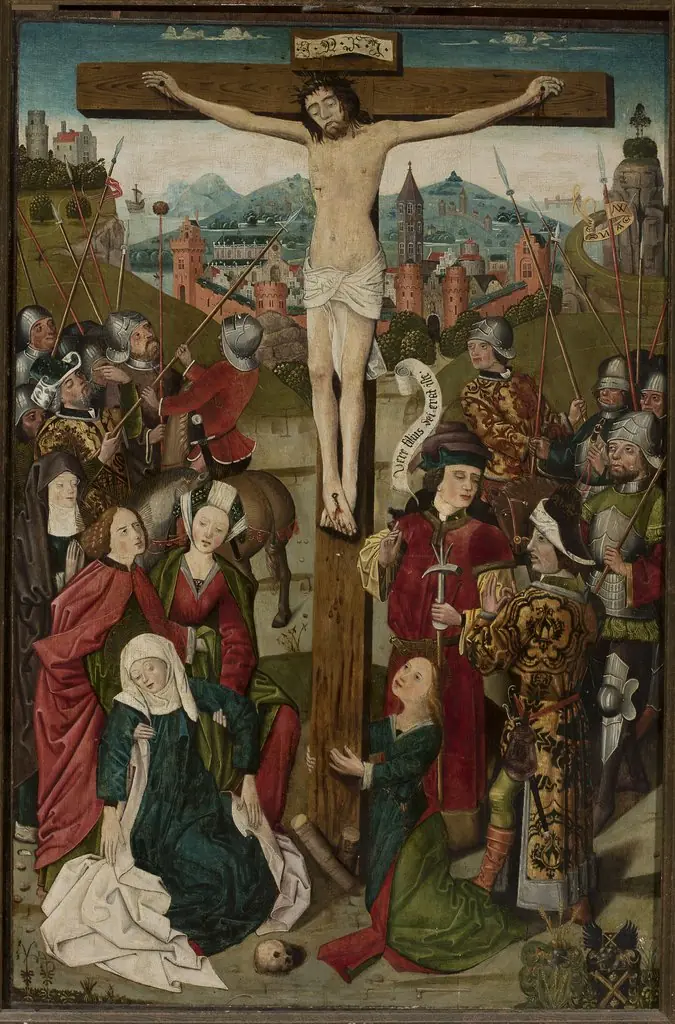
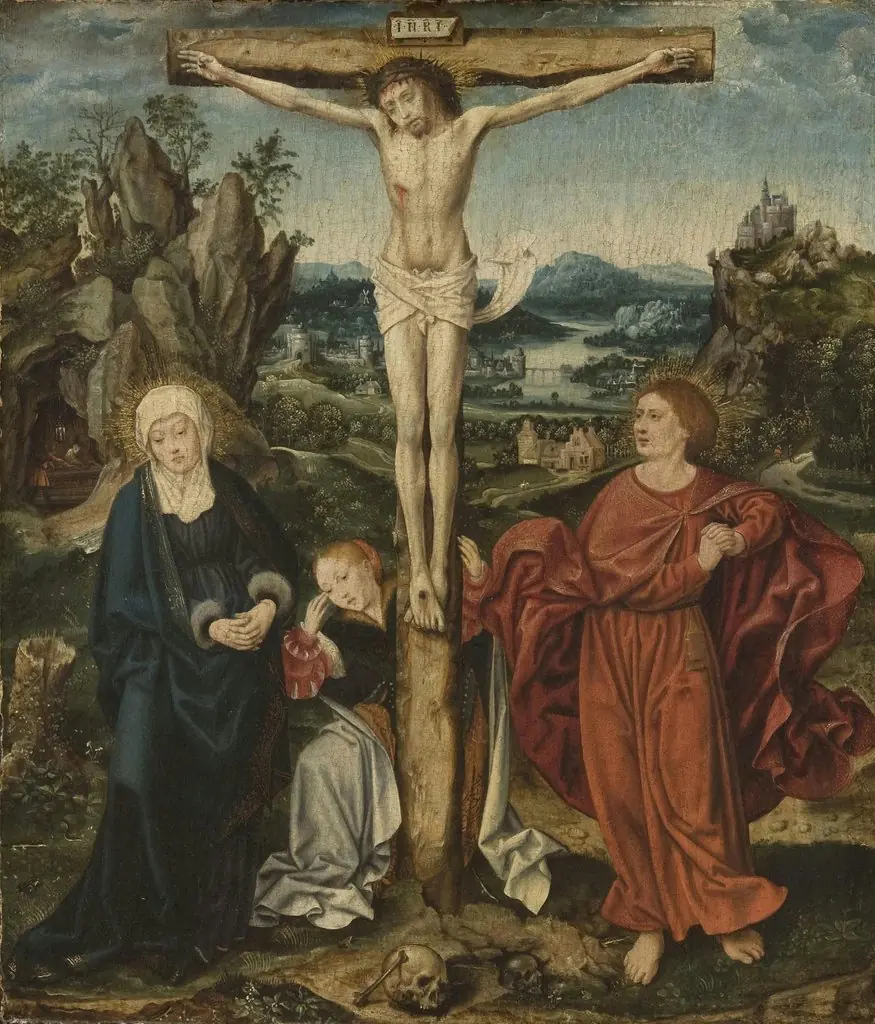
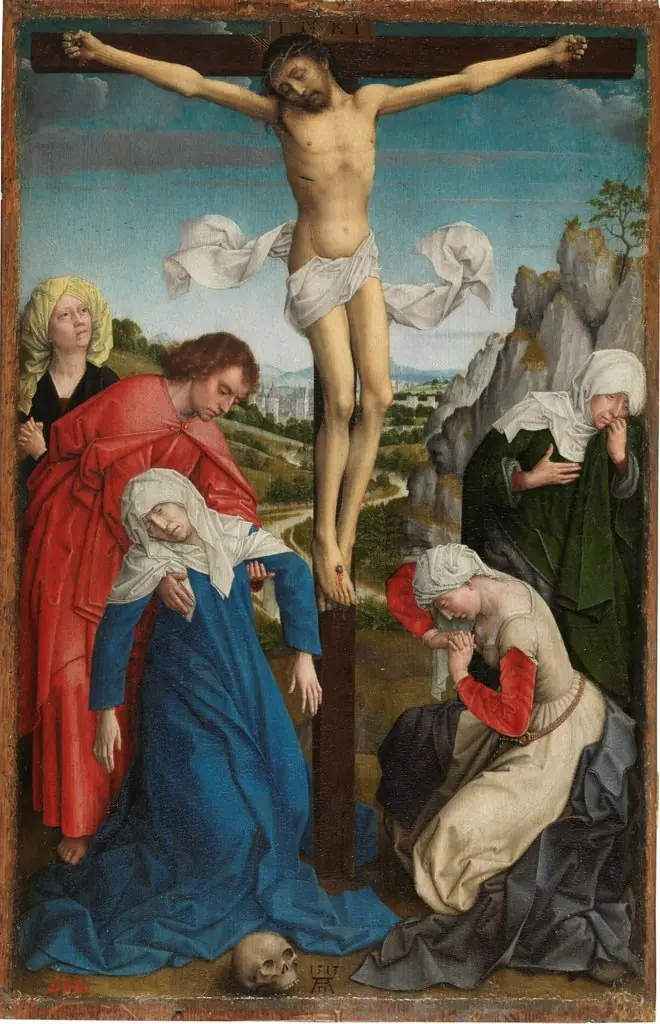
The painting depicts the Crucifixion of Jesus flanked by the two thieves traditionally named Dismas and Gestas, a subject drawn from the Gospel accounts of Christ’s death. The central figure of Jesus is shown nailed to a cross, his body marked by wounds and crowned with a halo of light, emphasizing his divine identity and sacrificial role. The flanking malefactors, one repentant and the other defiant, frame the scene with contrasting postures that underscore moral choice at the moment of death. Together these elements condense the Christian narrative of redemption through Christ’s atoning sacrifice.
History & Provenance
The painting Christ Crucified between the Two Thieves was created by Lucas Cranach the Elder in 1517. This work of religious art depicts the crucifixion of Jesus Christ and is currently held within the collection of the Bavarian State Painting Collections. Specifically, the piece resides at the Alte Pinakothek in Munich.
The available records confirm the inception date as 1517 and identify the artist without mentioning a specific commissioning patron or earlier ownership chain.
The painting is held in the Alte Pinakothek in Munich as part of the Bavarian State Painting Collections. Its dimensions are 52.5 cm in height and 30 cm in width.
In 2017, the work was included in the exhibition Cranach: Meister – Marke – Moderne held at the museum, marking its display within a major scholarly presentation of Lucas Cranach the Elder’s oeuvre.
Context
The painting demonstrates Cranach's mature synthesis of Northern Renaissance aesthetics with devotional intensity, positioning it within his pivotal role in Wittenberg's Reformation-era religious art production. As part of his extensive altarpiece program for the Wittenberg Castle Church, this work reflects both his close collaboration with Martin Luther and the broader shift toward Lutheran iconography in the 1510s. The composition's dramatic chiaroscuro and individualized figurae, evident in the contrasting expressions of the two thieves, mark a departure from earlier static depictions of the crucifixion, influencing subsequent German Expressionist interpretations of the Passion narrative.
Legacy
The Crucifixion of Jesus painted by Lucas Cranach the Elder in 1517 emerged as a key example of German Renaissance religious imagery, particularly noted for its composition featuring Christ positioned between two thieves on the cross. The work's formal qualities and narrative clarity contributed to its repeated reproduction in the artist's oeuvre and influenced the visual language of crucifixion scenes in Protestant regions of early modern Europe. Its presence in the Bavarian State Painting Collections at the Alte Pinakothek ensured continued public and scholarly attention, cementing its status as a reference point for later depictions of the Passion narrative in both religious and artistic contexts.
Overview
Painted in 1517, Christ Crucified between the Two Thieves is a significant religious work by Lucas Cranach the Elder, created during the early years of the Protestant Reformation. The composition centers on the crucifixion of Jesus, flanked by the two thieves, Dismas and Gestas, each affixed to their own cross. Below the central group, a small cluster of mourners, including women and a child, kneels in prayer, their expressions conveying deep sorrow.
The figures are set against a dramatic landscape featuring a rocky outcrop and a castle perched in the distance, a characteristic element of Cranach's style that blends biblical narrative with a distinctively Germanic setting. This work exemplifies Cranach's ability to merge traditional iconography with the emerging theological shifts of his time, utilizing a flattened perspective and sharp, linear contours typical of his mature period. The painting serves as a visual meditation on sacrifice and redemption, reflecting the artist's role as a key figure in disseminating Reformation ideas through art.
Technique & Style
Cranach employs a clear, linear approach typical of his workshop, with sharply defined outlines and a restrained palette. The foreground figures are rendered in vivid garments, a red dress, a blue robe, and a red‑clad child, while the background recedes into a dramatic, cloud‑filled sky and a distant castle perched on a hill.
Own this work as a print
Artist & collection
Artist
Lucas Cranach the Elder was a German Renaissance painter and printmaker in woodcut and engraving.