Artwork
The Man with the Red Bible
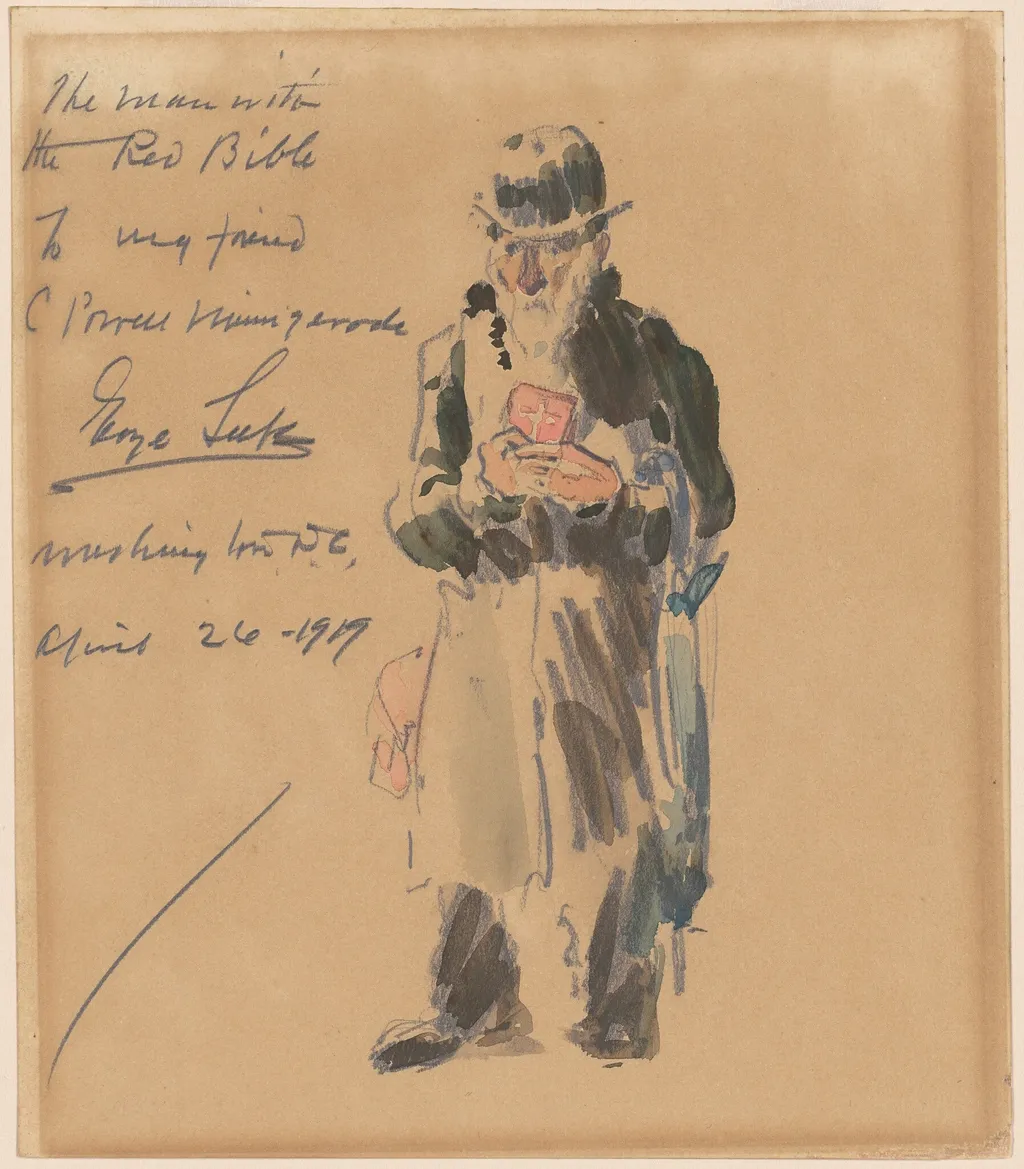
The Man with the Red Bible is a graphite drawing by George Luks. It dates from 1919 and is held in the collection of the National Gallery of Art.
- Inscription
- Inscribed:left in graphite: The man with / the Red Bible / To my friend / C Powell Minnigerode / George Luks / Washington D.C. / April 26 - 1919
About this work
Overview
His background as a newspaper illustrator informed his direct, unidealized approach to subject matter, distinguishing him from academic traditions of the time.
Created in 1919, The Man with the Red Bible is a watercolor and graphite drawing by George Luks, an artist linked to the Ashcan School. Executed on wove paper, the work exemplifies Luks’s commitment to portraying everyday urban life with emotional honesty. His background as a newspaper illustrator informed his direct, unidealized approach to subject matter, distinguishing him from academic traditions of the time.
Subject & Meaning
The figure is a solitary man, dressed in worn clothing, holding a red book, likely a Bible, that anchors the composition. His posture is still, his gaze introspective, suggesting a moment of private contemplation amid urban hardship. The red volume, vivid against muted tones, implies spiritual or moral weight, yet offers no clear narrative. Luks presents dignity in quiet endurance rather than overt suffering.
Technique & Style
Luks employed loose, expressive brushwork in watercolor, layered with precise graphite lines to define form and shadow. The wove paper’s texture enhances the tactile quality of the scene, while the limited palette, dominated by earth tones with the red book as accent, focuses attention on the figure’s presence. His technique balances spontaneity with control, characteristic of Ashcan artists’ rejection of polished finishes.
History & Provenance
Luks painted this work during a period when he was deeply engaged with the lives of New York’s working class, particularly in the Lower East Side. Though the drawing’s early ownership is undocumented, it entered a major public collection in the mid-20th century, where it remains as part of a broader effort to preserve Ashcan School works as significant records of American urban realism.
Context
Emerging from Robert Henri’s circle, Luks rejected the National Academy’s idealized aesthetics in favor of raw, unvarnished scenes of city life. In 1919, postwar America saw growing awareness of poverty and displacement, especially in immigrant neighborhoods. This drawing reflects that social climate, offering a quiet counterpoint to the era’s louder political and cultural narratives.
Legacy
The work endures as a quiet testament to the Ashcan School’s mission: to elevate ordinary people through honest depiction. Unlike grand historical or portrait traditions, Luks’s focus on a single, unnamed man underscores the value of individual experience. His approach influenced later realist artists who sought to capture the dignity of marginalized lives without sentimentality.
Own this work as a print
Artist & collection

Artist
George Benjamin Luks (August 13, 1867 – October 29, 1933) was an American artist, identified with the aggressively realistic Ashcan School of American painting.

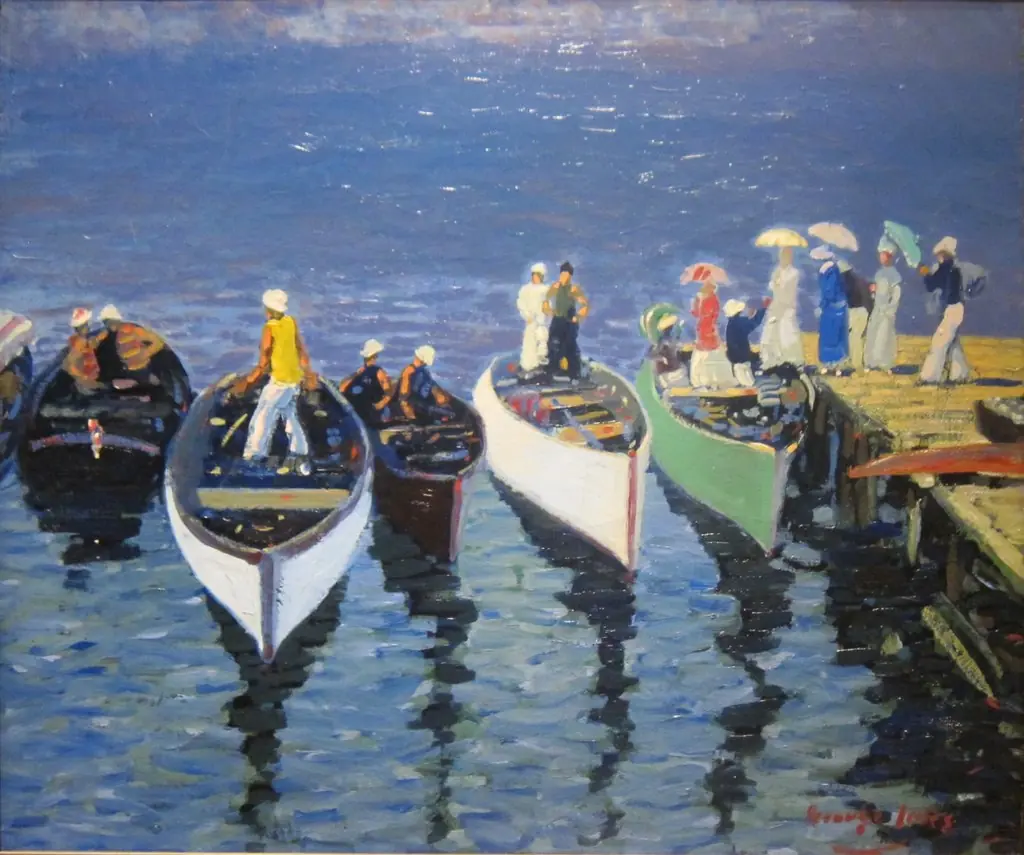
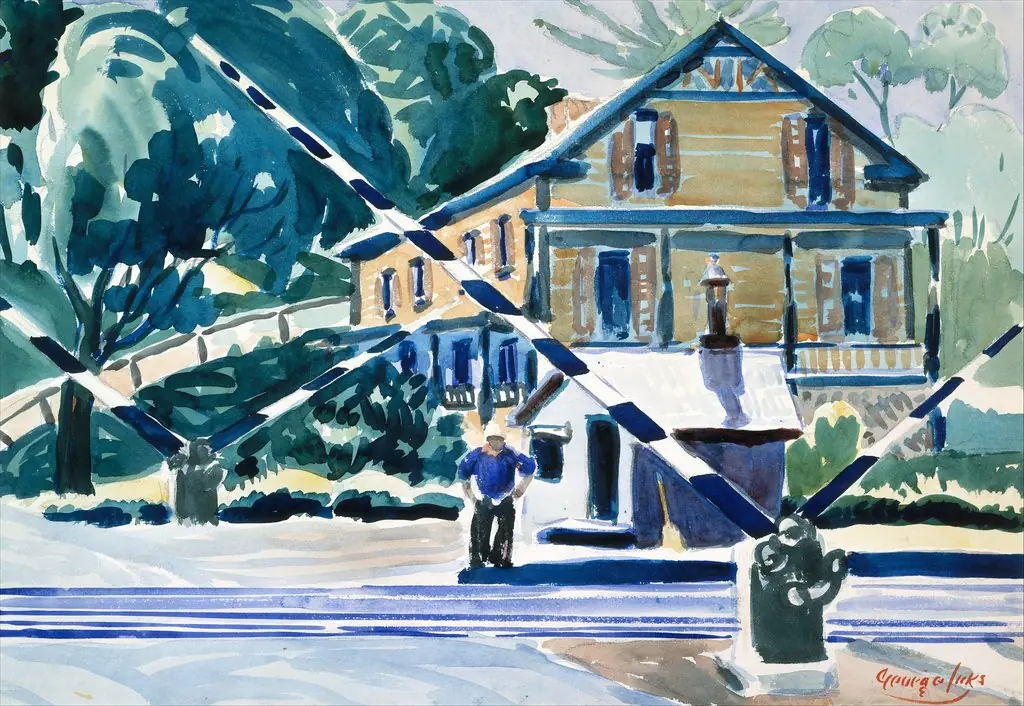
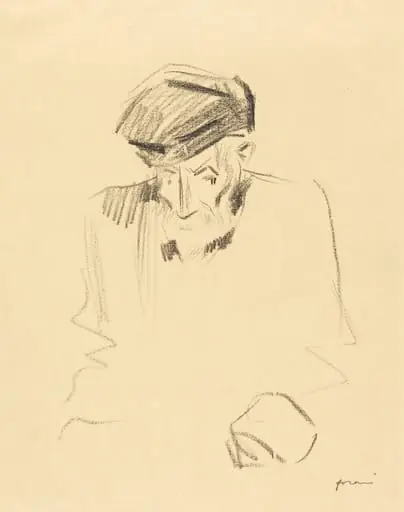 Portrait de Renoir (2e planche) (Portrait of Renoir) (second plate)
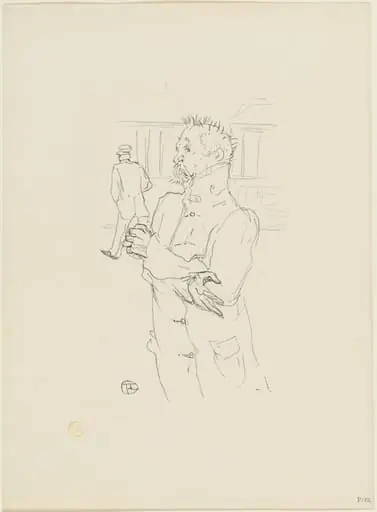 Le Fou
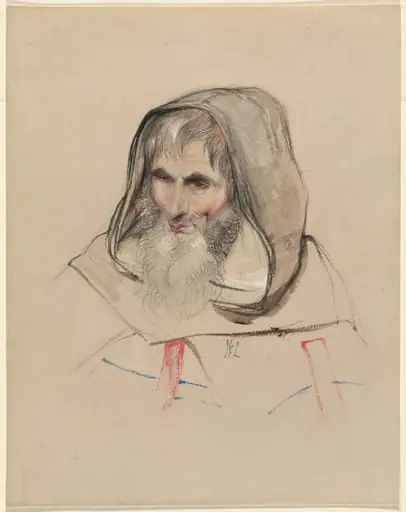 Head of a Spanish Monk
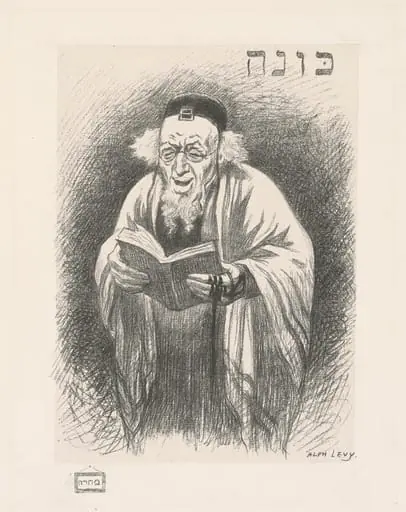 The Rabbi
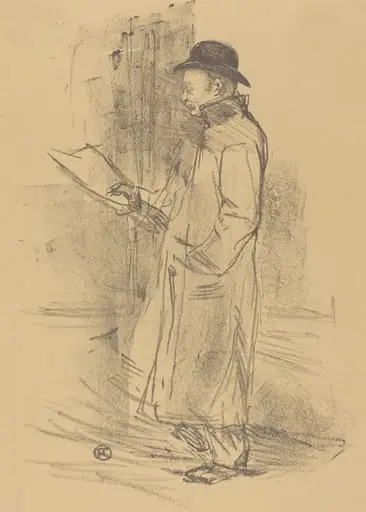 Program for "Benefice Gemier" (Programme du "Bénéfice Gémier")
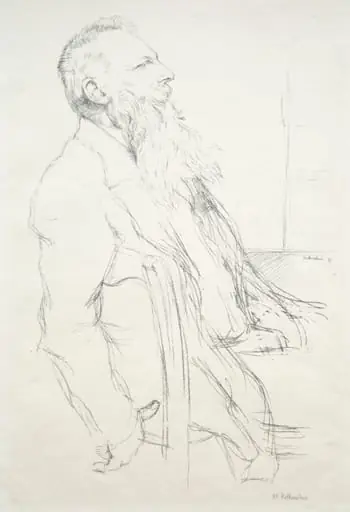 Auguste Rodin
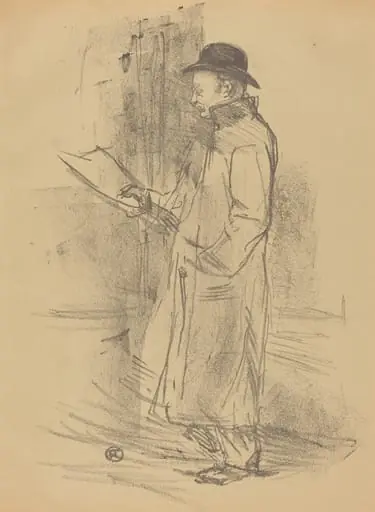 Benefit for Firmin Gémier
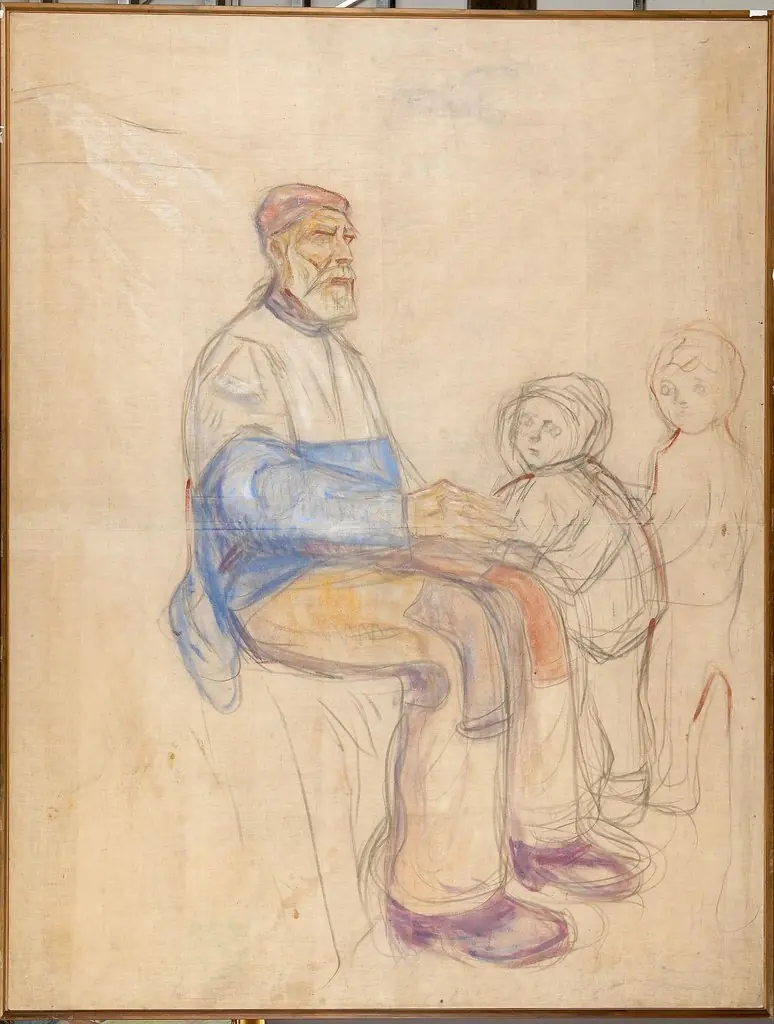 History: Study for the Old Man and Two Boys
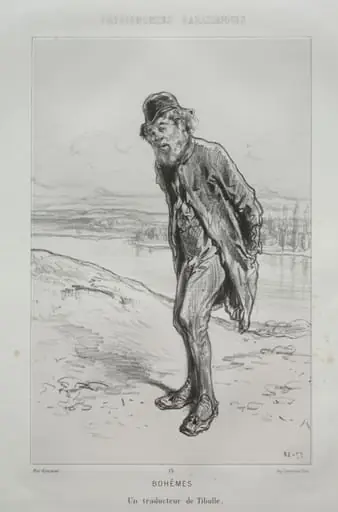 Bohèmes
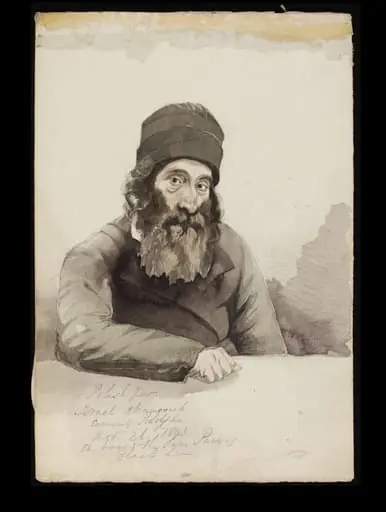 Polish Jew. Israel Abramovich
![Self-Portrait [recto], by Paul Cézanne](https://artifactworldgallery.com/img/paul-cezanne--self-portrait-recto--800f9cf98766d770-w320.webp) Self-Portrait [recto]
Self-Portrait [recto]- A reader of the Koran