Artwork
The Football Players
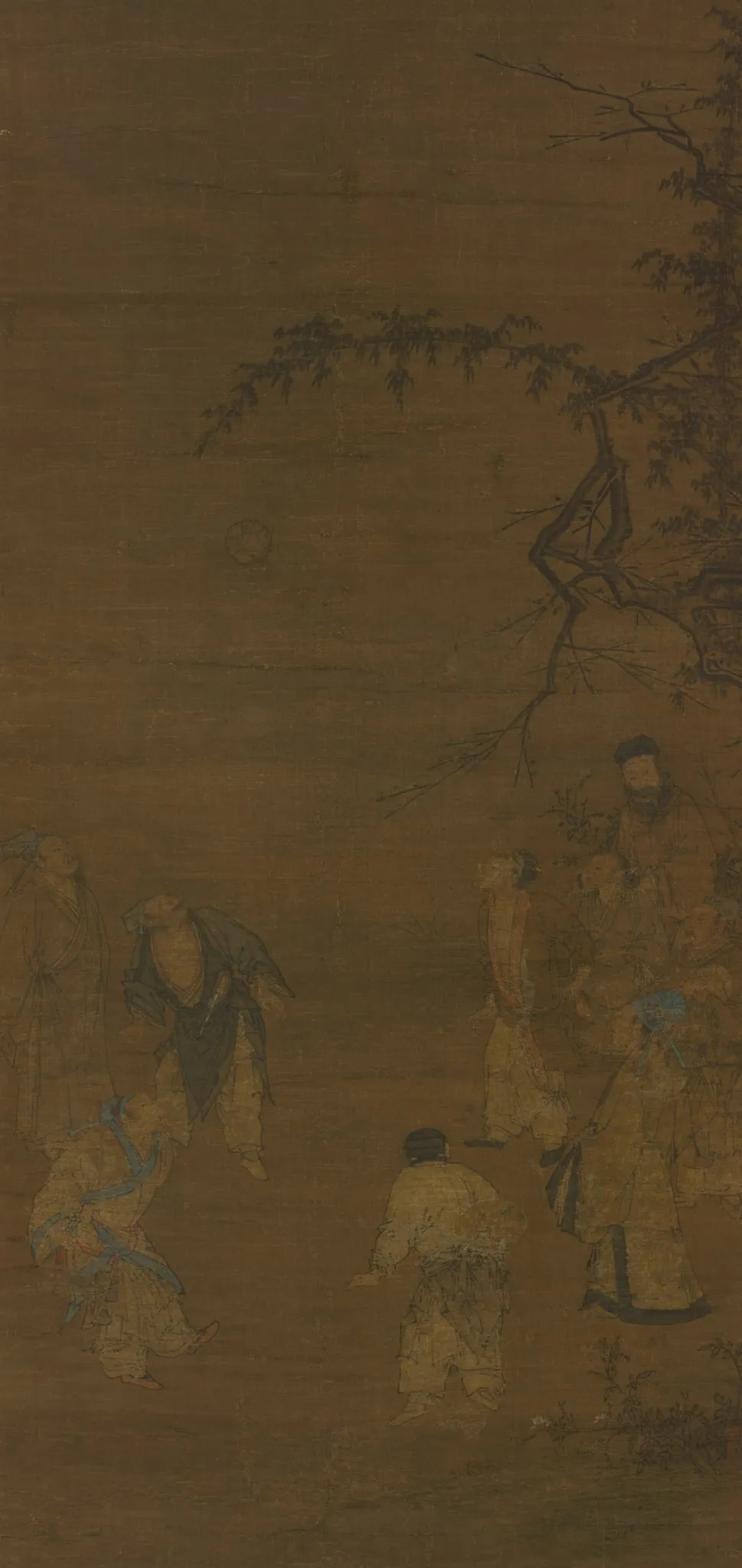
The Football Players is an unspecified painting by the Song dynasty painting artist Ma Yuan. It dates from 1207 and is held in the collection of the Cleveland Museum of Art.
- Accession no.
- 1971.26
- Credit line
- Gift of Mr. and Mrs. Wilbur Cowett
About this work
The figures look like they’re walking or standing still, but their postures feel slightly off-kilter, as if caught in motion.
This painting shows five figures standing in a dim, earthy landscape. The people wear loose robes in muted colors, yellows, browns, and blues, with one person holding a bundle. A bare tree branch stretches across the top, and the background is mostly dark with a hint of a moon.
The figures look like they’re walking or standing still, but their postures feel slightly off-kilter, as if caught in motion. The colors are soft and faded, blending into the background.
If you like this style, look up Ma Yuan (Chinese, c. 1150–after 1255) next.
Overview
Painted around 1207 by Ma Yuan, a court artist of the Southern Song dynasty, this work belongs to the genre of courtly scene painting. It captures a quiet moment among figures in a sparse, atmospheric landscape. Unlike grand historical or religious subjects, it focuses on ordinary human activity, rendered with subtle restraint. The composition reflects the aesthetic priorities of the Ma-Xia school, emphasizing mood over narrative detail.
Subject & Meaning
The painting portrays five individuals in a dim, open space, possibly engaged in a form of ball game or ritualized movement. Their postures suggest pause or transition rather than action, evoking contemplation rather than competition. The presence of a bundled object and the muted, earth-toned robes imply everyday life, not spectacle.
The lone bare branch and faint lunar glow frame the scene as a moment suspended between day and night, hinting at transience.
Technique & Style
Ma Yuan employs ink and light color washes to create a hazy, atmospheric depth. Figures are rendered with minimal brushwork, their forms barely defined against the darkened background. The use of negative space and partial visibility, such as the obscured ground and fading horizon, enhances the sense of quiet isolation. The palette, dominated by soft browns, yellows, and blues, is deliberately subdued, reinforcing the painting’s meditative tone.
History & Provenance
Created during the Southern Song court’s cultural peak, the painting reflects the imperial preference for intimate, lyrical subjects. It likely originated in the palace at Lin’an, where Ma Yuan served as a painter-academy official. Though its early ownership is undocumented, its stylistic traits align with other court works preserved in imperial collections. Later, it influenced Japanese ink painters who studied Southern Song models in temple and monastic circles.
Context
In early 13th-century China, court painting shifted from grand narratives to quiet, personal observations. This trend coincided with philosophical currents emphasizing harmony with nature and the impermanence of human affairs. Genre scenes like this one, though seemingly simple, were valued for their ability to evoke emotion through suggestion rather than detail. The painting’s subdued palette and spatial ambiguity mirror Daoist and Chan Buddhist ideals of restraint and stillness.
Legacy
Ma Yuan’s approach to composition and atmosphere became a model for later Chinese and Japanese artists. The Zhe school in Ming China adopted his use of asymmetry and atmospheric recession, while Japanese painters such as Shūbun and Sesshū studied his works in temple collections, adapting his tonal subtleties into their own ink traditions. His influence endured not through dramatic impact, but through the quiet authority of his spatial and emotional restraint.
Artist & collection

Artist
Ma Yuan (Chinese: 馬遠; pinyin: Mǎ Yuǎn; Wade–Giles: Ma Yüan; c. 1160–65 – 1225) was a Chinese painter of the Song dynasty. His works, together with that of Xia Gui, formed the basis of the so-called Ma-Xia (馬夏) school of…

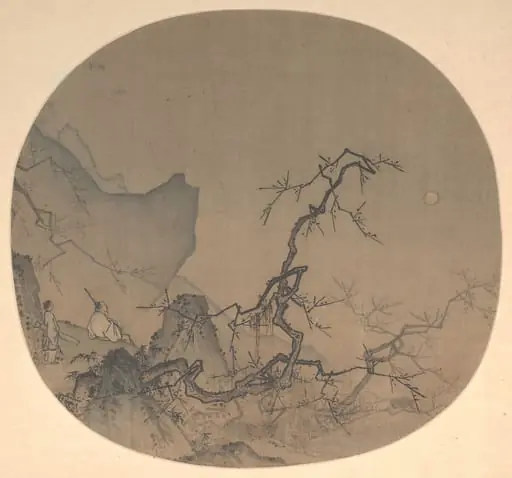 南宋 馬遠 月下賞梅圖 團扇|Viewing plum blossoms by moonlight
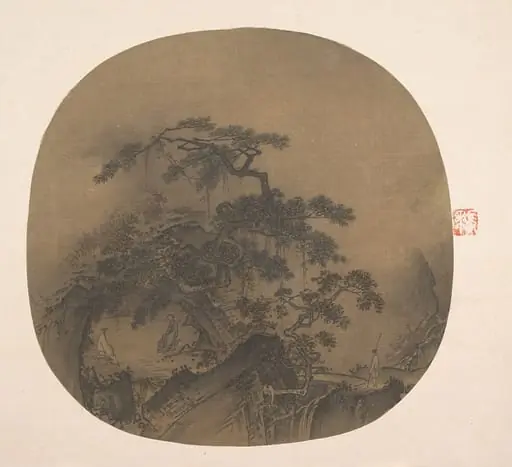 南宋 佚名 洞天論道圖 團扇|Conversation in a cave
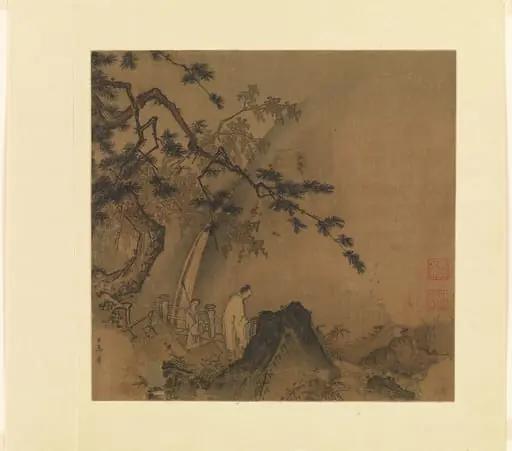 南宋 馬遠 高士觀瀑圖 冊頁 絹本|Scholar viewing a waterfall
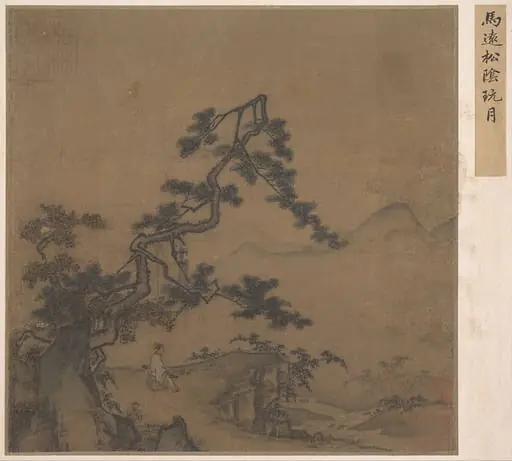 南宋 佚名 倣馬遠 松陰玩月圖 冊頁|Viewing the Moon under a Pine Tree
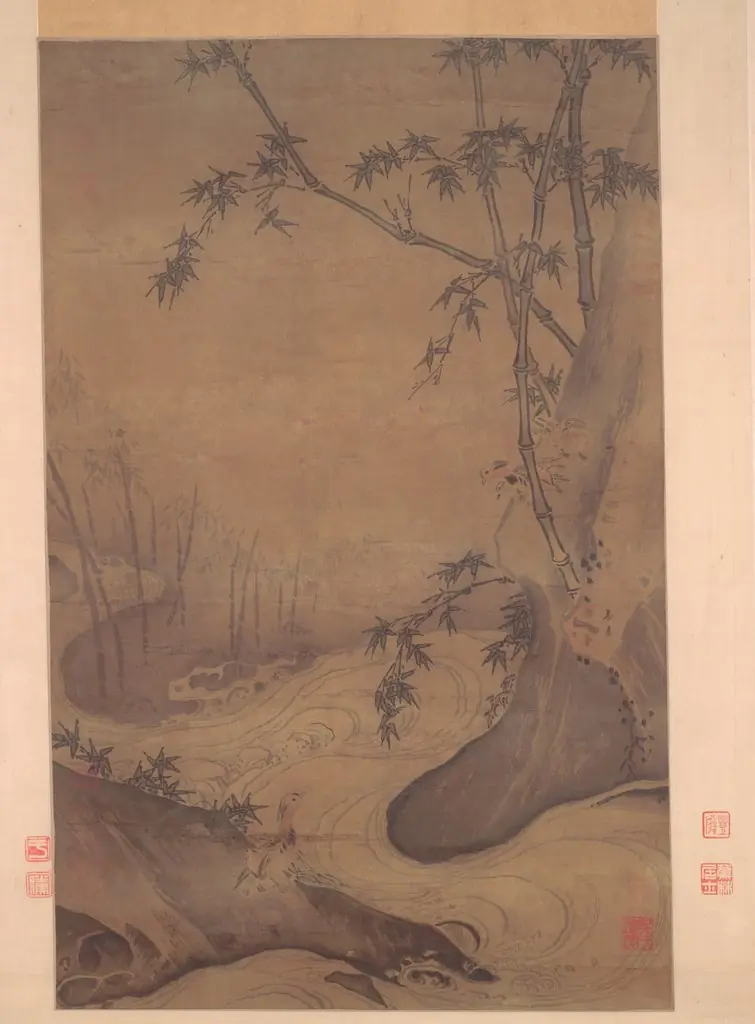 Bamboo and Ducks by a Rushing Stream
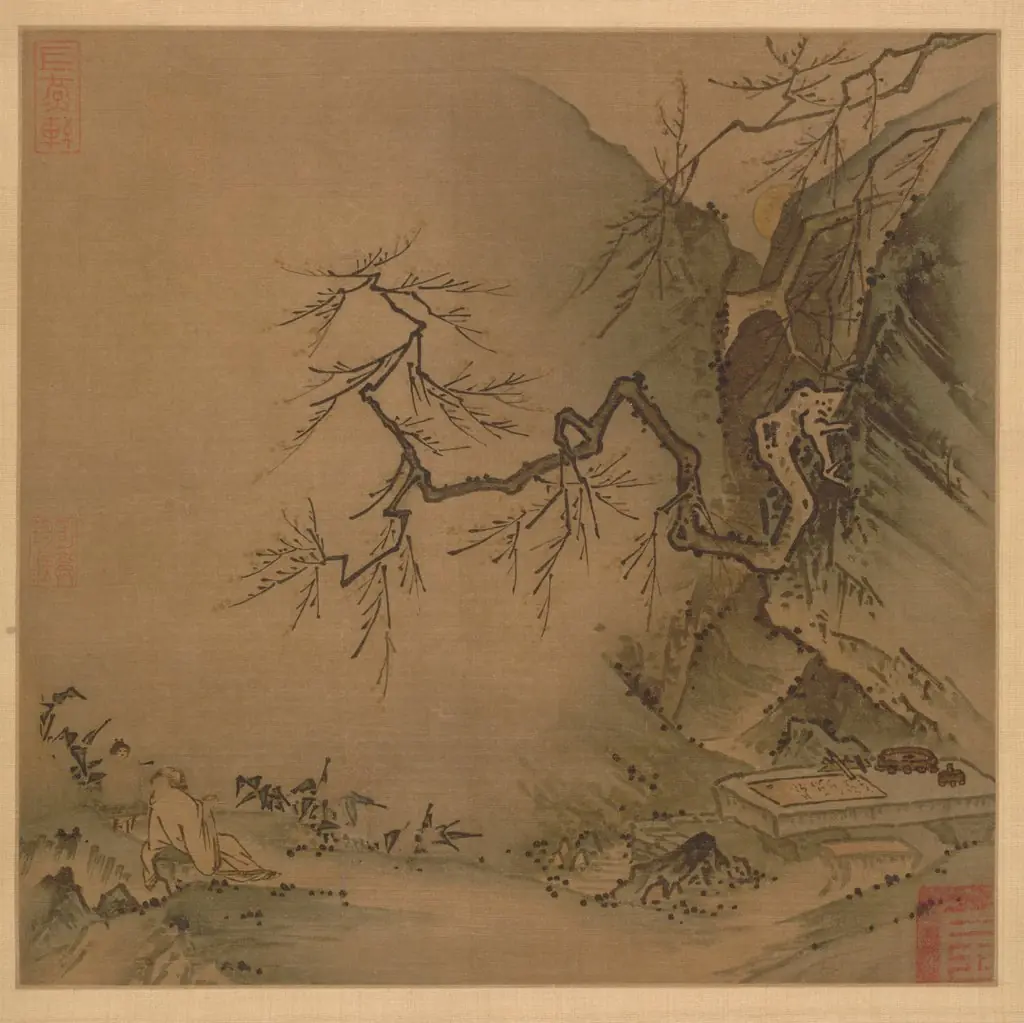 Drinking in the Moonlight
- The Football Players
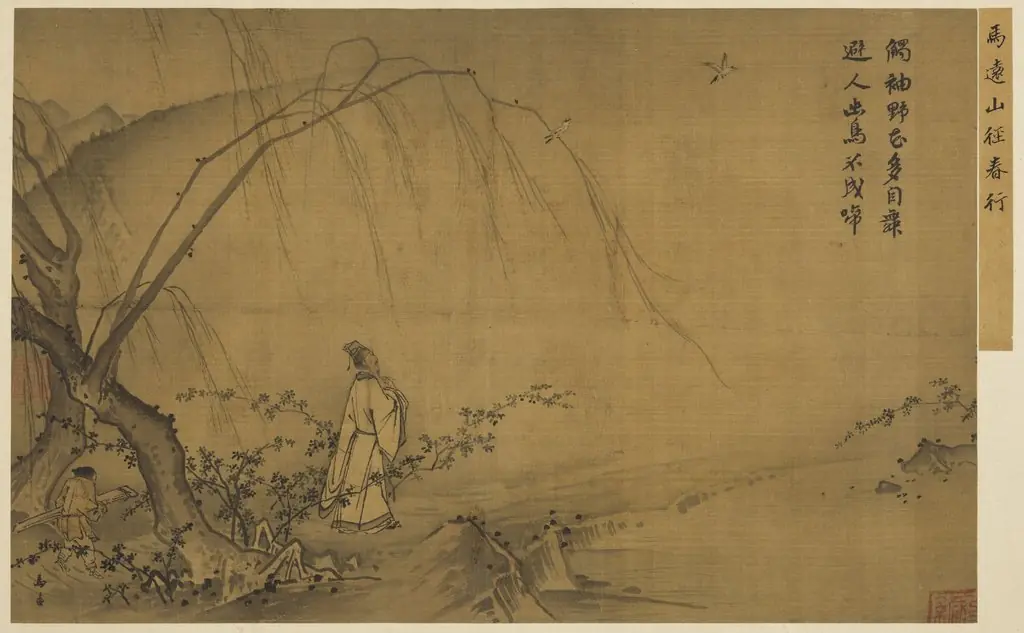 Walking on a Mountain Path in Spring
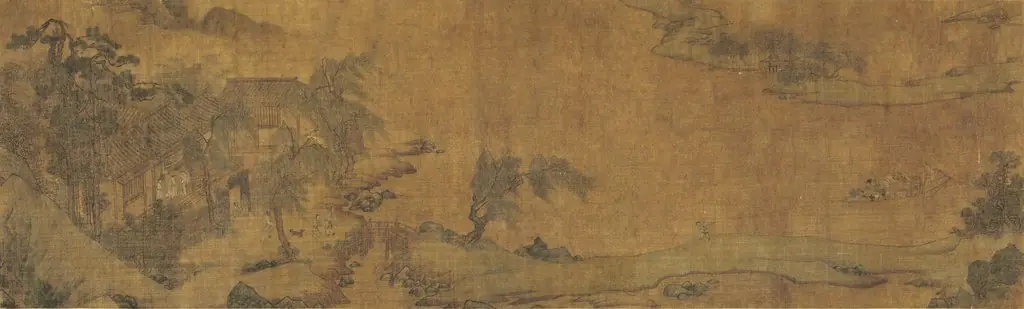 Homecoming Ode
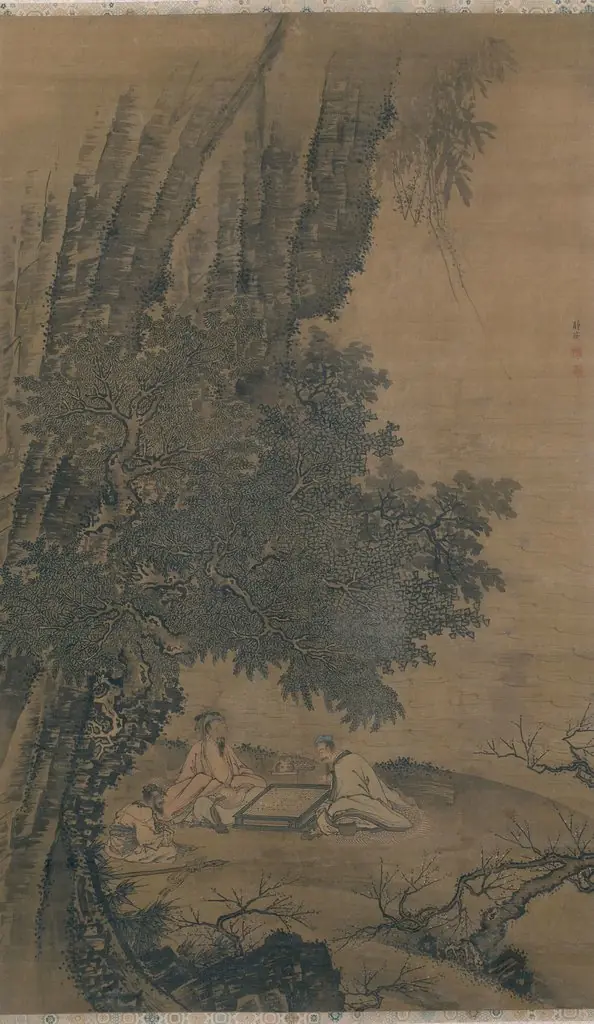 Landscape with Daoist Immortals Playing Weiqi
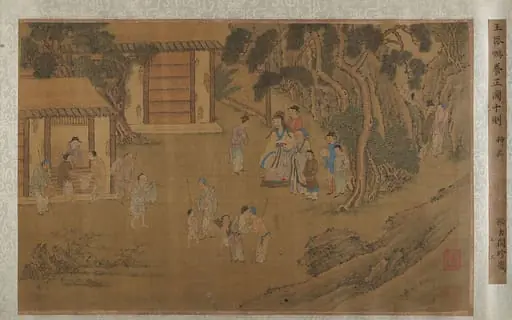 明/清 佚名 舊傳王振鵬 養正圖 卷|Family Training
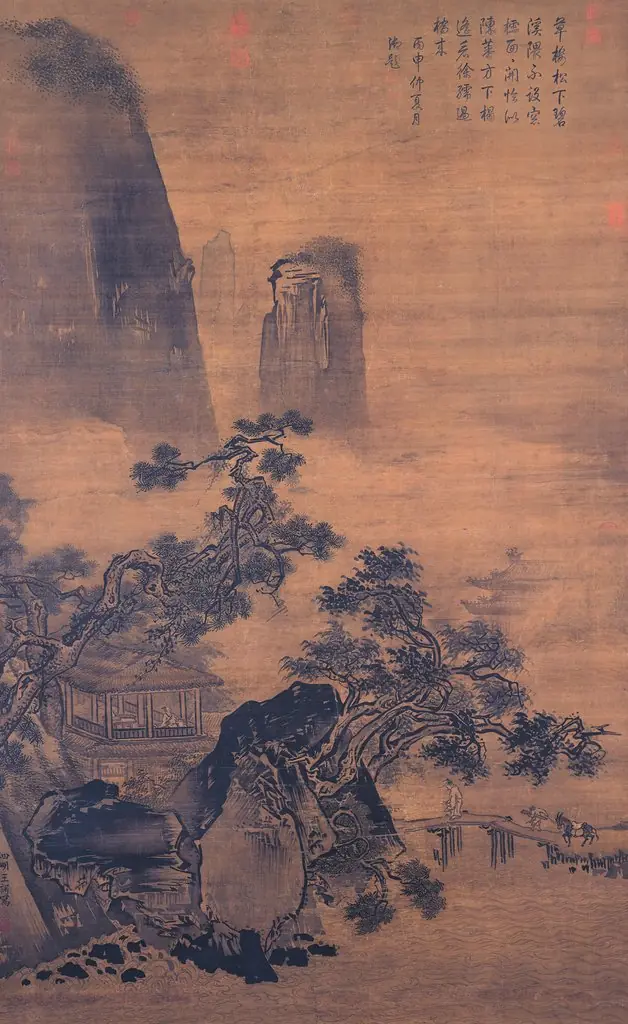 Crossing a Bridge to Visit a Friend
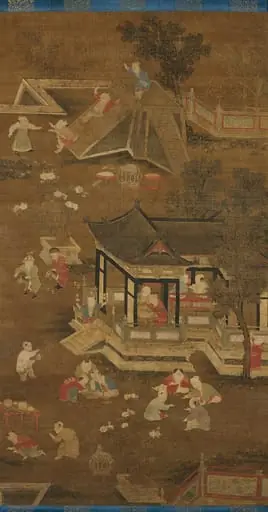 元末明初 佚名 絹本設色 嬰戯圖 軸|Children playing in the palace garden
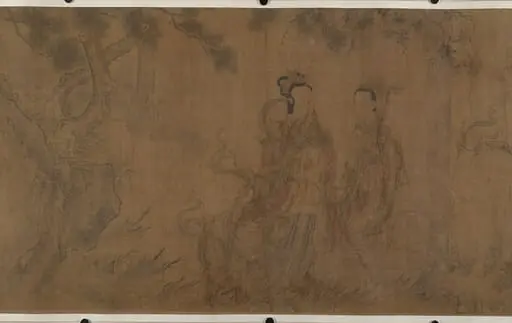 元? 佚名 仿李公麟 屈原九歌圖 卷|The Nine Songs: Illustrations to the poems of Qu Yuan (343–277 B.C.)
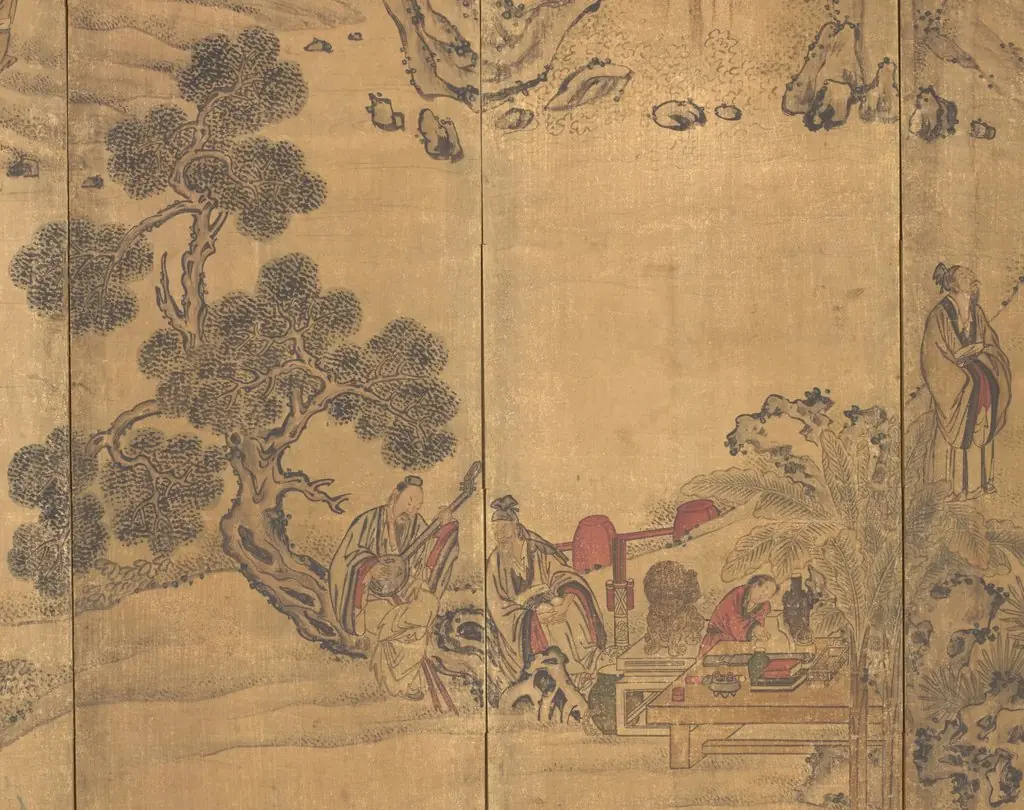 Elegant Gathering in the Western Garden
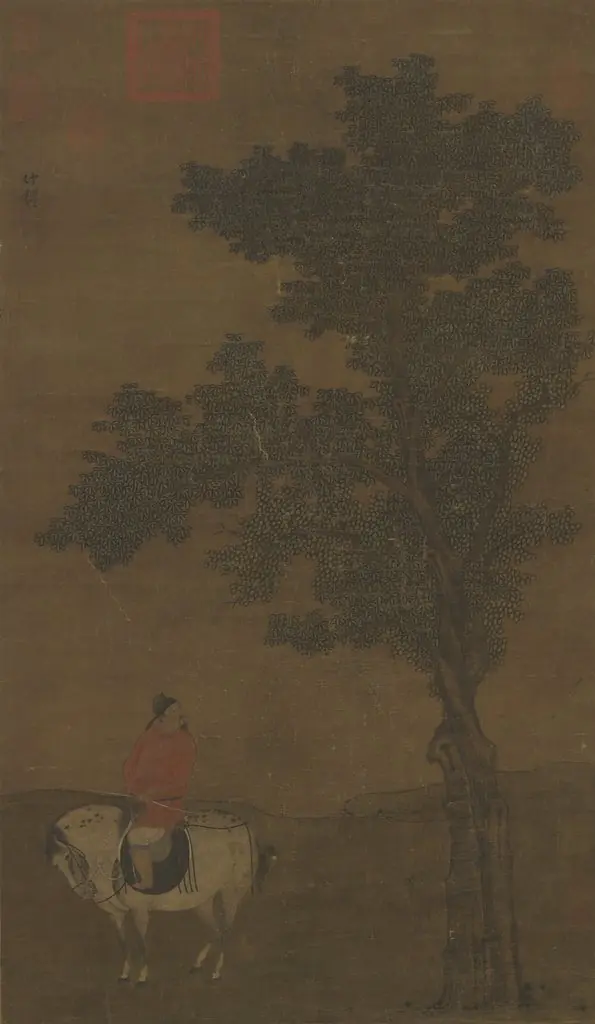 Traveling by Horseback in a Spring Countryside
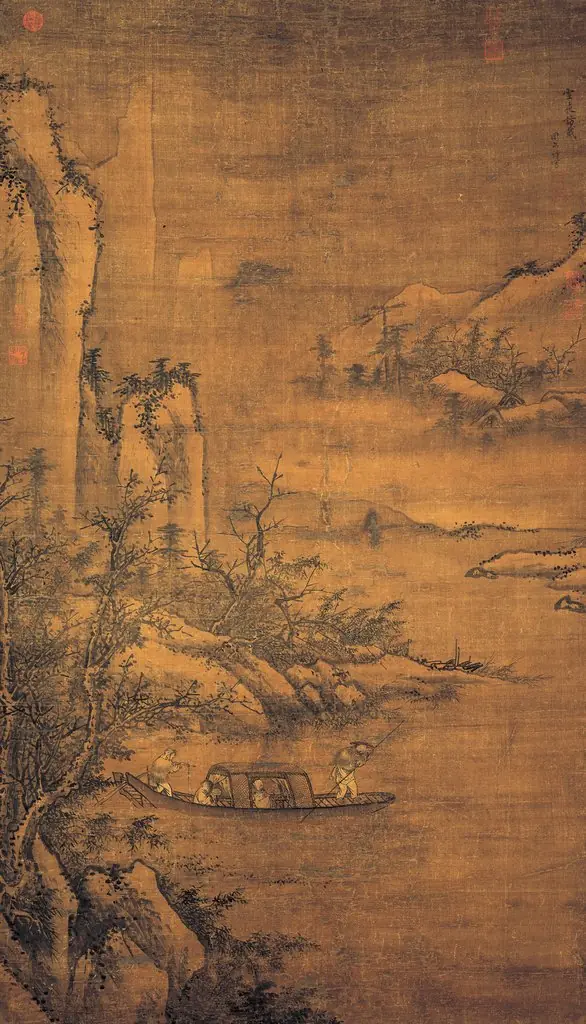 Visiting Tai Kuei on a Snowy Night
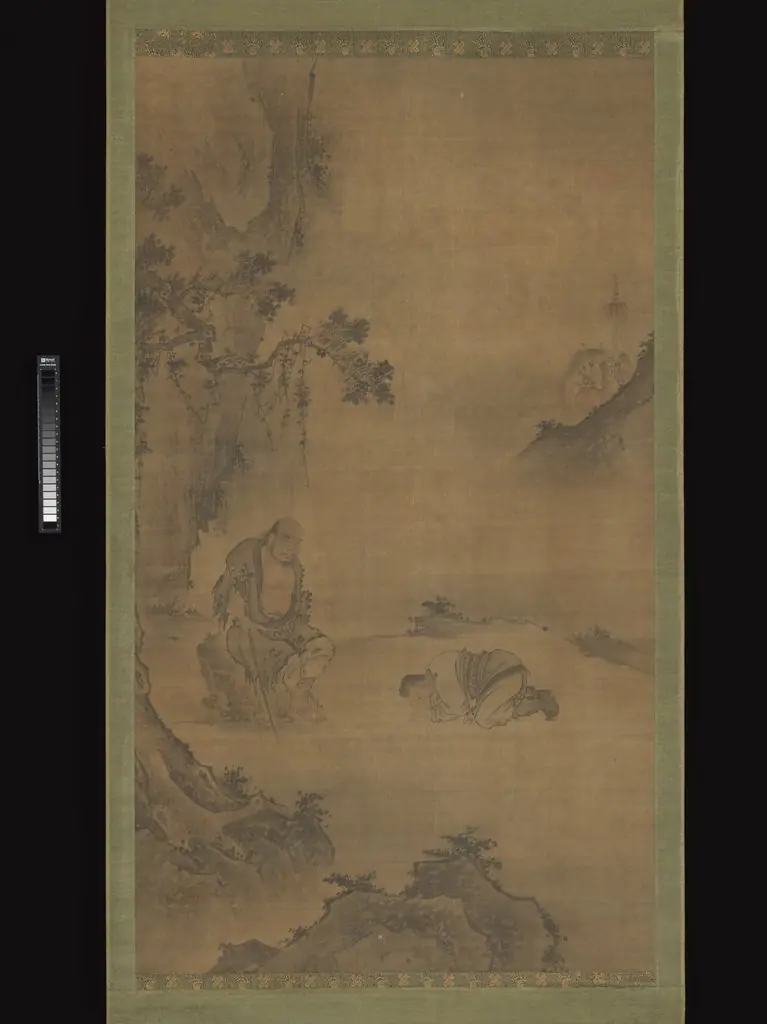 Daoist immortal Li Tieguai receiving a visitor
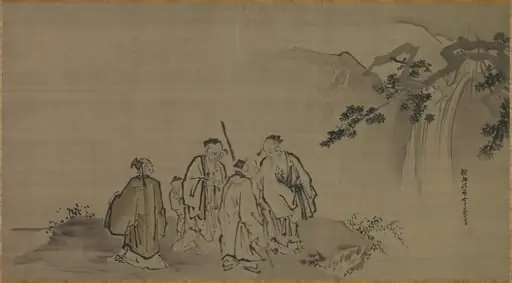 Chinese Sages