Artwork
Dead Toreador (Torero mort)
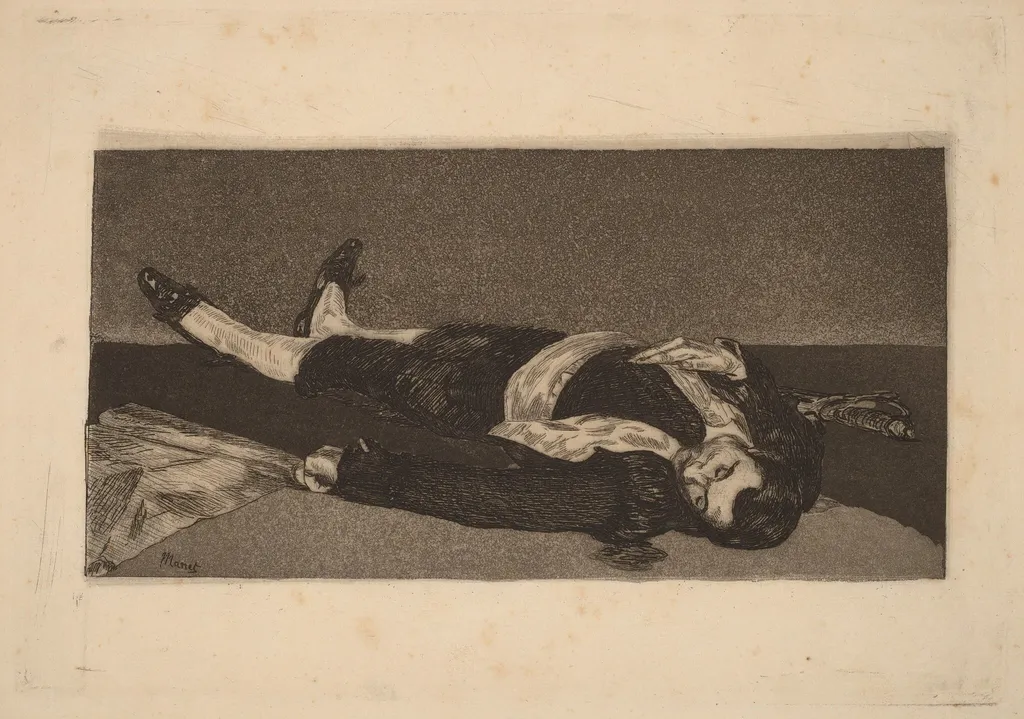
Dead Toreador (Torero mort) is an ink print by the Impressionist artist Édouard Manet. It dates from 1868 and is held in the collection of the National Gallery of Art.
About this work
Overview
The composition is stark and immediate, rendered with loose, urgent lines that suggest a rapid sketch rather than a polished finish.
Created in 1868, Dead Toreador is an etching and aquatint by Édouard Manet, depicting the lifeless body of a bullfighter. The composition is stark and immediate, rendered with loose, urgent lines that suggest a rapid sketch rather than a polished finish. The dark, uneven background isolates the figure, emphasizing the stillness of death.
The work belongs to Manet’s series exploring themes of mortality and spectacle, drawn from his interest in Spanish culture.
Subject & Meaning
The figure is a fallen torero, sprawled on the ground with limbs extended, head turned away, and one hand near the face, suggesting both vulnerability and sudden collapse. The draped cloth over the legs implies a ritual covering, perhaps from a post-bullfight ceremony. The absence of crowd or arena points not to glory but to quiet aftermath, shifting focus from spectacle to the human cost beneath it.
Technique & Style
Manet employed etching and aquatint to achieve a range of tonal depth without smooth gradations. The lines are irregular, deliberately rough, and the shading is built through cross-hatching and textured washes rather than contour. This technique mimics the immediacy of a sketch, rejecting idealized form in favor of raw, tactile presence. The print’s surface feels unpolished, enhancing the sense of an unmediated moment.
History & Provenance
Executed in 1868, the print was likely made during Manet’s engagement with Spanish themes following his travels and admiration for Goya. It was not widely exhibited in his lifetime and remained largely within private collections. Early impressions were limited, and the work gained recognition later as part of broader reassessments of Manet’s graphic output and his engagement with death as a subject.
Context
Manet’s interest in bullfighting emerged amid a European fascination with Spanish culture in the mid-19th century. Unlike romanticized depictions by contemporaries, he avoided heroism, focusing instead on the aftermath, death as quiet, unglamorous reality. This print aligns with his broader rejection of academic conventions, favoring candid observation over narrative embellishment, echoing the influence of Spanish masters like Goya.
Legacy
Dead Toreador stands as a quiet but forceful example of Manet’s graphic innovation. Its unflinching portrayal of death influenced later artists exploring the body in crisis, particularly in printmaking. The work’s rawness and emotional restraint contributed to shifting perceptions of the etching as a medium capable of profound psychological depth, beyond mere reproduction or illustration.
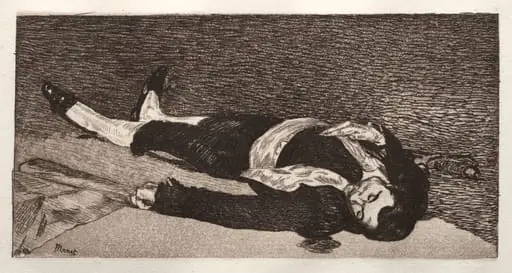
Own this work as a print
Artist & collection
Artist
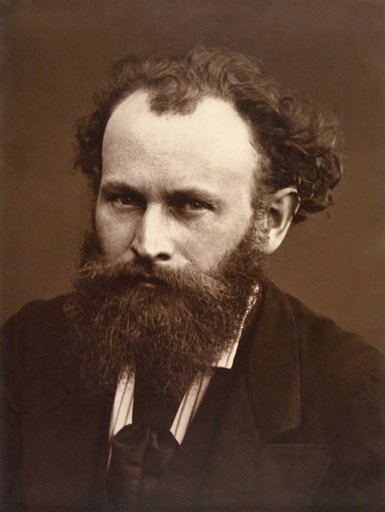
Édouard Manet was a French modernist painter. He was one of the first 19th-century artists to paint modern life, as well as a pivotal figure in the transition from Realism to Impressionism.

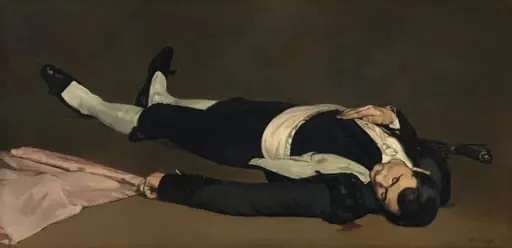
 Reclined Woman Sleeping (Femme couchee sommeillant)
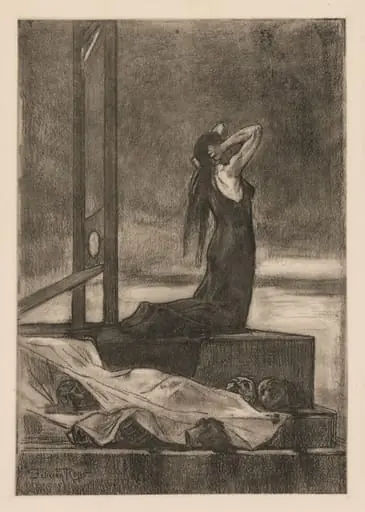 Capital Punishment: The Pain of Death (Todesstrafe: La peine de mort)
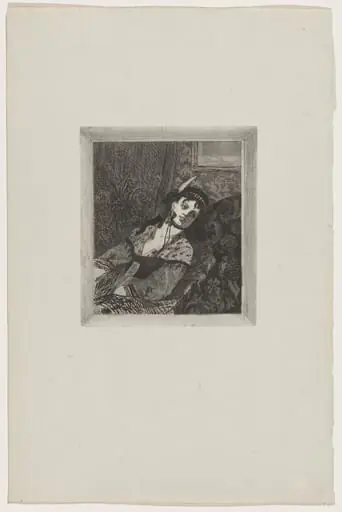 Untitled (La femme à la toque écossaise)
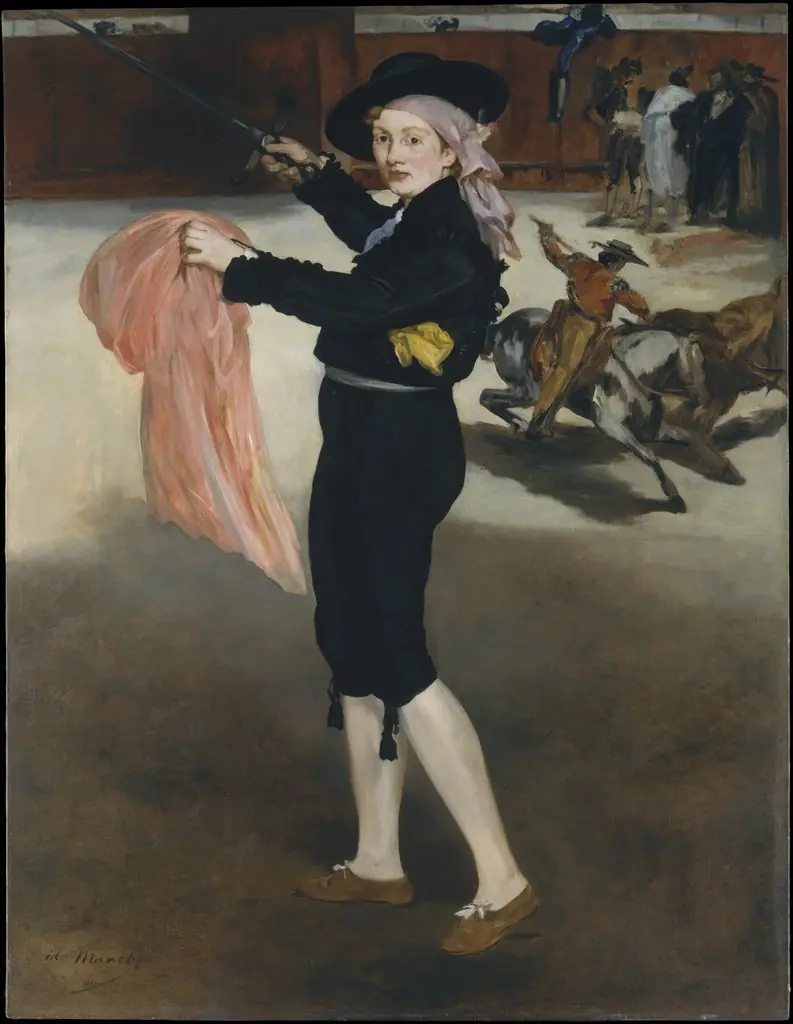
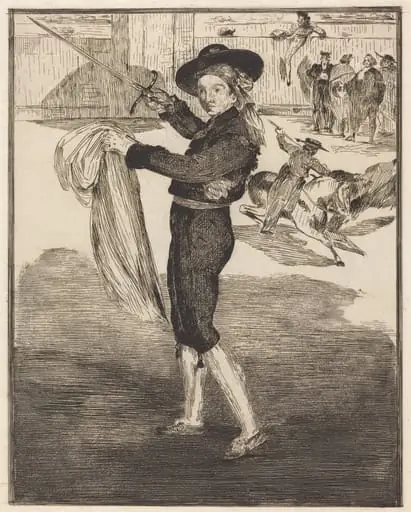 Mlle. Victorine in the Costume of an "Espada"(L'espada)
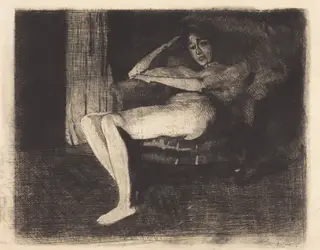 Intimate Fantasy (Féerie intime)
 Femme mettant son bas (Woman Putting On Her Stockings)
 Reducing, Small, Third Stone
 Rest
Rest Eva Lavallière
 Eva Lavallière