Artwork
Oysters
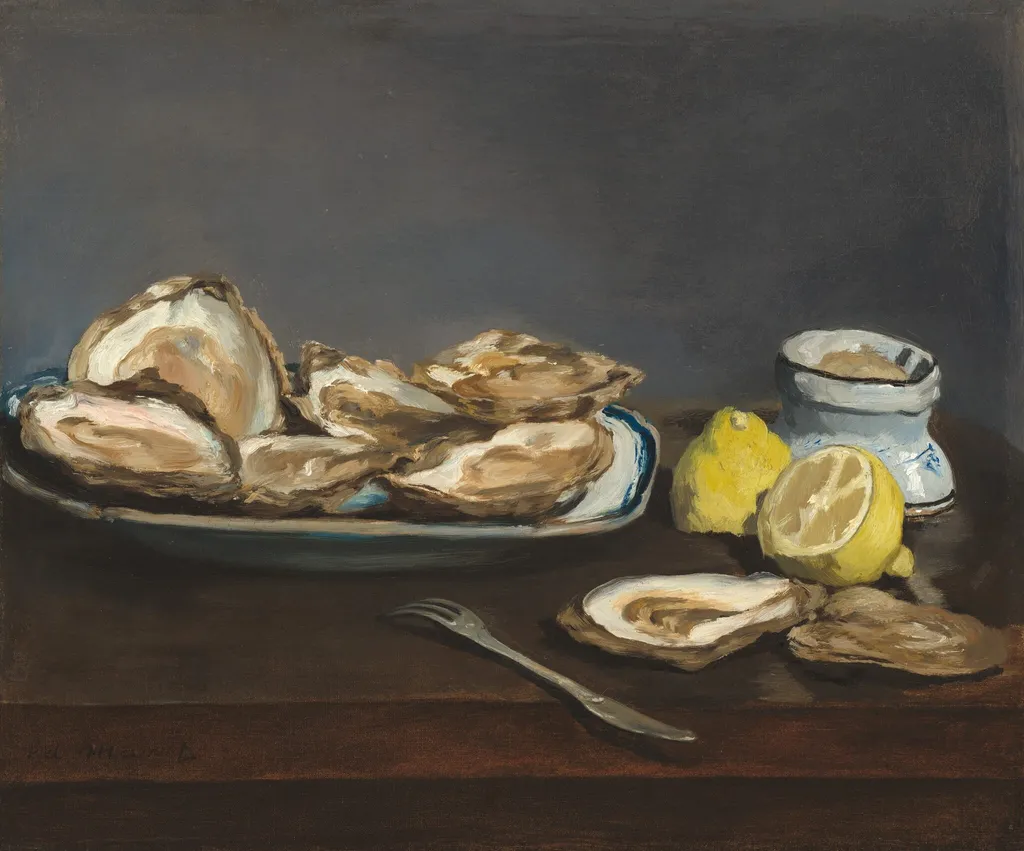
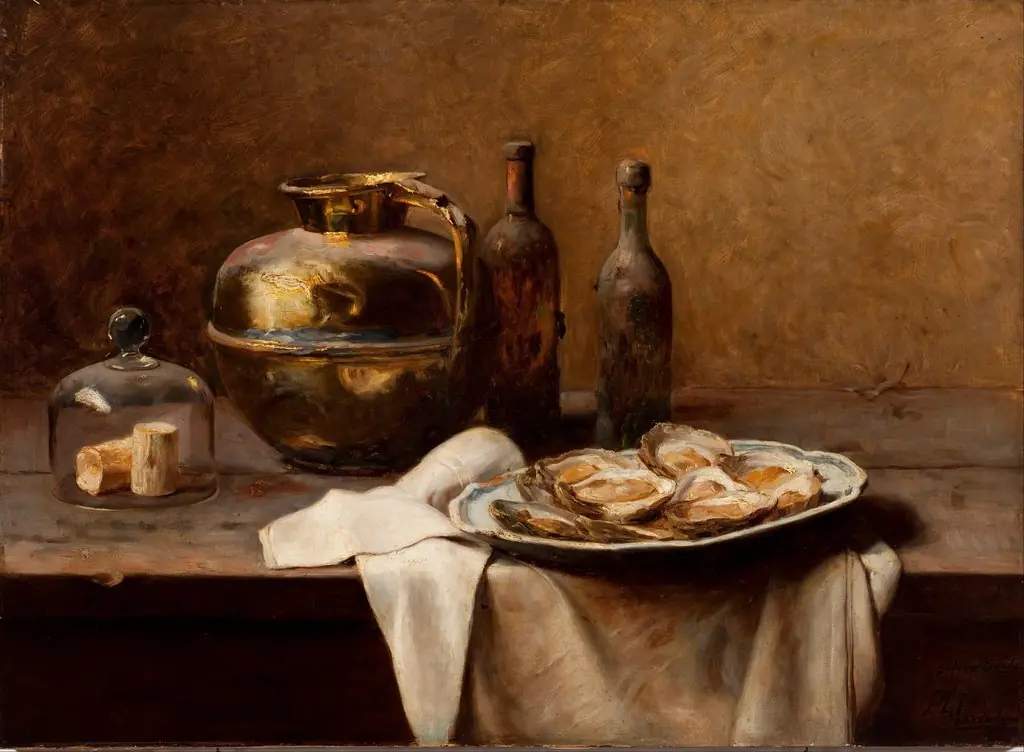
Oysters is an oil painting by the Impressionist artist Édouard Manet. It dates from 1862 and is held in the collection of the National Gallery of Art.
- Inscription
- Inscribed:lower left: Ed. Manet
About this work
Technique & Style
The painting remains in good condition as part of the National Gallery of Art's collection, having been preserved since its creation.
Edouard Manet's Oysters, executed in 1862, is an oil painting on canvas. The work measures 39.2 centimeters in height and 46.8 centimeters in width. Classified as a still life, the piece utilizes oil paint applied to a canvas support.
The medium and dimensions align with Manet's approach to intimate still-life compositions during this period. The painting remains in good condition as part of the National Gallery of Art's collection, having been preserved since its creation. Its formal qualities reflect the artist's characteristic handling of light and texture within the genre, focusing on the arrangement of oysters as the central subject.
History & Provenance
The work titled Oysters was painted by Édouard Manet in 1862, as recorded in the National Gallery of Art catalogue and confirmed by its inception date. Executed in oil on canvas, the painting measures 39.2 × 46.8 cm and belongs to the still‑life genre. After its creation it entered the artist’s personal collection, then passed to his wife Suzanne Leenhoff Manet; following Manet’s death it was sold at Hôtel Drouot in Paris on 4 February 1884.
The work subsequently belonged to Paul Michel‑Michel‑Lévy, then to Paul Gallimard before being acquired by Charles Montag in 1920. It later passed through the Swiss dealer Wildenstein, entered the collection of Dr. David M. and Adele Rosenwald Levy by 1946, and was gifted to the National Gallery of Art in 1962.
The work is held at the National Gallery of Art, Washington, D.C., accessioned as 1962.1.1. Its exhibition history includes a 1946 display in New York, where it was lent by Dr. David M. and Adele Rosenwald Levy. The painting was previously in the collections of Charles Montag, Emile Staub-Terlinden, and Paul Gallimard in Paris before entering the Levy collection by 1946.
Legacy
Manet’s Oysters (1862) entered the National Gallery of Art in 1962 after a series of Swiss owners and a 1943 Wildenstein sale, underscoring its role in the post‑war market for Impressionist works. The canvas has been exhibited in major retrospectives, including a 1946 New York show lent by Dr. and Mrs. Levy, and its presence in the Gallery’s permanent collection has made it a reference point for studies of Manet’s still‑life technique and the emergence of modernist genre painting;. Scholars cite the work when discussing the shift from bourgeois domestic scenes to more spontaneous brushwork, cementing its reputation as a pivotal piece in the evolution of 19th‑century French art.
Overview
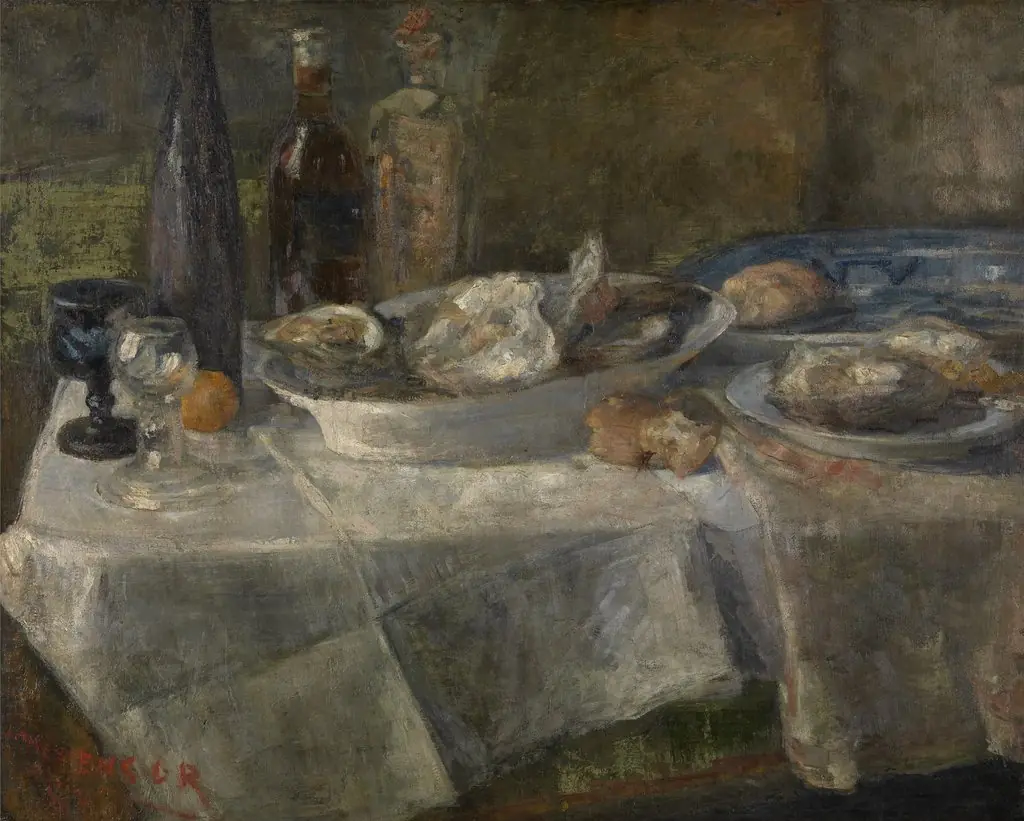
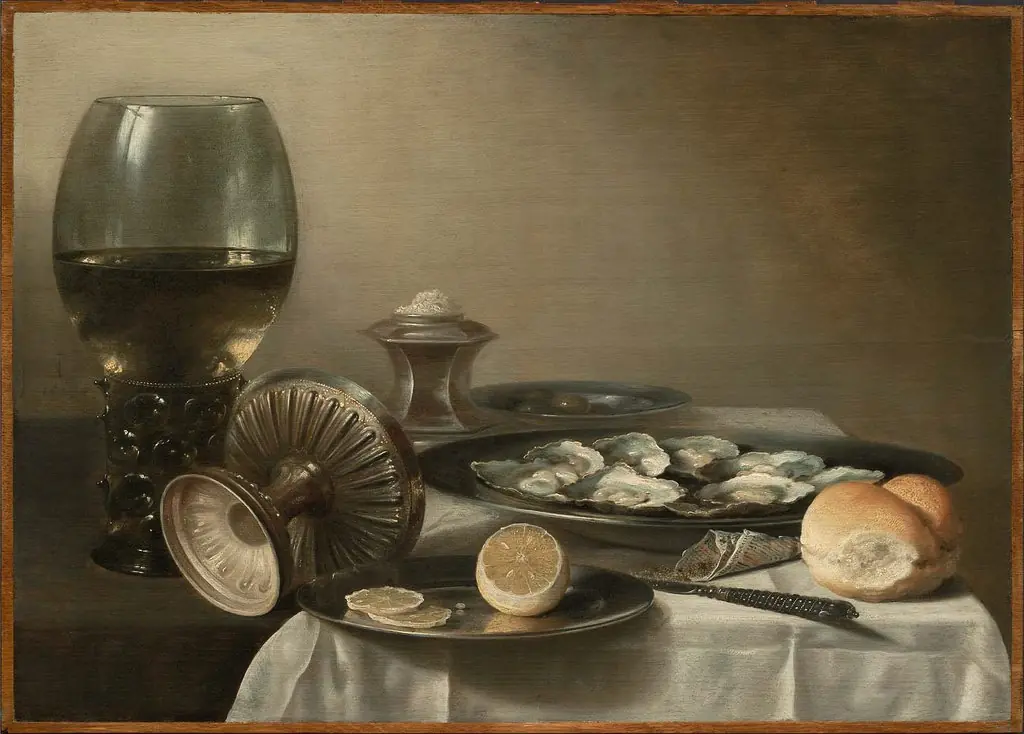
Edouard Manet's Oysters, painted in 1862, is a compact oil-on-canvas still life that captures a moment of casual dining with distinct immediacy. The composition features a white tablecloth upon which rests a cluster of opened oysters, a wedge of lemon, and a knife, arranged with a deliberate lack of formal symmetry. Manet employs rapid, visible brushstrokes that prioritize the sensation of light and texture over meticulous detail, a technique that lends the work an almost unfinished quality characteristic of his evolving style.
The artist focuses on the interplay of light on the wet shells and the stark contrast of the lemon against the white fabric, emphasizing the freshness and physical presence of the subjects. Created during a pivotal period when Manet was transitioning from Realism toward the innovations of Impressionism, this work rejects the polished finish of academic tradition in favor of a direct observation of modern life. It stands as an early example of the artist's commitment to depicting contemporary subjects with a bold, unidealized approach, foreshadowing the aesthetic principles that would define his later masterpieces.
Subject & Meaning
The painting depicts a modest still life featuring a few oysters, a lemon wedge, and a knife, all arranged on a white tablecloth. Manet's intention was to portray ordinary reality rather than idealized scenes or elaborate allegories. The visual freshness of the oysters and the straightforward presentation underscore his interest in capturing the immediacy of modern existence, inviting the viewer to appreciate the beauty in the commonplace.
Own this work as a print
Artist & collection
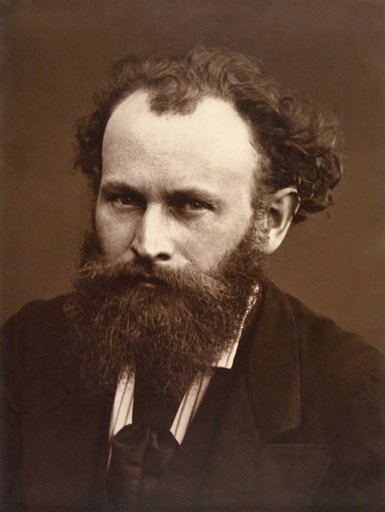
Artist
Édouard Manet was a French modernist painter. He was one of the first 19th-century artists to paint modern life, as well as a pivotal figure in the transition from Realism to Impressionism.