Artwork
Polichinelle
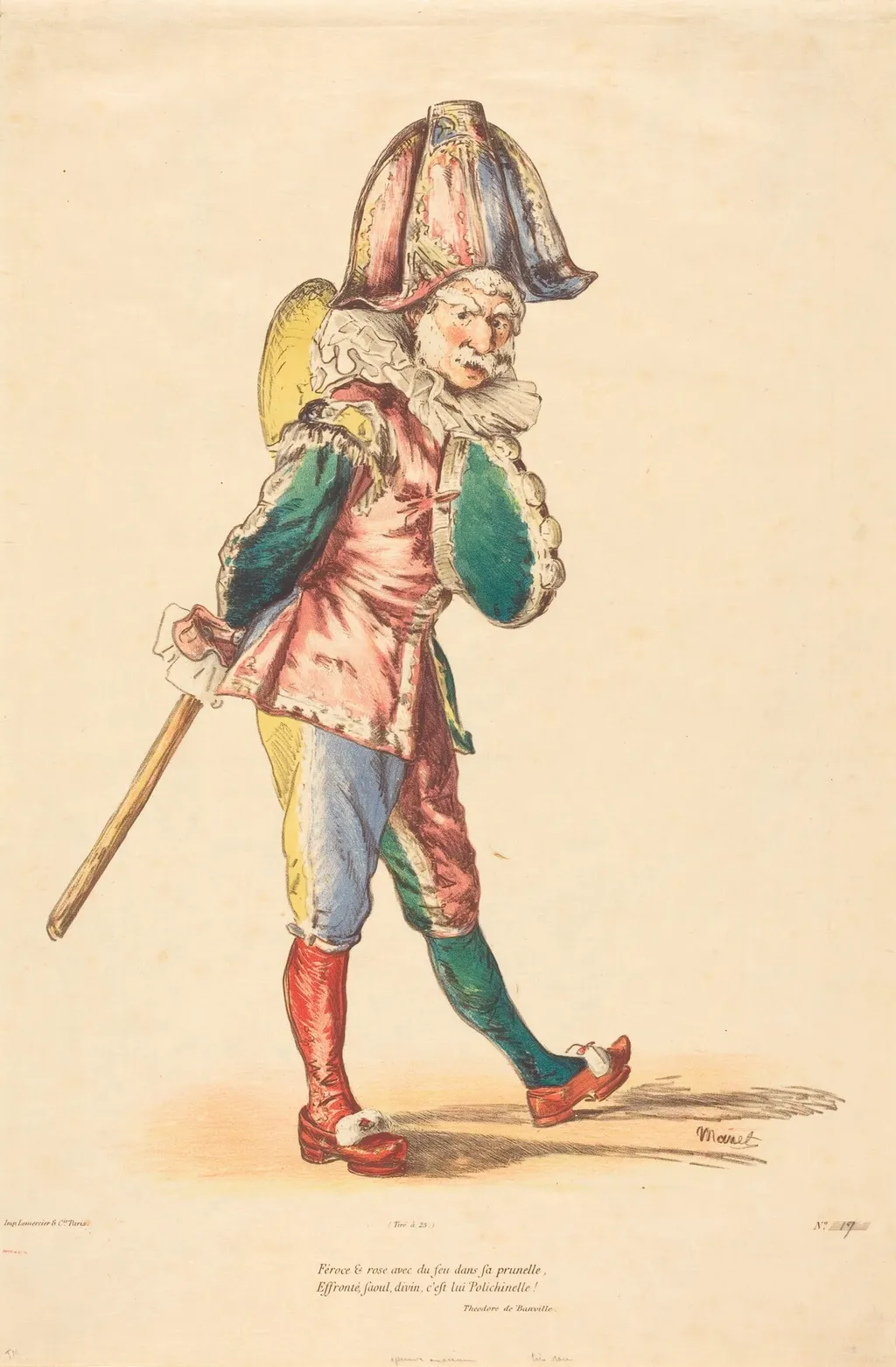
Polichinelle is an ink print by the Impressionist artist Édouard Manet. It dates from 1874 and is held in the collection of the National Gallery of Art.
- Inscription
- Inscribed:lower left in plate just below image: Imp. Lemercier & Cie. Paris.; lower center in plate just below image: (Tiré à 25.); lower right in plate within image: Manet; lower right in plate just below image: No. 17 (numeral in graphite); lower center in plate: Féroce & rose avec du feu dans sa prunelle, / Effronté, saoul, divin, c'est lui Polichinelle! / Théodore de Banville.; by later hand, lower center in graphite: epreuve ancien très rare
About this work
Overview
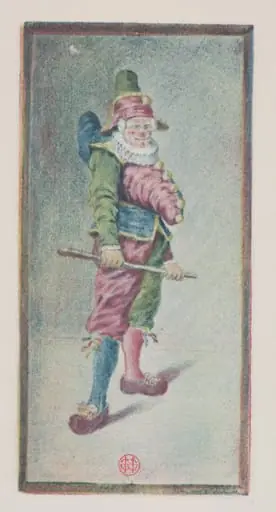
Edouard Manet’s lithograph entitled Polichinelle was produced in 1874. Executed as a seven‑color print on Japanese paper, the work belongs to the first edition of the image. It presents a single figure rendered in vivid hues, characteristic of Manet’s late printmaking experiments.
Subject & Meaning
He holds a staff and smiles broadly, embodying the theatrical stock character Polichinelle, a French adaptation of the comic Harlequin.
The central figure is a man dressed in an exaggerated costume: a tall, multicoloured hat topped with a feather, a yellow vest, green‑sleeved shirt and red trousers. He holds a staff and smiles broadly, embodying the theatrical stock character Polichinelle, a French adaptation of the comic Harlequin. The attire’s blend of flamboyance and absurdity suggests a satirical commentary on contemporary fashion and performance.
Technique & Style
Manet employed a seven‑color lithographic process, a demanding method that required separate stones for each hue. The use of Japanese paper, prized for its smooth surface and translucency, allowed fine detail and a luminous colour palette. The print’s flat areas of bright pigment and simplified forms reflect Manet’s interest in graphic clarity and the influence of Japanese prints on European art.
History & Provenance
Created in the mid‑1870s, Polichinelle was part of Manet’s exploration of commercial print media, a departure from his earlier oil paintings. The work was issued as a first‑edition lithograph, likely distributed to a limited audience of collectors and admirers of the artist’s print output. Its provenance traces through several private collections before entering a museum holding of nineteenth‑century French prints.
Own this work as a print
Artist & collection
Artist
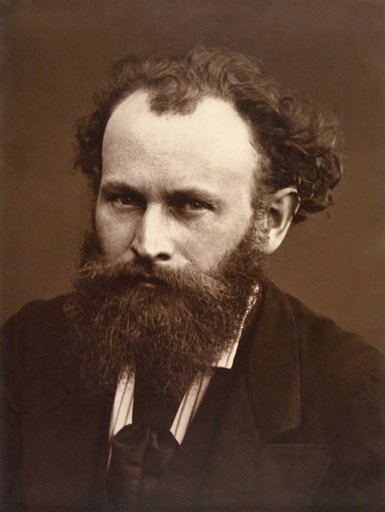
Édouard Manet was a French modernist painter. He was one of the first 19th-century artists to paint modern life, as well as a pivotal figure in the transition from Realism to Impressionism.