Artwork
Amethyst Woodstar
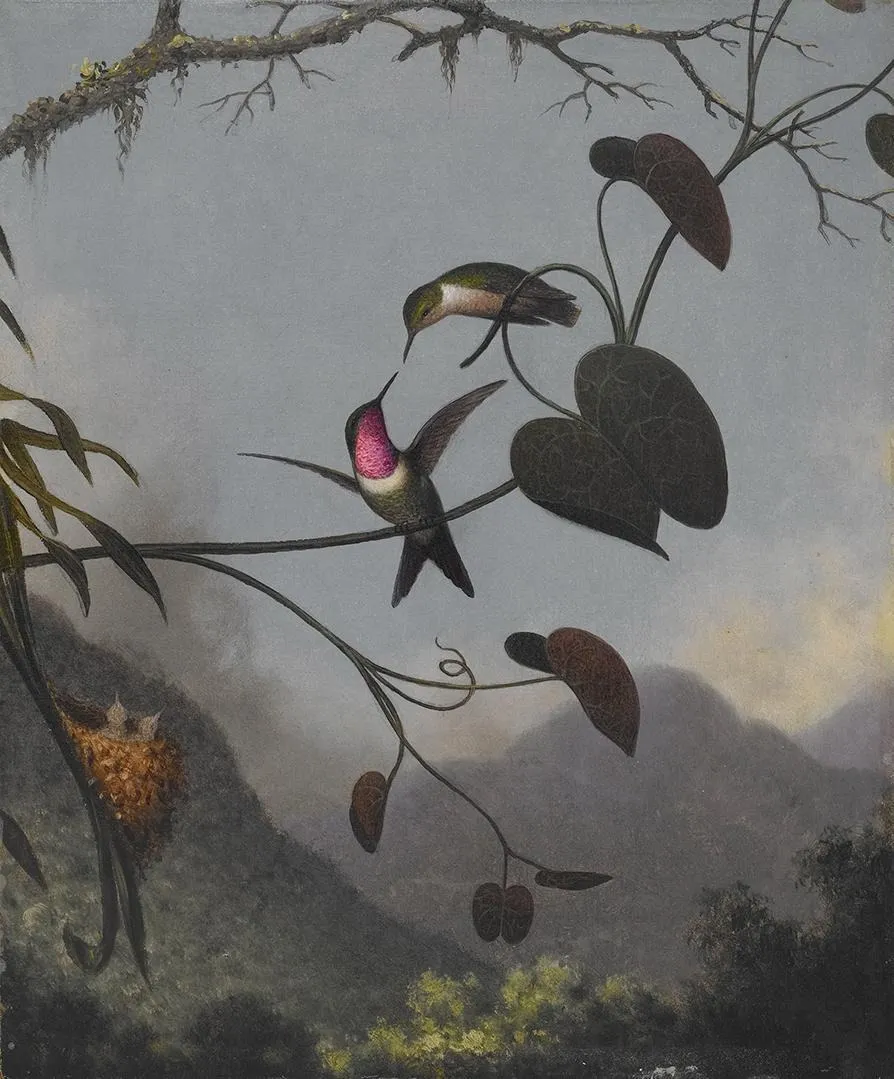
Amethyst Woodstar is an oil painting by the Luminist artist Martin Johnson Heade. It dates from 1863 and is held in the collection of the Crystal Bridges Museum of American Art.
About this work
Overview
Its subdued tones and meticulous detail distinguish it from the more dramatic landscapes of his peers.
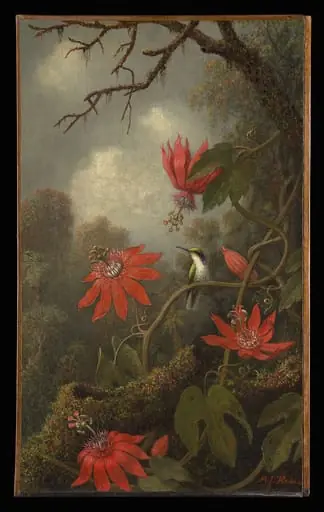
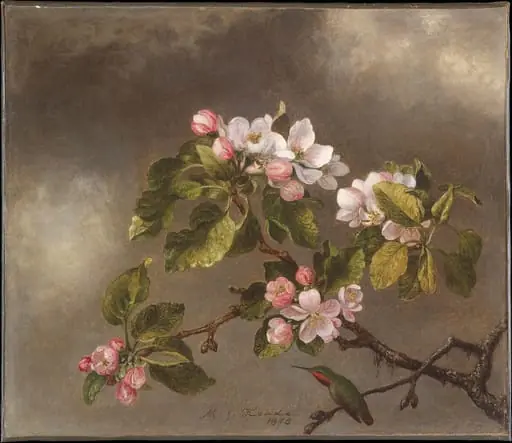
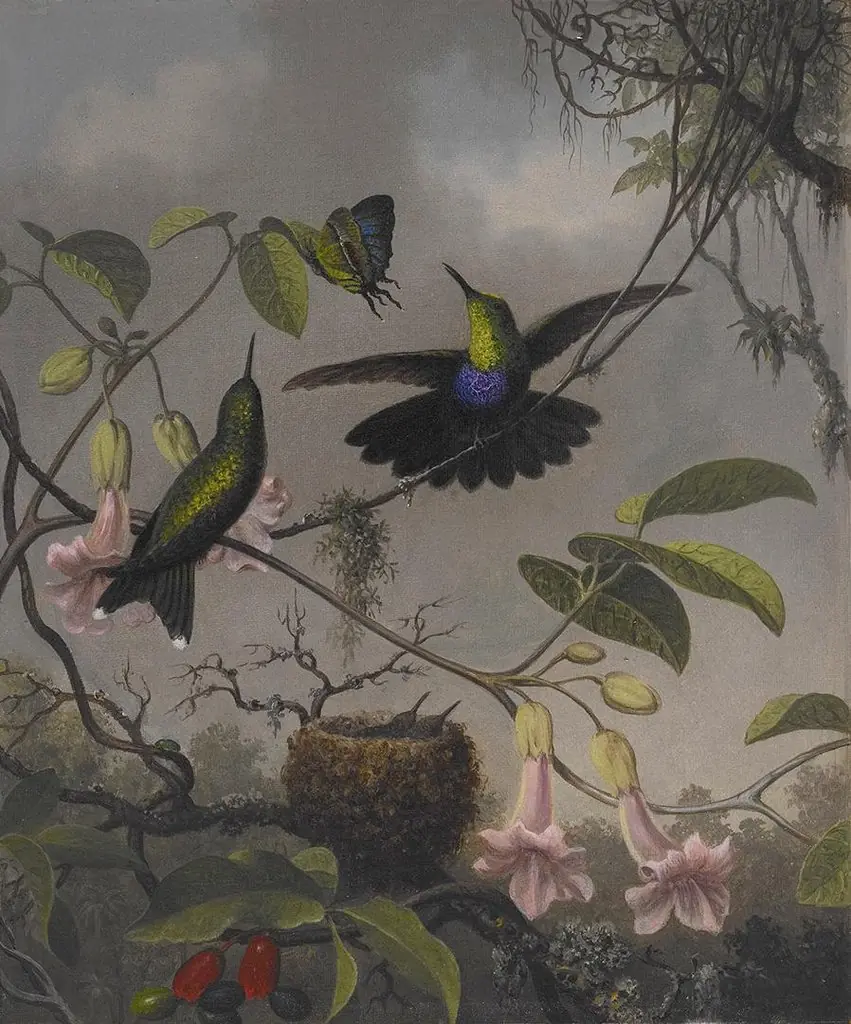
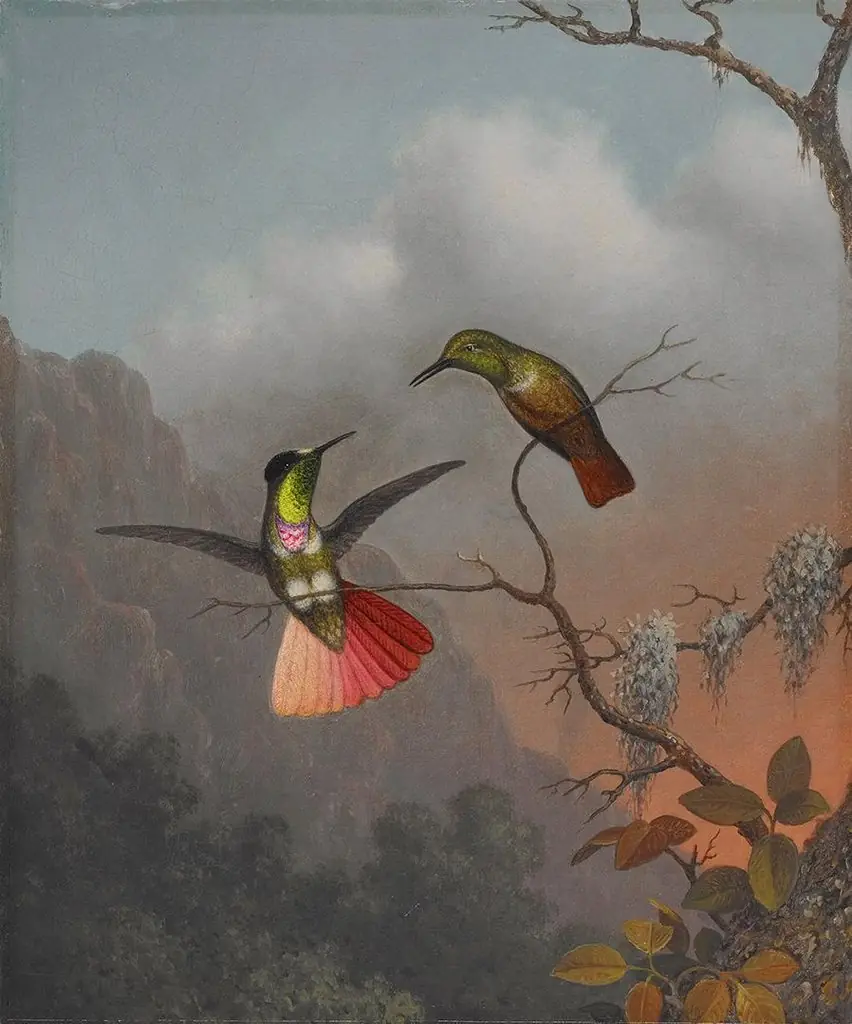
Painted in 1863, Amethyst Woodstar is an oil-on-canvas work by American artist Martin Johnson Heade. It belongs to the luminist tradition, emphasizing quiet light and atmospheric stillness. The painting captures two hummingbirds within a dense, softly rendered natural setting, reflecting Heade’s sustained interest in precise botanical and avian subjects. Its subdued tones and meticulous detail distinguish it from the more dramatic landscapes of his peers.
Subject & Meaning
The painting depicts a perched hummingbird with a vivid purple throat and another in mid-flight, both surrounded by lush, overlapping leaves. The birds are rendered with scientific accuracy, suggesting an interest in natural history. The absence of human presence and the intimate scale invite contemplation rather than narrative.
The work conveys a sense of quiet observation, aligning with 19th-century ideals of nature as a realm of subtle, undisturbed beauty.
Technique & Style
Heade employed fine, controlled brushwork to render the feathers and foliage with delicate precision. The background fades into muted grays and earth tones, allowing the birds to emerge with luminous clarity. Color is used sparingly, greens and purples dominate, while hints of yellow and brown suggest dappled light filtering through leaves. The composition guides the eye through subtle directional shifts, enhancing the illusion of movement without overt drama.
History & Provenance
Created in 1863, the painting remained in private collections for much of the 20th century before entering the Crystal Bridges Museum of American Art’s permanent collection. Its attribution to Heade has been consistently supported by stylistic analysis and archival records. Unlike many of his larger landscapes, this intimate study was not widely exhibited during his lifetime, contributing to its relative obscurity until recent scholarly reassessments.
Context
In the mid-19th century, American artists increasingly turned to natural subjects as scientific inquiry and transcendentalist thought gained traction. Heade’s focus on hummingbirds and tropical flora aligned with growing public fascination with exotic species, fueled by exploration and specimen collection. His work diverged from grand Romantic landscapes, instead favoring microscopic moments of natural life, reflecting a quieter, more observational aesthetic.
Legacy
Though overlooked for decades, Amethyst Woodstar is now recognized as a key example of Heade’s unique contribution to American art. Its blend of scientific detail and poetic stillness influenced later generations interested in ecological observation. The painting exemplifies how luminism extended beyond landscape to include intimate natural studies, expanding the movement’s thematic boundaries in American art history.
Artist & collection

Artist
Martin Johnson Heade (August 11, 1819 – September 4, 1904) was an American painter known for his salt marsh landscapes, seascapes, and depictions of hummingbirds, often depicted with orchids, as well as lotus blossoms and other still lifes.

Museum
Crystal Bridges Museum of American Art
Continue through works from the same source collection.