Artwork
Hooded Visorbearer
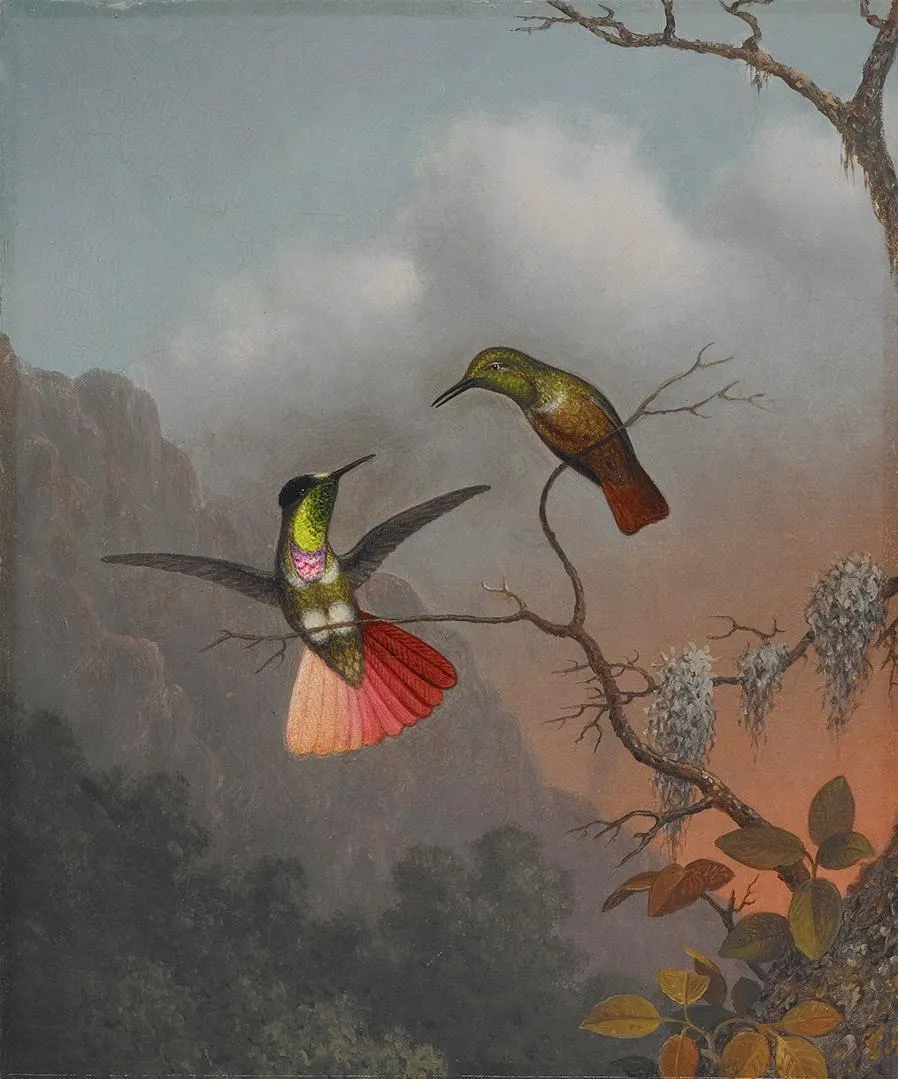
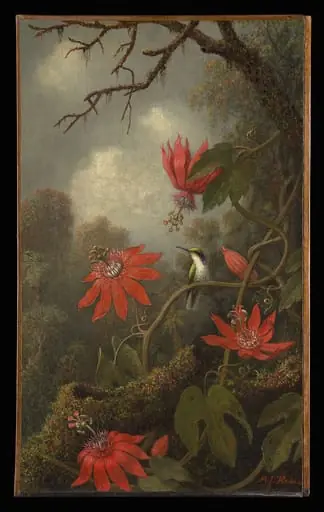
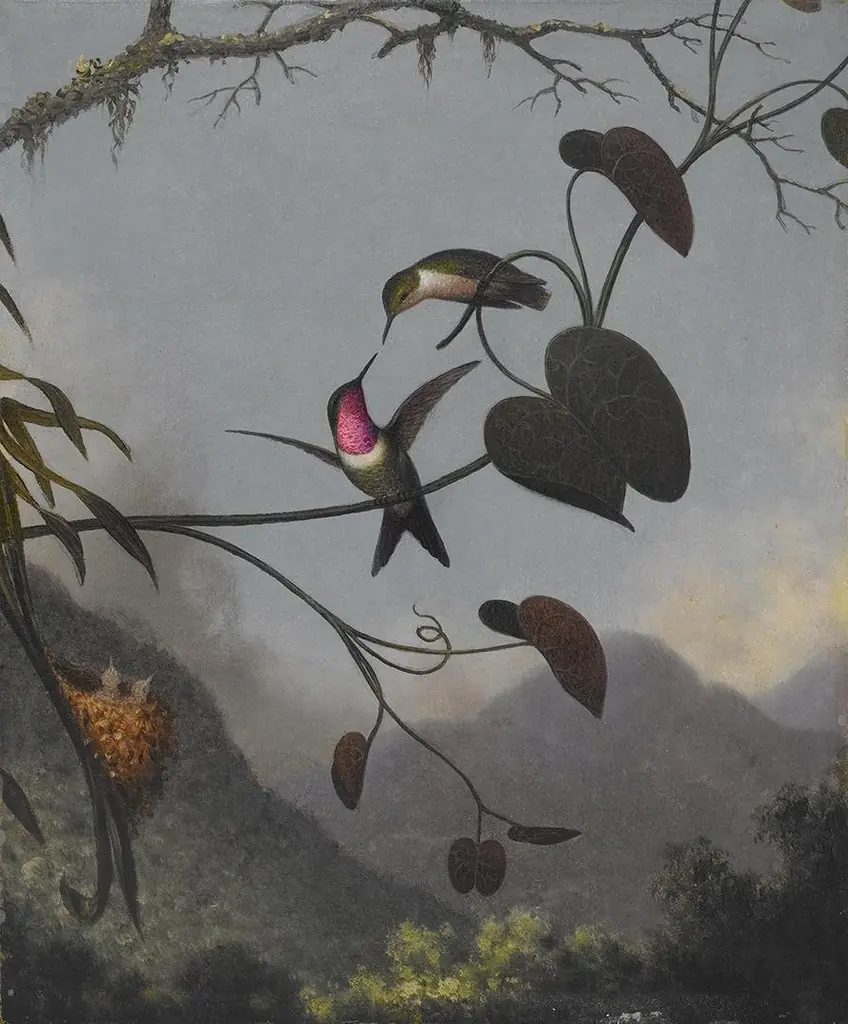
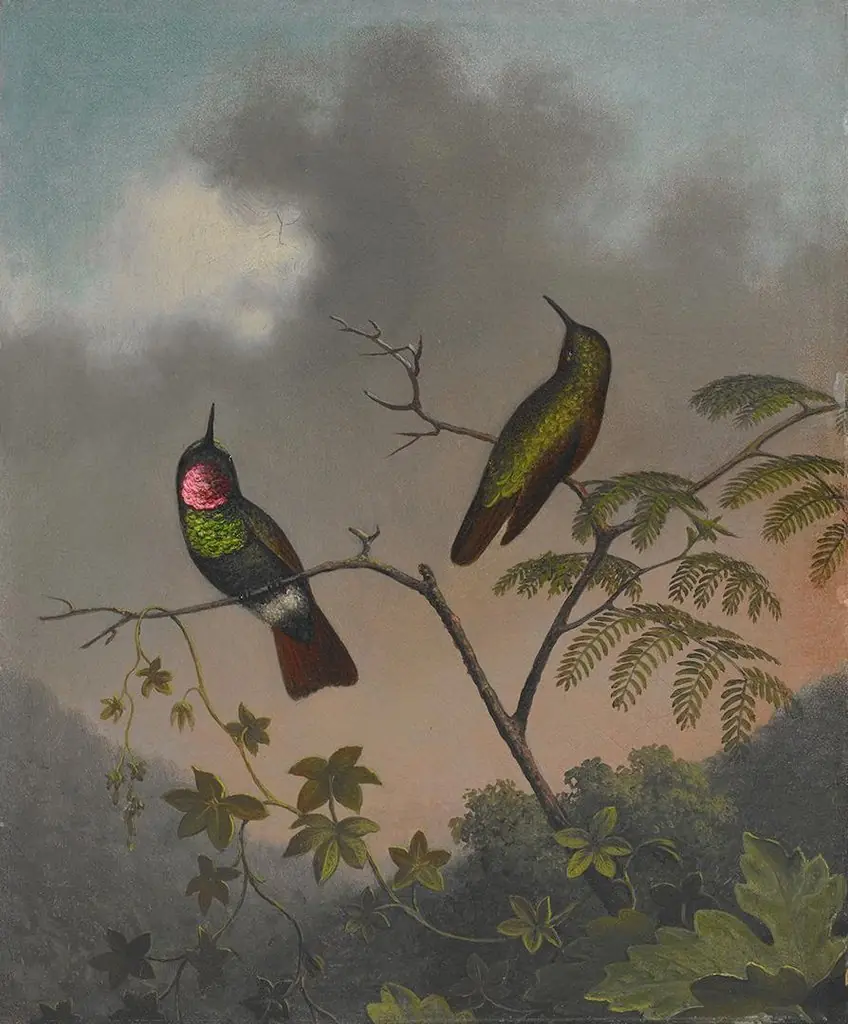
Hooded Visorbearer is an oil painting by the Luminist artist Martin Johnson Heade. It dates from 1863 and is held in the collection of the Crystal Bridges Museum of American Art.
About this work
Overview
Hooded Visorbearer is an 1863 oil painting by Martin Johnson Heade, characterized by the serene and luminous qualities of the luminist movement.
Subject & Meaning
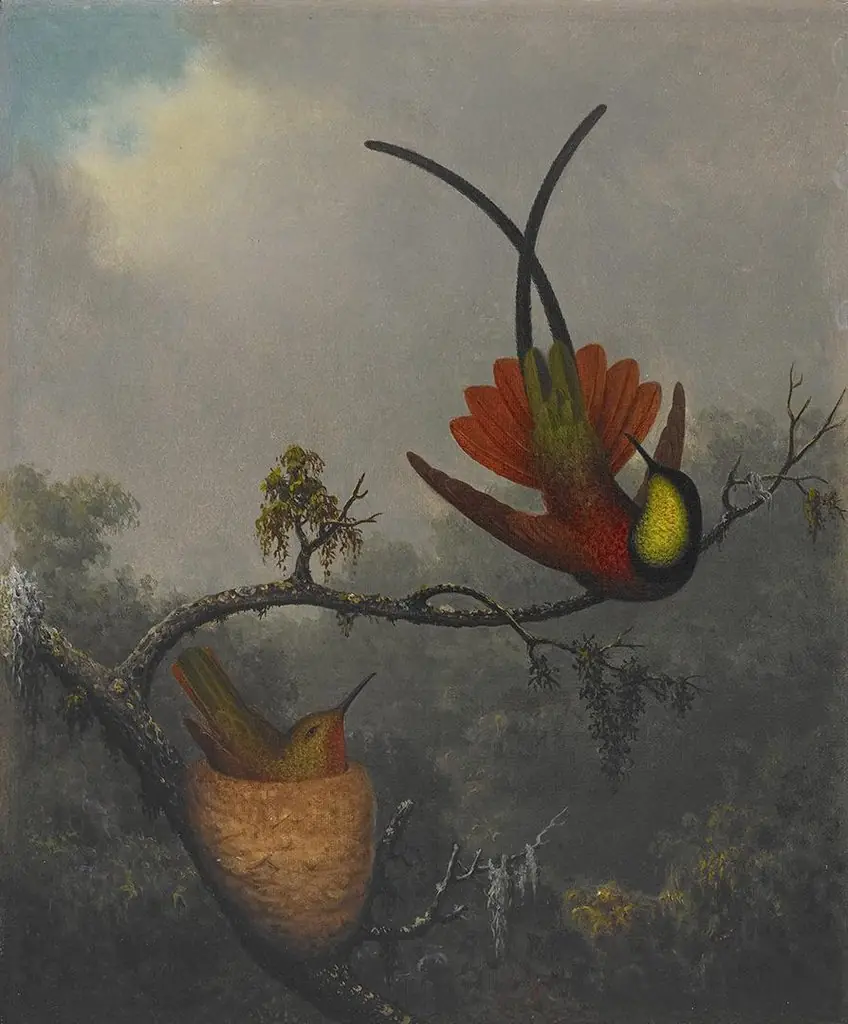
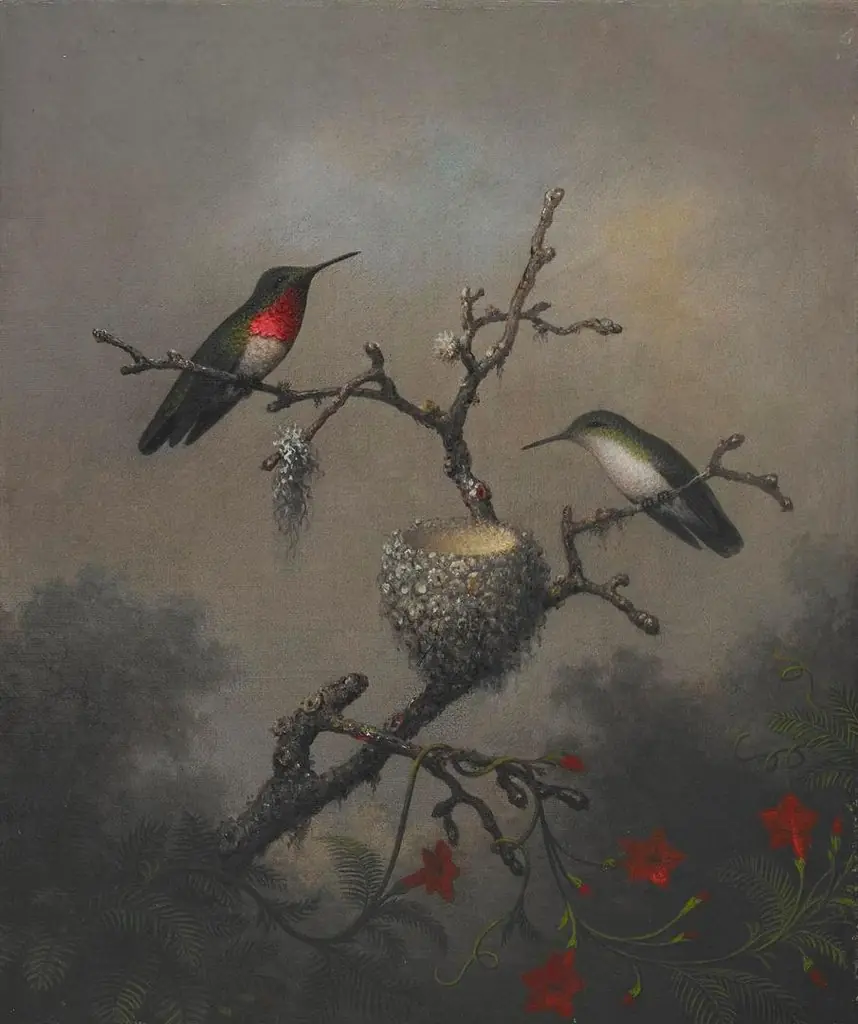
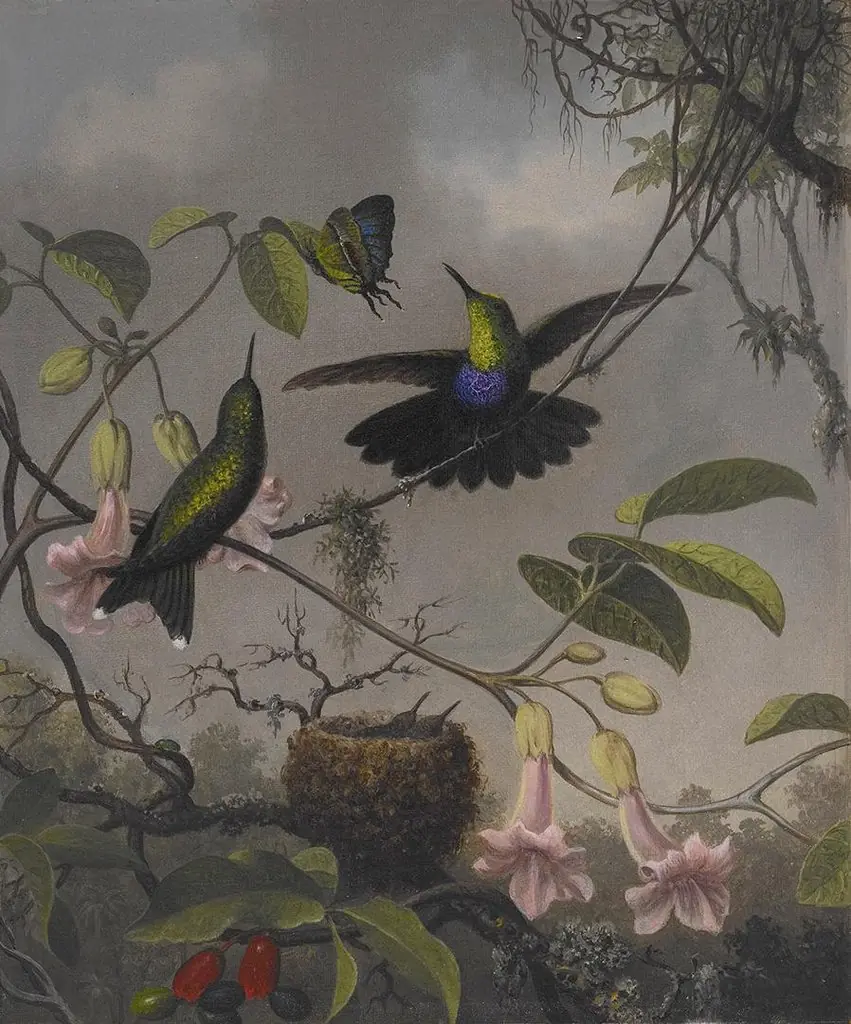
The painting captures two hummingbirds in a mountainous landscape: one in mid-air with outstretched wings, and another perched on a branch. The species depicted are distinguished by their plumage, a green-bodied, black-headed bird with a pink tail, and a brown-bodied bird with a green head and curved beak. The scene conveys a sense of gentle motion and tranquility.
Technique & Style
Heade's meticulous depiction of nature, typical of his work, utilizes color and light to create depth and dimensionality. The luminist style is evident in the soft, serene atmosphere and the emphasis on capturing the play of light within the natural setting.
History & Provenance
Created in 1863, Hooded Visorbearer reflects Heade's departure from his common subjects of salt marshes, seascapes, and still lifes with orchids or lotus blossoms, instead focusing on avian life. Heade, born in 1819 in Pennsylvania, developed his unique style under the influence of Edward Hicks and possibly Thomas Hicks.
Context
This work aligns with the broader luminist movement, emphasizing light, serenity, and the contemplation of nature. Heade's contribution to this movement is marked by his attention to detail and the subtle, peaceful ambiance of his paintings.
Legacy
Hooded Visorbearer contributes to Heade's legacy as a luminist painter who explored various aspects of the natural world, though it diverges from his more commonly known subjects. The piece showcases his ability to capture the essence of different natural elements with his characteristic luminosity.
Artist & collection

Artist
Martin Johnson Heade (August 11, 1819 – September 4, 1904) was an American painter known for his salt marsh landscapes, seascapes, and depictions of hummingbirds, often depicted with orchids, as well as lotus blossoms and other still lifes.

Museum
Crystal Bridges Museum of American Art
Continue through works from the same source collection.