Artwork
Black-throated Mango
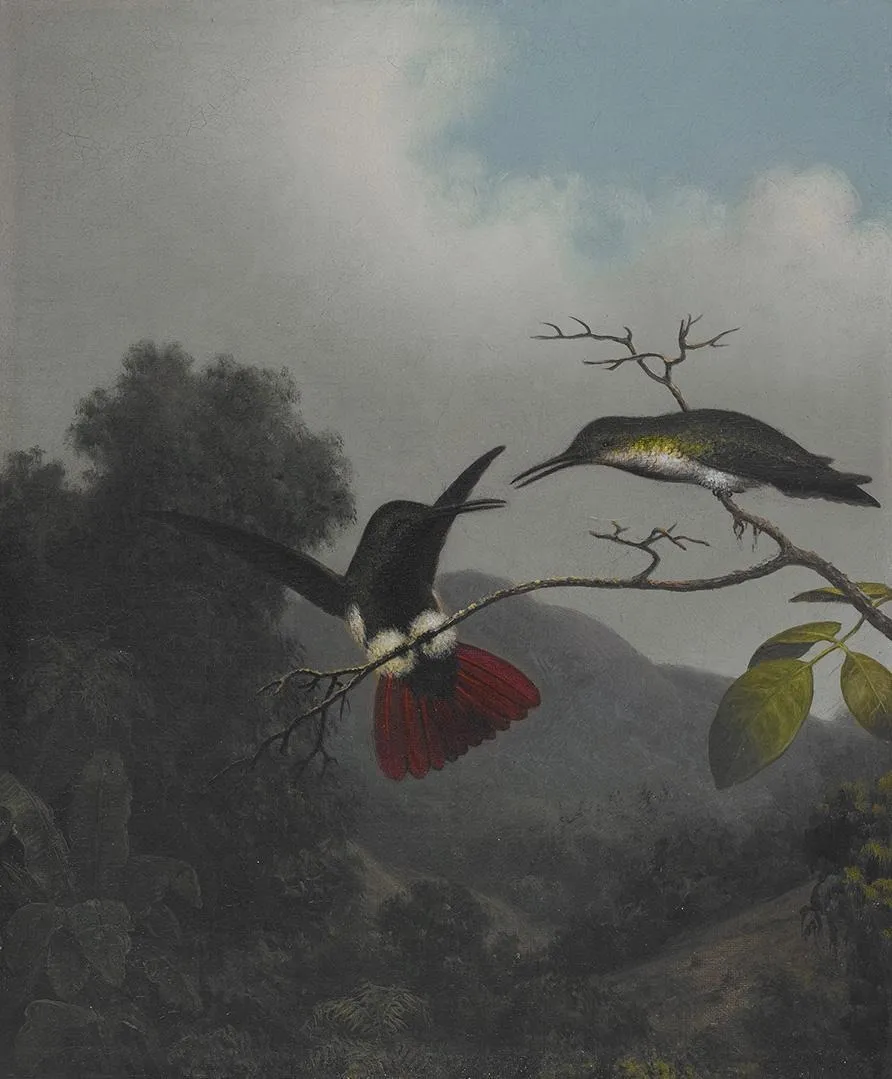
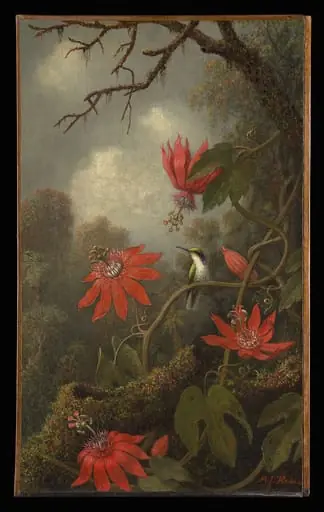
Black-throated Mango is an oil painting by the Luminist artist Martin Johnson Heade. It dates from 1863 and is held in the collection of the Crystal Bridges Museum of American Art.
About this work
Overview
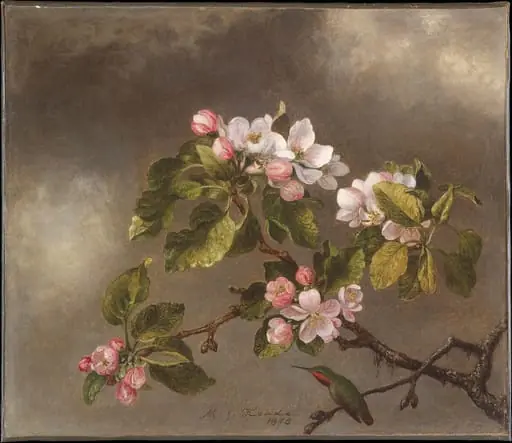
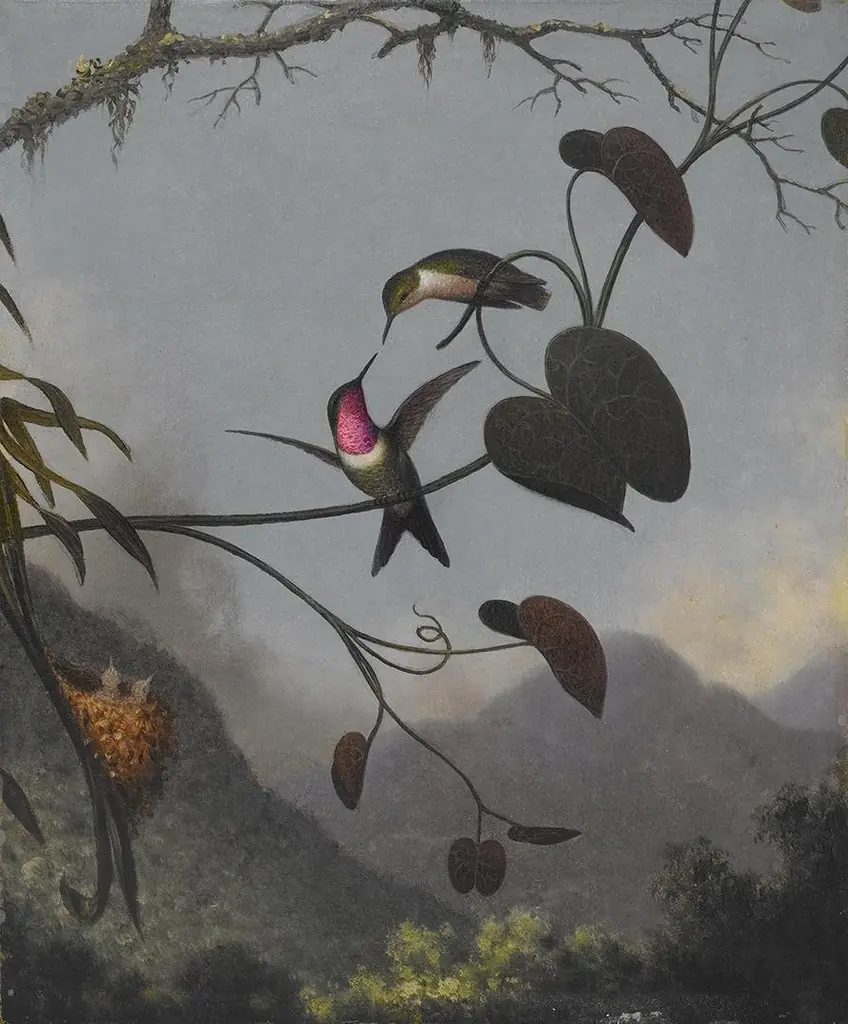
The composition centers on two hummingbirds, one perched, the other captured mid‑flight, set against a muted sky of gray‑blue and soft clouds.
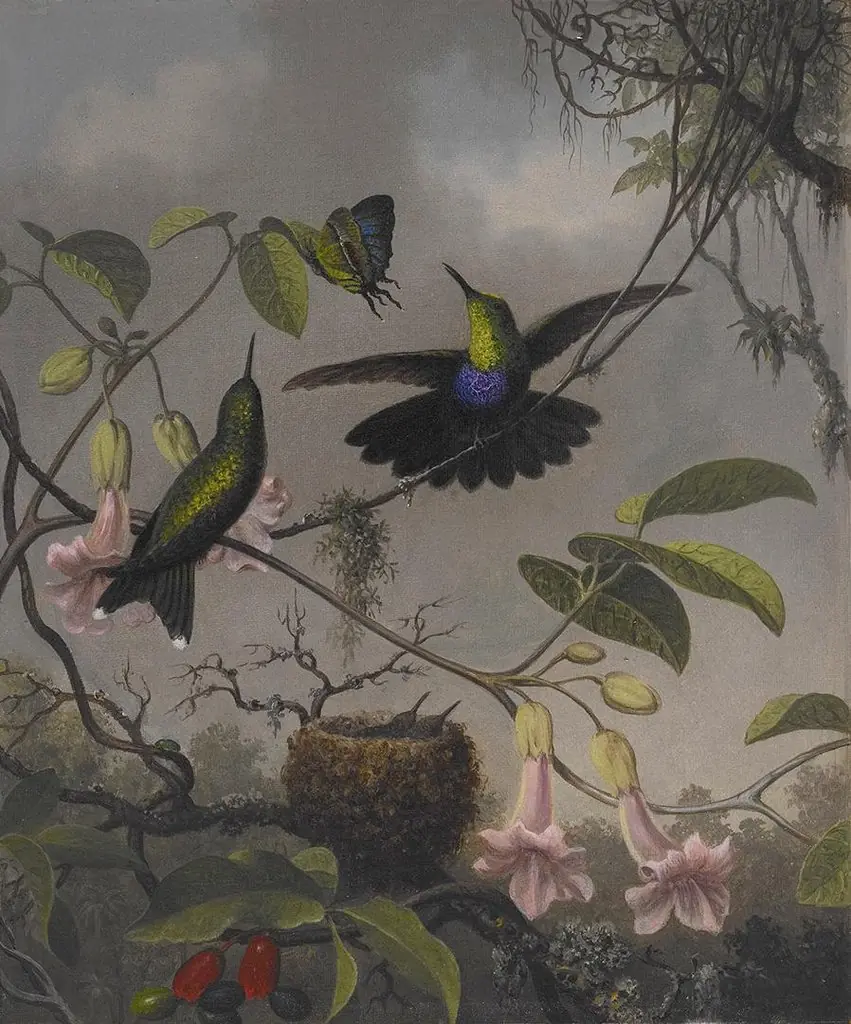
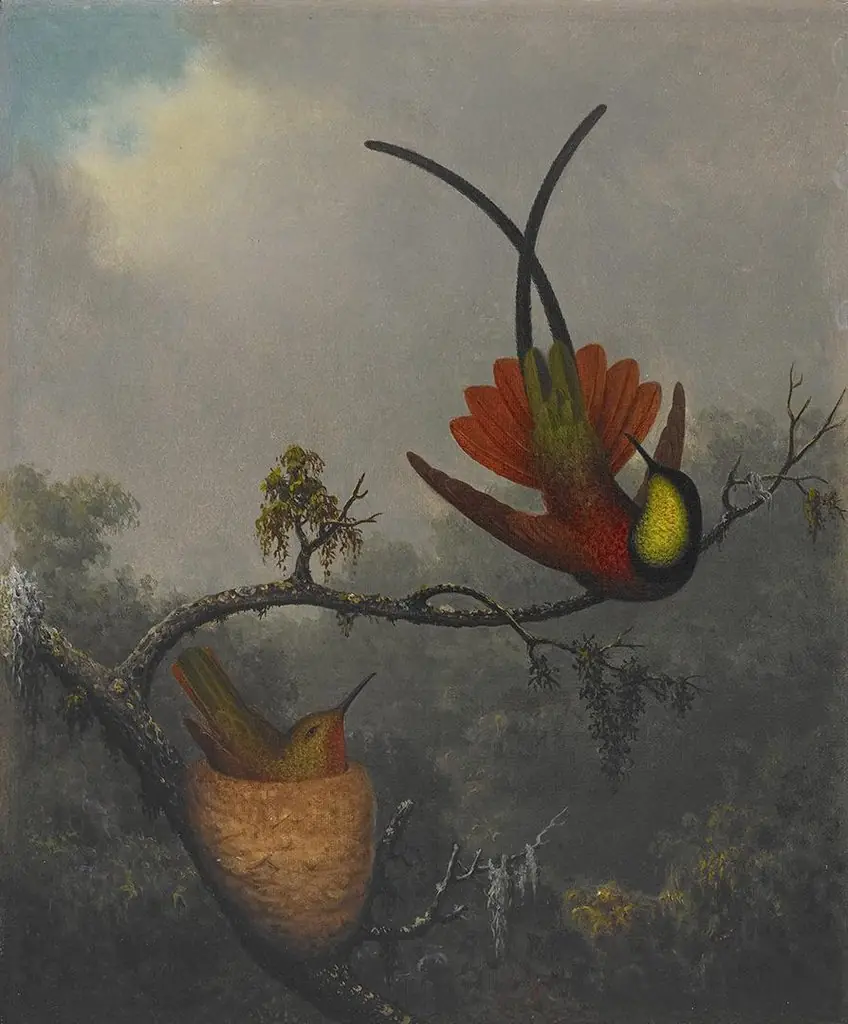
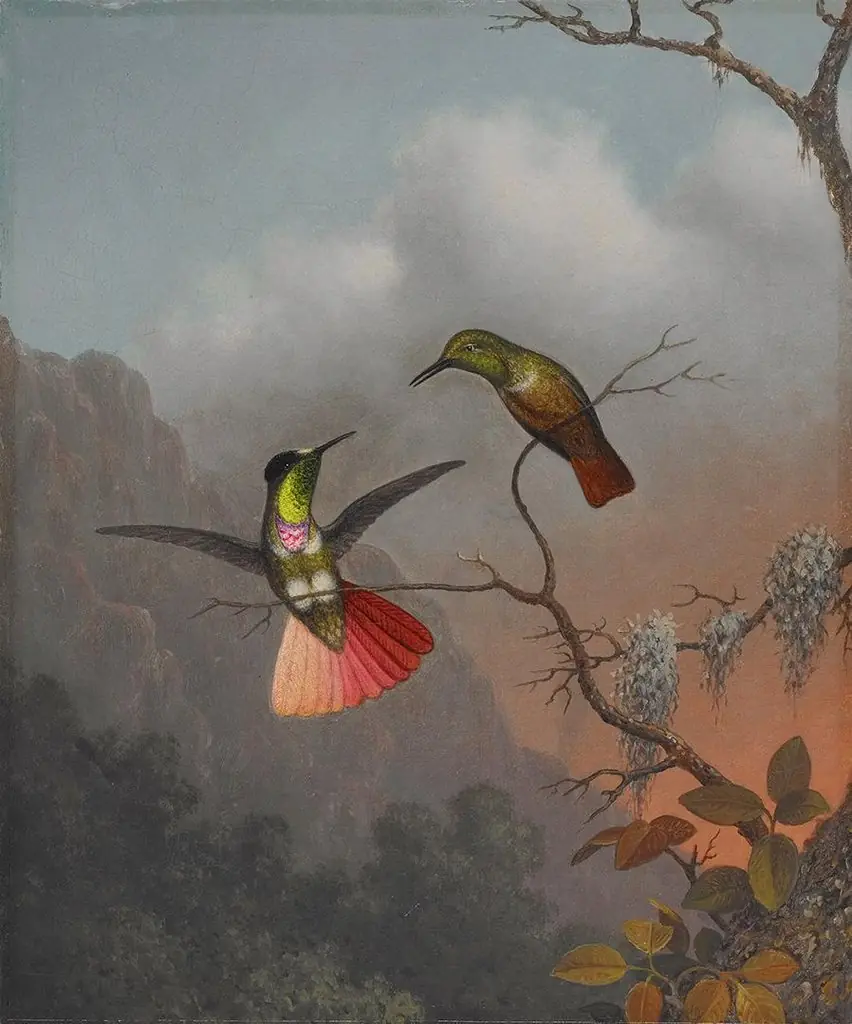
Martin Johnson Heade’s 1863 oil painting titled Black‑throated Mango presents a tranquil tropical scene rendered in the luminist tradition. The composition centers on two hummingbirds, one perched, the other captured mid‑flight, set against a muted sky of gray‑blue and soft clouds. Delicate foliage and orchids frame the birds, while subtle contrasts of black, white and a flash of red draw attention to the avian subjects.
Subject & Meaning
The work focuses on the fleeting presence of hummingbirds, creatures often associated with vitality and precision. By placing the birds among orchids and verdant leaves, Heade juxtaposes the fragility of flora with the rapid motion of the birds, suggesting a momentary harmony within a lush, tropical environment.
Technique & Style
Executed in oil, the painting employs the luminist emphasis on calm light and atmospheric clarity. Heade’s meticulous brushwork renders feather texture and leaf veins with fine detail, while a restrained palette of muted greens and grays enhances the contrast of the birds’ dark plumage and bright red tail. Chiaroscuro modeling adds depth, guiding the eye through the layered space.
History & Provenance
Heade, born in Pennsylvania in 1819 and trained under folk artist Edward Hicks, began exhibiting in the 1840s. By the 1860s he had established a reputation for precise natural studies, particularly hummingbirds and floral still lifes. Black‑throated Mango reflects his mature period, when he combined scientific observation with a luminous, balanced compositional approach.
Context
The painting emerges from a mid‑19th‑century American interest in exotic subjects and natural history. While many contemporaries favored grand historical themes, Heade’s focus on detailed, serene depictions of tropical birds and plants positioned him within a niche that blended art and emerging scientific illustration.
Artist & collection

Artist
Martin Johnson Heade (August 11, 1819 – September 4, 1904) was an American painter known for his salt marsh landscapes, seascapes, and depictions of hummingbirds, often depicted with orchids, as well as lotus blossoms and other still lifes.

Museum
Crystal Bridges Museum of American Art
Continue through works from the same source collection.