Artwork
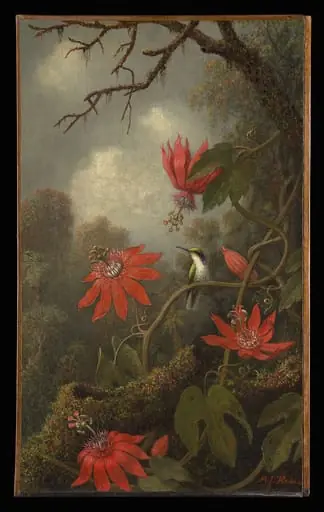
Fork-tailed Woodnymph
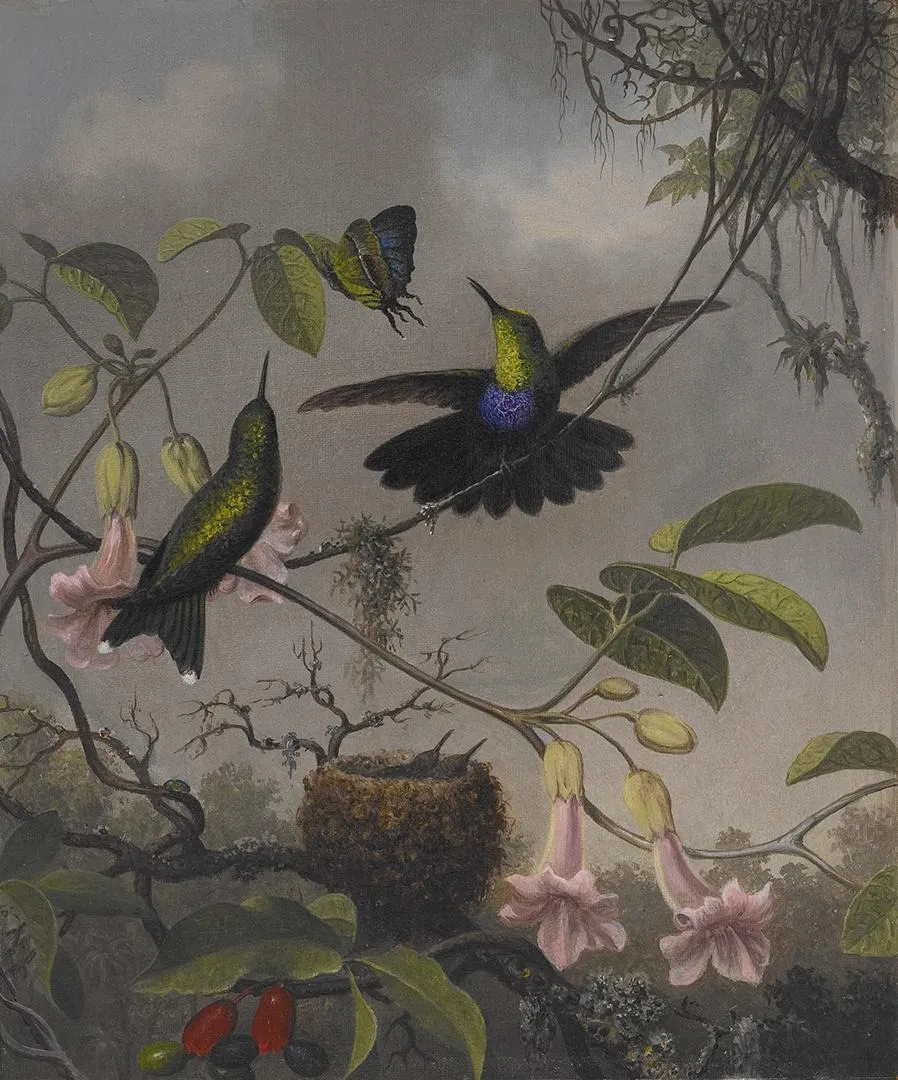
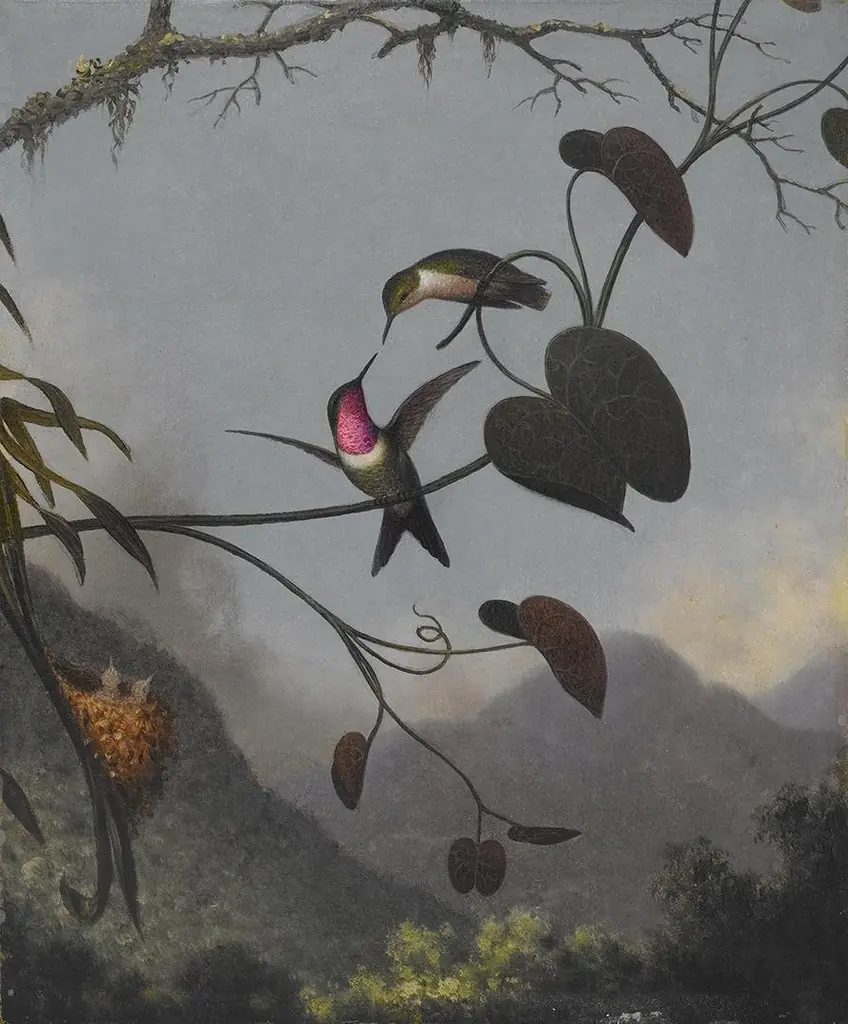
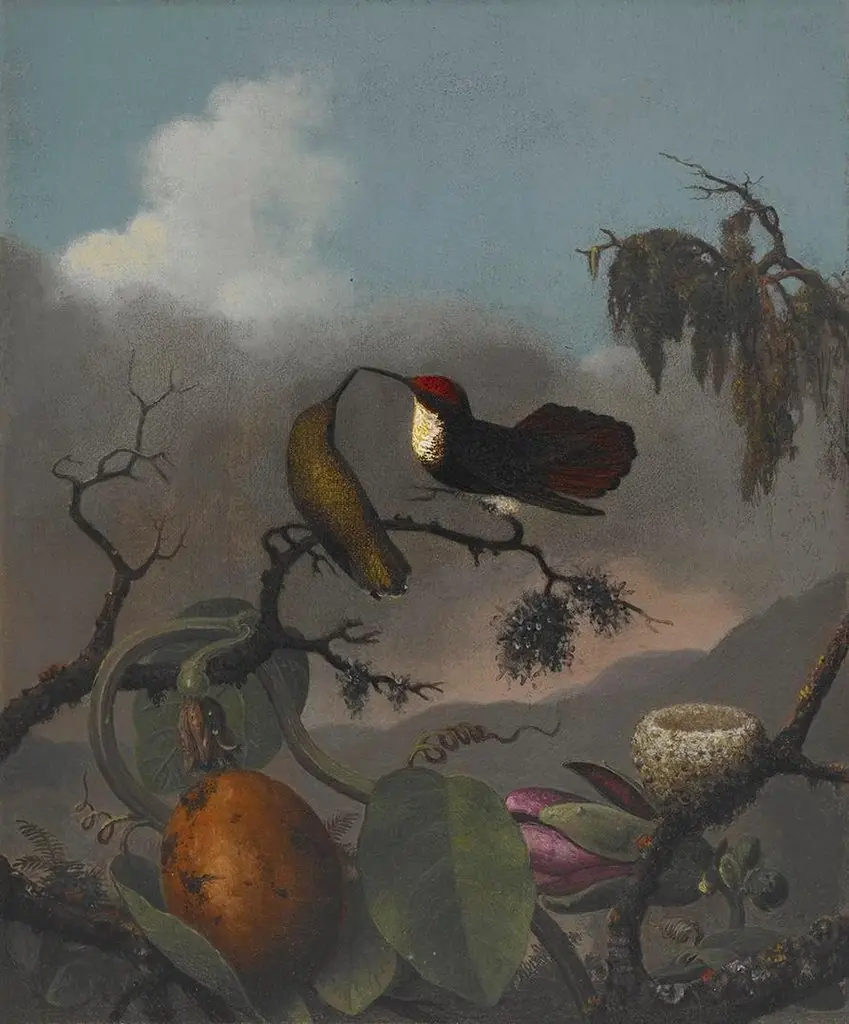
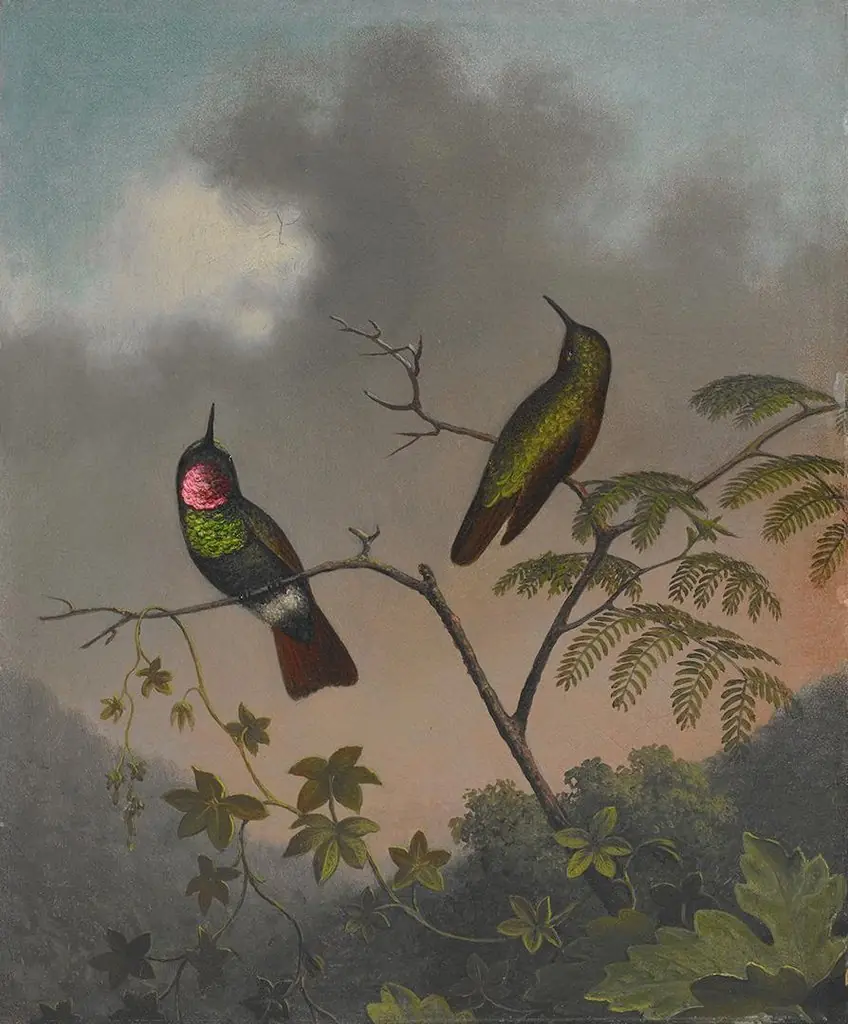
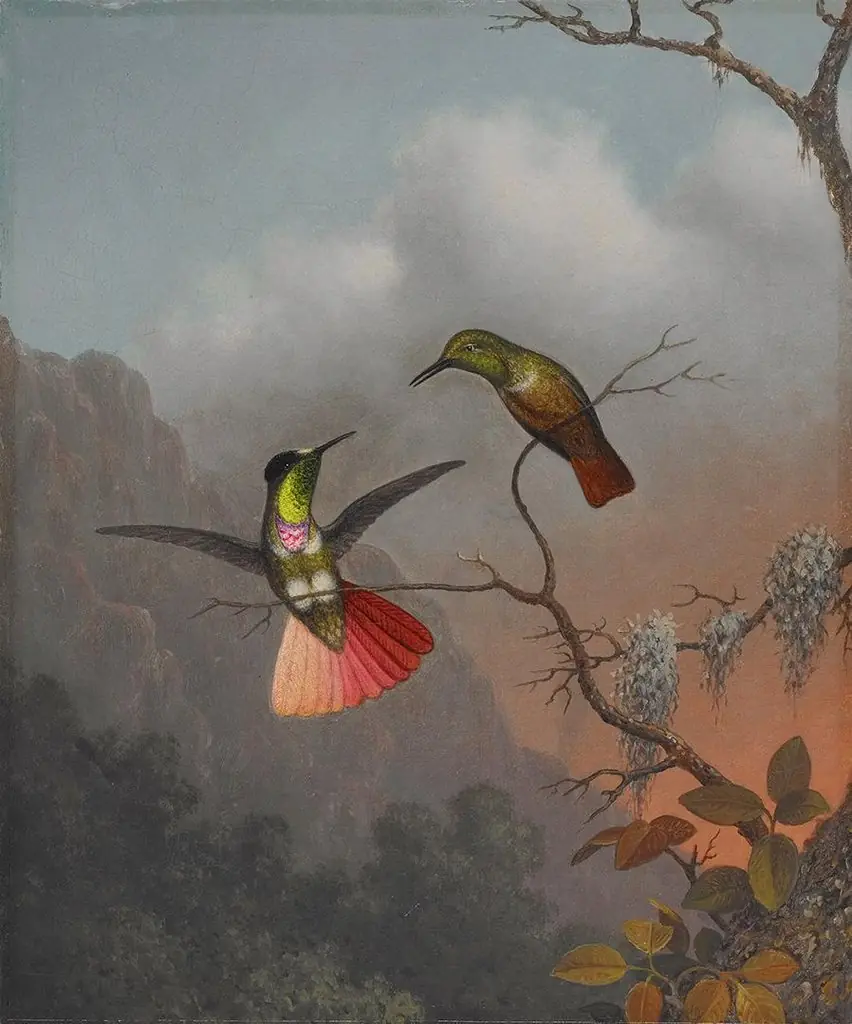
Fork-tailed Woodnymph is an oil painting by the Luminist artist Martin Johnson Heade. It dates from 1863 and is held in the collection of the Crystal Bridges Museum of American Art.
About this work
Overview
Fork-tailed Woodnymph is a painting created by Martin Johnson Heade in 1863 using oil paint. It is part of the collection at Crystal Bridges Museum of American Art.
Subject & Meaning
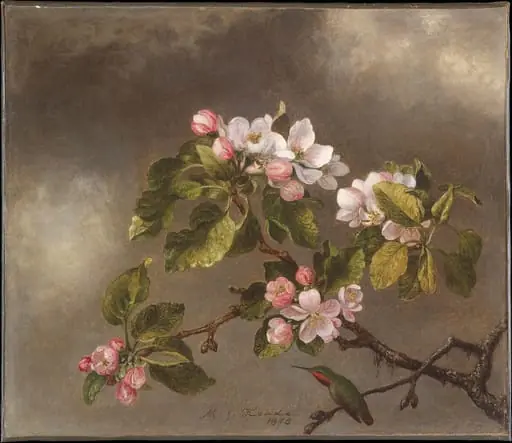
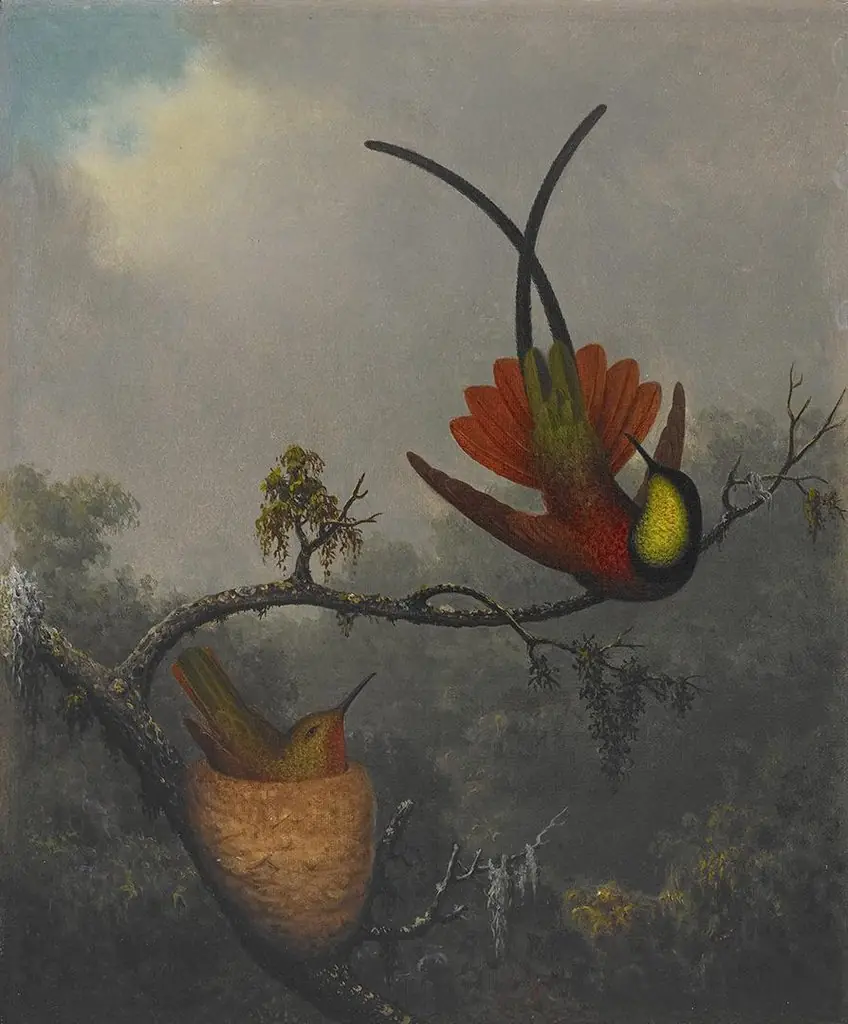
The painting depicts two birds perched on a branch amidst lush greenery and vibrant flowers, with a nest visible in the foreground. The scene conveys a sense of warmth and life, with the birds and flowers displayed in vivid detail.
Technique & Style
Heade's use of chiaroscuro creates a sense of depth and dimensionality, while the soft, muted gray background highlights the colors of the birds and flowers. The work combines elements of romanticism with a distinct personal style, characteristic of the luminist movement's emphasis on light.
Artist & collection

Artist
Martin Johnson Heade (August 11, 1819 – September 4, 1904) was an American painter known for his salt marsh landscapes, seascapes, and depictions of hummingbirds, often depicted with orchids, as well as lotus blossoms and other still lifes.

Museum
Crystal Bridges Museum of American Art
Continue through works from the same source collection.