Artwork
Calabash Flowers and Beetle
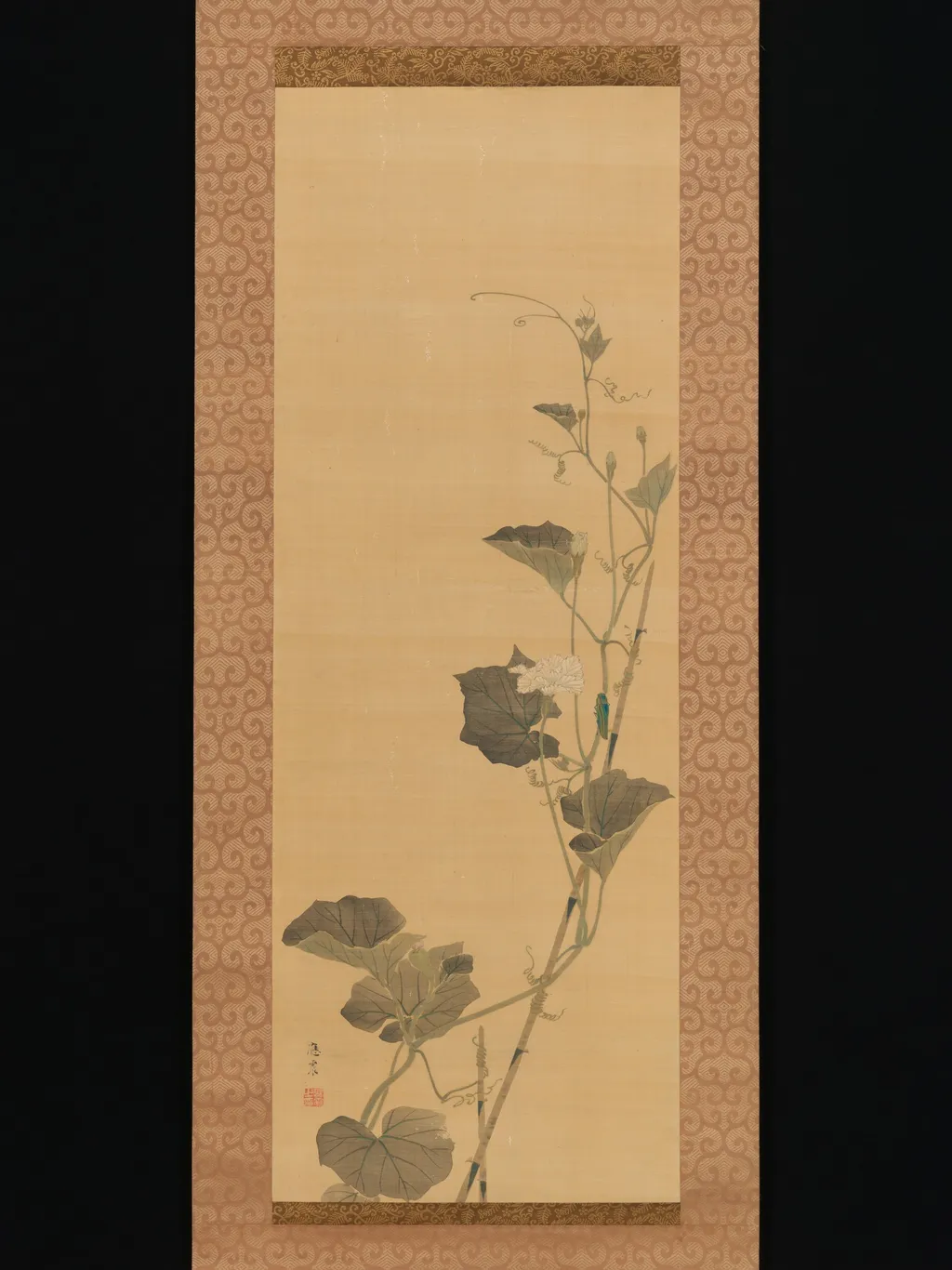
Calabash Flowers and Beetle is an unspecified painting by the Maruyama Shijo artist Maruyama Ōshin. It dates from 1819 and is held in the collection of the Metropolitan Museum of Art.
About this work
Subject & Meaning
Together, the flower and insect evoke a meditation on the fleeting beauty of the natural world, a recurring theme in Maruyama Ōshin's painterly practice.
Calabash Flowers and Beetle is a painting by Maruyama Ōshin that depicts a flower and an insect, as recorded in its cataloguing. The work pairs botanical and entomological subjects, a combination characteristic of Japanese nature studies that highlight the seasonal and ecological relationships between plants and the creatures drawn to them.
The calabash flower, with its distinctive trailing vines and pale blooms, traditionally carries associations with late summer and early autumn in East Asian visual culture, while the inclusion of a beetle, often a symbol of vitality, transformation, and the transience of life, adds a layer of meaning tied to natural cycles. Together, the flower and insect evoke a meditation on the fleeting beauty of the natural world, a recurring theme in Maruyama Ōshin's painterly practice.
History & Provenance
Calabash Flowers and Beetle is a painting by Maruyama Ōshin dated 1819. According to the work's cataloguing, it was created in Japan in that year. The painting is held in the collection of the Metropolitan Museum of Art, where it is currently located.
No further details about its commission, prior ownership, or chain of custody are documented in the available sources.
Calabash Flowers and Beetle is held in the collection of the Metropolitan Museum of Art in New York. The painting, created by Maruyama Ōshin in 1819, depicts floral and insect subjects originating from Japan. While the specific inventory or accession number is not provided in the available records, the work is confirmed as part of the museum's holdings.
The provided sources do not contain information regarding a specific exhibition history for this artwork, nor do they list past display dates or loan records.
Overview
Maruyama Ōshin's painting, "Calabash Flowers and Beetle," created in 1819, offers a detailed botanical study. The artwork presents a single vine with its characteristic leaves and a delicate flower, accompanied by an insect. This piece is part of the collection at The Metropolitan Museum of Art, serving as an example of Japanese naturalistic painting from the early 19th century.
Technique & Style
Ōshin employed a precise hand to render the botanical forms, using fine, slightly undulating lines to define the edges of the leaves and flower petals. The plant is set against a plain, light background, which accentuates its presence and allows the viewer's focus to remain entirely on the natural subject. Strategic use of negative space around the vine further emphasizes its delicate yet robust structure within the composition.
Own this work as a print
Artist & collection

- 墨林愚庵筆 葡萄蝉図|Cicada on a Grapevine
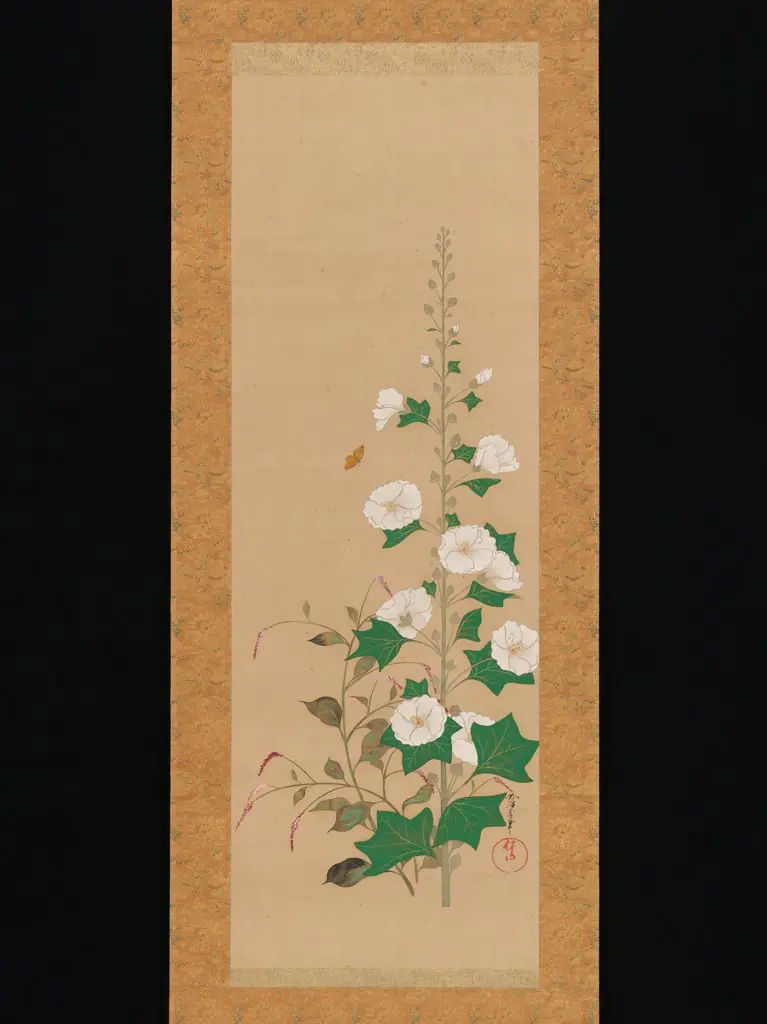 Hollyhocks and Prince’s-Feather Flowers
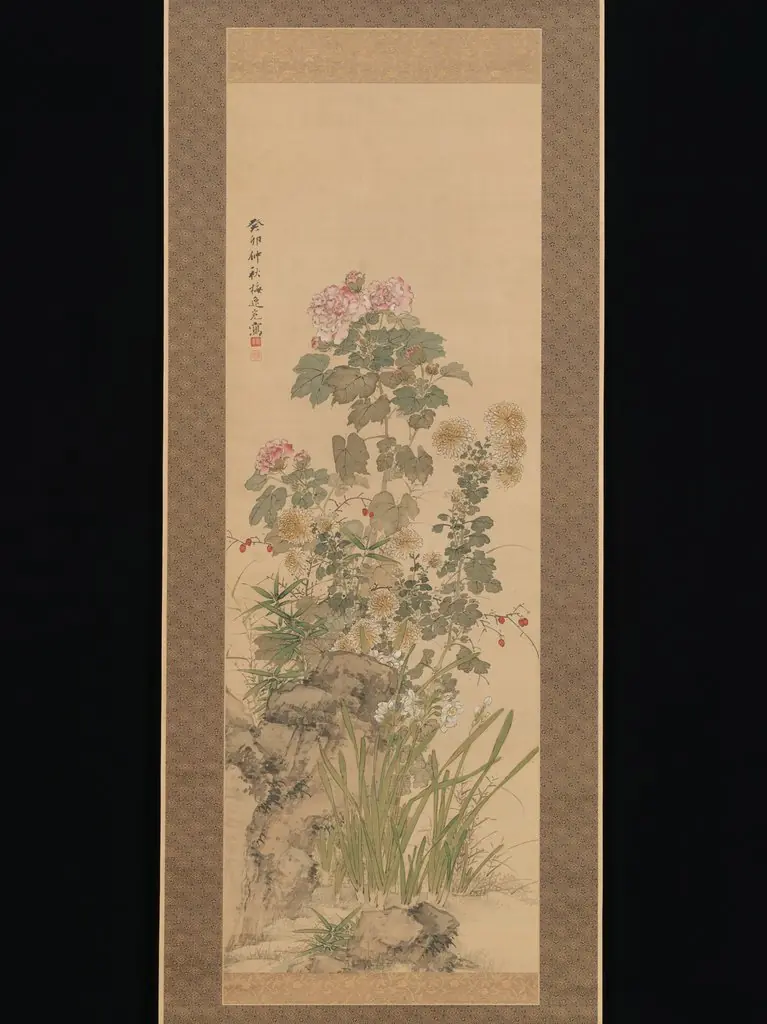 Autumn Flowers
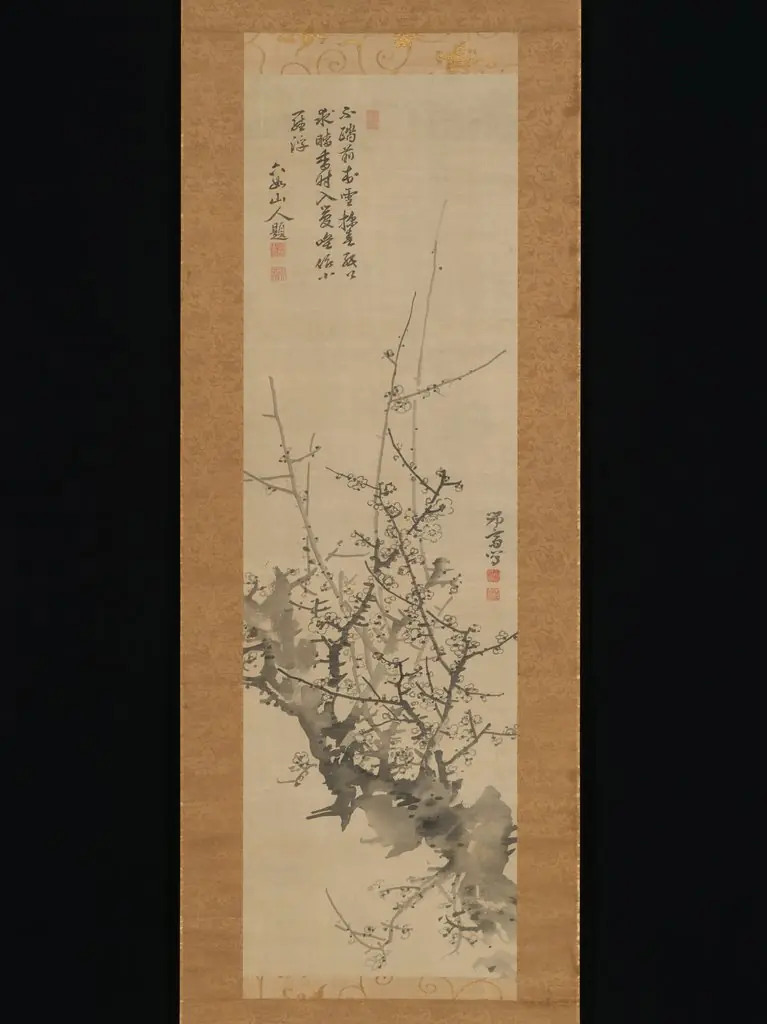 Plum Blossoms
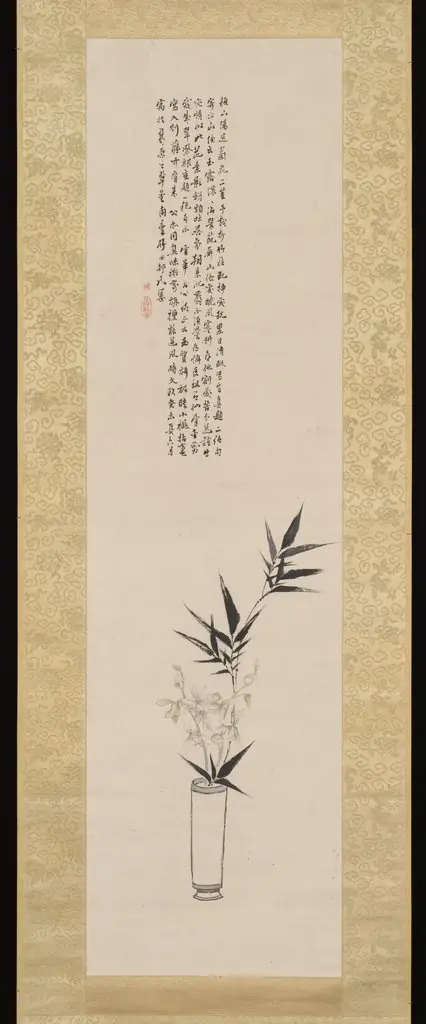 Orchid and Bamboo in a Vase 蘭竹同瓶図 (Ranchiku dōbin zu)
 Taihu Rock and Banana Plant
 粟に燕図|Millet and Sparrows
 Intimate Scenery of Pomegranate Blossoms
 Untitled
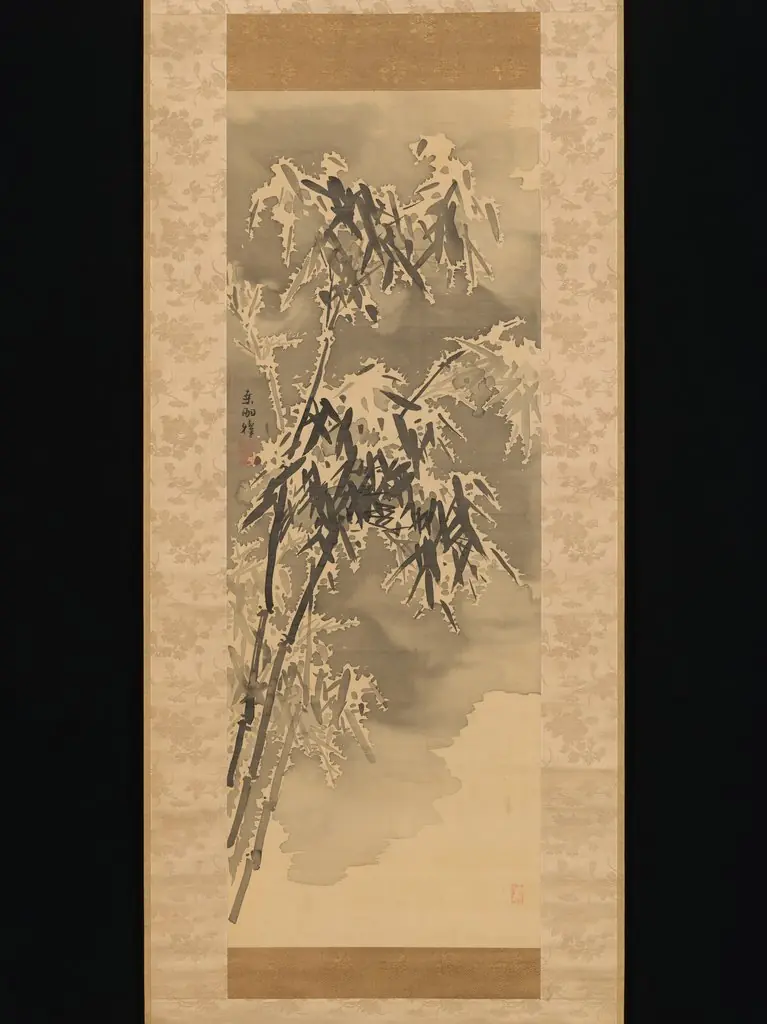 Bamboo in Snow
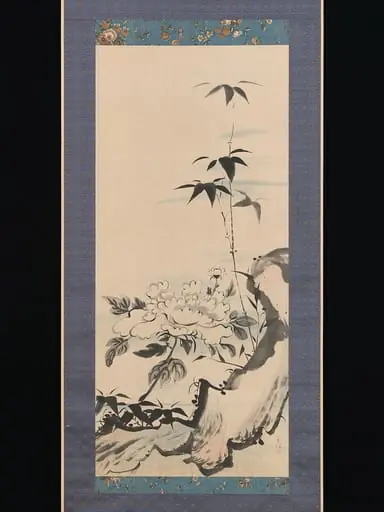 徳山玉瀾筆 牡丹に竹図|Peony and Bamboo
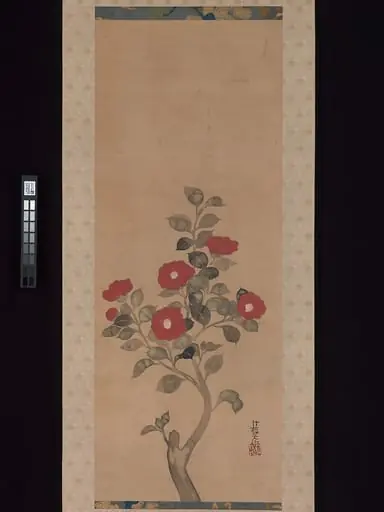 Untitled