Artwork
De zeven werken van barmhartigheid
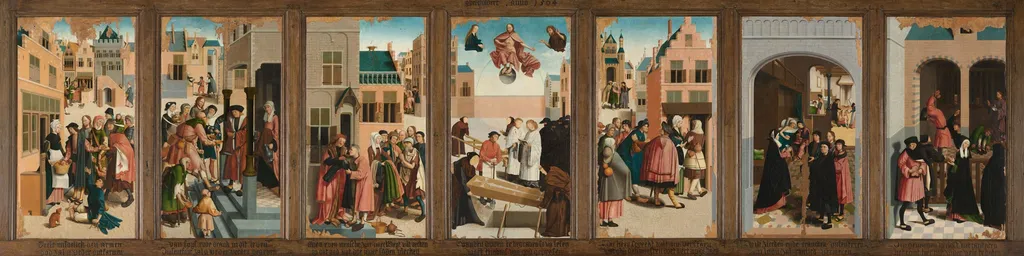
De zeven werken van barmhartigheid is an unspecified painting by the Northern Renaissance artist Master of Alkmaar. It dates from 1504 and is held in the collection of the Rijksmuseum.
About this work
You see seven small panels in one frame, each showing a different act of kindness, feeding the hungry, giving water to the thirsty, and so on.
You see seven small panels in one frame, each showing a different act of kindness, feeding the hungry, giving water to the thirsty, and so on. A Dutch city street runs behind all of them, with Christ watching from the crowd in almost every scene.
The panels were painted just before a wave of violence against church art in 1566. Many works like this were destroyed, so it’s rare to see one that survived, even with damage.
To see more of these everyday scenes, visit the Rijksmuseum.
Technique & Style
The technique and style of the Master of Alkmaar’s Seven Works of Mercy are defined by oil on panel construction, bright pigments, and a distinctive caricatured figure style. The seven panels, created in 1504 for the church of Saint Lawrence in Alkmaar, depict the seven corporal works of mercy through narrative scenes with exaggerated gestures and clear, flat spatial arrangements influenced by Gerard ter Borch. Each panel bears a rhymed inscription that reinforces its charitable theme, and the compositional economy reflects late Gothic conventions while anticipating Renaissance naturalism. The works are currently housed in the Rijksmuseum, Amsterdam, and have been studied for their material integrity and conservation needs.
The paintings are executed on wooden panels with an oil binder, employing a limited but vivid palette that emphasizes symbolic clarity over naturalistic detail. The figures are rendered with elongated proportions and stylized expressions, a hallmark of the Master’s hand that scholars link to the workshop of Gerard ter Borch or the early Alkmaar school. The formal treatment of drapery and architectural settings demonstrates a controlled use of perspective, while the overall handling of light and shadow contributes to a flat yet luminous visual field. These stylistic choices underscore the devotional function of the altarpiece and its didactic intent.
The attribution of the series to the Master of Alkmaar remains tied to the stylistic analysis of figure type and monogrammatic signatures found in related works, including the St. Lawrence altarpiece and associated portraits in the Rijksmuseum and Metropolitan Museum of Art collections.
History & Provenance
The polyptych *De zeven werken van barmhartigheid* was commissioned in 1504 by the Confraternity of the Holy Spirit for the Great Church of Saint Lawrence in Alkmaar, where it remained until later removal. It was created by the Master of Alkmaar, a painter active in Alkmaar around the turn of the sixteenth century. The work consists of seven panels depicting the Seven Works of Mercy, each accompanied by inscribed texts in rhyme. After centuries in its original ecclesiastical setting, the panels entered the collection of the Rijksmuseum in Amsterdam, where they are preserved today.
The Seven Works of Mercy panels were commissioned in 1504 by the Brotherhood of the Holy Spirit for the Grote or Sint-Laurenskerk in Alkmaar. The polyptych, which bears the stamp of Geertgen tot Sint Jans, is now held by the Rijksmuseum in Amsterdam, where it forms part of the museum's collection of works attributed to the Master of Alkmaar. A restoration of the panels was documented by C. J. de Bruyn Kops in the Bulletin van het Rijksmuseum in 1975. No specific inventory or accession number is recorded in the available sources, and no exhibition history beyond its long-term residence at the Rijksmuseum is documented.
Context
The panels were commissioned in 1504 by the Brotherhood of the Holy Spirit for the Grote or Sint-Laurenskerk in Alkmaar, and they now belong to the collection of the Rijksmuseum in Amsterdam. The artist's notname derives directly from this series, which is also called the Retable of the Seven Works of Charity. The paintings show a clear stylistic influence of Geertgen tot Sint Jans, employing bright colors and figures drawn in an exaggeratedly caricatured manner, with rhymed explanatory inscriptions on each frame reinforcing the charitable message drawn from Matthew 25.
Scholarly identification of the anonymous painter has long been debated. Max Jakob Friedländer proposed that the Master of Alkmaar is identical to Cornelis Buys I, brother of Jacob Cornelisz van Oostsanen and active in Alkmaar between 1490 and 1524, a suggestion later strongly endorsed by Godfridus Johannes Hoogewerff. More recently, the name of Pieter Gerritsz, originally of Haarlem and documented in Alkmaar from 1502, has been put forward as an alternative candidate. Stylistic comparisons have also linked the work to Jan Mostaert, suggesting possible workshop training around 1475. A further hypothesis equates the master with the Master of the Fountain of Life.
Legacy
The painting series De zeven werken van barmhartigheid, created around 1504 for the church of Saint Lawrence in Alkmaar, established a prototype for depicting charitable acts that was widely referenced in later discussions of Dutch Renaissance art. The work's iconography, seven panels each illustrating a distinct act of mercy drawn from Matthew 25:35-36, became a standard model for subsequent religious commissions and influenced the visual language of charity in Northern European art. Contemporary records from the 16th century, including mentions in the archives of the Egmond Abbey and the church of Saint Lawrence, attest to its immediate impact and the high regard in which it was held by patrons such as the Confraternity of the Holy Spirit. Modern scholarship continues to cite the series as a pivotal example of early Netherlandish narrative painting, shaping both artistic practice and scholarly interpretation of the period.
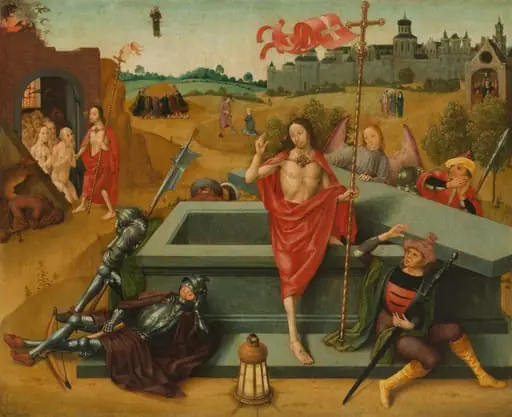
Artist & collection
Artist
The Master of Alkmaar was a Dutch painter active around Alkmaar at the beginning of the sixteenth century.

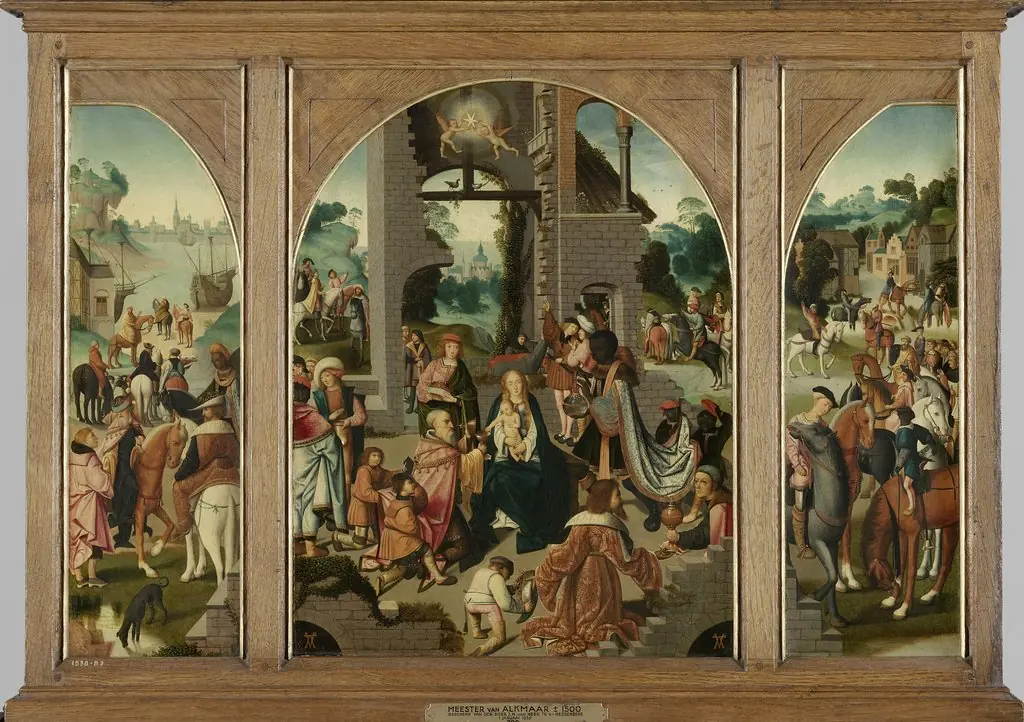 Triptych with the adoration of the Magi (centre panel and inner wings), St Antony Abbot (outer left wing) and St Adrian (outer right wing)
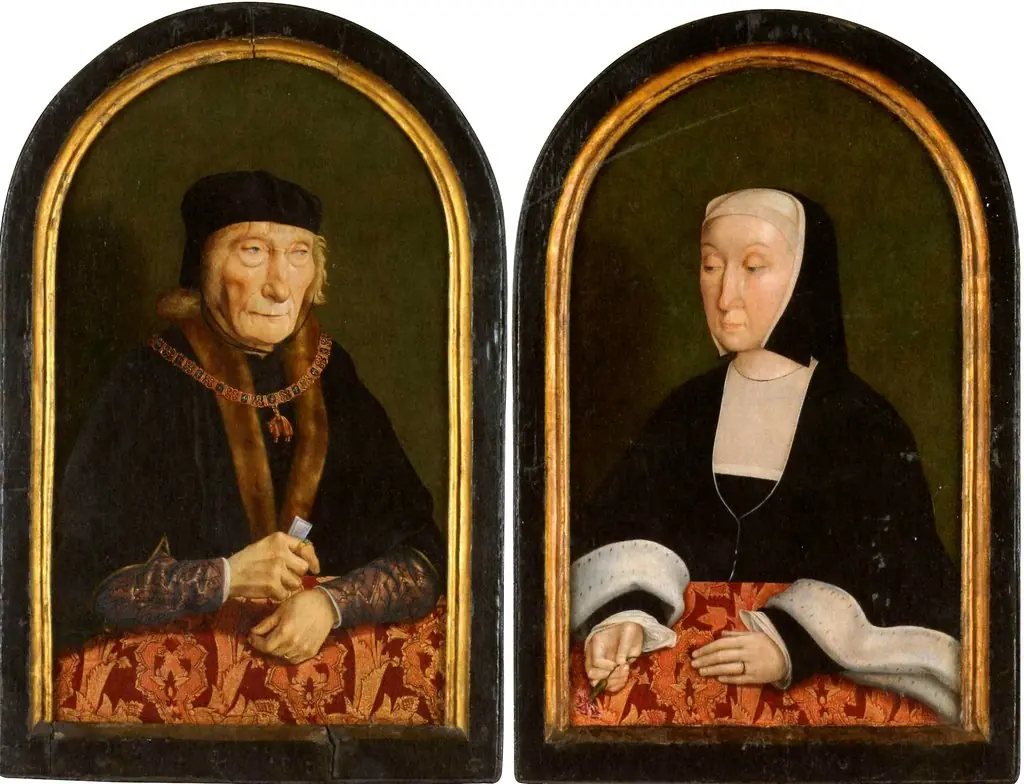 Portrait of Jan III, First Count of Egmond (1438–1516) and his wife Magdalena van Werdenburg, Countess of Egmond (1464–1538)
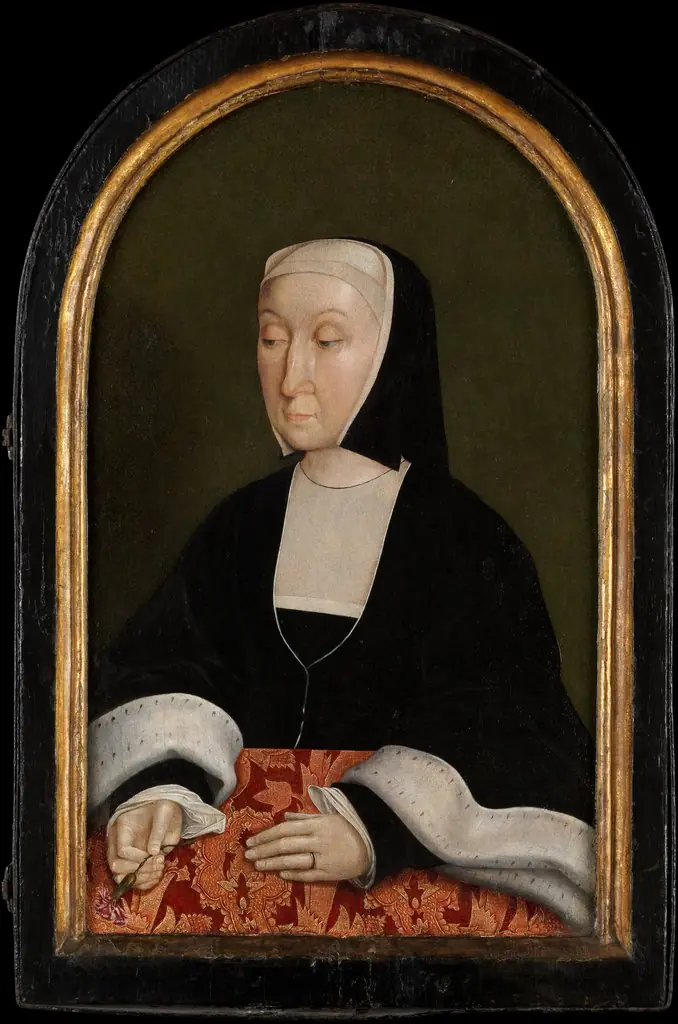 Portrait of Magdalena van Werdenburg (1464–1538), Countess of Egmond and wife of Jan (1438–1516), First Count of Egmond;
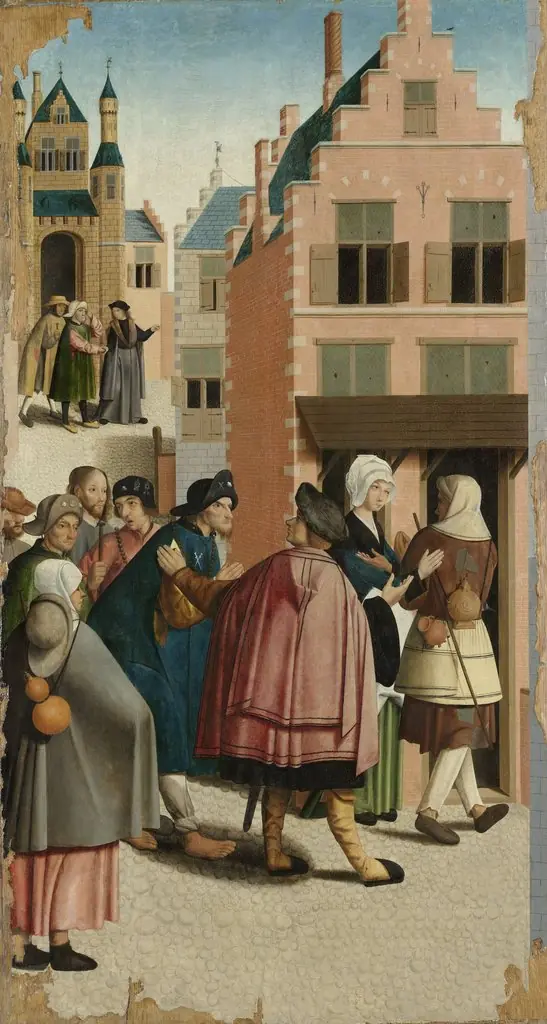 The Seven Works of Mercy
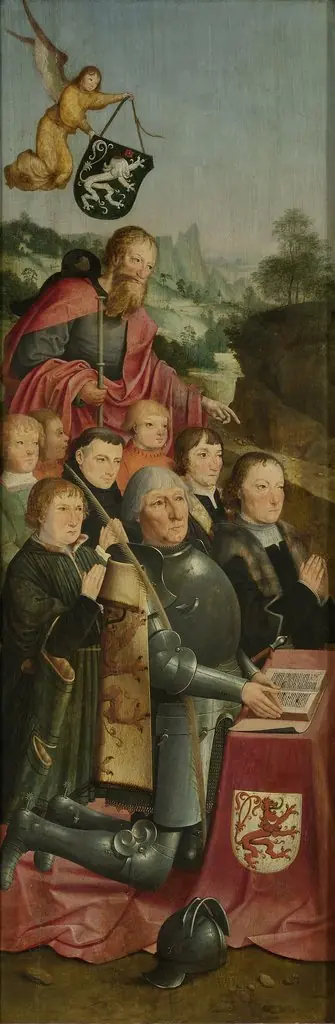 Memorial Panel with Eight Male Portraits, probably Willem Jelysz van Soutelande and Family, with Saint James the Greater and the Van Soutelande Family Crest, inner left wing of an altarpiece
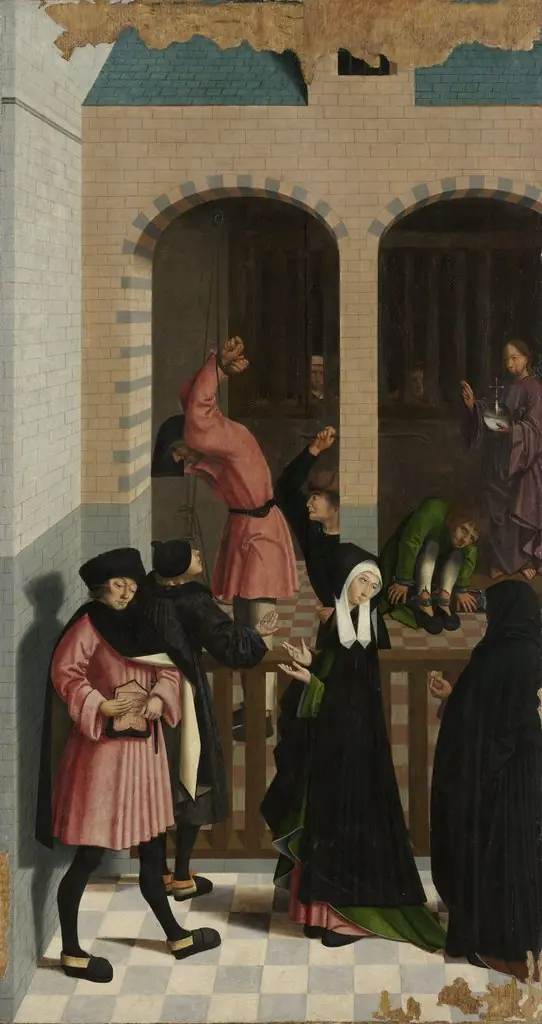 The Seven Works of Mercy
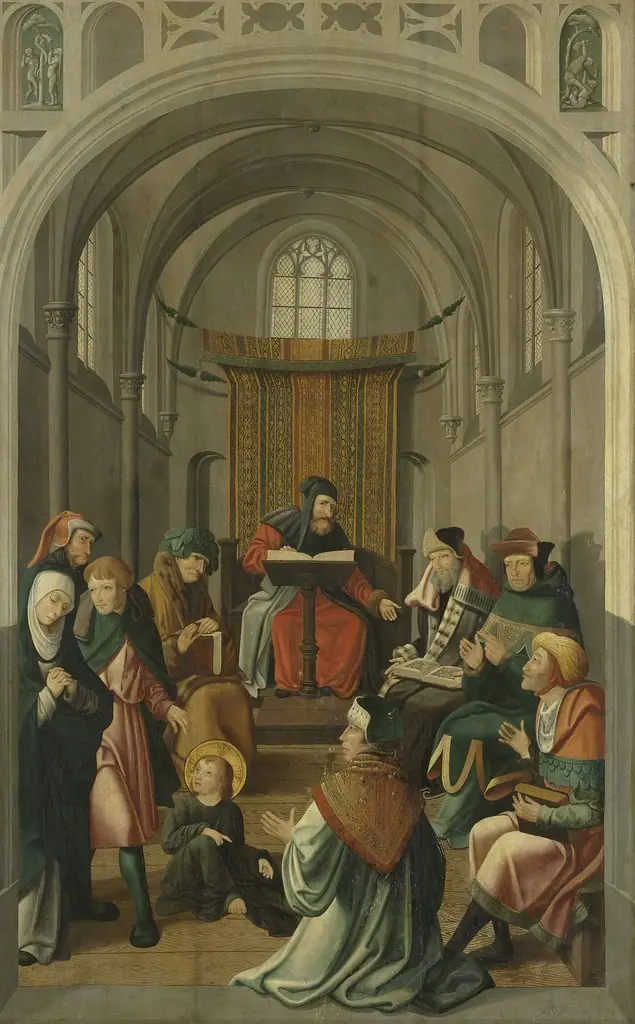 Panel of an altarpiece with Jesus disputing with the doctors in the Temple (inner wing) and Christ appearing to his mother (outer wing)
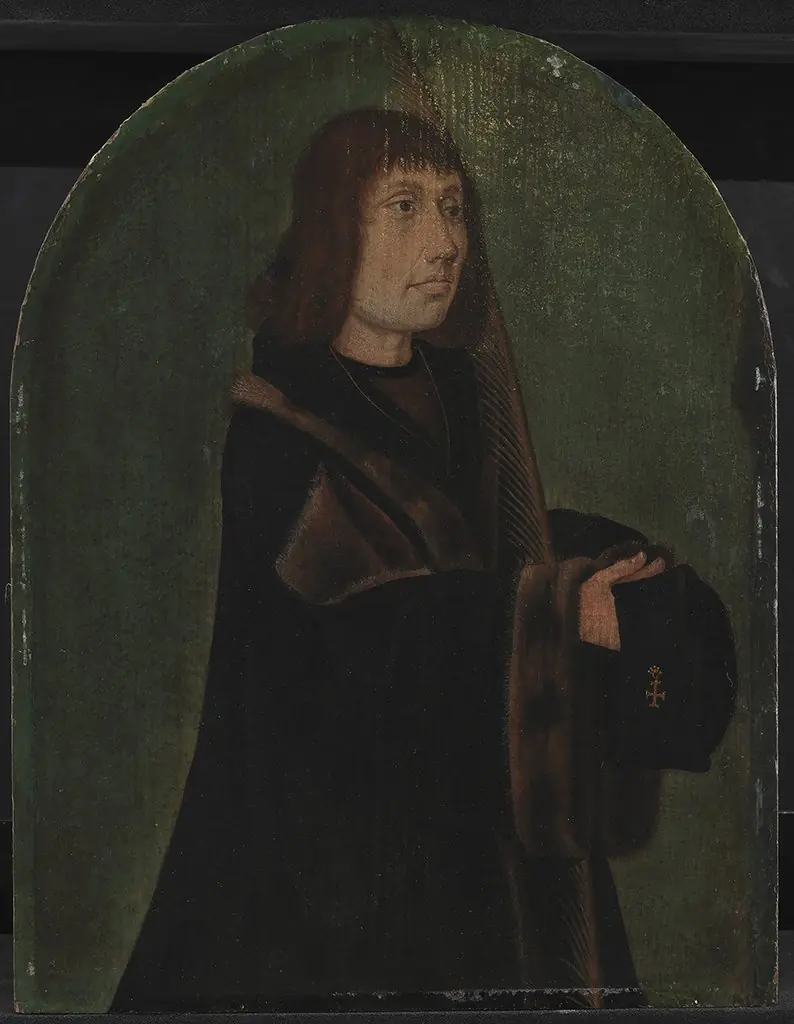 Portrait of a Man
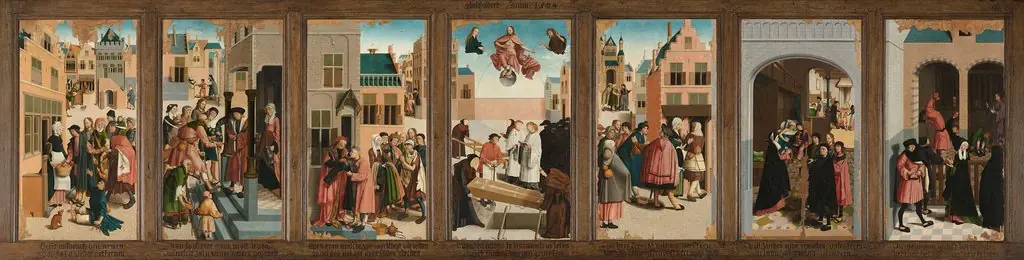 The Seven Works of Charity
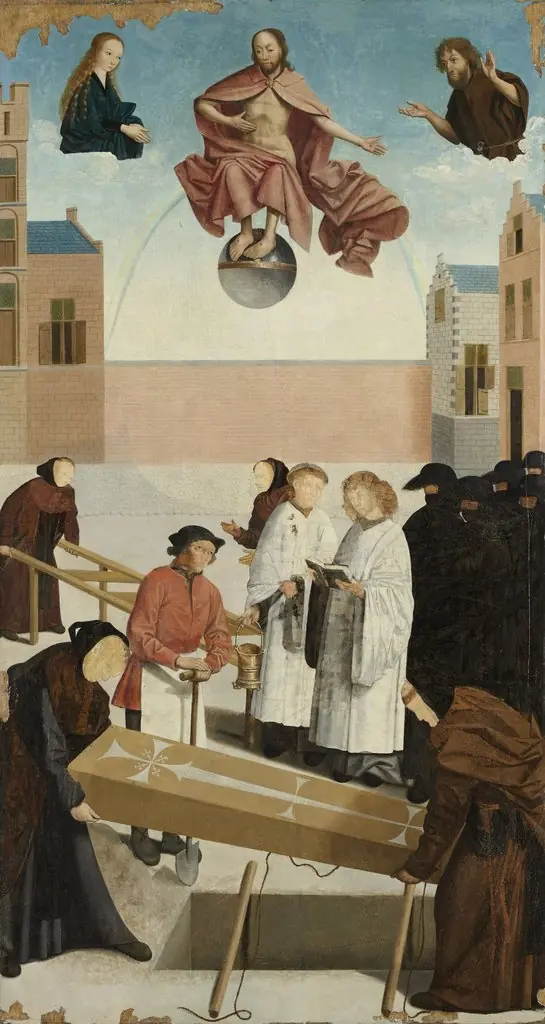 The Seven Works of Mercy
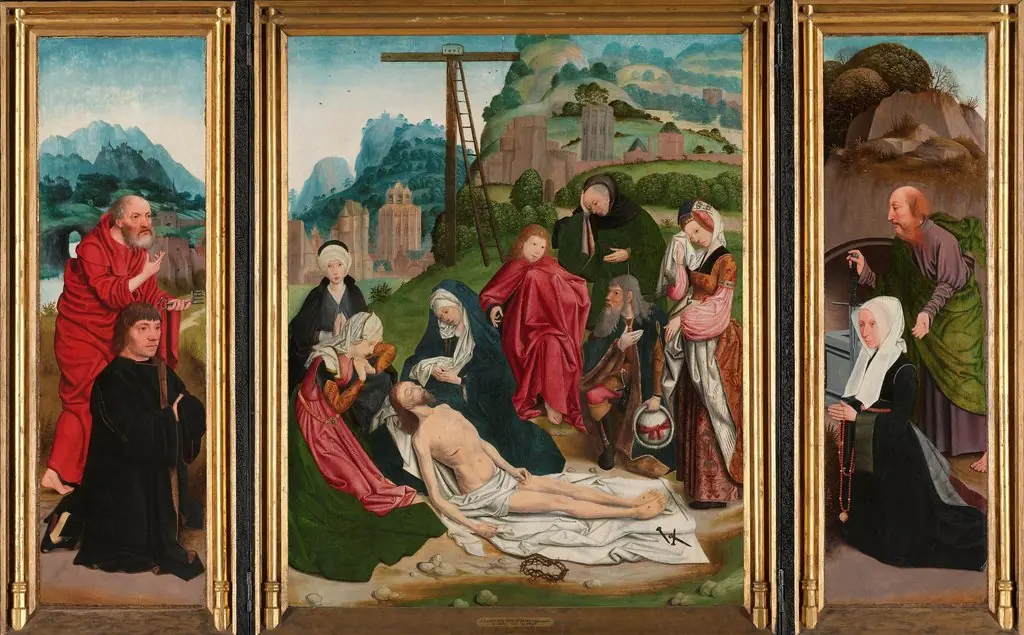 Triptych with the Lamentation (centre panel), the donor with St Peter (inner left wing), the donor’s wife with St Paul (inner right wing) and the donors’ coats of arms (outer wings)
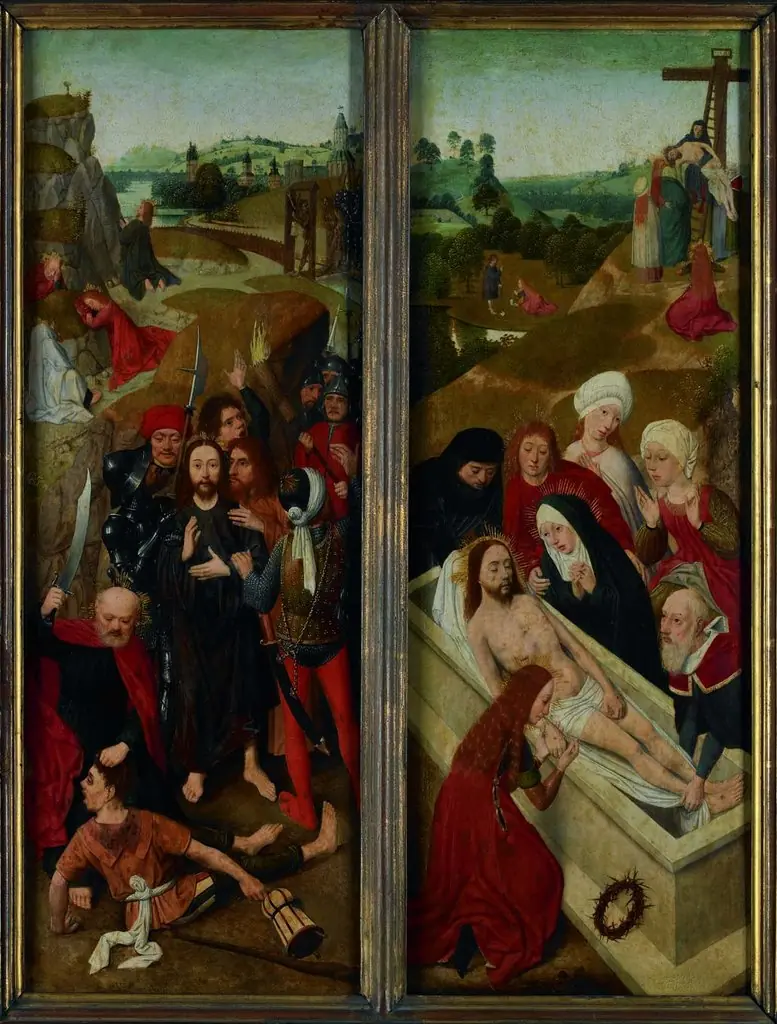 he taking of Christ and The entombment
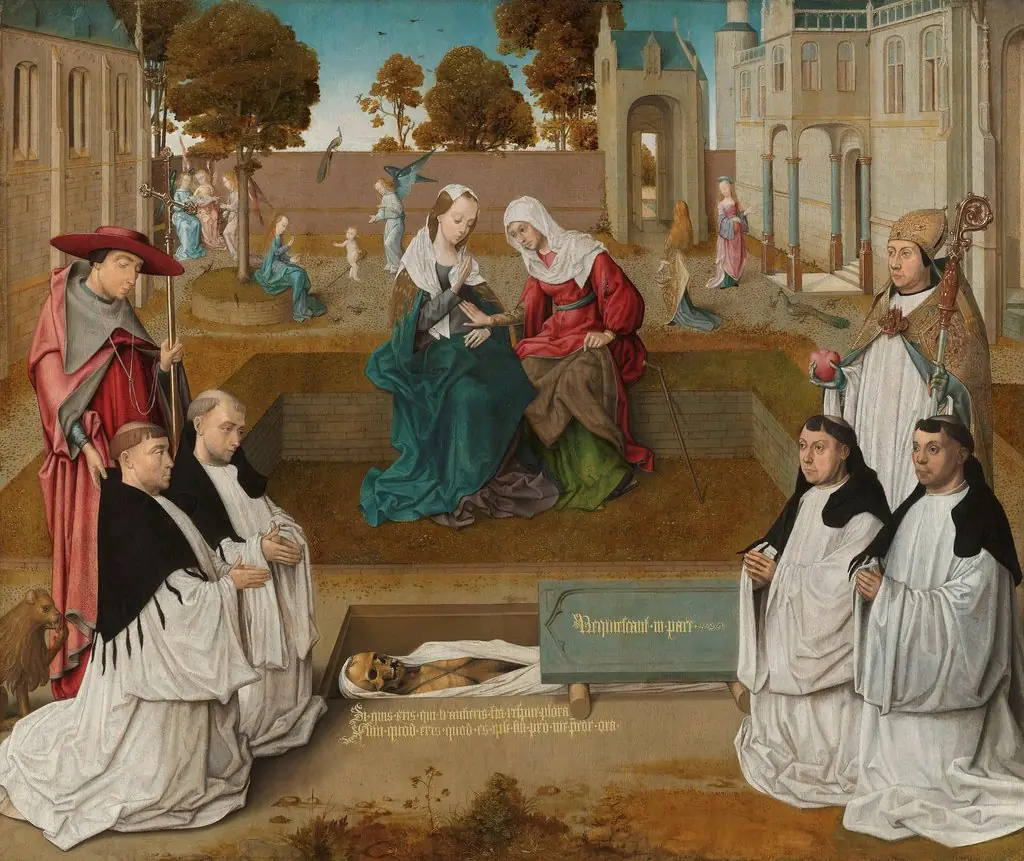 Four canons with Sts Augustine and Jerome by an open grave, with the Visitation
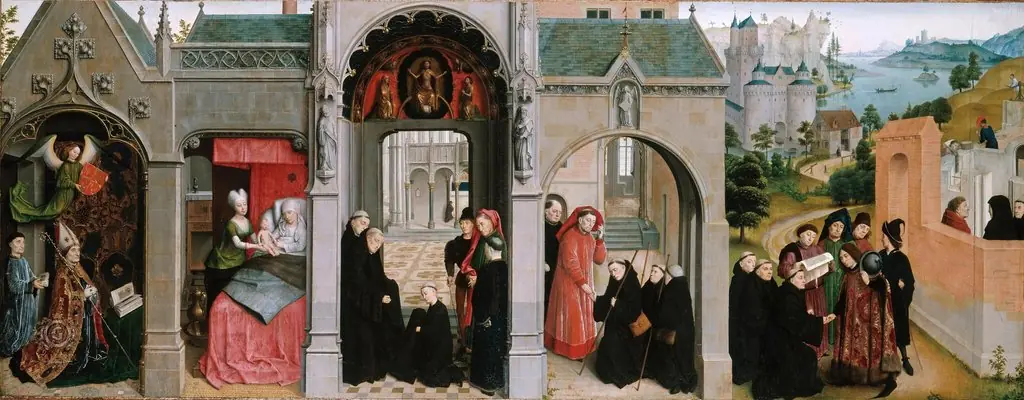 Scenes from the Life of St Bertin
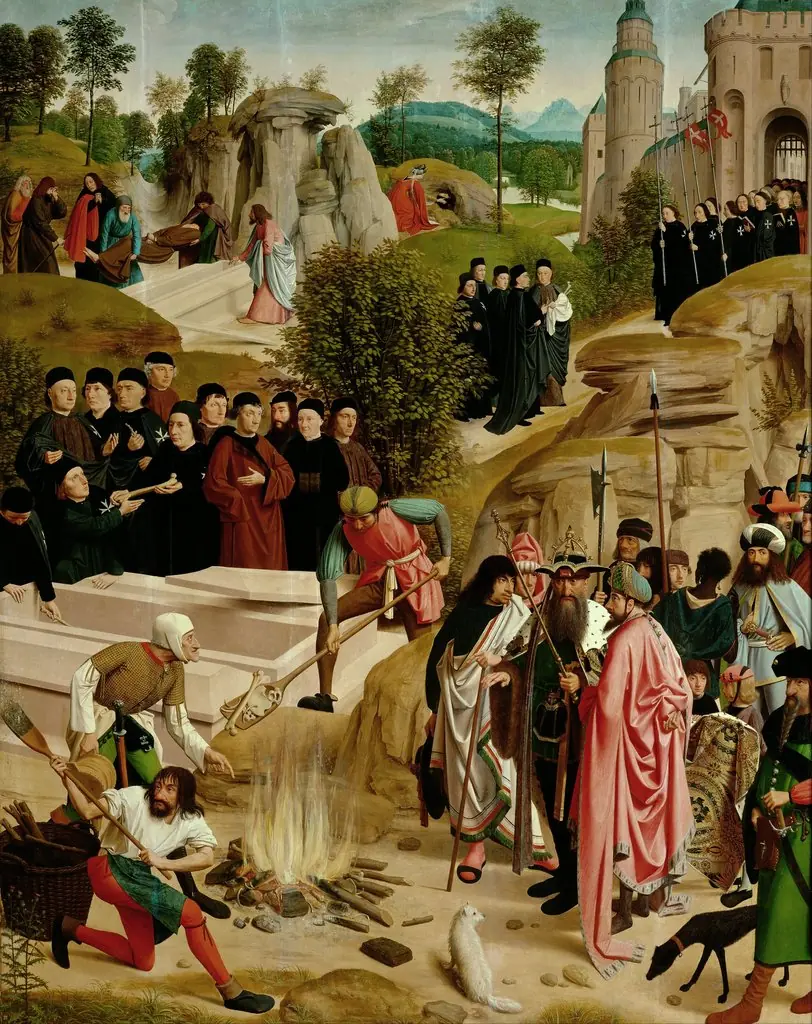 Legend of the Relics of St. John the Baptist
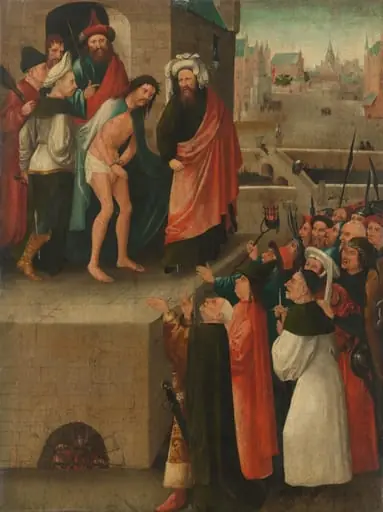 Ecce Homo
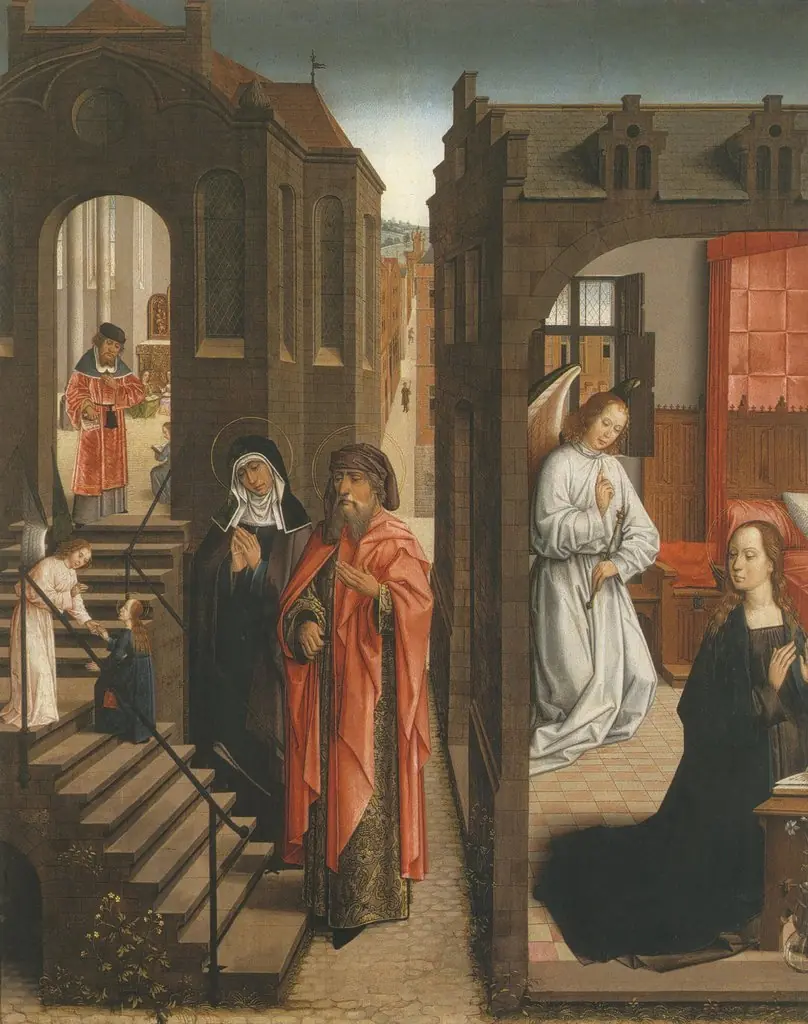 Opdracht van Maria en Annuntiatie