Artwork
The Seven Works of Charity
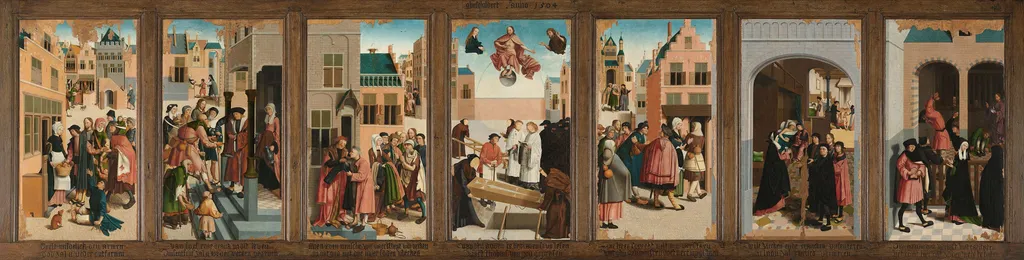
The Seven Works of Charity is an oil painting by the Northern Renaissance artist Master of Alkmaar. It dates from 1504 and is held in the collection of the Rijksmuseum.
About this work
Subject & Meaning
The series was commissioned by the Holy Spirit Confraternity in Alkmaar, whose charitable mission corresponded directly to the depicted works of mercy.
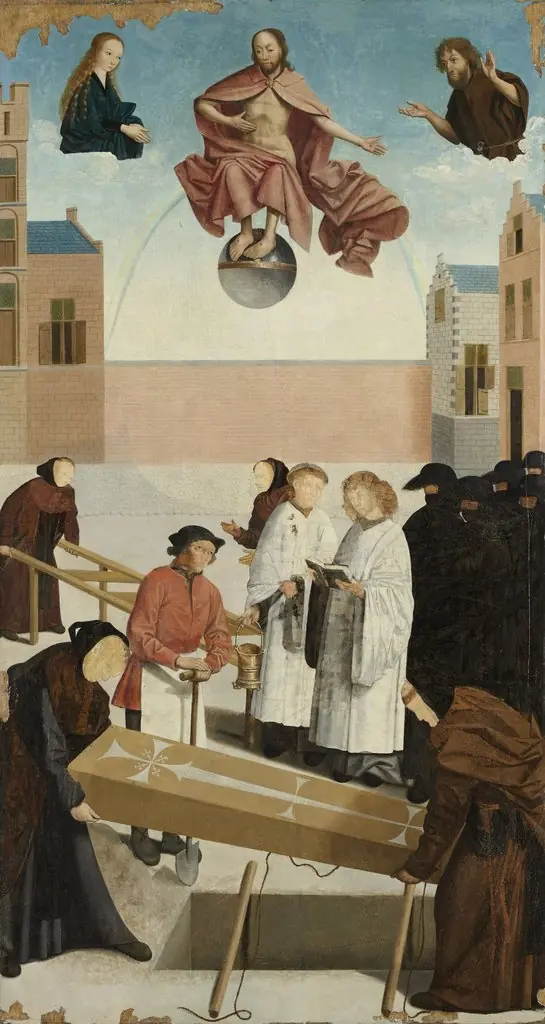
The Seven Works of Charity depicts the seven corporal works of mercy as enumerated in Matthew 25: feeding the hungry, giving drink to the thirsty, clothing the naked, burying the dead, sheltering travelers, comforting the sick, and ransoming captives. In each panel, Christ appears in the background overseeing the scene, aligning the work with the biblical passage that frames these acts as decisive for salvation at the Last Judgement, which is shown in the upper center of the central panel.
The series was commissioned by the Holy Spirit Confraternity in Alkmaar, whose charitable mission corresponded directly to the depicted works of mercy. Some art historians identify the figures in the sixth panel as confraternity members, reflecting a common practice of self-representation in commissioned religious art of the period.
Technique & Style
The Seven Works of Charity is a series of seven oil-on-panel paintings created in 1504 by the Master of Alkmaar. Each individual panel measures 101 cm in height and 55.5 cm in width. Stylistically, the works are characterized by bright colors and figures rendered in an exaggeratedly caricatured manner, a quality sometimes linked to the influence of Geertgen tot Sint Jans. The composition places Jesus in the background of each scene, with the Last Judgement depicted in the upper center of the central panel. The physical condition of the series reflects a turbulent history; the painted surfaces along the edges of each panel suffer significant water damage. Furthermore, technical analysis reveals that the figures' faces, particularly in the middle panel, were brutally mutilated with a sharp object, likely during the iconoclastic riots of 1566, leaving deep holes and unidentifiable features. During restoration between 1971 and 1975, decision was made to leave these damages visible rather than covering them.
History & Provenance
The Seven Works of Charity was commissioned by the Holy Spirit Confraternity (Heilige Geesthuis) in Alkmaar, a religious brotherhood that operated in the town’s waag from the late 14th century until 1572, where it organized aid to the sick, travelers, and the poor, and also engaged in ransoming prisoners (1, 2, 3). The work was likely created around 1504, as indicated by its dated inception and stylistic analysis (1, 2). After its creation, the series remained in the Church of St. Lawrence in Alkmaar until 1582, when it was removed following iconoclastic disturbances and subsequent alterations to the church interior (2, 3). In July 1918, the panels were acquired by the Rijksmuseum in Amsterdam, becoming its present owner (2, 3). Between 2004 and 2010, the work was on loan to Museum Boijmans Van Beuningen (2). The attribution of the work has been debated, with proposals linking it to Cornelis Buys I or Pieter Gerritsz, both artists active in Alkmaar during the early 16th century and documented in church records (1, 3).
The Seven Works of Charity is currently held by the Rijksmuseum in Amsterdam. The work was acquired by the museum in July 1918 from the Church of St Lawrence in Alkmaar, where it had resided since 1574. Prior to its time in the church, the series was commissioned by the regents of the Holy Spirit almshouse. Following its acquisition, the painting remained in the Rijksmuseum collection until 2004, when it was loaned to the Museum Boijmans Van Beuningen. This loan period lasted until 2010, after which the work returned to its permanent home in Amsterdam.
Context
The Seven Works of Mercy (1504) by the Master of Alkmaar exemplifies the Northern Renaissance tradition of linking corporal acts of charity with the Last Judgement, a thematic conjunction common in Christian art from the Middle Ages through the Early Modern Era. Commissioned by the Holy Spirit Confraternity of Alkmaar, the series visually instructs viewers on moral conduct, with confraternity members depicted modeling virtuous behavior for the faithful. Scholarship has long debated the artist's identity, with proposals ranging from Cornelis Buys I to Pieter Gerritsz, the latter supported by archival records linking him to Alkmaar between 1515 and 1529. The work's physical history reflects the religious turmoil of the Dutch Reformation; it suffered iconoclastic violence in 1566 and was deliberately defaced in 1582 by Protestant zealots opposed to its Catholic imagery. Despite these mutilations and water damage, the panels remain a significant document of early 16th-century devotional practice and are currently held by the Rijksmuseum.
Artist & collection
Artist
The Master of Alkmaar was a Dutch painter active around Alkmaar at the beginning of the sixteenth century.

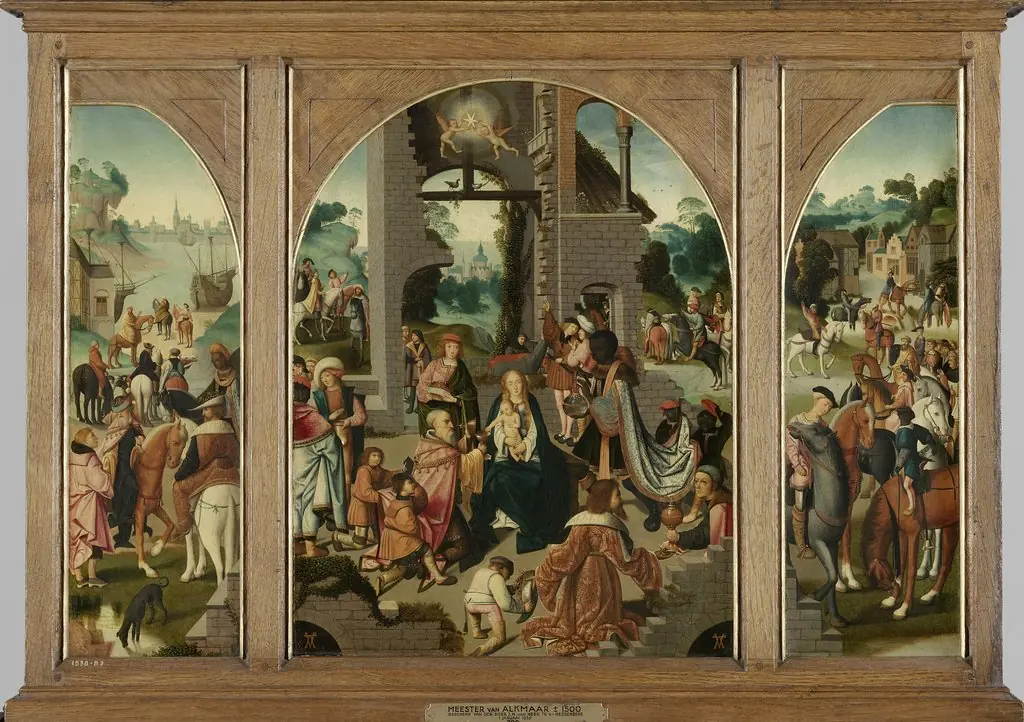 Triptych with the adoration of the Magi (centre panel and inner wings), St Antony Abbot (outer left wing) and St Adrian (outer right wing)
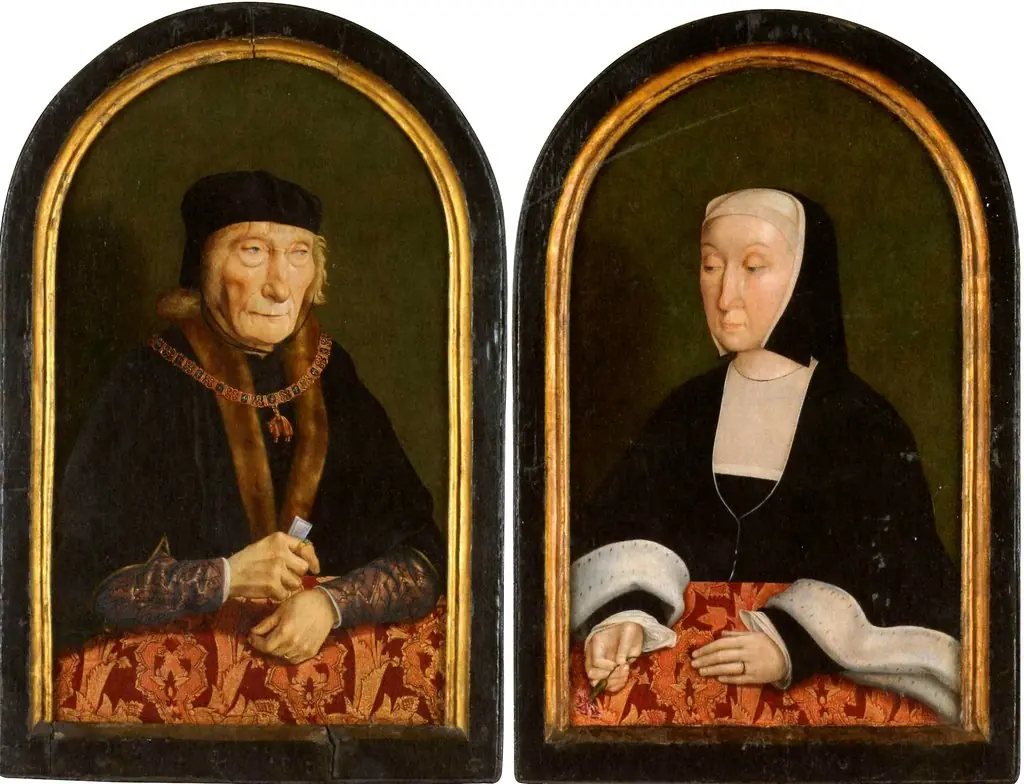 Portrait of Jan III, First Count of Egmond (1438–1516) and his wife Magdalena van Werdenburg, Countess of Egmond (1464–1538)
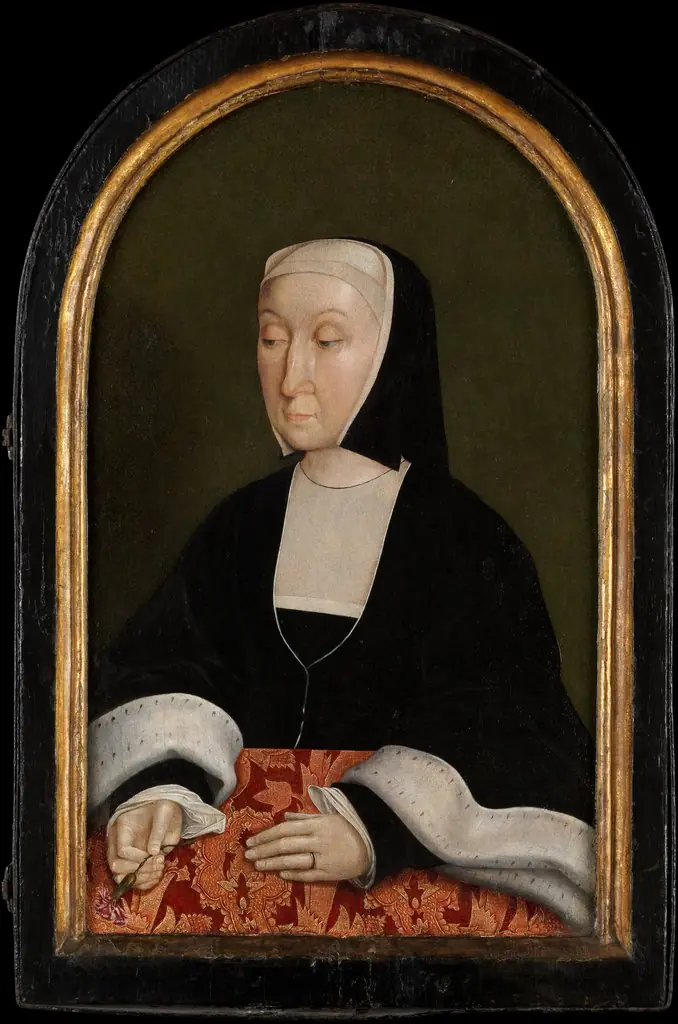 Portrait of Magdalena van Werdenburg (1464–1538), Countess of Egmond and wife of Jan (1438–1516), First Count of Egmond;
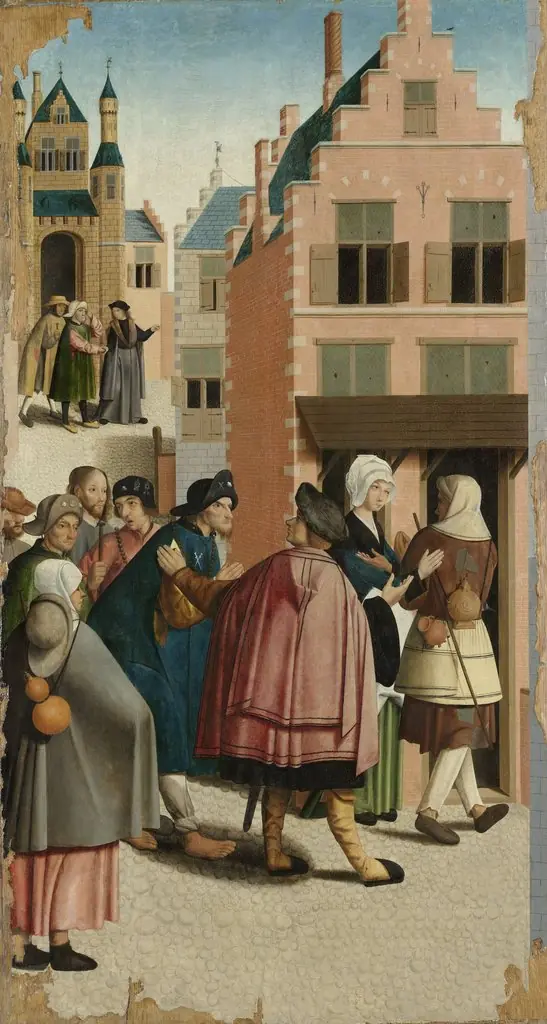 The Seven Works of Mercy
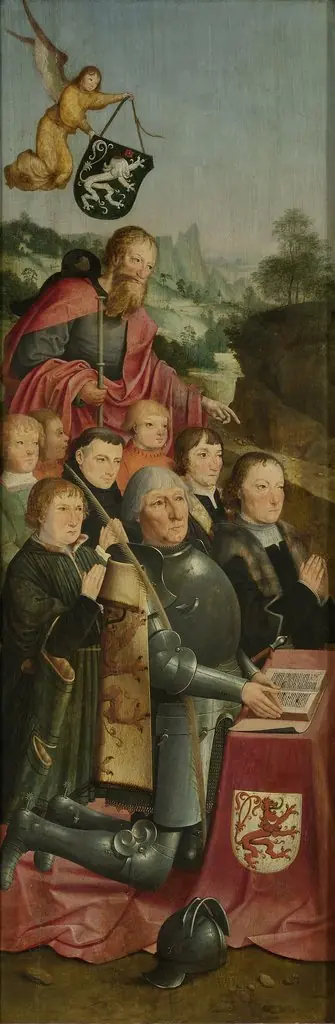 Memorial Panel with Eight Male Portraits, probably Willem Jelysz van Soutelande and Family, with Saint James the Greater and the Van Soutelande Family Crest, inner left wing of an altarpiece
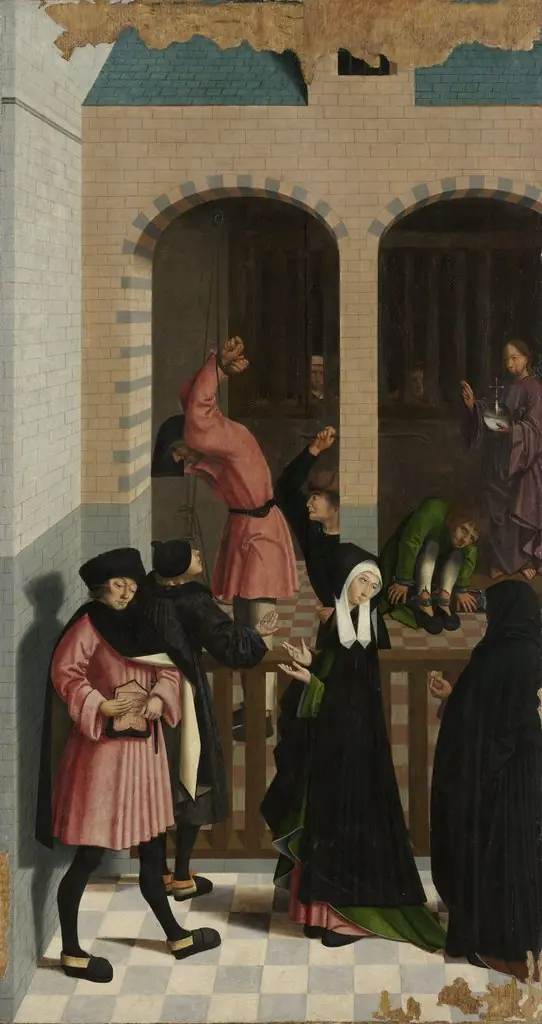 The Seven Works of Mercy
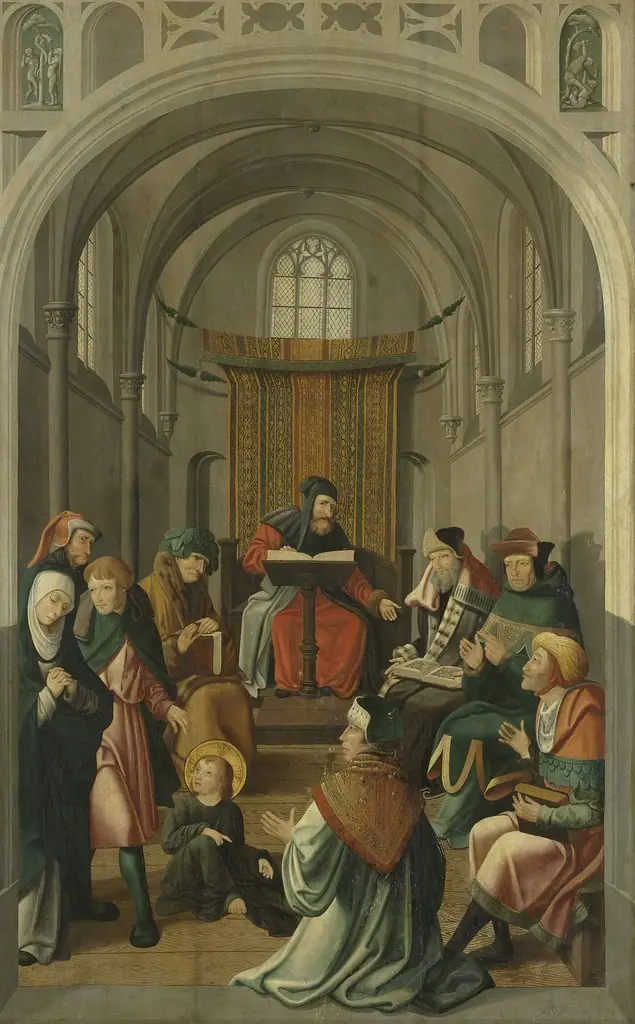 Panel of an altarpiece with Jesus disputing with the doctors in the Temple (inner wing) and Christ appearing to his mother (outer wing)
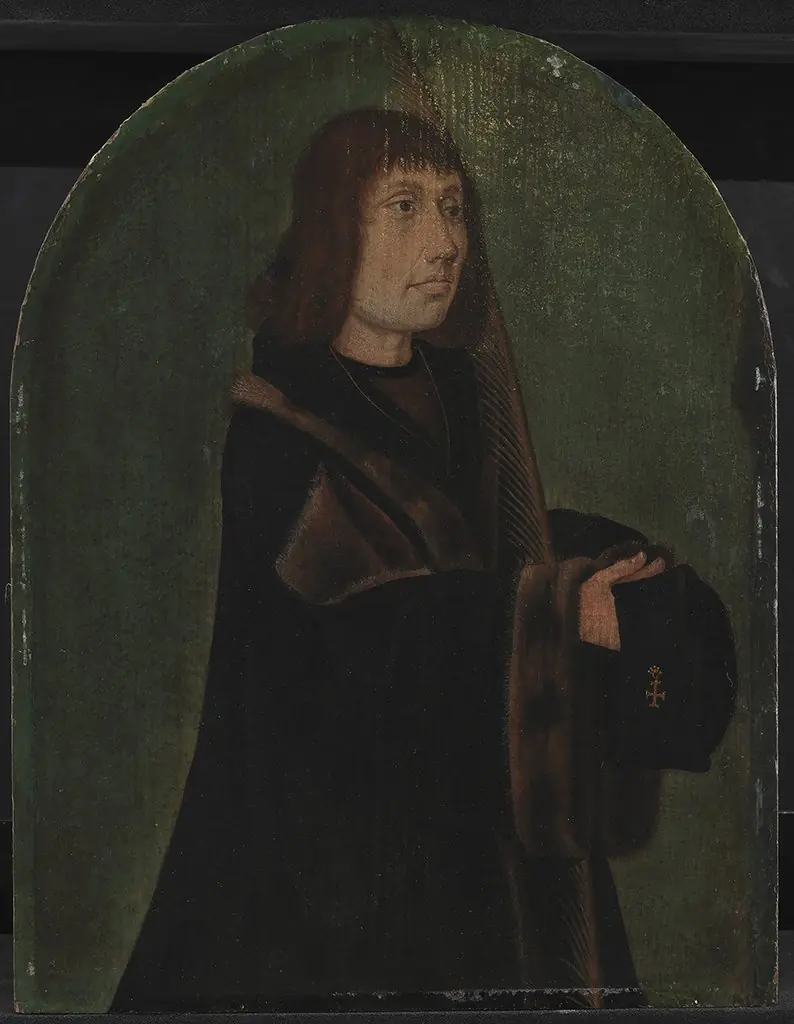 Portrait of a Man
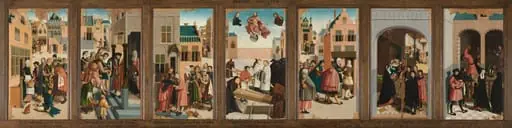 De zeven werken van barmhartigheid
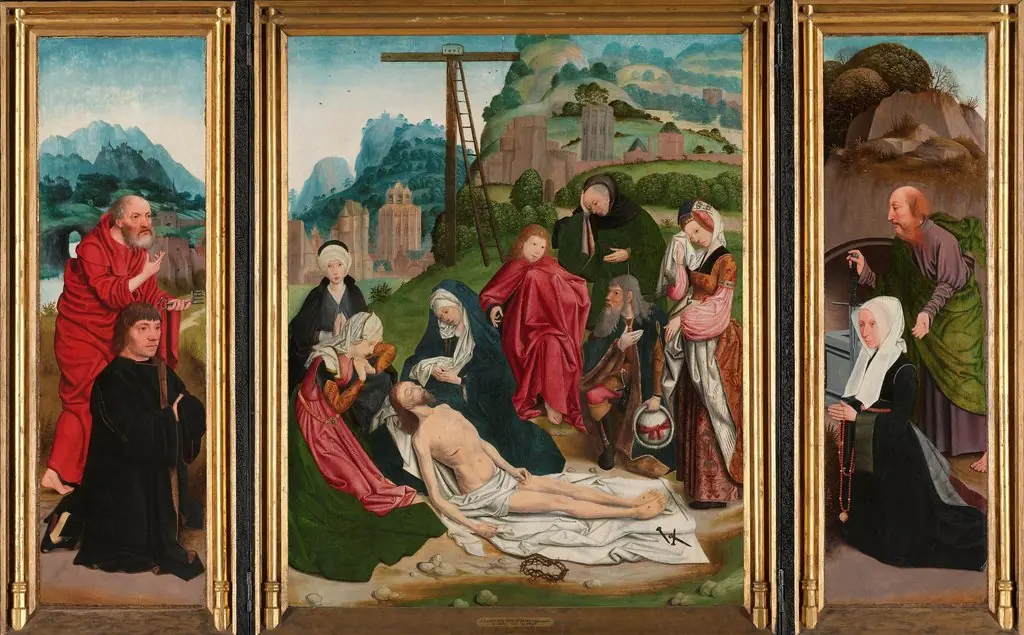 Triptych with the Lamentation (centre panel), the donor with St Peter (inner left wing), the donor’s wife with St Paul (inner right wing) and the donors’ coats of arms (outer wings)
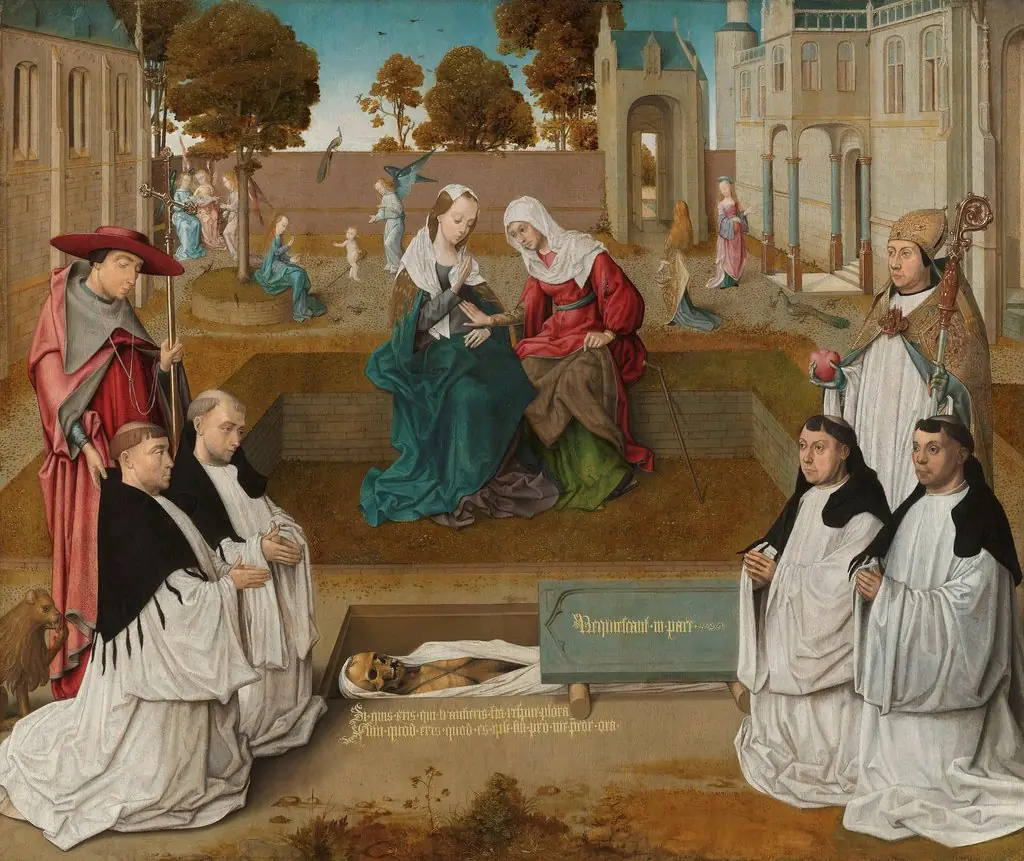 Four canons with Sts Augustine and Jerome by an open grave, with the Visitation
![The Raising of the Cross [center, left, and right panels], by Master of the Starck Triptych](https://artifactworldgallery.com/img/master-of-the-starck-triptych--the-raising-of-the-cross-center-left-and-right-panels--5f0053e23b45aff7-w320.webp) The Raising of the Cross [center, left, and right panels]
The Raising of the Cross [center, left, and right panels]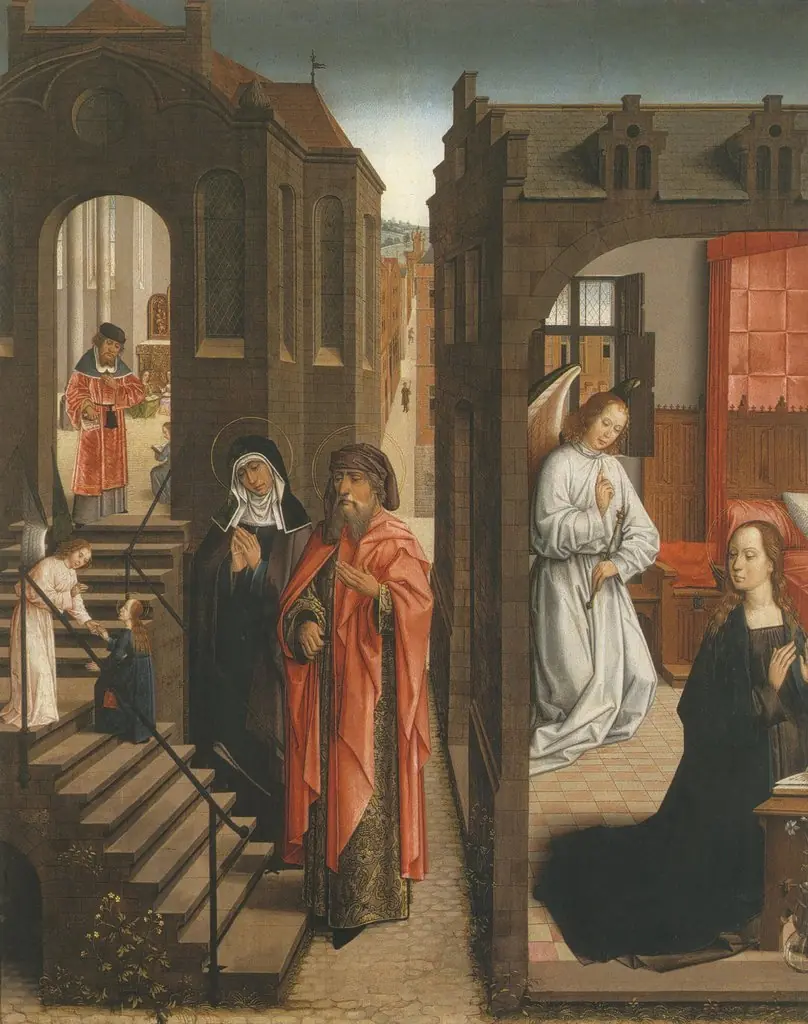 Opdracht van Maria en Annuntiatie
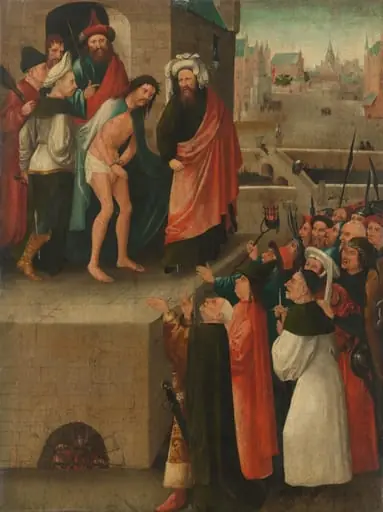 Ecce Homo