Artwork
Virgin and Child Enthroned with Scenes from the Life of the Virgin
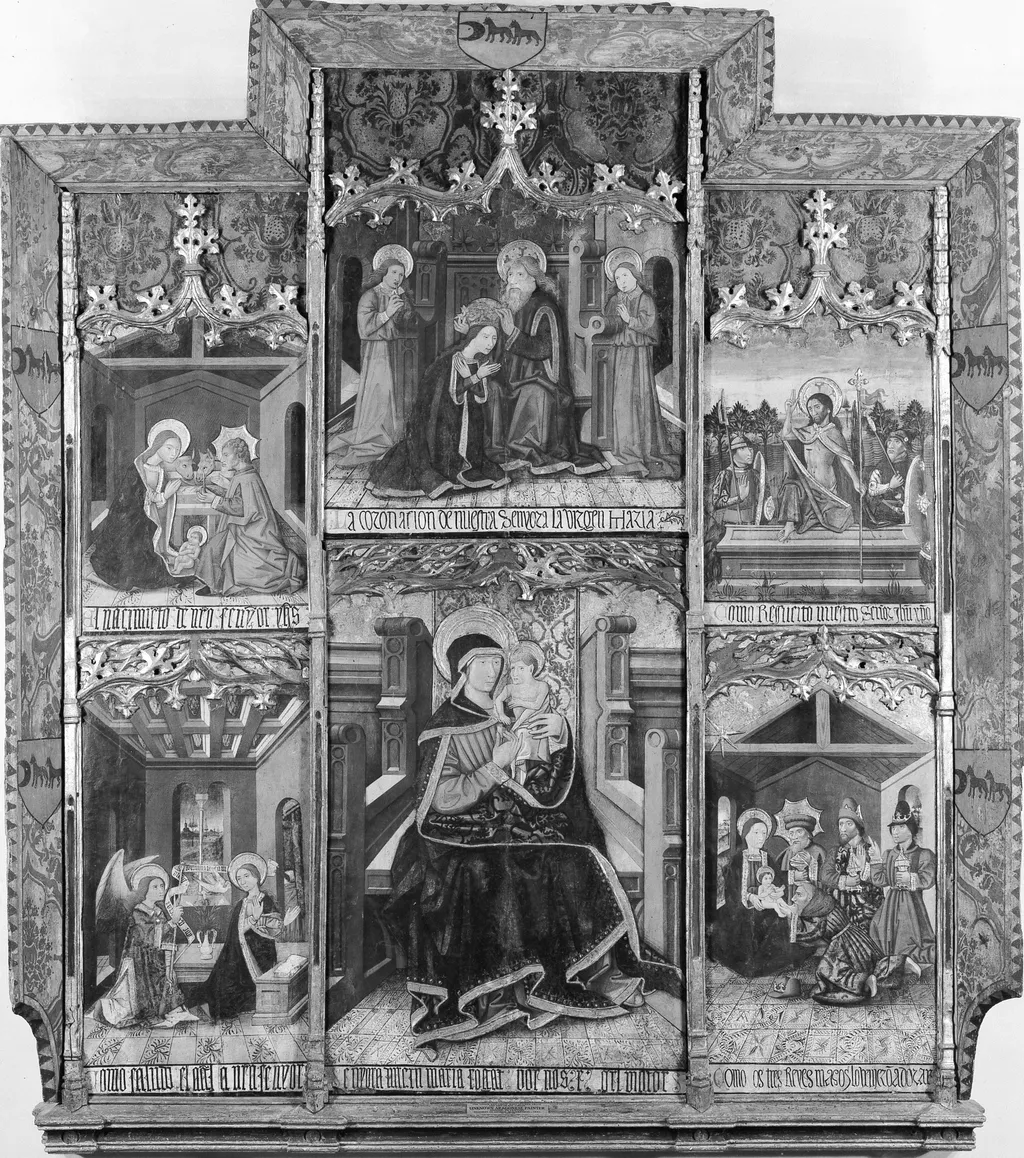
Virgin and Child Enthroned with Scenes from the Life of the Virgin is a tempera painting by the Northern Renaissance artist Master of Morata. It dates from 1500 and is held in the collection of the Metropolitan Museum of Art.
About this work
Subject & Meaning
The inclusion of gold leaf and tempera on wood underscores the sacred function of the panel within early sixteenth‑century devotional practice.
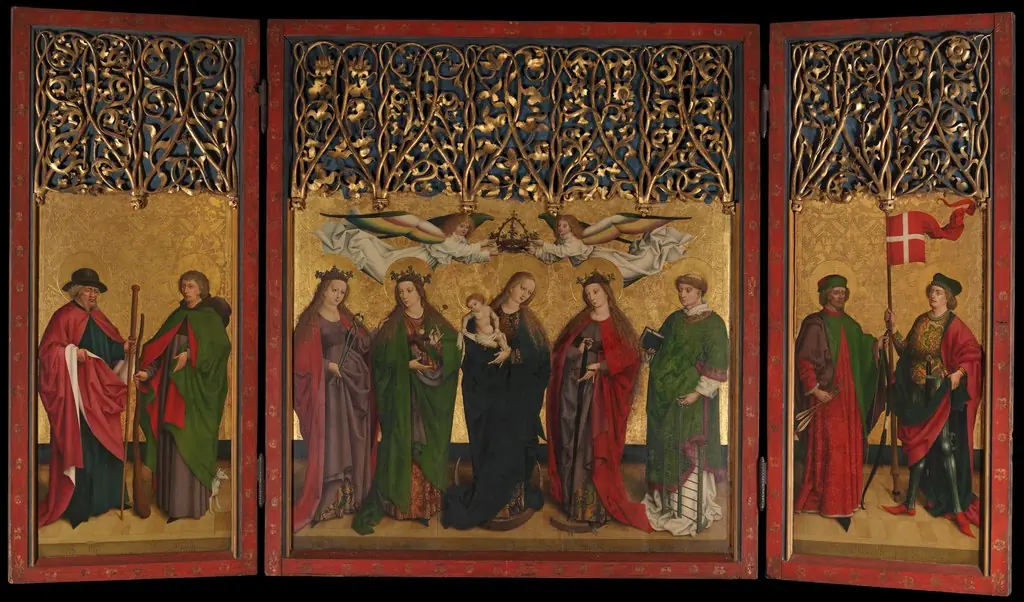
The work depicts the Virgin seated on a throne with the Christ Child, surrounded by a narrative cycle that includes the Coronation of the Virgin, an angel, a saint, the Adoration of the Magi, the Resurrection of Jesus, the Nativity, and other episodes from the Virgin’s life. These iconographic elements reference Marian devotion and the theological emphasis on Mary’s role as intercessor and queen of heaven. The inclusion of gold leaf and tempera on wood underscores the sacred function of the panel within early sixteenth‑century devotional practice.
The composition combines hierarchical placement with narrative detail, allowing viewers to contemplate both heavenly glory and the earthly events that shaped Christian salvation.
Technique & Style
The painting is executed in tempera on a wooden panel with applied gold leaf, a technique typical of early sixteenth‑century Spanish devotional works. The wooden support is rectangular, measuring approximately 132 × 87 cm, and the surface is decorated with gold leaf to emphasize the sacred narrative. The composition brings together several episodes from the Life of the Virgin, including the Coronation of the Virgin, the Adoration of the Magi, the Nativity, the Resurrection, and the Madonna and Child, arranged in a hierarchical, iconographic program.
The work was created circa 1500 by the Master of Morata for the Metropolitan Museum of Art’s George Blumenthal collection.
History & Provenance
The panel painting Virgin and Child Enthroned with Scenes from the Life of the Virgin is attributed to the Master of Morata and dated to circa 1500 based on stylistic analysis and internal records. The work was first recorded in the collection of George Blumenthal, whose bequest transferred it to the Metropolitan Museum of Art in 1941. No documented commission or original location survives, but the painting’s iconographic program, combining the Coronation of the Virgin with scenes such as the Nativity and Adoration of the Magi, suggests a devotional context likely intended for private or ecclesiastical use in late fifteenth-century northern Italy.
Overview
This wooden panel painting, titled Virgin and Child Enthroned with Scenes from the Life of the Virgin, presents a devotional image centered on the Madonna and Christ Child. The main composition features Mary seated on a throne, cradling the infant Jesus. This central image is flanked by six smaller narrative panels, arranged in two vertical columns of three, which illustrate various episodes from the Virgin Mary's life.
Own this work as a print
Artist & collection
Artist
Master of Morata is the conventional name given to an anonymous Spanish painter active in Aragon during the late fifteenth century, roughly between 1470 and 1505.

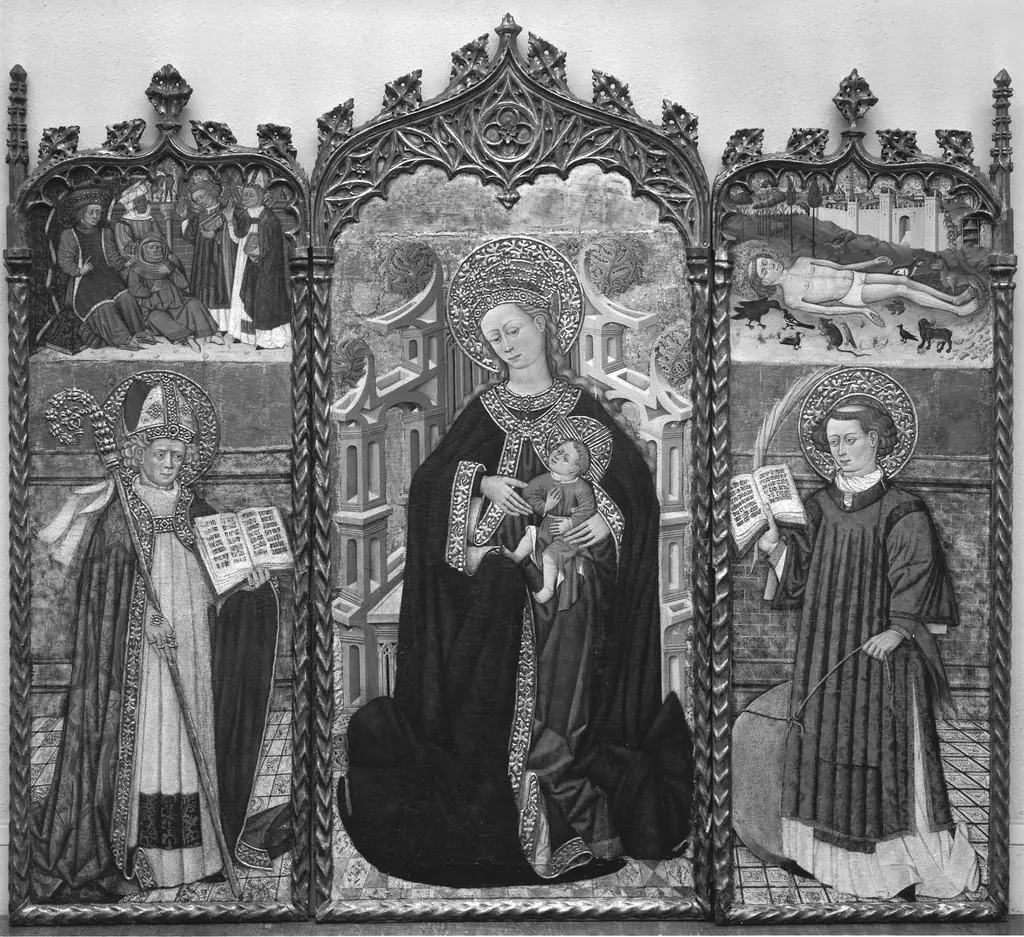 Virgin and Child Enthroned with Saints Valerius and Vincent
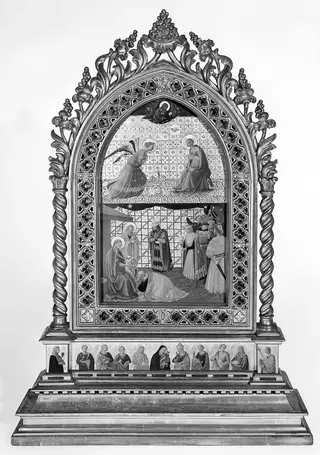 The Adoration of the Kings and the Annunciation
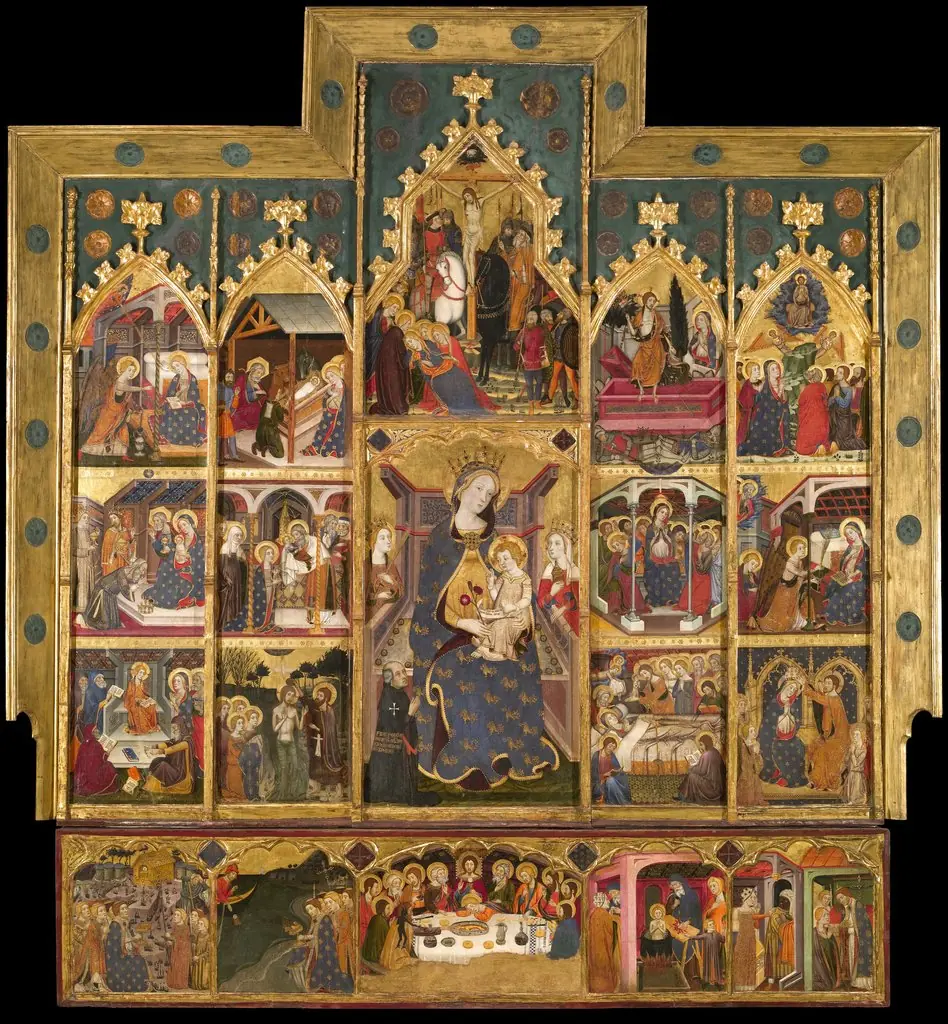 Altarpiece of the Virgin
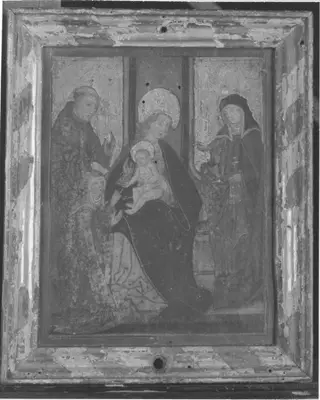 Die Vermählung der hl. Katharina
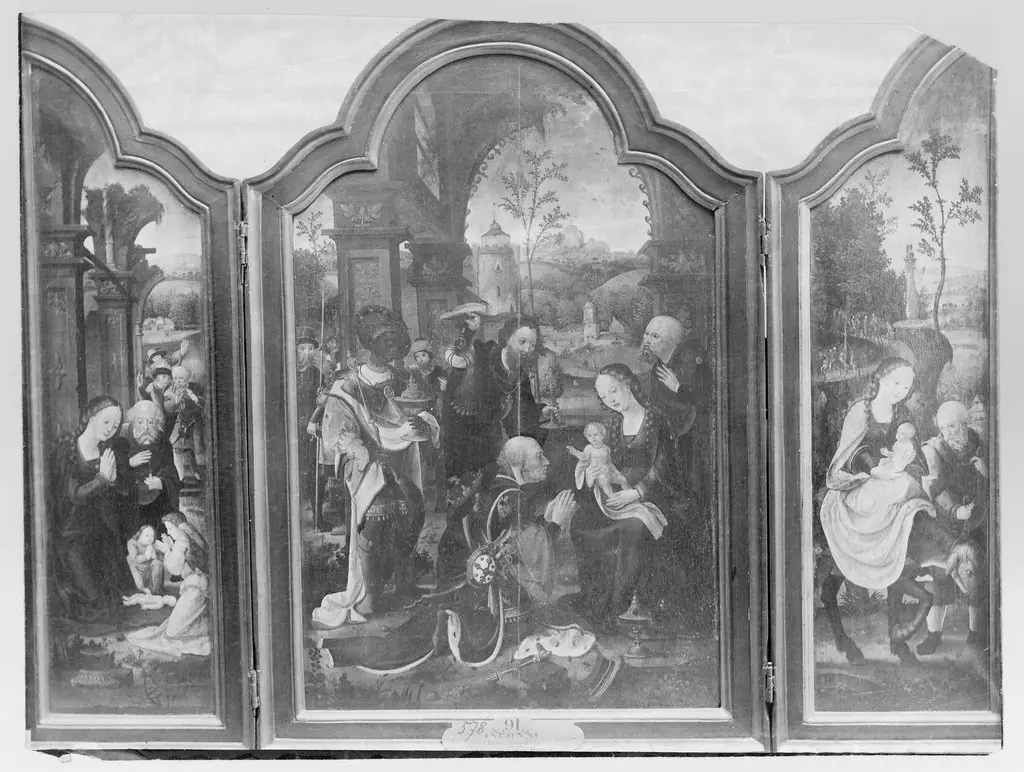 Nativity (left panel), Adoration of the Magi (central panel), Rest on the Flight into Egypt (right panel)
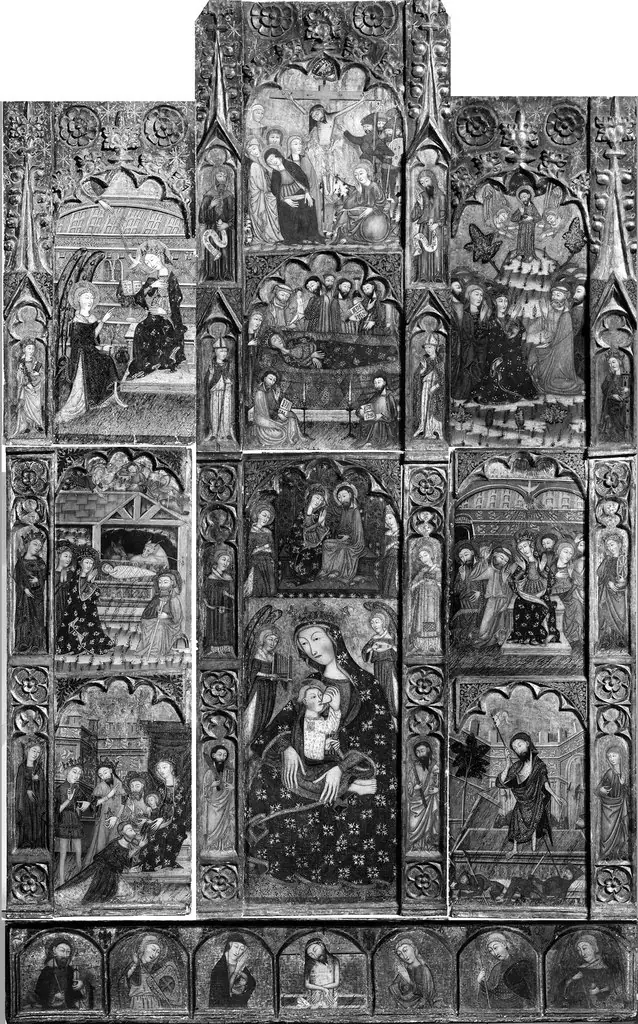 Retable
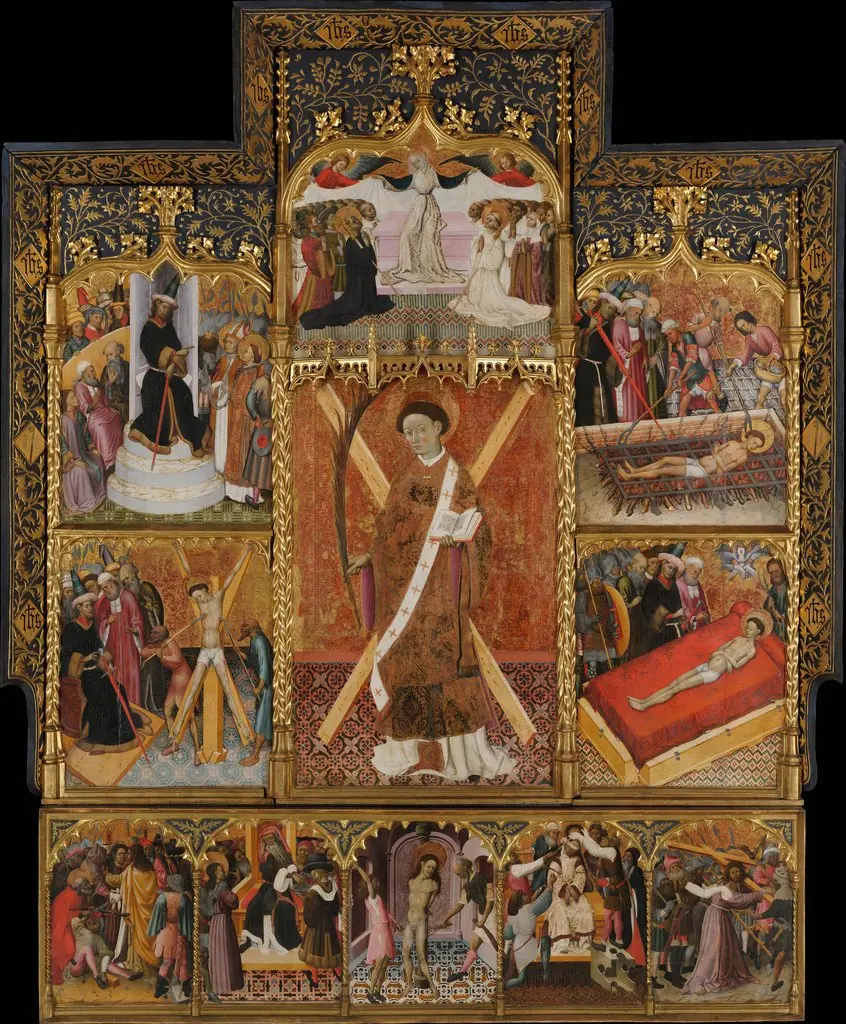 Altarpiece of Saint Vincent
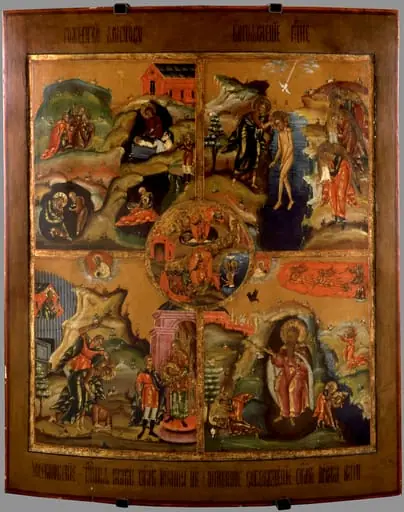 Viisi kirkkovuoden juhlateemaa
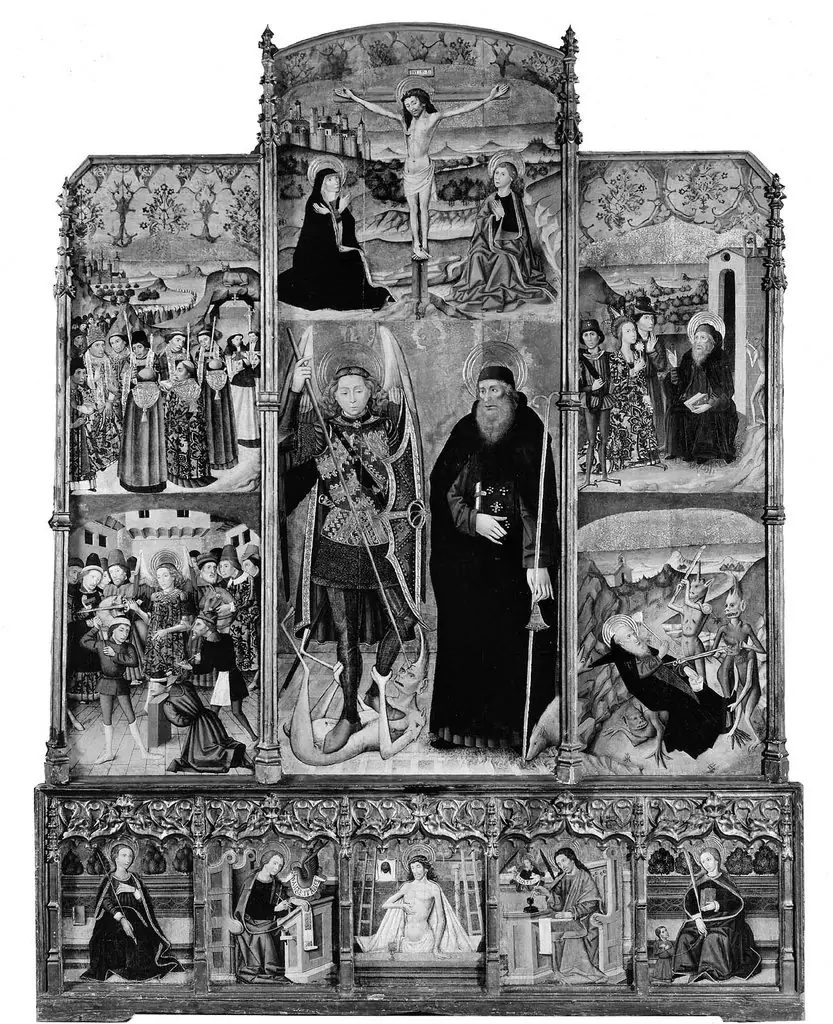 Altarpiece of Saints Michael and Anthony Abbot
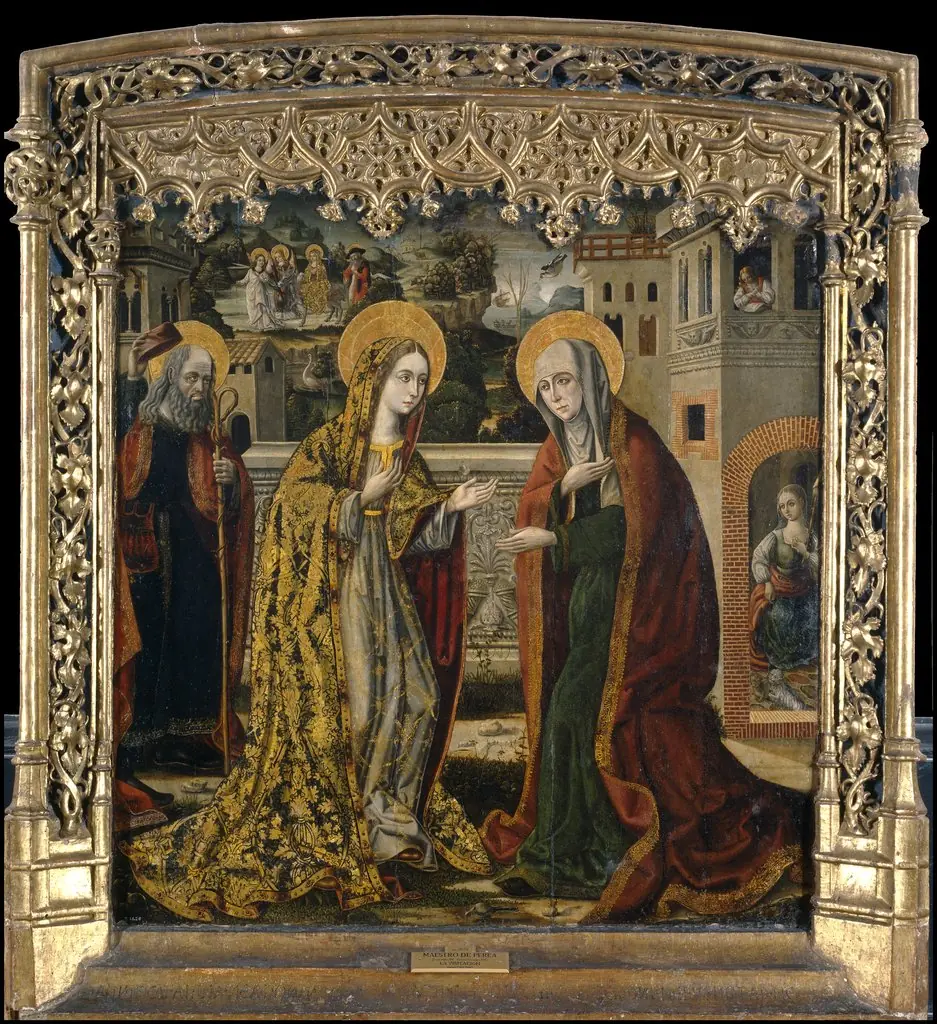 The Visitation
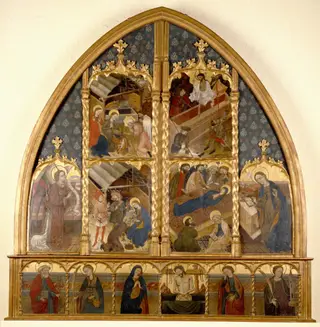 Nativity, Annunciatory Angel, Adoration of the Magi, Resurrection, Death of the Virgin, The Annunciate, Saints Peter and Lucy, Virgin Mary, Resurrected Christ, Saints John and Barbara
- Scenes from the Life of the Virgin