Artwork
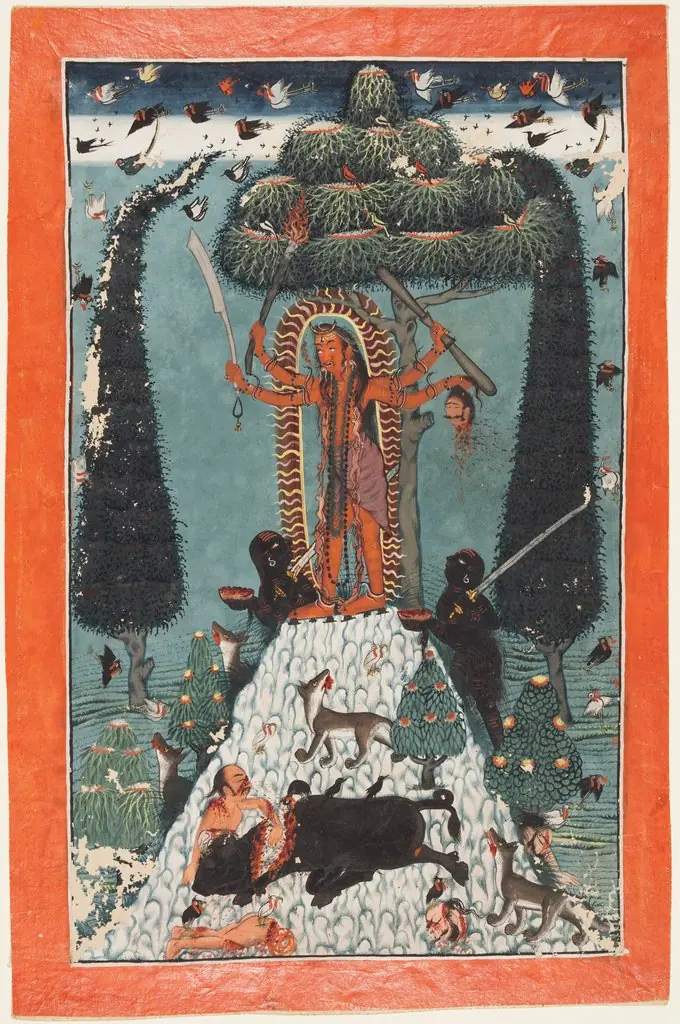
Goddess standing on a mountaintop
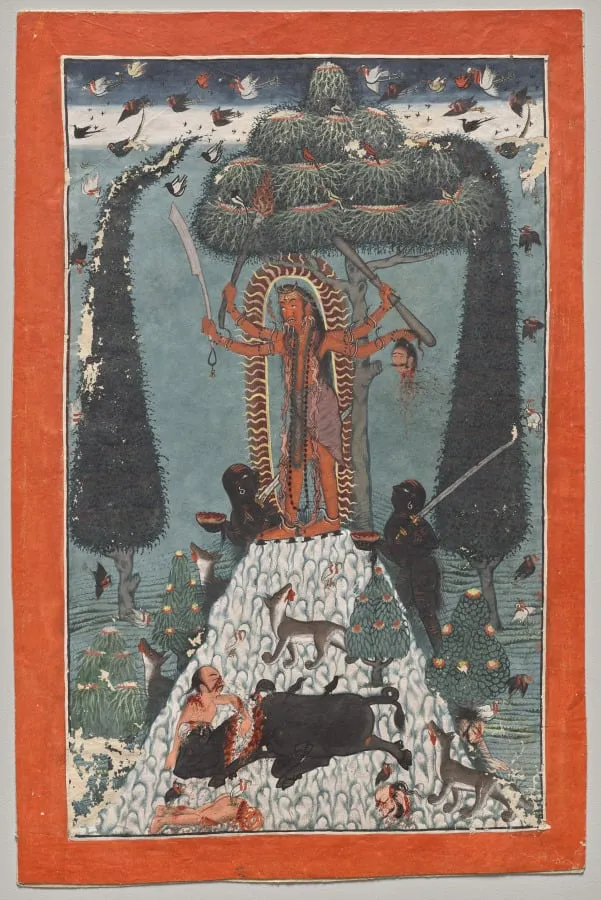
Goddess standing on a mountaintop is an unspecified painting by the Baroque artist Master of the court of Mandi. It dates from 1720 and is held in the collection of the Cleveland Museum of Art.
- Accession no.
- 2018.98
- Credit line
- Purchase and partial gift from the Catherine and Ralph Benkaim Collection; Severance and Greta Millikin Purchase Fund
About this work
Overview
This Pahari painting depicts a powerful, unidentified four-armed goddess standing atop a mountain, amidst a gruesome yet symbolic scene of sacrifice and carnage.
Subject & Meaning
The goddess embodies fierce protection, worshipped in the northwest Himalayas to aid devotees in overcoming external and internal enemies. Her attire, corpses as earrings and a skull garland, signifies triumph over evil.
Technique & Style
While specific artistic techniques are not detailed, the work reflects characteristic Pahari school traits, often marked by vivid coloration and dynamic compositions, here emphasizing the goddess's dominance.
History & Provenance
Originating from the Pahari kingdoms in northern India, the painting's exact date and artist remain unspecified, though it aligns with regional religious practices prevalent during the Pahari kingdoms' flourishing period.
Context
The piece is rooted in the religious practices of the northwest Himalayan region, where the veneration of fierce goddesses was integral to seeking protection and victory over adversaries.
Legacy
This work represents a significant example of Pahari art and the cultural significance of goddess worship in northern India, influencing the study of regional religious art forms.
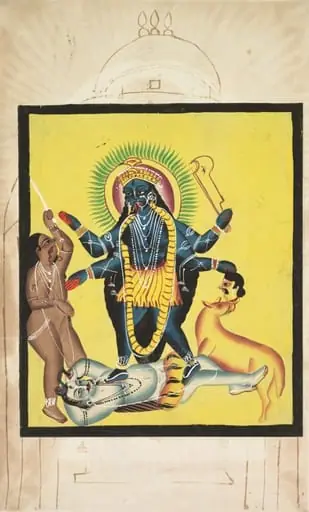
Artist & collection

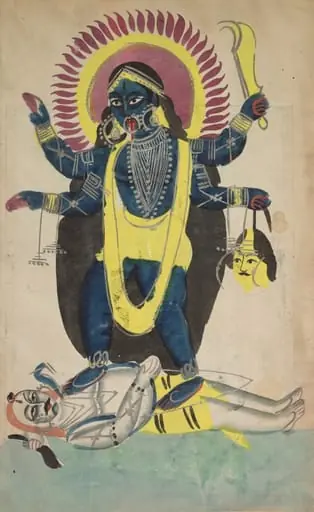 Kali Dancing on Shiva (recto), from a Kalighat album
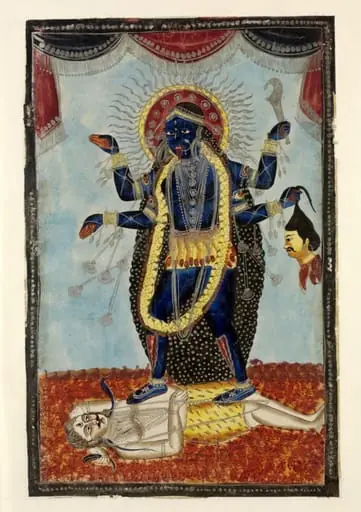 Kali and Shiva
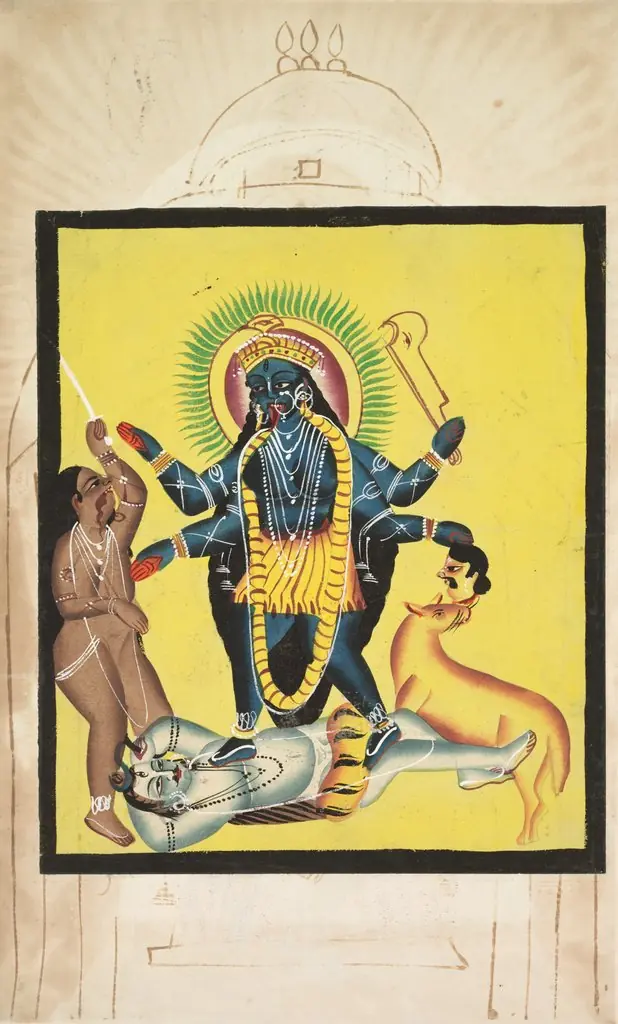 Kali Standing on Shiva (verso), from a Kalighat album
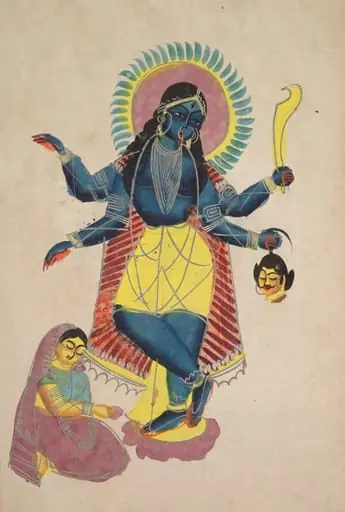 Krishna as Kali worshipped by Radha (recto), from a Kalighat album
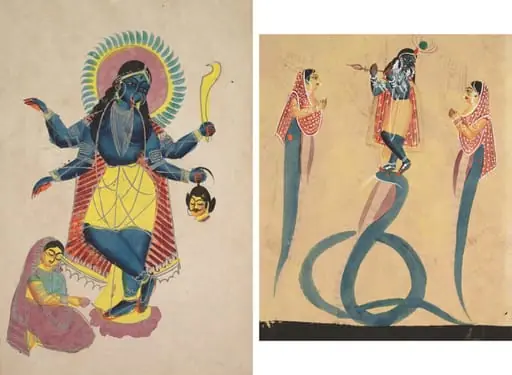 Leaf from a Kalighat album: Krishna as Kali worshipped by Radha (recto); Krishna quells the serpent Kaliya (verso)
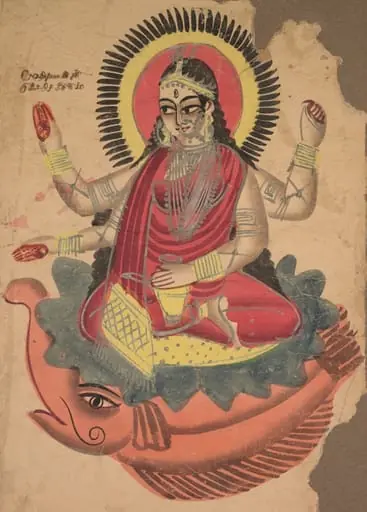
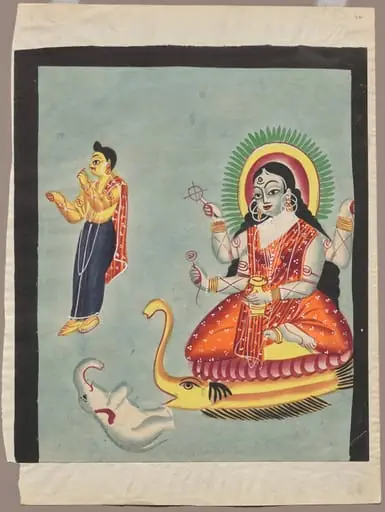 The Goddess Ganga, from a Kalighat album
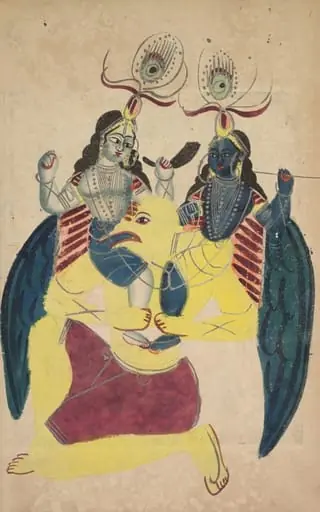 Garuda Carrying Balarama and Krishna (verso), from a Kalighat album