Artwork
Seventy-Two Peaks Under the Blue Sky with Mount Furong
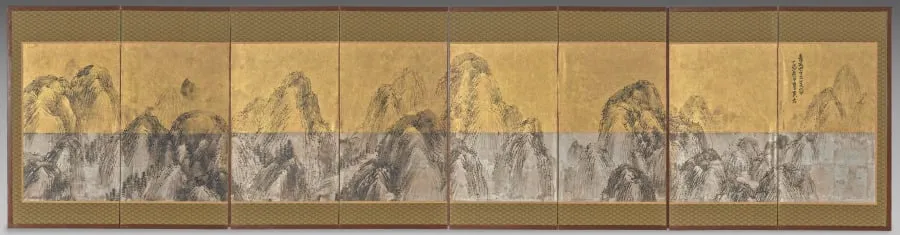
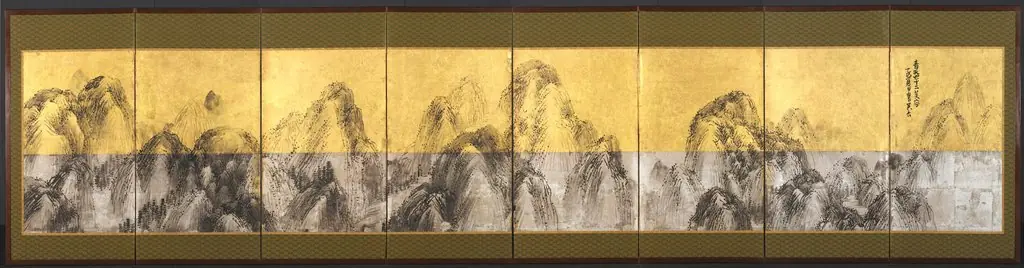
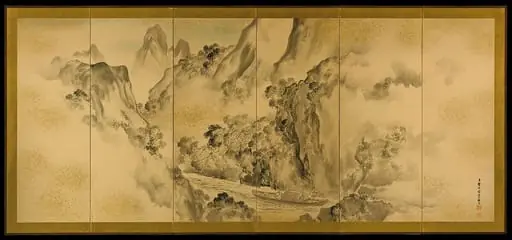
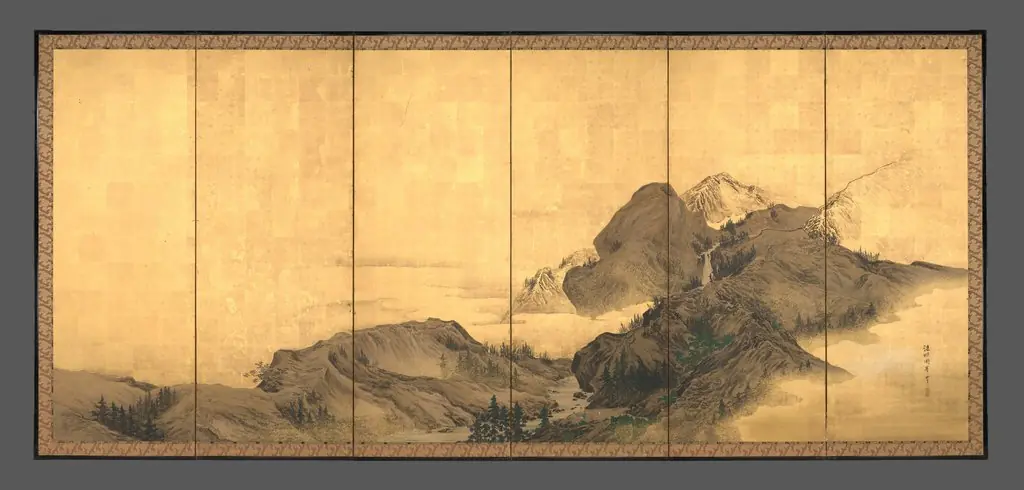
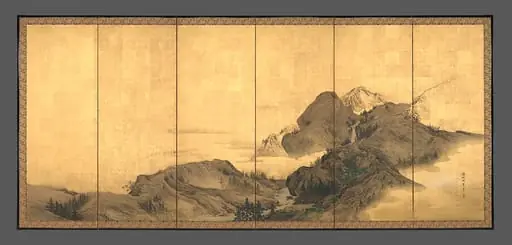
Seventy-Two Peaks Under the Blue Sky with Mount Furong is an unspecified painting by the Joseon dynasty painting artist Matsumura Goshun. It dates from 1785 and is held in the collection of the Cleveland Museum of Art. This six-panel folding screen, modest in height, was designed as a room divider for a small Japanese tearoom.
- Accession no.
- 1980.28
- Credit line
- Andrew R. and Martha Holden Jennings Fund
About this work
You see a low folding screen with soft blue hills stacked like waves under a pale sky.
The artist painted a real place, China’s Heng mountain range, but the screen was meant for a tiny Japanese tearoom. The inscription names Mount Furong, one peak among seventy-two, tying the scene to old poems and spiritual traditions.
Look up the subject: japan, edo period (1615–1868).
Overview
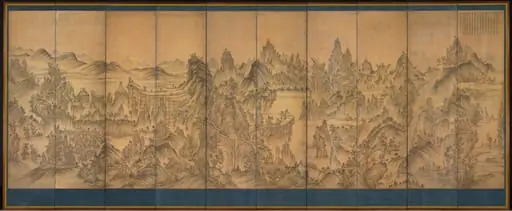
This six-panel folding screen, modest in height, was designed as a room divider for a small Japanese tearoom. The painted surface presents a series of gentle, blue‑toned hills that rise like undulating waves beneath a pale sky, creating a tranquil visual rhythm across the panels.
Subject & Meaning
The landscape depicts the Heng mountain range of Hunan Province, China, specifically highlighting Mount Furong among the famed seventy‑two peaks. The range holds a longstanding place in Buddhist and Daoist lore and has been celebrated in Chinese poetry, linking the work to spiritual and literary traditions beyond its Japanese setting.
Technique & Style
Executed in the ink‑and‑color wash typical of Edo‑period screen painting, the composition balances delicate brushwork with subtle tonal gradations. The artist employs a restrained palette of blues and grays, allowing the forms to recede into atmospheric depth while maintaining a decorative surface suitable for interior display.
History & Provenance
Attributed to Matsumura Goshun (c. 1752–1811), the piece reflects the influence of his mentor Yosa Buson, whose late work also portrayed the same Chinese mountain range. The screen’s inscription, which identifies the location and the specific peak, corroborates its authorship and situates it within Goshun’s later career.
Context
During the Edo period, Japanese artists often turned to Chinese subjects to convey scholarly taste and cosmopolitan refinement. By rendering a Chinese sacred landscape on a domestic screen, the work exemplifies the period’s synthesis of foreign motifs with Japanese interior aesthetics.
Artist & collection