Artwork
Ecce Homo
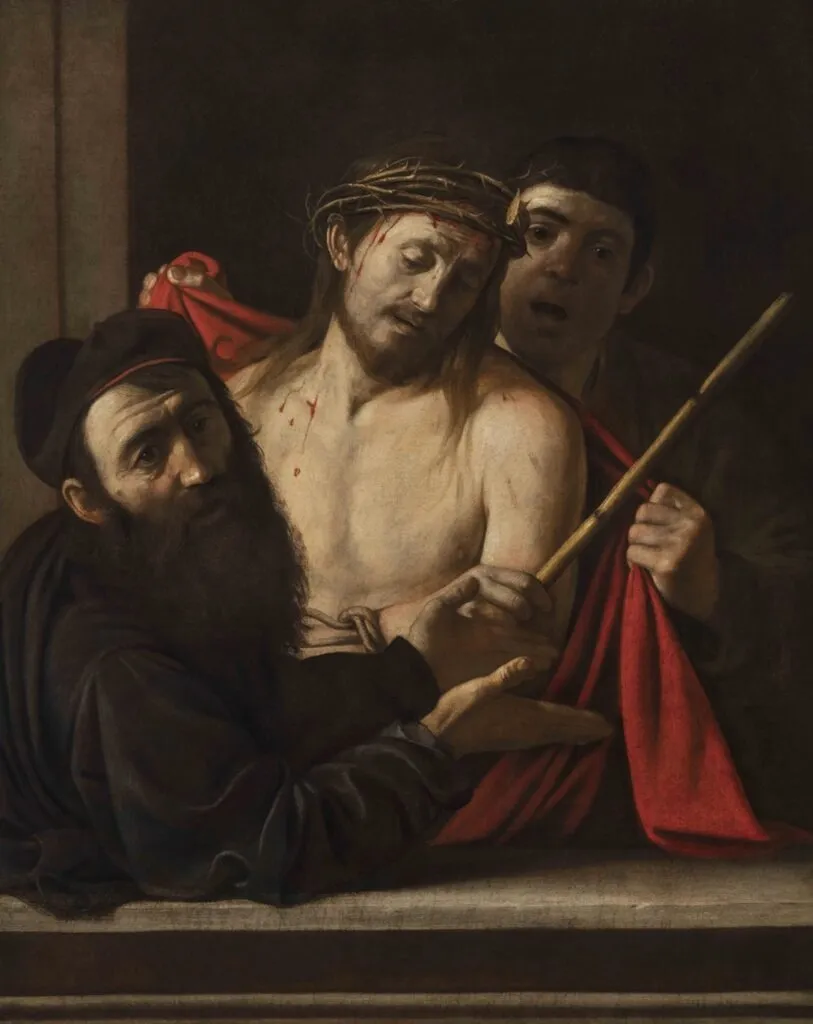
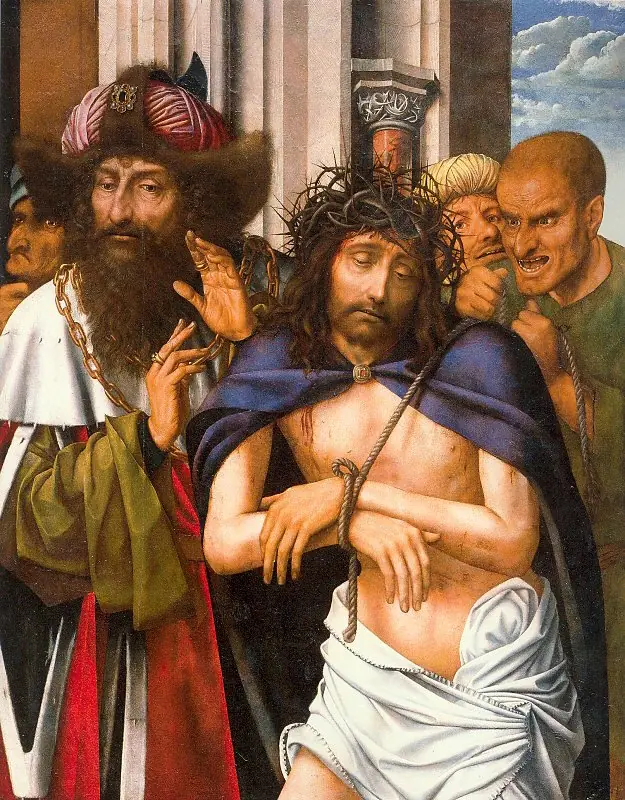
Ecce Homo is an oil painting by the Early Baroque Italian artist Caravaggio. It dates from 1607 and is held in the collection of the Museo del Prado.
About this work
Ecce Homo is an oil painting made around 1607 by Caravaggio. The work shows the biblical scene known as ecce homo.
It traveled from Italy to Spain, ending up in the collection of Evaristo Pérez de Castro. In April 2021 an auction tried to list it as by a follower of Jusepe de Ribera, but the Spanish government stopped the sale after
Subject & Meaning
The work serves as a stark representation of Christ's humiliation and the Roman authority's presentation of him to the public.
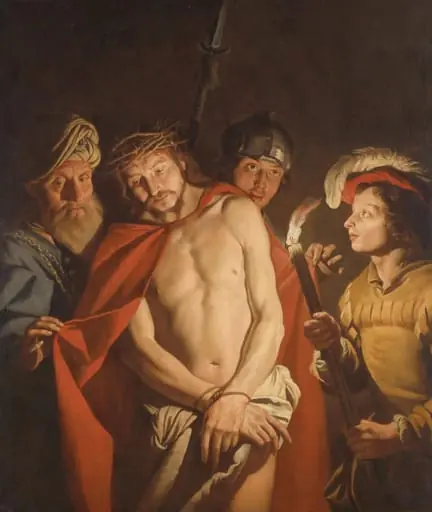
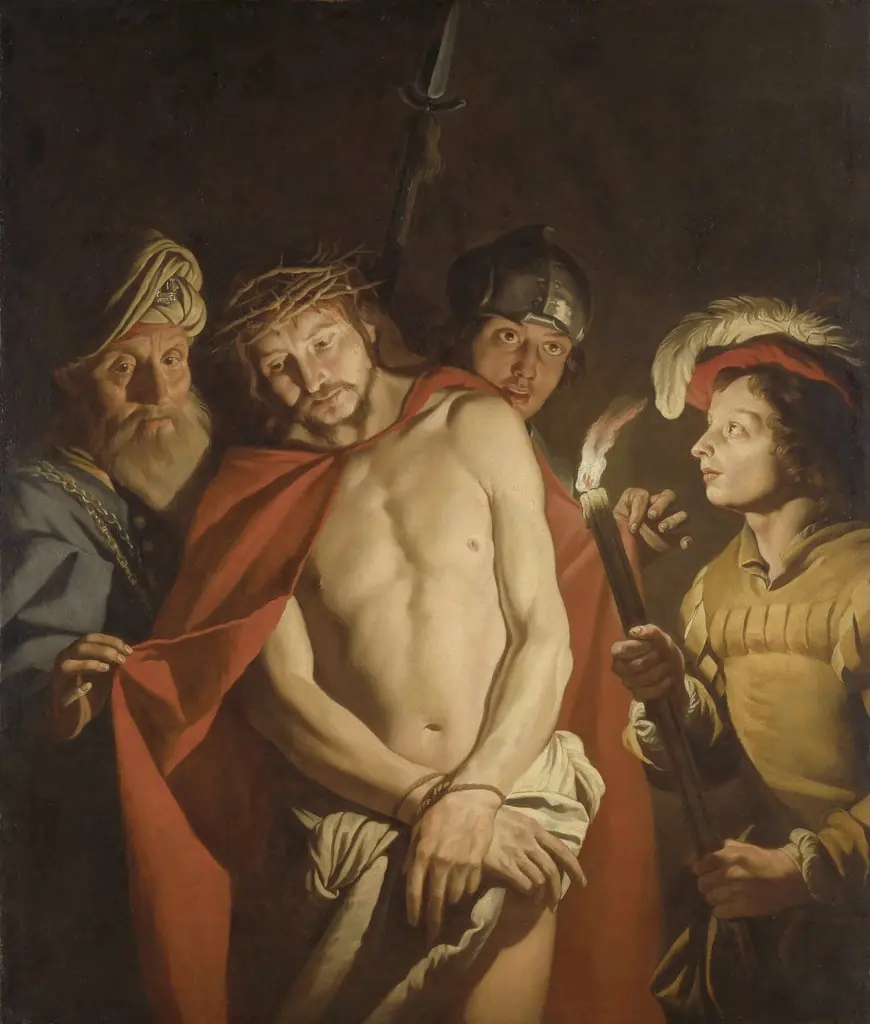
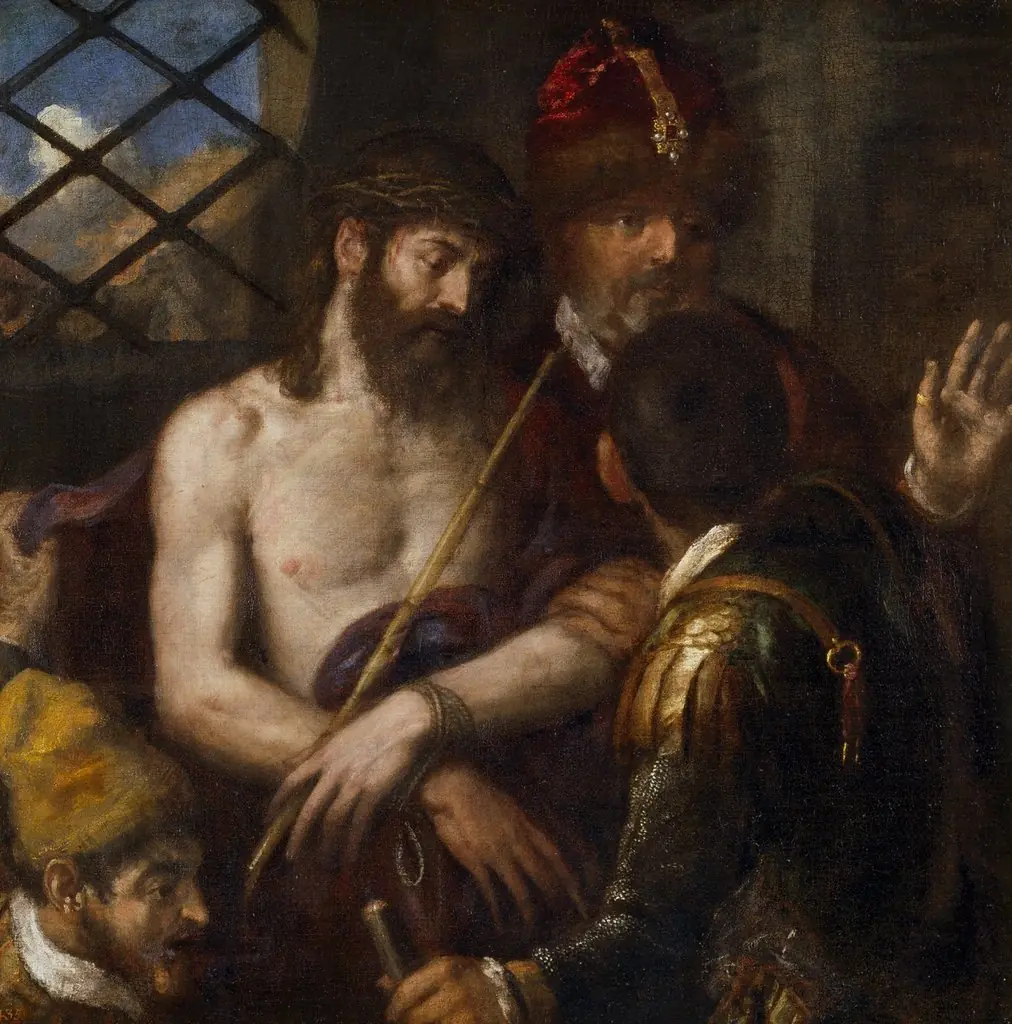
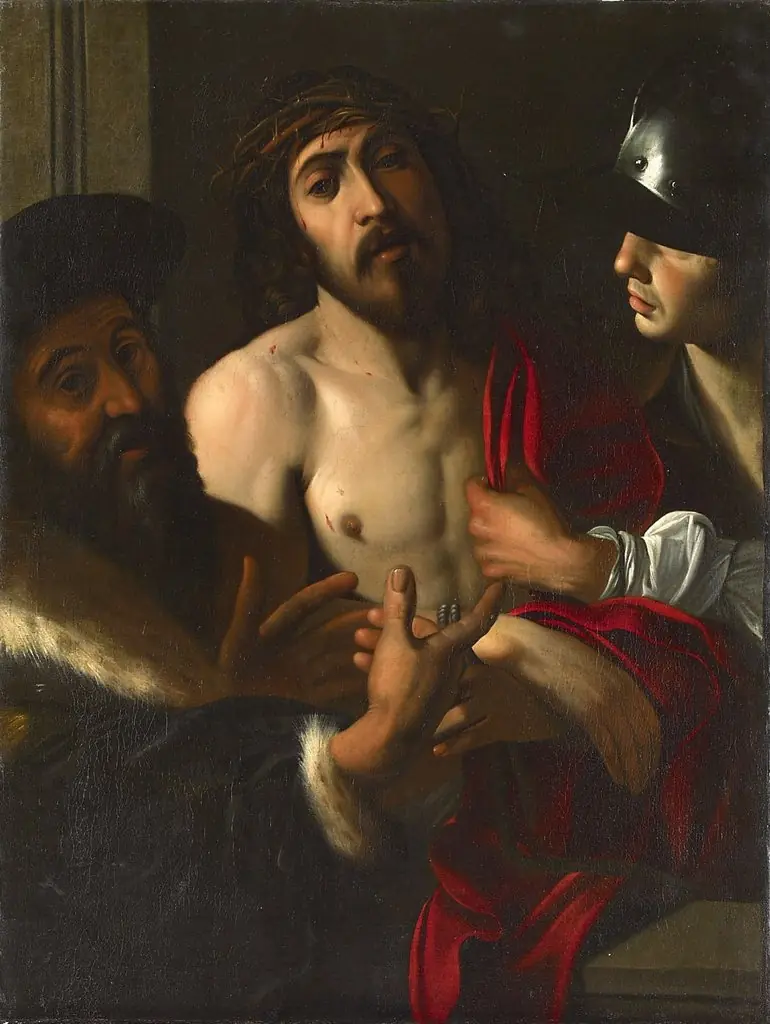
The painting depicts the biblical scene of Ecce Homo, derived from the Gospels where Pontius Pilate presents the tortured Christ to the crowd before the crucifixion, declaring "Behold the man." The composition centers on Jesus, shown bleeding with a crown of thorns and hands bound, holding a reed. He is flanked by two figures: Pilate in the foreground gestures toward the suffering Christ, while a soldier behind him removes a red mantle from the victim's shoulders.
This intimate, close-up arrangement emphasizes the physical and emotional weight of the moment, contrasting the bowed head and downcast gaze of Jesus with the direct engagement of the surrounding figures. The work serves as a stark representation of Christ's humiliation and the Roman authority's presentation of him to the public.
Technique & Style
The work is an oil painting on canvas, measuring 111 cm in height and 86 cm in width. Executed between 1605 and 1609, the piece exemplifies the Baroque style through its dramatic lighting and intimate, close-up composition. The surface features visible brushstrokes that contribute to the three-dimensional modeling of the three figures: Christ, Pontius Pilate, and a soldier.
Christ is depicted with a crown of thorns and a bleeding forehead, while a red robe is being removed from his shoulders. The painting is unsigned, a common characteristic of the artist's oeuvre. Following its rediscovery in 2021, the work underwent extensive restoration before being displayed.
Some scholars have noted specific color similarities to other known works by the artist, while others dispute the attribution based on a perceived lack of dramatic vigor.
History & Provenance
Attributed to Michelangelo Merisi da Caravaggio, this oil-on-canvas painting is dated between 1605 and 1609. The work likely arrived in Spain shortly after its creation in Italy. Its earliest documented appearance occurs in 1631 within the inventory of Juan de Lezcano, followed by ownership by the Count of Castrillo in 1657.
The piece subsequently entered the Spanish royal collection as a gift to Philip IV and later passed to Prime Minister Manuel Godoy. In 1823, the Royal Academy of Fine Arts of San Fernando exchanged the work for a painting by Alonso Cano to acquire it for Evaristo Pérez de Castro, where it remained in his family's collection for two centuries. The work was rediscovered in April 2021 when the family attempted to auction it, initially attributing it to an associate of Jusepe de Ribera.
Following a government halt to the sale and subsequent expert analysis, the attribution was revised to Caravaggio. The painting was sold in a private transaction for approximately 36 million euros to a British collector residing in Spain in 2024.
Following a halted 2021 auction, the painting was acquired by a British collector residing in Spain and entered the Museo del Prado in Madrid on loan. The institution displays the work under an agreement lasting until at least April 2027, with the piece exhibited from May 27, 2024, to February 23, 2025, before traveling to Italy and returning in November 2025.
Historically, the canvas appeared in a 1631 inventory belonging to Juan de Lezcano before passing to the Count of Castrillo in 1657. It subsequently entered the Spanish royal collection under Philip IV and was later held by Manuel Godoy. In 1823, the Royal Academy of Fine Arts of San Fernando exchanged the work with politician Evaristo Pérez de Castro, in whose family it remained for two centuries.
Context
The painting's modern critical reception centers on its dramatic 2021 reattribution from a follower of Jusepe de Ribera to Caravaggio. Scholars such as Maria Cristina Terzaghi and Massimo Pulini supported the attribution by citing specific stylistic elements, including the three-dimensional rendering of figures, brushwork, and similarities to works like Young Sick Bacchus and Salome with the Head of John the Baptist. However, the consensus is not universal; specialists Nicola Spinosa and Camillo Mazitti have disputed the claim, arguing the work lacks Caravaggio's characteristic dramatic vigor.
Historically, the work illustrates the fluctuating reputation of the artist in Spain. While an 1823 inventory identified it as a Caravaggio, it was exchanged for a painting by Alonso Cano because academic tastes of the era favored Cano over the Italian master. This exchange underscores how shifting aesthetic values caused the work to be undervalued for centuries until its recent rediscovery and subsequent exhibition at the Museo del Prado confirmed its significance.
Legacy
The painting's modern legacy is defined by its dramatic rediscovery. Listed for auction in April 2021 with a €1,500 starting price and an attribution to a follower of Jusepe de Ribera, the Spanish government halted the sale after experts suggested it could be by Caravaggio. The work was subsequently declared a Bien de Interés Cultural, barring its export, before being acquired in a private sale for approximately €36 million by a British collector residing in Spain.
The painting was loaned to the Museo del Prado, where it went on display on 27 May 2024, and was later sent to Rome and Naples for temporary exhibitions before returning to the Prado in November 2025, on loan at least until April 2027. Its reappearance has prompted renewed scholarly debate, with figures such as Maria Cristina Terzaghi and Massimo Pulini supporting the Caravaggio attribution while Nicola Spinosa and Camillo Mazitti have disputed it.
Overview
The oil on canvas titled Ecce Homo, dated to roughly 1607, is attributed to the Italian Baroque painter Michelangelo Merisi da Caravaggio. It portrays the biblical moment when Christ is presented to the crowd, a subject traditionally known as ecce homo.
Artist & collection
Artist
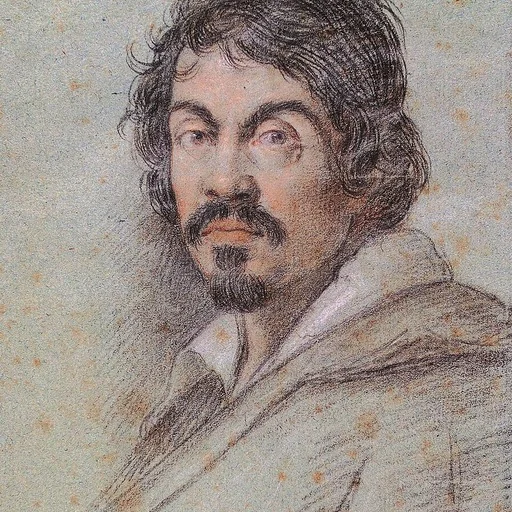
Michelangelo Merisi da Caravaggio (also Michele Angelo Merigi or Amerighi da Caravaggio; 29 September 1571 – 18 July 1610), known mononymously as Caravaggio, was an Italian painter active in Rome for most of his artistic life.