Artwork
François-Théodore de Nesmond
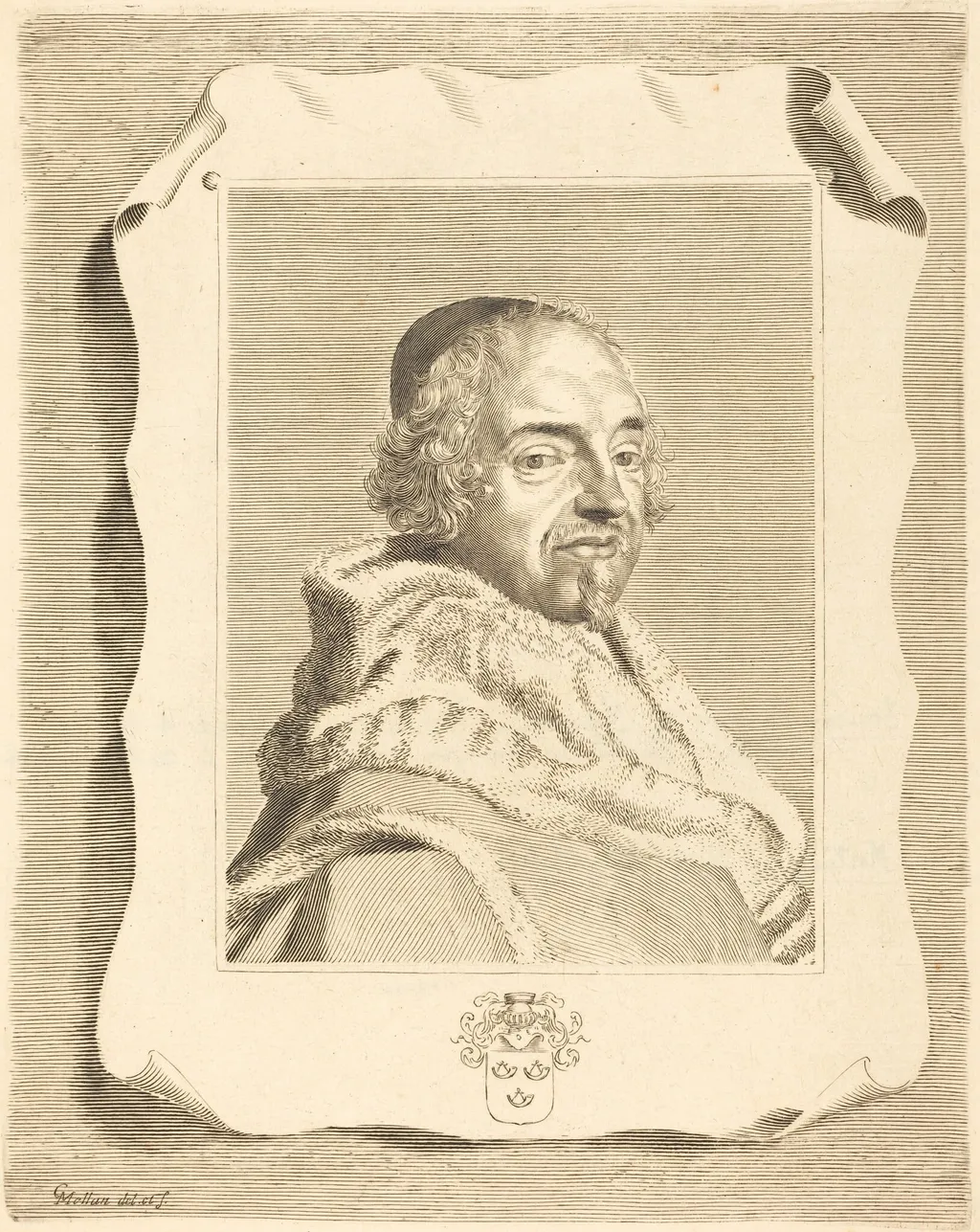
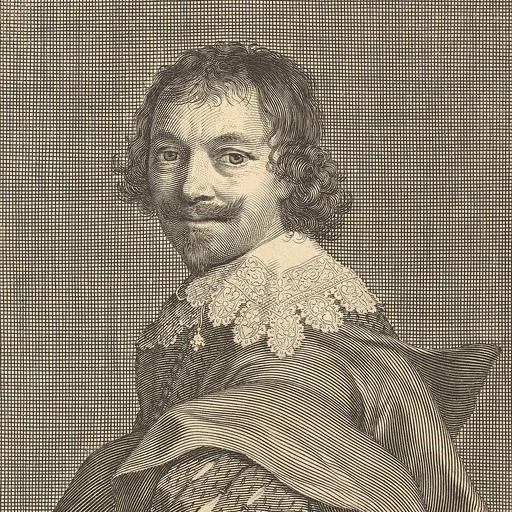
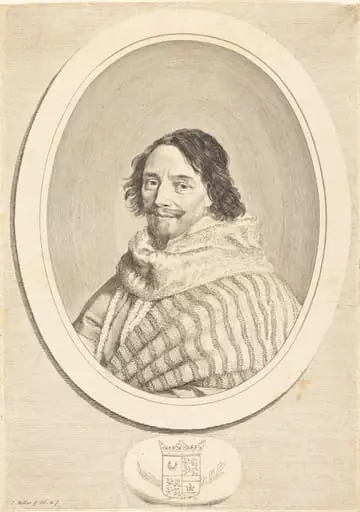
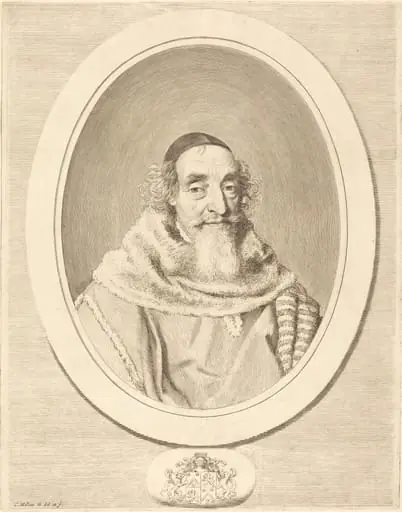
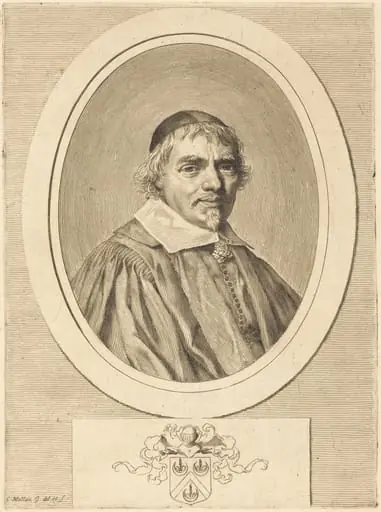
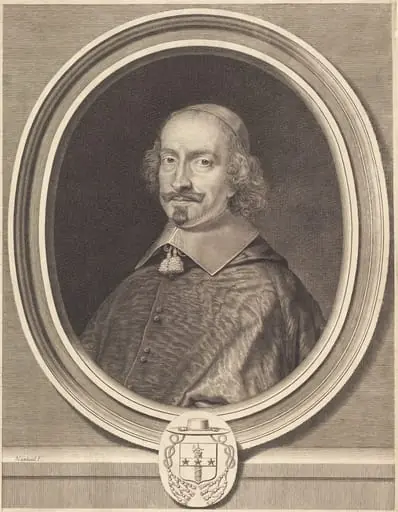
François-Théodore de Nesmond is an ink print by the Renaissance artist Claude Mellan. It dates from 1643 and is held in the collection of the National Gallery of Art.
- Inscription
- Inscribed:lower left in plate: CMellan del. et. S.; by later hand, across center verso in graphite: Francois Theodore de Nesmond - President au parlement de Paris, / succeda a Chrelier de Lamorgres, s[?] beau pere le 20 decembre 1636 / Montaiglon 219 (only state) / c. 27294
About this work
Overview
The composition is tightly framed against a plain background, focusing attention entirely on the psychological presence and physical details of the subject.
Created in 1643 by the French Baroque master Claude Mellan, this engraving presents a formal portrait of François-Théodore de Nesmond. The work depicts the sitter from the shoulders up, facing the viewer with a composed, neutral expression. Nesmond is characterized by his curly hair, which is partially covered by a hat, and he wears a heavy coat trimmed with fur, signifying his status.
Mellan executes the portrait with the precise line work typical of his mature period, utilizing dense cross-hatching to model the three-dimensional form of the face and to render the varied textures of the fabric and fur. The composition is tightly framed against a plain background, focusing attention entirely on the psychological presence and physical details of the subject. As an engraving on laid paper, the piece demonstrates Mellan's technical mastery in translating painterly effects into the graphic medium, a skill that defined his reputation in seventeenth-century France.
This work stands as a significant example of French Baroque portraiture, capturing the dignity and attire of a prominent figure of the era through meticulous incision and tonal control.
Subject & Meaning
The work depicts the French nobleman François‑Théodore de Nesmond, identifiable by his curly hair beneath a hat and the fur‑trimmed coat that frames his shoulders. The restrained pose and lack of overt symbolism suggest a straightforward representation of status and identity.
Technique & Style
Mellan employs fine cross‑hatching to model the facial features and fabric textures, achieving subtle gradations of tone. The precision of the lines conveys a tactile sense of the fur and the smoothness of skin, characteristic of the detailed engraving practice of the mid‑seventeenth century.
History & Provenance
Created in 1643, the print is attributed to Claude Mellan, a French engraver known for his meticulous line work. The portrait was likely commissioned to commemorate de Nesmond’s social standing, and the surviving impressions remain on laid paper, a common support for prints of the period.
Own this work as a print
Artist & collection